Fountain Enthusiast

A Day in the Life of a Fountain Enthusiast: From Cleaning to Capturing Beauty

Introduction

To most people, a fountain is a decorative water feature—something that adds charm to a garden or elegance to a public square. But for a fountain enthusiast, it’s much more than that. It’s a living, flowing piece of art, a centerpiece of tranquility, a tribute to craftsmanship and culture. This blog post takes you behind the scenes into the fascinating life of a fountain enthusiast, detailing the care, creativity, and connection that go into appreciating and maintaining these architectural marvels. Whether it’s scrubbing algae from granite edges or capturing the perfect sunrise reflection in a marble basin, every task becomes an act of devotion.

Morning Rituals: Greeting the Fountain

A Daily Check-In with Beauty

Most fountain enthusiasts start their day by visiting their beloved water feature—whether it’s in their backyard, in a community park, or part of a city-wide catalog of historic installations. The morning light often offers the most serene moments. Sunlight gently reflects on water, birds take their first drink, and the world seems still.

For hobbyists with personal fountains, this visit involves a quick visual inspection. Are the pumps running smoothly? Is the water level stable? Has wind-blown debris cluttered the basin? These questions are answered before the first sip of coffee.

The First Clean-Up

Depending on the weather and location, the fountain may need a quick cleaning. Leaves, twigs, and petals can clutter the surface. A net skimmer or gloved hands work just fine for light tasks. If the fountain is solar-powered or includes LED features, enthusiasts often check wiring and panel exposure.

Midday Maintenance: Where Love Meets Labor

Cleaning: An Art and a Responsibility

Fountains require regular maintenance to stay pristine. This includes:

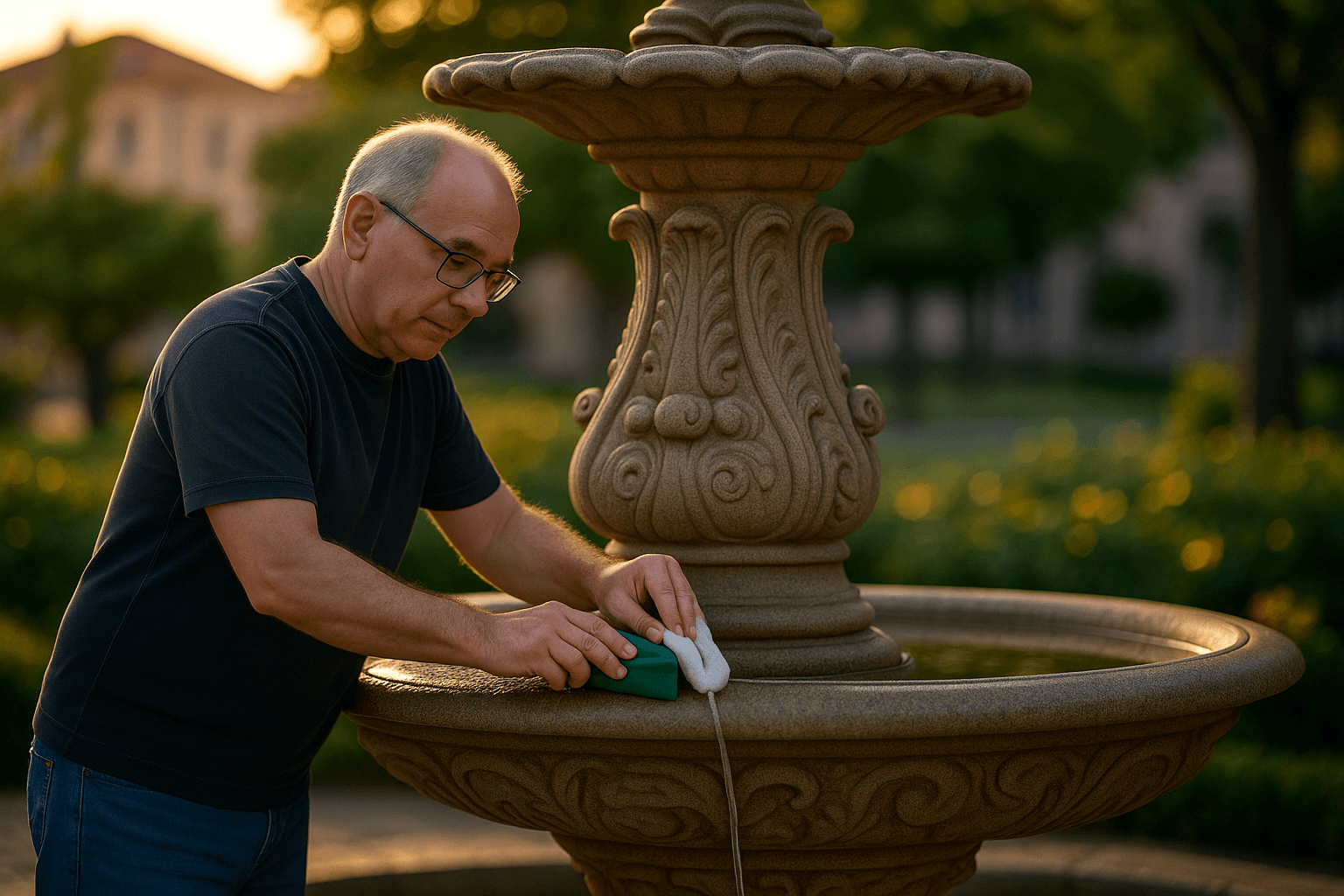
    • Scrubbing the Basin: Using non-abrasive brushes to clean algae and mineral buildup.
    • Checking the Water Chemistry: Especially important for fountains that support fish or birds. pH balance, chlorine levels, and clarity are tested.
    • Refilling the Water: Evaporation is a daily concern, especially in warmer climates.
    • Inspecting Pumps and Filters: Clogs and mechanical wear can affect water flow and noise.

Many enthusiasts prefer to use natural, non-toxic cleaning agents to avoid harming wildlife and polluting local groundwater. Vinegar, baking soda, and gentle soaps are staples in a fountain cleaner’s kit.

Seasonal Considerations

During spring, enthusiasts might be reassembling disassembled features. In the summer, they battle algae and mosquito breeding. Autumn means more leaf litter and potential clogs, while winter (in some regions) requires draining, covering, or heating systems to prevent freeze damage.

Each season becomes an opportunity to learn and adapt.

Afternoon Adventures: Exploration and Photography

Hunting for Hidden Gems

Many fountain enthusiasts don’t stop at their own installations. They spend their afternoons visiting other fountains—some are city landmarks, others are tucked away in unexpected corners of town.

Urban explorers and travelers might spend hours mapping out historic fountains, researching their builders, and photographing them for blogs, vlogs, or Instagram. There’s often a local story behind every fountain:

    • A town square’s centerpiece built in 1890.
    • A modern kinetic sculpture that reacts to pedestrian movement.
    • A small mosaic fountain crafted by a community arts group.

Photography: Capturing Water in Motion

Photographing fountains is both a technical challenge and an aesthetic joy. Enthusiasts often use DSLR cameras with fast shutter speeds to capture splashes, or long exposure for silky water trails. Morning and golden hour lighting bring out the stone’s texture and water’s shimmer.

Tips for excellent fountain photos:

    • Shoot from low angles for dramatic backgrounds.
    • Use neutral density filters for daytime long exposures.
    • Focus on reflections and symmetry.
    • Don’t forget the surrounding flora or architectural context.
    • Drone enthusiasts might take things a step further by capturing aerial footage that reveals the geometric perfection of large fountain layouts.

Evening Reflections: Journaling and Sharing

Fountain Logs and Maintenance Diaries

Before bed, many enthusiasts reflect on the day’s discoveries. They record data on water usage, maintenance updates, or personal observations in physical notebooks or apps. Over time, these logs become valuable references and sentimental keepsakes.

For example:

    • “Cleaned algae from upper tier. Water pressure stronger after filter rinse.”
    • “Spotted a blue jay bathing in the east basin.”
    • “Added underwater lights—spectacular effect at twilight.”

Blogs, Forums, and Social Media

Sharing is a huge part of the lifestyle. Fountain lovers often engage with niche online communities where they swap tips, celebrate rare finds, and inspire one another.

    • Popular topics include:
    • Restoring antique fountains
    • Designing custom water features
    • Comparing pump efficiency
    • Sharing before-and-after makeover stories
    • Hosting virtual photo walks or “fountain tours”

Some even run dedicated blogs or YouTube channels, providing walkthroughs, product reviews, and behind-the-scenes content from city explorations or home builds.

Fountain Enthusiast 2

Emotional Connections and Personal Stories

More Than Just Water

Ask any fountain enthusiast what draws them in, and you’ll get a deeply emotional answer. For some, it’s nostalgia—memories of childhood park visits. For others, it’s therapeutic—calming effects of running water on anxiety. Many are artists or architects who see water as a dynamic medium in spatial design.

One hobbyist might share how maintaining their grandfather’s courtyard fountain keeps them connected across generations. Another might speak of how building a DIY bamboo fountain helped them through depression.

Fountains become emotional anchors—symbols of care, beauty, and personal growth.

Community and Collaboration

Helping Others Install and Maintain

Many enthusiasts volunteer or consult informally for local installations, nonprofit groups, or family friends. They might:

    • Advise on fountain placement based on sun and wind direction
    • Help design eco-friendly systems
    • Offer guidance on material selection for specific climates
    • Train others on maintenance best practices

Shared love for fountains creates tight-knit micro-communities where members share tools, supplies, or even offer hands-on help during setup.

Joining Events and Celebrations

Some cities host Fountain Festivals or Water Art Walks that enthusiasts eagerly attend. Others participate in urban restoration projects where they help preserve historic fountains through cleaning, fundraising, and awareness campaigns.

It’s not just a solitary passion—it often becomes a shared mission.

The Collector’s Heart: Beyond the Fountain

Memorabilia and Models

Many fountain lovers collect miniature replicas, old postcards, or vintage photos of iconic fountains. Scale models—crafted from clay, resin, or 3D printing—can line shelves like trophies. Enthusiasts might even try their hand at designing tabletop fountains to bring the joy indoors.

Books and Learning

Their bookshelves are filled with:

    • Architectural histories of Roman, Moorish, or Renaissance fountains
    • Technical manuals on hydraulics and pump systems
    • Art photography collections
    • Journals on landscape architecture and urban planning
    • Continual learning is part of the hobby’s appeal.

A Fountain Enthusiast’s Wishlist

Like any passion, there’s always room to dream. A fountain lover’s wishlist might include:

    • Installing a tiered marble fountain with LED uplighting
    • Visiting the Trevi Fountain in Rome or the Dubai Fountain at Burj Khalifa
    • Creating a rain-harvesting, solar-powered fountain
    • Publishing a photo book of regional fountains
    • Leading a community project to restore an abandoned public feature
    • These dreams reflect a blend of technical skill, artistic vision, and social purpose.

Conclusion

Being a fountain enthusiast is more than enjoying flowing water. It’s a lifestyle filled with craftsmanship, storytelling, emotional resonance, and community. From early morning cleanings to late-night journaling, each action is a form of love. Fountains are not static structures—they are dynamic experiences that bring together nature, art, and people.

If you’ve ever admired a fountain’s soothing sound or captured a photo of its graceful arcs, you might already be on your way to joining this passionate circle. All it takes is a spark of curiosity—and perhaps a pair of waterproof gloves.

FAQs:

Ideally, once a week for light debris removal, and once a month for deep cleaning including pump and filter checks.
Early morning or golden hour (just before sunset) offers the best lighting for texture, contrast, and reflections.
It’s not recommended, especially if birds or pets access the fountain. Opt for natural cleaners like vinegar or baking soda.