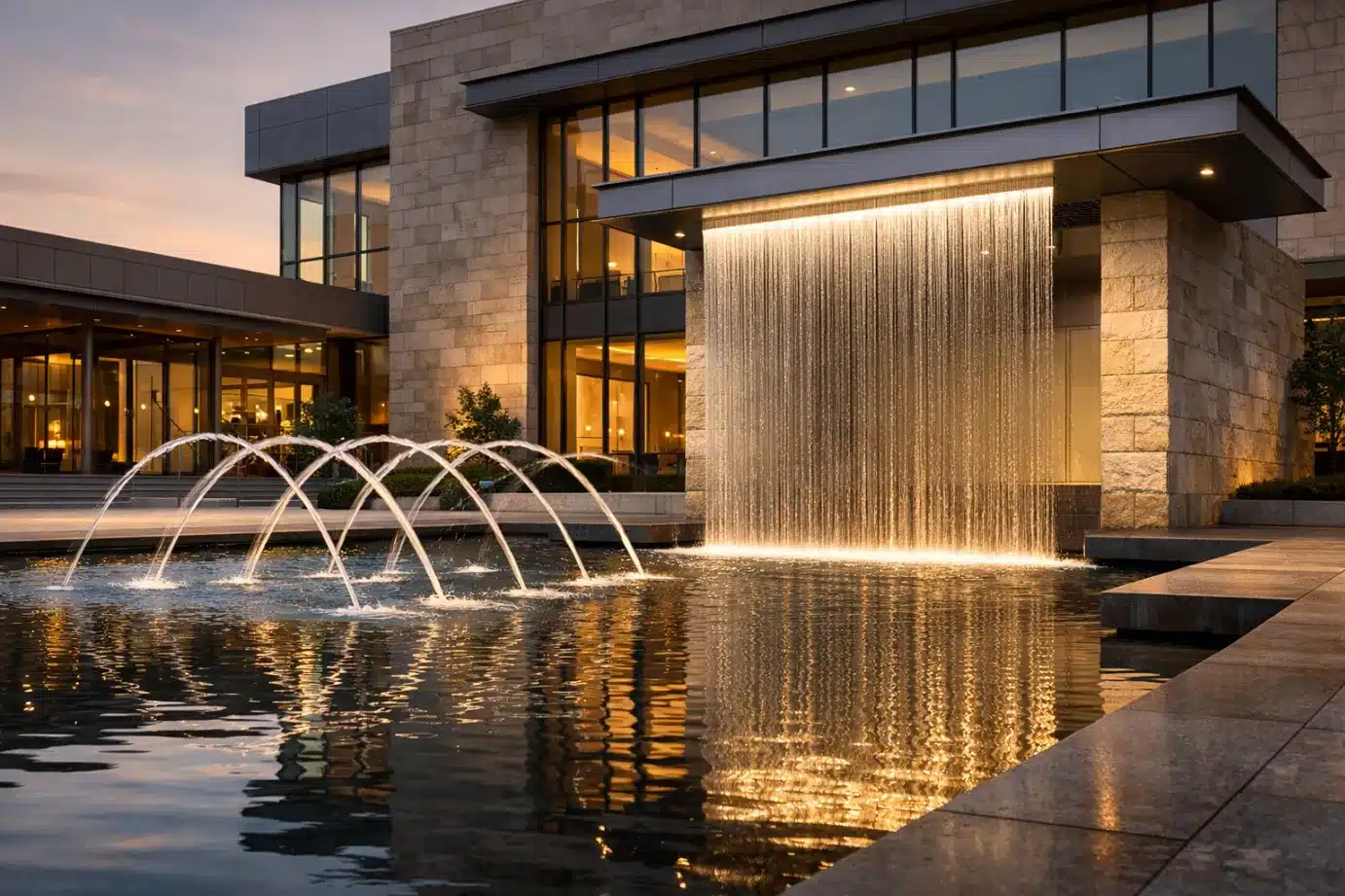
Acoustic Precision: Designing Fountains for Performance Halls and Plazas
In the modern built environment, fountains are no longer merely decorative elements. They have evolved into sophisticated water features that influence atmosphere, acoustics, and human experience. Nowhere is this evolution more critical than in performance halls and public plazas, where sound quality, audience comfort, and architectural harmony must coexist seamlessly.
Designing fountains for these spaces requires a careful balance between visual beauty and acoustic precision. The sound of moving water can enhance or disrupt an environment depending on how it is engineered. From indoor water fountains that support quiet contemplation in lobbies to dramatic outdoor water fountains that animate civic plazas, acoustic design is central to success.
This article explores how acoustically optimized fountains are designed, the science behind water sound, and best practices for integrating indoor fountains, outdoor fountains, and specialized installations like rain curtain fountains into performance-driven spaces.
The Role of Sound in Fountain Design
Why Acoustics Matter
Performance halls require precise sound control to preserve music, speech clarity, and audience immersion. Plazas benefit from ambient sound masking to reduce traffic noise and create comfort. Indoor fountains must complement HVAC systems and architectural acoustics without overpowering them. The goal is not silence, but intentional sound.
Understanding Water Acoustics
Water produces sound through impact, turbulence, and flow velocity. In uncontrolled conditions, this sound can become white noise, or worse, a distraction.
Key Acoustic Variables
- Drop Height: Higher drops create louder, sharper sounds.
- Surface Interaction: Water striking stone sounds different than water striking water.
- Flow Rate: Greater volume increases sound intensity.
- Edge Geometry: Smooth weirs produce gentle sounds; serrated edges produce texture.
- Enclosure & Reflection: Walls, ceilings, and hard surfaces amplify sound.
By controlling these variables, designers shape the sonic character of fountains.
Fountains in Performance Halls
Indoor Fountains as Acoustic Assets
In performance halls, indoor fountains are often located in:
- Grand lobbies
- Atriums
- Intermission lounges
- VIP reception areas
Rather than competing with performances, these indoor water fountains serve as transitional soundscapes, helping audiences mentally shift from the outside world into a curated cultural experience.
Best Fountain Types for Performance Halls
Wall Fountains
Wall fountains are ideal for acoustically controlled interiors. Water flows in thin sheets, producing consistent, low-frequency sound that avoids sharp splashes.
- Predictable sound levels
- Minimal footprint
- Visual elegance
Rain Curtain Fountain
A rain curtain fountain creates a vertical veil of water. When designed with micro-laminar flow, it produces a soft, immersive sound similar to rainfall, excellent for calming large interior spaces.
Floor Fountains
Floor fountains inside performance venues are typically decorative rather than interactive. Their sound must be subtle, often achieved through low flow rates and shallow basins.
Outdoor Plazas: Sound as Urban Strategy
Public plazas face different challenges, including traffic noise, pedestrian activity, open-air acoustics, and changing crowd densities. Here, outdoor fountains become strategic tools for sound masking and spatial definition.
Outdoor Water Fountains as Sound Buffers
Properly designed outdoor water fountains can:
- Mask traffic noise
- Reduce perceived crowd density
- Create zones of comfort
- Improve dwell time
Lower-frequency water sounds are most effective at masking urban noise without becoming intrusive.
Fountain Typologies for Plazas
Large-Scale Outdoor Fountains
Grand outdoor fountains often serve as focal points. Design considerations include:
- Multiple small drops instead of one large drop
- Broad weirs rather than plunging cascades
- Diffused splash zones
Interactive Floor Fountains
These fountains allow visitors to walk through jets. Acoustic considerations include:
- Pulsed jets vs. continuous jets
- Sound variation throughout the day
- Safety and slip resistance
Garden Fountains in Plazas
Smaller garden fountains within larger plazas create intimate acoustic pockets, useful near seating areas or café zones.
Balancing Visual Drama and Acoustic Control
Visual Loudness vs. Acoustic Loudness
- Laminar jets can shoot several meters with minimal sound.
- Sheet waterfalls can look powerful while sounding soft.
- Lighting and motion amplify perceived intensity without increasing noise.
Designers must treat indoor water fountains and outdoor water fountains as entirely different acoustic instruments.
Specialized Fountain Applications
Tabletop Fountains in VIP Areas
- Stress reduction
- Personal sound masking
- Luxury perception
Sound must remain under conversational levels at all times.
Indoor Fountains in Recording Facilities
Some performance complexes include rehearsal and recording spaces. In these cases, indoor fountains must be isolated acoustically or placed in non-critical zones to avoid sound bleed.
Materials and Acoustic Texture
The material a fountain interacts with significantly affects sound.
Common Materials
- Stone: Warm, natural tones
- Metal: Sharper, brighter sound
- Glass: Clean, modern, reflective
- Concrete: Deep, muted resonance
For wall fountains and rain curtain water features, glass and stone are commonly chosen for their predictable acoustic profiles.
Mechanical Systems and Noise Control
Often, the loudest part of a fountain isn’t the water, it’s the equipment. Best practices include:
- Use variable-speed pumps
- Isolate pumps acoustically
- Locate mechanical rooms away from sensitive areas
- Employ vibration dampeners
Sustainability and Sound
- Lower flow rates reduce noise and energy use
- Recirculating systems ensure consistent sound
- Smart controls adjust sound levels based on occupancy
Modern water fountains can even respond dynamically to events, becoming quieter during performances and livelier during intermissions.
The Psychological Impact of Water Sound
Sound influences emotion. Properly designed fountains:
- Lower stress
- Improve focus
- Enhance memory of place
In performance venues, this emotional priming enhances the audience’s overall experience.
Designing for Flexibility
Modern venues demand flexibility. Fountain systems should allow:
- Adjustable flow rates
- Programmable sound profiles
- Seasonal operation changes
The Future of Acoustic Fountain Design
- AI-controlled sound modulation
- Acoustic modeling software
- Sensor-driven flow adjustments
Conclusion: Fountains as Acoustic Instruments
When designed with intention, fountains are not background elements, they are acoustic instruments. In performance halls and plazas, they shape experience, guide movement, and elevate architecture.
From elegant wall fountains and immersive rain curtain fountains to interactive floor fountains and intimate tabletop fountains, acoustic precision transforms water into a powerful design medium.
By integrating sound science, material selection, and mechanical control, designers can ensure that fountains, indoor fountains, and outdoor water fountains perform beautifully—both visually and acoustically.