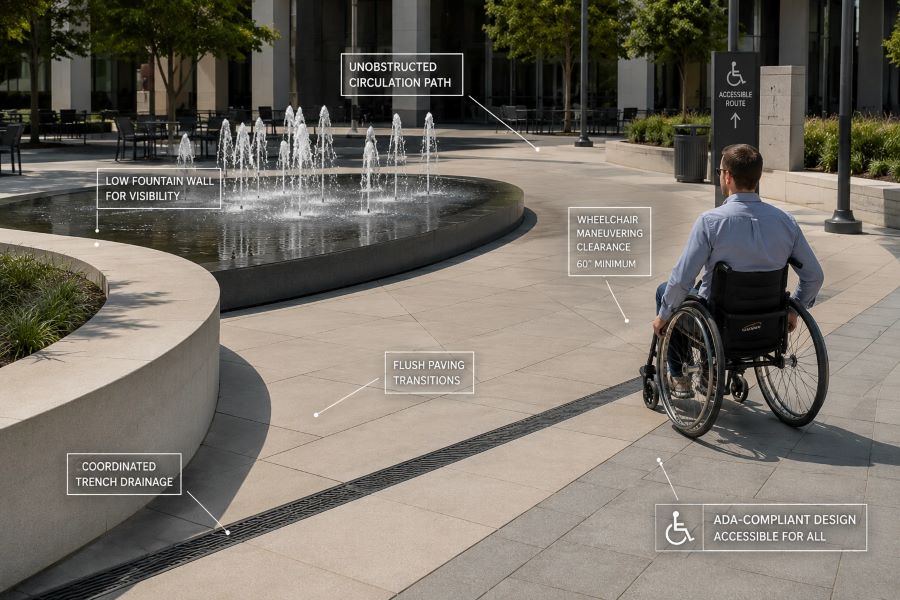
...

ADA Compliance for Commercial Fountains: Accessibility Design Guide for Architects and Developers

Accessible design is a primary consideration in commercial fountain systems.

For architects, developers, landscape architects, hospitality designers, and commercial property owners, understanding ADA compliance in fountain design is essential for avoiding permitting issues, redesign exposure, accessibility violations, operational liability, and long-term maintenance complications.

Commercial fountains directly influence:

  • Pedestrian circulation
  • Drainage behavior
  • Visual wayfinding
  • Maneuverability
  • Visibility
  • Public interaction
  • Plaza organization

Poorly coordinated fountain layouts can obstruct accessible routes, create slip hazards, introduce protruding object violations, or compromise safe maneuverability for wheelchair users and visually impaired visitors.

The Americans with Disabilities Act (ADA), together with state accessibility codes and local regulations, establishes standards that directly affect how commercial fountains and architectural water features are designed, positioned, detailed, and maintained.

When accessibility is integrated early into commercial water feature design, compliance becomes significantly easier, coordination improves, and the final environment becomes safer and more comfortable for all users.

What Is ADA Accessibility in Fountain Design?

ADA accessibility in fountain design involves coordinating accessible routes, clear maneuvering areas, surface conditions, drainage, protruding objects, and public interaction areas to ensure commercial fountain environments remain safe and accessible for users with disabilities.

This includes coordination of:

  • Circulation pathways
  • Splash management
  • Slip resistance
  • Trench drainage
  • Wheelchair maneuverability
  • Reach ranges
  • Public controls
  • Visual wayfinding
  • Accessible viewing areas

Accessibility planning should begin during schematic design rather than after architectural layouts are finalized.

ADA Fountain Design Checklist

Before finalizing the fountain construction documents, architects and consultants should verify that the following accessibility coordination items have been addressed.

CategoryADA & Accessibility Coordination Requirements
Accessible RoutesMinimum route widths, turning clearances, unobstructed circulation
Protruding ObjectsCompliance with 27–80 inch protrusion zone limitations
Surface ConditionsSlip-resistant paving, drainage coordination, level transitions
Splash ManagementSplash containment away from accessible routes
Reach RangesADA-compliant heights for public controls or operable features
DrainageFlush trench drains, no standing water, compliant grate spacing
LightingAdequate illumination along circulation paths
Seating & Viewing AreasAccessible viewing positions and wheelchair maneuvering space
MEP CoordinationDrainage routing and waterproofing coordination
Maintenance PlanningSurface cleaning, drainage inspection, splash monitoring

Why ADA Compliance Matters in Fountain Design

Commercial fountains are frequently positioned in high-traffic public environments, including:

  • Hotel lobbies
  • Mixed-use developments
  • Public plazas
  • Office campuses
  • Retail destinations
  • Civic gathering spaces
  • Healthcare environments

Because fountain systems affect pedestrian circulation and public interaction, they directly influence compliance with accessibility requirements throughout the surrounding environment.

Common ADA-related fountain issues include:

  • Accessible route encroachments
  • Slip hazards
  • Poor drainage coordination
  • Improper level transitions
  • Uncontrolled splash-out
  • Protruding object violations
  • Inaccessible controls
  • Obstructed maneuvering clearances

Accessibility coordination for custom fountains or integrated plaza water features should begin during schematic design rather than after circulation patterns are finalized.

Poorly coordinated accessibility conditions can also create long-term operational liability exposure for hospitality operators, developers, and public-facing commercial properties.

Why Developers Prioritize ADA Coordination

Developers increasingly evaluate fountain systems not only for aesthetics, but also for:

  • Liability reduction
  • Permitting efficiency
  • Public safety
  • Operational reliability
  • Hospitality experience
  • Long-term maintenance exposure
  • Property management efficiency
  • Lifecycle performance

In many commercial projects, accessibility coordination problems do not originate from the fountain basin itself. They emerge from surrounding paving transitions, trench drains, splash zones, seating walls, decorative planters, signage, and circulation bottlenecks introduced late during design development.

For hospitality and mixed-use environments, accessible circulation, pedestrian orientation, and clear visual wayfinding directly affect the guest experience and overall perception of the property.

Accessible Routes and Circulation Requirements

Accessible circulation should remain a primary planning consideration throughout the fountain environment.

This is especially important for:

  • Civic plaza fountains
  • Hospitality water features
  • Resort fountains
  • Public gathering areas
  • Interactive fountain installations

Minimum Clear Width Requirements

ADA Standards for Accessible Design establish minimum accessible route widths that must remain unobstructed throughout the fountain environment.

Typical requirements include:

  • Minimum 36-inch accessible routes in some conditions
  • Recommended 44-inch circulation widths in many commercial environments
  • 60-inch passing areas where wheelchair users may need to pass each other
  • Minimum 80-inch vertical headroom clearance

Fountain basins, seating walls, planters, lighting elements, and decorative features should never reduce required circulation widths.

This is particularly important for large outdoor fountains integrated into plazas, pedestrian corridors, and hospitality courtyards.

Turning Radii and Maneuvering Space

Wheelchair maneuvering zones should remain clear near:

  • Fountain viewing areas
  • Seating zones
  • Interactive controls
  • Lobby entrances
  • Elevators
  • Corridor intersections

Architects should coordinate:

  • Turning clearances
  • Wheelchair approach dimensions
  • Surface transitions
  • Edge conditions
  • Drain locations
  • Circulation flow

Avoid positioning fountain basins or decorative barriers where they interfere with maneuverability, pedestrian orientation, or unobstructed navigation. Strong visual wayfinding and circulation clarity are critical in high-traffic public environments.

Protruding Object Requirements

One of the most frequently overlooked ADA issues in architectural fountain systems involves protruding objects.

Objects positioned between 27 inches and 80 inches above the finished floor that project into circulation routes may create hazards for visually impaired users who rely on cane detection.

Common Fountain Elements Requiring Review

Potential protruding object conflicts include:

  • Decorative fountain arms
  • Cantilevered spillways
  • Projecting coping details
  • Lighting fixtures
  • Water blades
  • Signage elements
  • Electrical housings

Fountain features projecting into pedestrian circulation zones should either:

  • Remain below 27 inches, which can be detected by a cane
  • Remain above 80 inches outside the hazard zone
  • Remain outside accessible circulation routes entirely

The review process for protruding objects should be systematically coordinated throughout design development and BIM review workflows.

Surface Conditions and Slip Resistance

Commercial fountain environments naturally introduce moisture through:

  • Splash-out
  • Mist drift
  • Overflow
  • Condensation
  • Maintenance operations
  • Wind-driven spray

Because of this, surface specification becomes critical to ADA compliance.

Recommended Surface Design Considerations

Architects should coordinate:

  • Slip-resistant paving materials
  • Stable walking surfaces
  • Proper drainage slopes
  • Flush transitions
  • Minimal surface irregularities
  • Splash-zone management

Many hospitality and public-facing commercial projects target a minimum wet Dynamic Coefficient of Friction (DCOF) rating of 0.42 for walking surfaces exposed to water.

Drainage systems should quickly remove water from circulation routes without creating standing water conditions.

In many hospitality plaza projects, splash zones expand significantly after opening as wind patterns, guest traffic flow, and seasonal operating conditions begin affecting real-world fountain performance. Conservative splash planning helps reduce long-term slip hazards and drainage problems.

Fountain compliance

Drainage and Splash Management

Splash management is one of the most underestimated aspects of commercial water feature design.

Actual splash zones frequently exceed expectations once:

  • wind conditions
  • nozzle pressure
  • user interaction
  • seasonal weather
  • pedestrian traffic

are introduced during real-world operation.

ADA-Related Splash Concerns

Poor splash coordination can create:

  • Wet accessible routes
  • Slip hazards
  • Water accumulation
  • Surface deterioration
  • Unsafe transitions
  • Visibility concerns

Drainage coordination should include:

  • Flush trench drains
  • Compliant grate spacing
  • Overflow routing
  • Surface slope coordination
  • Waterproofing interfaces

For large architectural water features, splash studies or operational mockups may be appropriate during design development.

Interactive Fountains and Reach Range Requirements

Interactive fountain systems require additional ADA review due to their direct public interaction.

Examples include:

  • Splash pads
  • Sensor-activated fountains
  • Activation buttons
  • Interactive jets
  • Touch controls
  • Public-operable features

Interactive fountain design should also consider:

  • Tactile interaction
  • Circulation clarity
  • Accessible approach zones
  • Splash containment
  • Pedestrian orientation

ADA Reach Range Standards

Public-operable components generally should comply with:

  • Forward reach ranges of 15–48 inches
  • Side reach ranges of 15–48 inches
  • Required clear floor space
  • Accessible approach clearances
Controls should also remain operable without:
 
  • tight grasping
  • pinching
  • twisting
 

ADA Considerations by Fountain Type

Plaza Fountains

Large plaza fountains should maintain clear circulation paths around the basin perimeter.

Architects should coordinate:

  • Splash containment
  • Viewing access
  • Edge visibility
  • Drainage coordination
  • Circulation clarity
  • Lighting integration

Accessible viewing positions should allow wheelchair users to experience the fountain without entering splash zones.

Lobby Fountains

Lobby fountains are often located in tighter circulation areas where accessibility conflicts become more likely.

Common coordination concerns include:

  • Reduced corridor widths
  • Wet floor conditions
  • Protruding edge details
  • Wayfinding interruptions
  • Drainage coordination

Interior fountain installations should prioritize unobstructed navigation and safe circulation transitions.

Rain Curtain and Wall Fountains

Vertical rain curtain fountains and wall-mounted water features are often highly ADA-friendly because they reduce floor obstruction and simplify circulation planning.

Architects should still coordinate:

  • Basin projections
  • Splash containment
  • Drainage
  • Slip resistance
  • Maintenance access

What Maintenance Access Should Be Coordinated?

Architects and property teams should coordinate maintenance access for:

  • Trench drain inspection
  • Basin cleaning
  • Waterproofing inspection
  • Lighting access
  • Splash-zone monitoring
  • Surface cleaning
  • Drainage maintenance
  • Equipment servicing

Many long-term accessibility issues originate not from initial design intent, but from inadequate maintenance access that prevents safe upkeep of fountain environments over time.

State and Local Accessibility Code Coordination

Federal ADA standards establish minimum accessibility requirements, but state and local codes may impose stricter provisions.

California Title 24, for example, often introduces additional accessibility requirements beyond federal ADA standards.

Before finalizing fountain construction documents, project teams should confirm:

  • Applicable state accessibility codes
  • Local amendments
  • Inspection procedures
  • Permitting requirements
  • Accessibility review processes

Complex public-facing developments frequently benefit from accessibility consultant review during design development.

BIM, CAD, and Construction Document Coordination

Accessibility coordination should be integrated into the project’s digital documentation workflow.

Architects should coordinate ADA-related fountain requirements within:

  • CAD details
  • BIM models
  • Revit families
  • Circulation studies
  • Section drawings
  • Drainage coordination plans
  • Equipment layouts
  • Accessibility review overlays

Key BIM Coordination Areas

Accessible Route Modeling
Verify clear circulation widths and turning radii throughout the fountain environment.

Drainage Coordination
Coordinate trench drains, overflow systems, and surface slopes with accessible route requirements.

Fountain Edge Conditions
Review basin edges, coping geometry, seating walls, and splash zones for maneuverability and protrusion compliance.

Common ADA Mistakes in Commercial Fountain Design

Treating the Fountain as an Isolated Feature

Accessibility should be evaluated throughout the entire circulation network, not just around the fountain basin.

Underestimating Splash Zones

Wind-driven splash frequently extends farther than anticipated during actual operation.

Conservative splash planning helps prevent:

  • wet walking surfaces
  • drainage problems
  • long-term s

Ignoring Maintenance Access

Maintenance personnel require safe access to:

  • trench drains
  • splash zones
  • lighting systems
  • waterproofing inspection areas
  • drainage systems

Missing the Protruding Object Review

The 27–80-inch protrusion zone is highly specific and is frequently overlooked during design review. All decorative projections should be evaluated systematically during coordination review.

Accessibility as a Design Principle

The best commercial fountain environments integrate accessibility into the design concept from the beginning rather than treating it as a late-stage compliance exercise.

Accessible fountain environments are often:

  • Safer
  • Easier to navigate
  • Visually clearer
  • Better drained
  • More operationally efficient
  • More comfortable for all visitors

Integrating accessibility early also improves coordination between:

  • architecture teams
  • landscape architects
  • MEP consultants
  • fountain engineers
  • structural consultants
  • waterproofing specialists

Well-coordinated accessibility planning frequently improves both operational performance and the overall guest experience.

FAQs:

Commercial fountains must comply with ADA accessibility requirements related to accessible routes, maneuvering clearances, protruding objects, drainage, surface conditions, and operable controls where public interaction occurs.

ADA standards generally require a minimum 36-inch-wide accessible route, although many commercial projects use wider circulation paths for improved comfort and pedestrian flow.

Yes. Interactive fountains and splash pads should provide accessible circulation, compliant reach ranges, and unobstructed public interaction areas.

Slip-resistant paving materials, properly coordinated drainage, and minimal surface irregularities are typically recommended in fountain environments.

Objects located between 27 inches and 80 inches above the finished floor should not project into accessible circulation routes in ways that create hazards for visually impaired users.

Yes. Flush trench drains help reduce trip hazards and improve wheelchair accessibility around commercial fountain systems.

ADA coordination should begin during schematic design to avoid costly redesigns later during construction documentation or permitting. 

Yes. Splash pads and interactive fountain systems should comply with applicable ADA accessibility standards related to circulation, controls, surface conditions, and maneuverability.

Commercial Fountain Accessibility Checklist Resource

Many project teams benefit from maintaining a dedicated accessibility coordination checklist throughout design development and construction documentation.

A downloadable “Commercial Fountain Accessibility Checklist” can help teams track:

  • Accessible route clearances
  • Splash management
  • Drainage coordination
  • Protruding object review
  • Surface slip resistance
  • Reach range compliance
  • Lighting coordination
  • Maintenance access

This type of resource is especially valuable on large hospitality, civic, and mixed-use projects involving multiple consultants and phased review workflows.

Need Help Designing ADA-Compliant Commercial Fountains?

Fountains.com works with architects, developers, landscape architects, hospitality consultants, and commercial project teams to create accessible commercial fountain systems that balance:

  • ADA coordination
  • engineering performance
  • drainage integration
  • accessibility planning
  • operational reliability
  • long-term maintainability
  • visual impact

Our team can assist with:

  • ADA coordination
  • accessible route planning
  • splash management strategies
  • drainage coordination
  • fountain engineering
  • waterproofing coordination
  • shop drawings
  • construction-phase coordination
  • custom fountain design
  • material recommendations

Whether your project involves public plazas, hospitality developments, civic spaces, or large-scale architectural water features, early accessibility coordination can significantly improve both compliance and user experience.

Fountains.com designs and builds custom commercial fountains, engineered water features, and architectural fountain systems for projects throughout the United States.

Contact  Fountains.com to discuss ADA-compliant fountain design, accessibility coordination, or a custom fountain consultation.