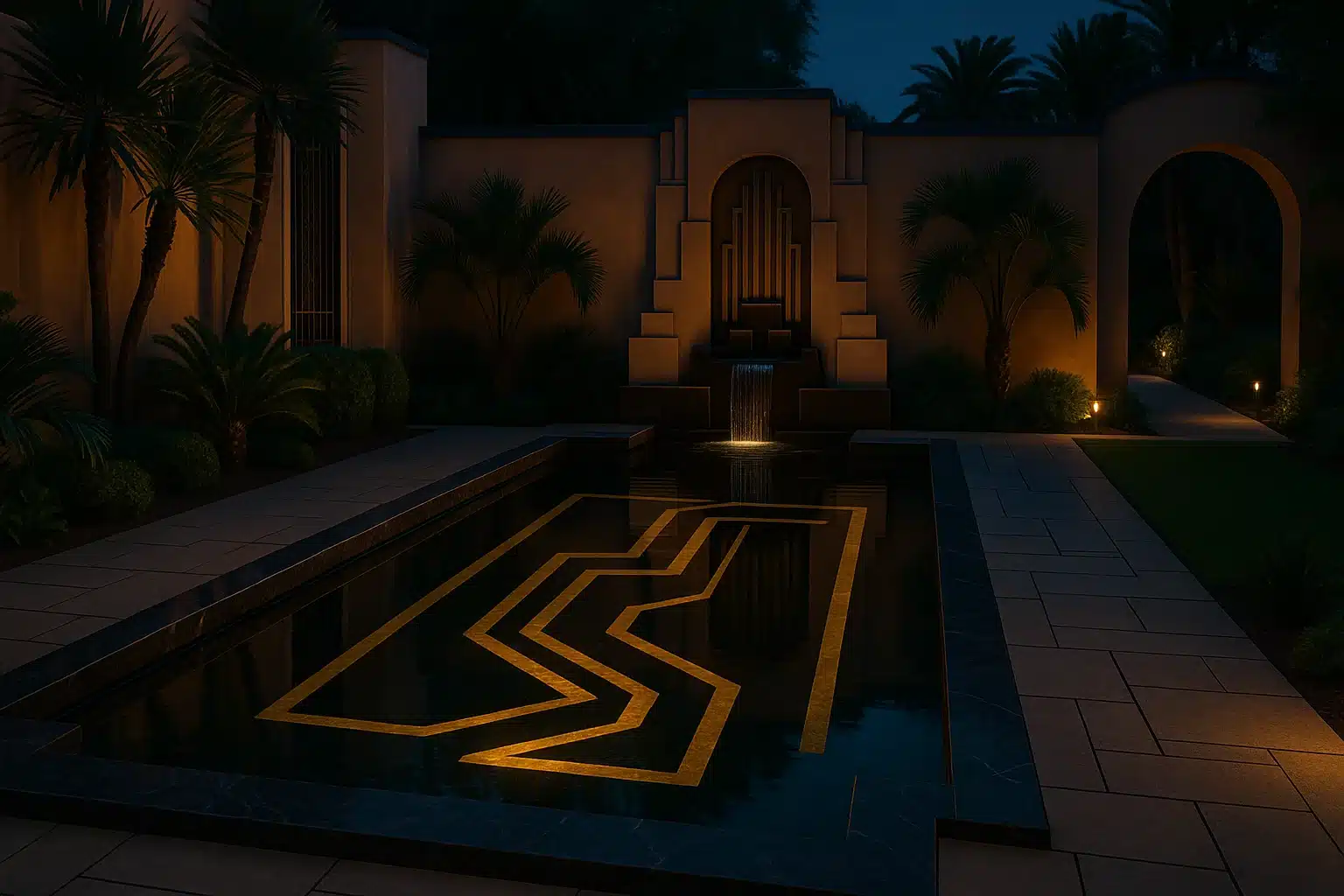
388.1.Art-deco-fountains

Art Deco Water Features: Glamour Returns to Garden Design

Introduction: The Return of Glamour in the Garden

Garden design, for much of the 21st century, has leaned toward the naturalistic. Minimalist, sustainable, and low-maintenance trends have dominated, gravel gardens, wildflower meadows, and ecological ponds reflecting a more organic sensibility. Yet, as cycles in design often go, a new movement is surfacing. Glamour, luxury, and bold geometry are returning. At the forefront of this revival? Art Deco water features.

The Art Deco movement, synonymous with the roaring 1920s and early 1930s, embodied elegance, symmetry, and sophistication. From the glittering spires of New York’s Chrysler Building to the sweeping curves of ocean liners and cinemas, it was a style that celebrated progress and optimism. Now, these same qualities are being rediscovered and reinterpreted in the modern garden, offering a refreshing counterpoint to rustic informality.

Art Deco water features, with their sleek lines, mirrored surfaces, and stylized motifs, transform outdoor spaces into statements of timeless glamour. Let’s explore how this design language is making waves once again.

The Essence of Art Deco in Landscape Design

To understand why Art Deco is returning, we first need to appreciate what makes it so enduring.

1. Geometry and Symmetry

Art Deco thrives on formality. Straight lines, zigzags, chevrons, and geometric patterns dominate. In gardens, this translates to carefully structured layouts, where symmetry and precision create a sense of drama and order. Water, with its reflective qualities, becomes a natural medium for expressing these shapes, through rectangular pools, stepped fountains, or circular basins that anchor a design axis.

2. Luxurious Materials

While modern design often favors understated textures, Art Deco embraces opulence. Think black granite, polished brass, marble, chrome, and glass. When used in a water feature, these materials shimmer in sunlight and glow under evening illumination. They create focal points that exude confidence and sophistication.

3. Stylized Ornamentation

Art Deco motifs often draw from Egyptian, Aztec, and classical sources, stylized into sleek forms. Sunbursts, zigzags, and geometric waves work beautifully when integrated into fountain basins, tile mosaics, or sculptural spouts. The result is a look that is both historical and futuristic, anchored in tradition yet dazzlingly modern.

4. A Celebration of Glamour

Above all, Art Deco was about celebration. The post–World War I era brought newfound optimism, and design reflected it. Today’s resurgence of this aesthetic carries a similar spirit—a desire for joy, beauty, and elegance after decades of minimalism.

In the garden, this manifests as a reawakening of decorative ambition—a willingness to make outdoor spaces not just restful, but breathtaking.

Why Art Deco Water Features Are Trending Again

1. The Desire for Personality

In the Instagram age, individuality matters. Homeowners want spaces that express character rather than conformity. Art Deco water features deliver this in abundance—each one an artwork in itself. A sculptural fountain or a tiled reflecting pool instantly becomes a conversation piece.

2. A Reaction Against Minimalism

The clean, gray palette of contemporary garden design is starting to feel overused. People crave warmth, texture, and richness. Art Deco—with its metallics, jewel tones, and theatrical flair, offers a lush antidote to the overly restrained modernism of recent years.

3. Connection to Architecture

Many 1920s and 1930s homes, or even contemporary houses inspired by those eras, are ideally suited to Deco-style landscaping. An Art Deco water feature not only complements architectural details like steel-framed windows or curved balconies, but also bridges the transition between interior luxury and outdoor serenity.

4. The Luxury Garden Market

High-end landscape design increasingly draws on historical styles to create timeless appeal. Art Deco fits perfectly here, evoking sophistication without feeling outdated. Combined with today’s technology in lighting and water circulation, these features merge classic aesthetics with modern performance.

Key Elements of an Art Deco Water Feature

1. Geometric Form

Rectangular basins, tiered fountains, and concentric circles dominate. The design should be symmetrical, crisp, and deliberate. A long reflecting pool with sharp edges, for instance, can visually elongate a garden while referencing the grandeur of Deco geometry.

2. Luxurious Finishes

Use polished stone, metallic accents, and glass tiles to achieve a rich surface quality. Gold or bronze finishes on spouts and fittings add warmth, while black granite or dark slate provides depth and drama. Even concrete can work if treated with smooth plaster finishes and precise detailing.

3. Bold Color Accents

Though monochrome schemes (black, white, silver) are classic Deco, accent colors, like emerald green, sapphire blue, or gold, inject personality. Mosaic tiling around fountains often uses these jewel tones to create shimmering effects that dance in the water’s reflection.

4. Decorative Lighting

Lighting plays a crucial role in highlighting symmetry and materiality. Submerged LED strips or artfully positioned spotlights can turn a daytime feature into a nocturnal spectacle. The interplay between light, shadow, and water surface recalls the glitz of old Hollywood.

5. Streamlined Ornamentation

Avoid over-clutter. Art Deco is decorative but disciplined. Every embellishment—be it a relief sculpture, a geometric grille, or a sunburst motif—should serve the design rather than distract from it.

Designing an Art Deco-Inspired Garden

1. Structure and Layout

Begin with strong geometry. Formal paths, symmetrical planting beds, and axial alignments guide the eye toward the central water feature. A long linear fountain can form the garden’s spine, with pathways and hedging mirroring its shape.

2. Materials Palette

Stick to a concise set of luxurious materials—such as marble, granite, limestone, or rendered concrete with metallic detailing. Polished surfaces contrast beautifully with natural plant textures, reinforcing the sense of sophistication.

3. Planting Style

While Art Deco is architectural, it doesn’t mean sterile. Balance hard edges with structured planting: clipped box hedges, ornamental grasses, palms, and cycads. These species evoke the exoticism that often accompanied Deco architecture.

For color, use deep greens and burgundy foliage accented with white blooms—creating contrast without overwhelming the geometry.

4. Furniture and Accessories

Think in terms of streamlined glamour. Chrome-framed chairs, terrazzo tables, and geometric planters echo the design language. Add subtle Art Deco motifs in gate details, railing patterns, or outdoor lighting.

5. Integration with Architecture

If your home carries Deco or Modernist influences, align the garden’s design lines with the building’s forms. Aligning the water feature’s axis with a central door or window can create a seamless visual connection between inside and outside.

Types of Art Deco Water Features

1. The Stepped Fountain

Perhaps the quintessential Art Deco water feature, the stepped fountain uses tiered platforms or receding layers to create depth and rhythm. Often made of stone, plaster, or concrete, these fountains may incorporate stylized motifs—sunbursts or fluted edges—that capture light and motion beautifully.

2. Reflecting Pools

A shallow rectangular pool bordered by stone or tile offers serenity and sophistication. The mirror-like surface amplifies architectural symmetry, especially when placed along the garden’s central axis. Add submerged lighting for evening drama.

3. Wall-Mounted Fountains

Ideal for smaller gardens or courtyards, wall-mounted fountains can feature bronze spouts, mosaic backdrops, and symmetrical reliefs. A pair of stylized fish or shell motifs channeling water into a basin captures the nautical glamour of Deco design.

4. Geometric Water Walls

Modern interpretations of Deco often take the form of sleek water walls. These use polished metal or glass surfaces with gentle water sheens cascading down. When paired with patterned lighting or etched designs, they create an ultra-luxurious effect.

5. Sculptural Basins

Some designs integrate figurative sculpture, female silhouettes, stylized animals, or abstract forms, as part of the fountain’s structure. These references to the human form or mythic themes are classic Deco touches, reminiscent of the grandeur of 1930s hotels and theaters.

Material Inspirations

1. Stone and Marble

For traditionalists, marble and limestone convey timeless luxury. Polished black marble offers bold contrast against water, while pale travertine exudes Mediterranean charm.

2. Metal

Bronze and brass lend warmth and reflectivity. Many Art Deco fountains use metallic grilles or trims to frame the basin or conceal plumbing, turning functional elements into design statements.

3. Tile and Glass

Mosaic tilework, especially with glass or enamel finishes, evokes the glamour of the Jazz Age. Iridescent glass tiles shimmer beneath water, changing hue as light shifts.

4. Concrete and Plaster

For a modern Deco reinterpretation, smooth cast concrete can mimic the monolithic forms of early 20th-century architecture. Pair it with clean edges and minimal color for a contemporary twist.

Lighting the Glamour: Nighttime Drama

1. Submerged LEDs

Use soft white or warm gold LEDs beneath water surfaces to accentuate movement and reflection. Linear LED strips along basin edges can emphasize symmetry.

2. Uplighting

Illuminate architectural backdrops or statues with uplighters to cast elegant shadows that enhance depth.

3. Color Accents

Occasional use of colored lighting, deep blue or amber, can create an atmospheric, theatrical effect reminiscent of vintage cinemas.

Modern Interpretations: Blending Past and Present

Art Deco Water Features Glamour Returns to Garden Design

While purists may favor period accuracy, contemporary designers are reimagining Art Deco for modern living.

1. Minimalist Deco

This approach distills the movement’s geometry into clean, simplified forms. Instead of elaborate motifs, focus on proportion and balance, perhaps a single rectangular pool with a bronze spout.

2. Sustainable Glamour

Luxury and sustainability are no longer mutually exclusive. Recycled glass tiles, energy-efficient pumps, and solar-powered lighting allow eco-conscious homeowners to enjoy Deco elegance responsibly.

3. Digital Lighting Control

Smart lighting systems let you adjust brightness, color, and timing from your phone—offering the same sense of luxury that Art Deco once represented through craftsmanship and material richness.

Inspiration from History

The great fountains of the Art Deco era continue to inspire designers today. Consider the Rockefeller Center’s Prometheus Fountain in New York, its gilded sculpture and cascading water embody the drama and confidence of the 1930s. Or the Miami Beach Art Deco District, where pastel-colored buildings with geometric reliefs inspire modern tropical interpretations.

These historic precedents remind us that Deco design is not bound by nostalgia. Its principles, balance, luxury, and optimism, are timeless.

Creating Your Own Art Deco Water Feature

1. Start with a Vision

Decide whether your goal is subtle sophistication or statement luxury. Sketch out your feature’s shape and location, ensuring it aligns with the garden’s geometry.

2. Choose the Right Materials

Select materials that complement your home’s architecture. A contemporary home might suit smooth concrete and glass, while a period property may call for stone and bronze.

3. Focus on Proportion

Art Deco is about balance. Keep your water feature proportionate to its surroundings. A small courtyard might benefit from a vertical wall fountain; a large estate could host a long, formal reflecting pool.

4. Add Decorative Touches

Introduce subtle motifs, perhaps a sunburst tile pattern or a metallic trim around the basin. Use these sparingly to maintain elegance.

5. Light It Up

Plan lighting from the start. Water and light together define the mood, mystical, festive, or serene.

6. Integrate Surroundings

Frame the water feature with symmetrical planting or paving. Even simple box hedges can reinforce the structured aesthetic.

Maintenance Considerations

Luxury requires upkeep, but modern technology makes it manageable.

  • Use high-quality water pumps for consistent flow and quiet operation.
  • Install filtration systems to prevent algae buildup.
  • Winterize properly if you live in a cold climate, drain water and protect pipes.
  • Polish or seal metallic surfaces annually to maintain their sheen.

With care, an Art Deco water feature can remain dazzling for decades.

The Emotional Impact of Deco Design

Beyond aesthetics, there’s an emotional reason for this style’s resurgence. Art Deco emerged during a period of optimism, when people sought beauty and confidence amid uncertainty. In today’s world, where simplicity sometimes borders on austerity, the return of Deco’s sensuality feels refreshing.

An Art Deco custom water feature embodies a celebration of art, craftsmanship, and joy, qualities that resonate deeply in a time when many crave connection and meaning in their environments.

Conclusion: Glamour Flows Again

As the pendulum of design swings, the revival of Art Deco marks a renewed appreciation for beauty and sophistication. Water features offer the perfect medium to express this spirit, combining motion, light, and reflection into a living sculpture.

Whether through a glittering stepped fountain, a sleek geometric pool, or a mosaic-clad wall, Art Deco water features allow us to channel the opulence of the past into the gardens of today. Glamour, it seems, has once again found its flow.

FAQs:

Art Deco water features are characterized by geometric shapes, luxurious materials, and symmetrical designs. They often incorporate polished stone, metallic accents, and stylized motifs such as sunbursts or zigzags.

Absolutely. Art Deco complements both period and contemporary settings. In modern gardens, it offers a bold, glamorous focal point that contrasts beautifully with minimalist surroundings.

Not necessarily. With modern pumps, filtration systems, and durable finishes, maintenance can be minimal. Regular cleaning and seasonal care will preserve their elegance for years.