


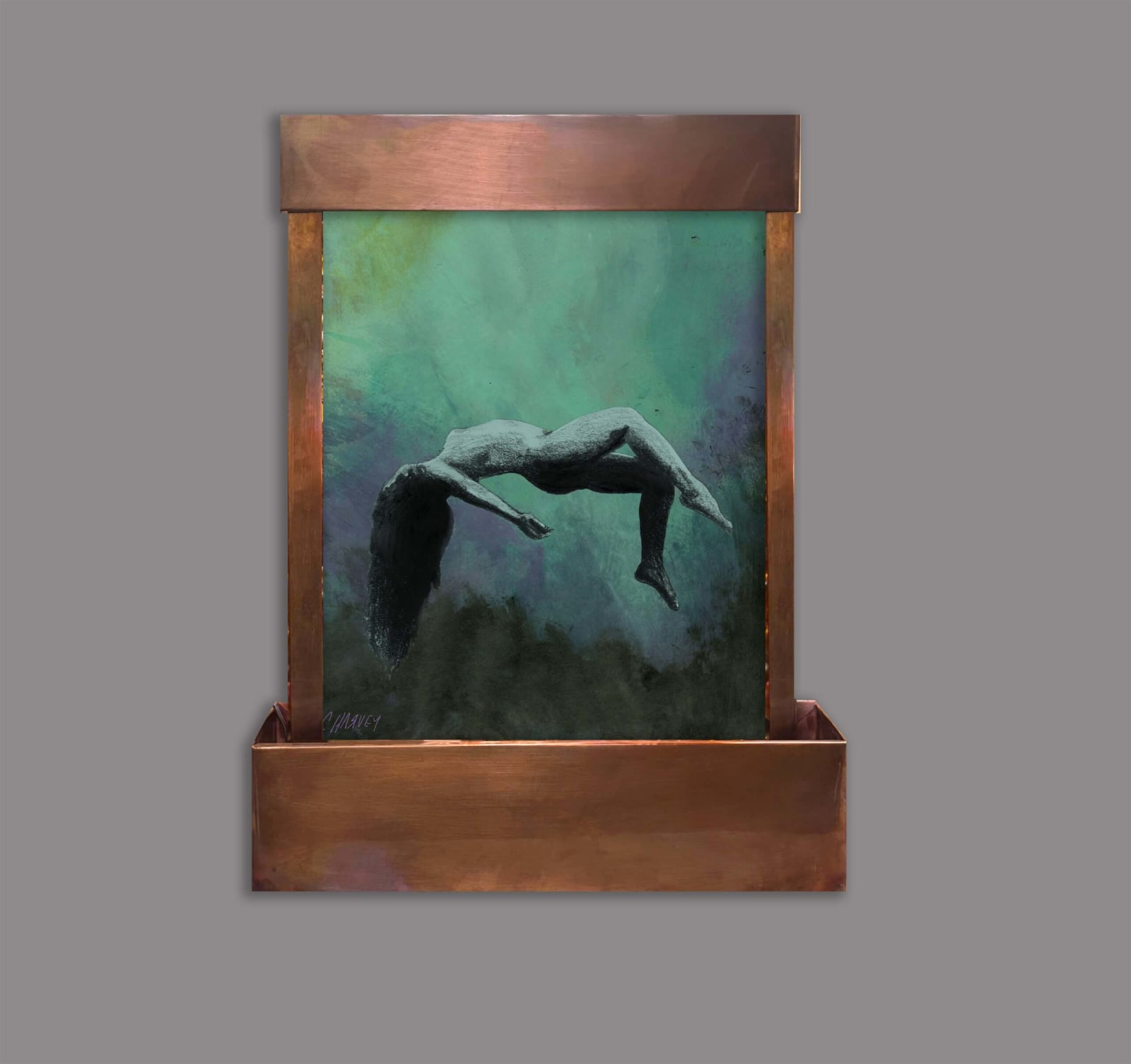
Indoor Water Fountains: How to Choose Size, Sound and Spot
Selecting the right indoor water fountain involves balancing room dimensions with your preferred water sound and power access. This guide helps you navigate the options to find a centerpiece that fits your home perfectly.
Choosing the right indoor water feature comes down to balancing the physical scale of the piece with your room's dimensions while ensuring the water sound suits your environment. Before buying, consider how the water flow interacts with your space, as most indoor units rely on simple recirculation rather than plumbing connections.
What size fountain should I get for my room?
The best size for indoor fountains depends on the visual weight of the area where you intend to place it. In a small office or on a shelf, a compact unit provides a subtle presence without dominating the space.
If you're placing a feature in a larger living room or foyer, consider the clearance between the ceiling and the top of the fountain to avoid a cramped look. Floor models often work best near furniture groupings, such as adjacent to a sofa or armchair, where the sound can be enjoyed without the fountain taking up too much traffic flow. Avoid placing large statement pieces in narrow hallways, as the width can impede movement even if the floor space technically allows for it.
When sizing, look at the total width and height in the product data to visualize how it sits relative to your nearby furniture. A piece that's too tall can make a room feel closed in, while one that's too small might look like an afterthought.
Common mistakes
Don’t hang a wall fountain directly against bare drywall without a backing plate or splash barrier, since small amounts of splash and condensation can stain or soften the wall over time. Also, avoid placing heavy floor fountains on carpet, as the weight can cause the surface to shift and lose its level, which leads to uneven water flow and potential splashing.
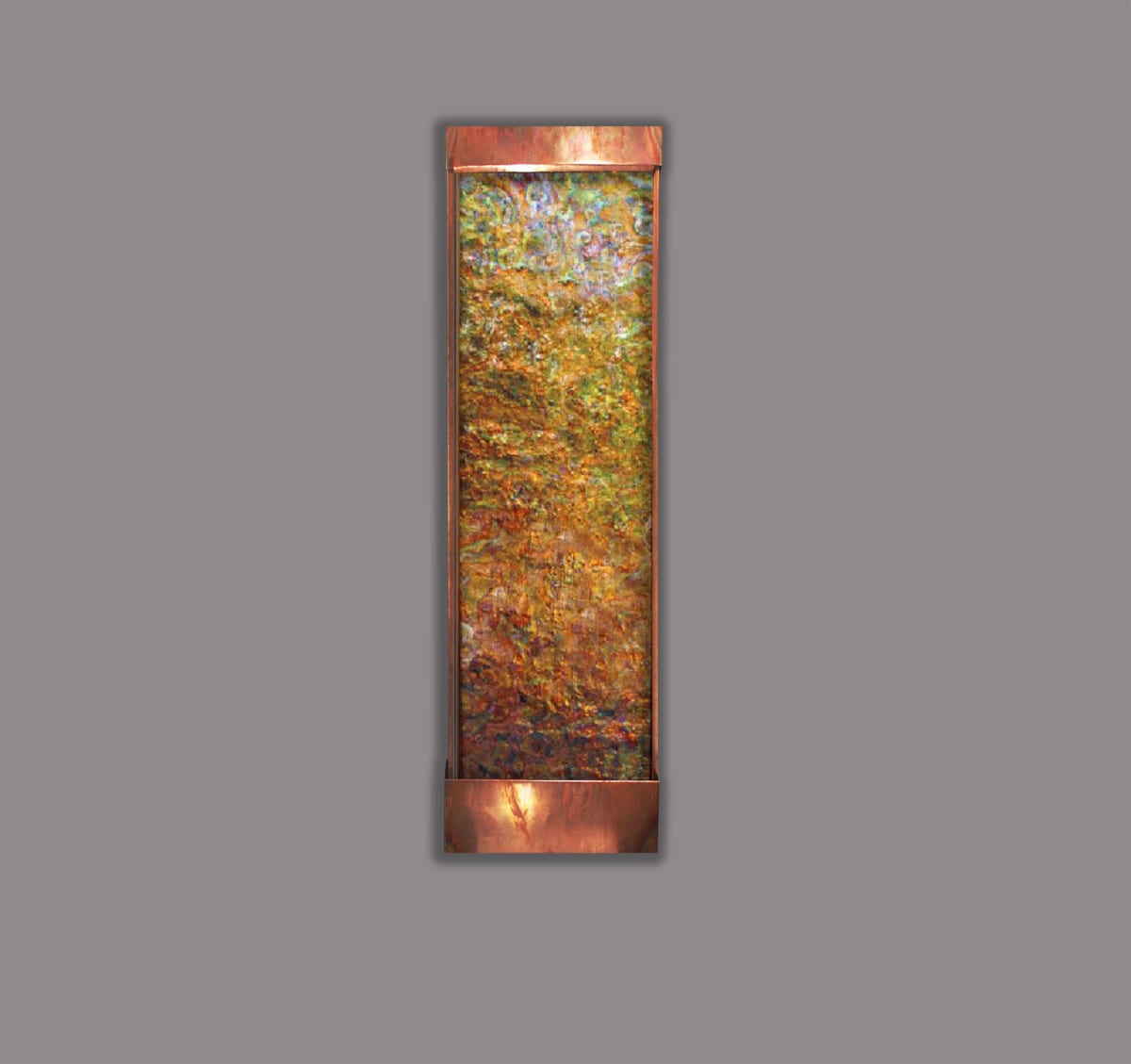 Tall Canyon Floor Fountain
How loud is a water fountain, and can the sound be adjusted?
A water fountain's volume is primarily governed by the pump's flow rate and the design of the water path. Most indoor pumps feature an adjustable dial that lets you increase or decrease the water movement, which directly impacts the decibel level.
If you prefer a whisper-quiet background, you can turn the flow down until the water barely clings to the surface. For a more pronounced splash, opening the pump wide creates a louder, more active sound. Sheet-style water walls typically produce a smooth, consistent sound, while cascading designs that drop water from one basin to the next create a more rhythmic, percussive noise.
You should monitor the water level carefully, as a low reservoir allows air into the pump, leading to a loud, erratic rattling or gurgling sound that indicates cavitation. To keep the fountain operating correctly, maintain the water level according to the product guidelines so the pump remains fully submerged, which helps avoid mechanical noise.
Does a fountain need an outlet nearby?
Most indoor water fountains are plug-and-play systems, designed for standard household electricity. You'll simply need a grounded wall outlet nearby to power the recirculating pump. Because these units are self-contained, they don't connect to your home's permanent plumbing lines; the pump simply cycles the water already within the reservoir. That’s true of most indoor models, including many of our floor fountains.
For indoor safety, we recommend plugging your fountain into a GFCI-protected outlet. These outlets monitor for electrical imbalances and shut off power instantly if a ground fault occurs, providing an essential layer of protection for any appliance near water. Check your local building codes, as they may specify GFCI requirements for any electrical device used near a water source.
Hidden wiring is a common priority for interior aesthetics. If your fountain doesn't come with built-in cable management, many owners use surface-mount cord covers painted to match their wall color or place the unit strategically near an outlet to keep the excess cord concealed behind a floor plant or furniture. Always route the power cord so it isn't pulled tight, and avoid placing it where it'll be stepped on or pinched by heavy items. If your chosen piece has a particularly long cord, a simple cable sleeve or spiral wrap can bundle the slack neatly behind the base.
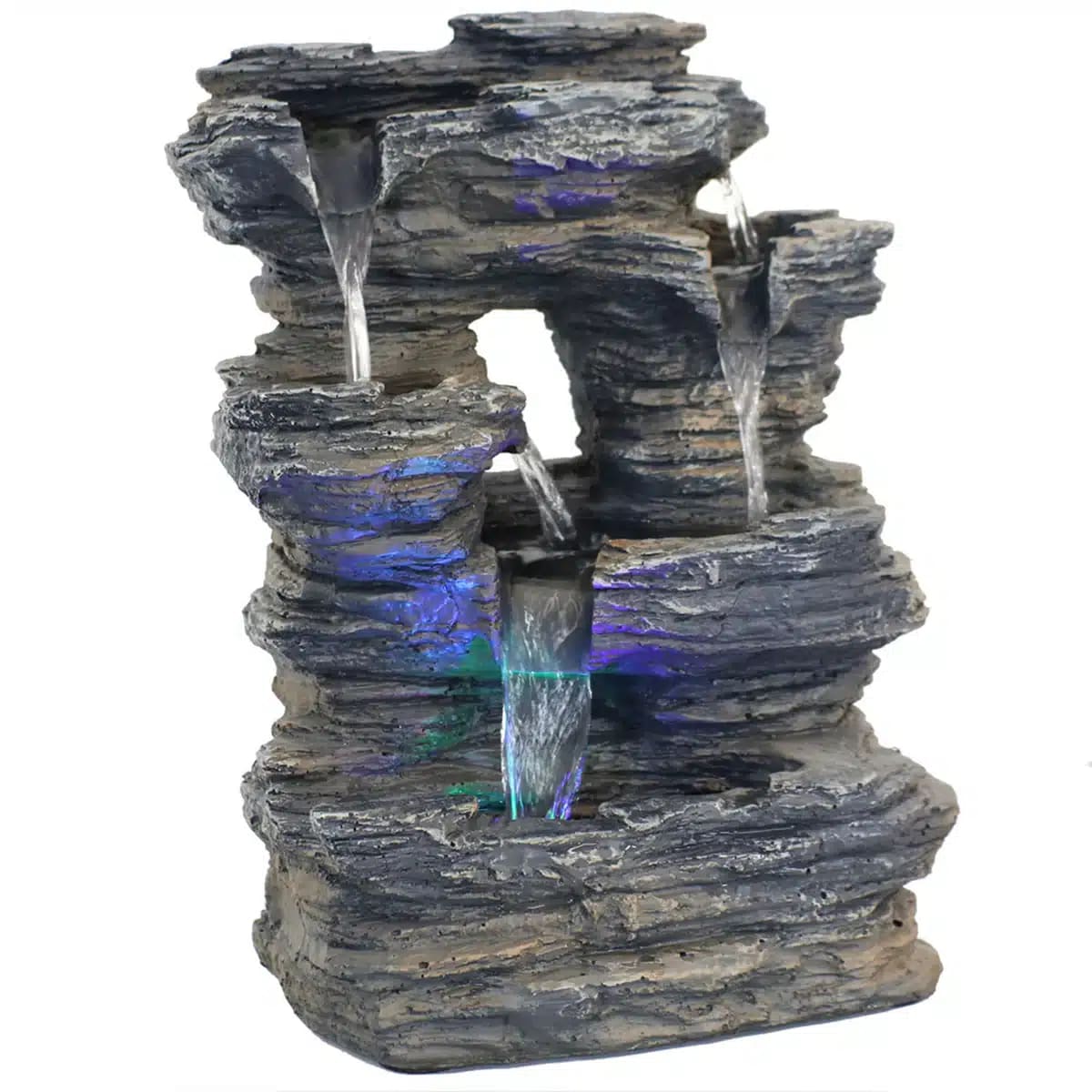 Five Stream Rock Cavern Tabletop Fountain w/ LED Light
How heavy is a floor fountain, and does it need a base?
Floor fountains vary significantly in weight depending on their material. Lightweight options, such as those made from fiberglass, copper, or reinforced resin, may weigh as little as 50 to 100 pounds, making them easier to position. Conversely, solid cast stone or granite pieces can easily reach several hundred pounds. Always confirm the weight of your specific model before delivery so you can ensure your floor structure is prepared to support the load. You can see some of our most popular options by browsing our Best Sellers.
For heavier statement pieces, verify your flooring is level. Even a slight slope can cause water to pool unevenly or spill over the edge, potentially damaging wood or carpet. Using a durable, non-slip leveling shim can help secure the base on uneven surfaces. If you're uncertain about the load-bearing capacity of your floors, especially with larger stone models, consult a structural professional to confirm the location is safe.
Because these units can be exceptionally heavy and require careful maneuvering to avoid scratching floors or damaging the fountain itself, you may want to consult a local professional to handle the heavy placement for you. They have the experience to move, level, and stabilize your fountain safely. Avoid sliding heavy pieces across delicate floor surfaces; use a furniture dolly or heavy-duty felt pads if you must shift them during initial setup.
Can a wall fountain be mounted on drywall?
Mounting a wall fountain on drywall is entirely possible, provided you account for the weight of the fountain and the water it holds. Lightweight wall fountains, often made of metal or reinforced composite materials, are typically easier to hang than massive stone carvings. The key is ensuring the unit is anchored directly into the wooden or metal studs behind your drywall rather than relying on drywall anchors alone.
Before you begin, use a stud finder to locate the structural frame of your wall. Most residential wall studs are spaced 16 inches apart, so check if your fountain's mounting hardware aligns with that spacing. If it does not, you may need a backer board—a piece of finished wood or metal plate securely fastened to the studs—to serve as a sturdy base for the fountain. This distributes the weight across multiple studs and prevents the fountain from pulling the drywall loose over time.
Stone units are significantly heavier and require professional-grade hardware, such as lag bolts, to penetrate deep into the structural members of your wall. Avoid surface damage by using a mounting plate or protective barrier between the back of the fountain and the wall. This protects your paint or wallpaper from moisture and prevents the edge of the fountain from grinding into the surface. If you're unsure about the load capacity of your wall or the strength of your mounting hardware, use our fountain installer guide to find a local professional who can ensure the installation is safe and permanent.
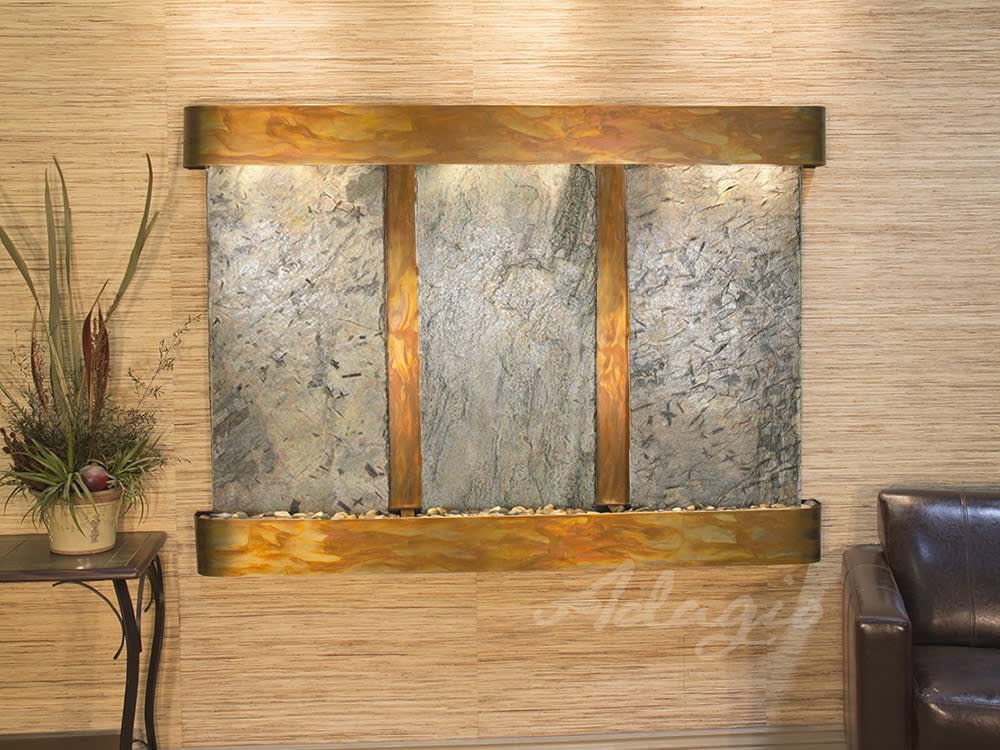 Olympus Falls
Comparison: Indoor Fountain Types and Specs
Choosing the right fountain depends on your available floor space and the look you want. Tabletop fountains are compact and great for surfaces like desks or shelves, while wall-mounted units save floor space entirely. Floor fountains act as significant statement pieces. For a better understanding of the range and styles, see our full selection of indoor models.
Weight and pump requirements vary. Check the specific product data before ordering.
- Tabletop: usually under 2 ft tall, about 5–25 lbs, with a 5–10W pump. Best for desks, shelves and side tables.
- Wall: roughly 20"–75" wide x 30"–60" tall (custom sizes go larger), about 50–200+ lbs, with a 15–40W pump. Saves floor space but must be anchored into studs.
- Floor: roughly 18"–48" wide x 40"–96" tall, about 50–500+ lbs depending on material, with a 20–60W pump. A statement piece for living rooms, foyers and lobbies.
Dimensions and weight for wall and floor units vary with materials like slate, copper or cast stone, and pump wattage typically increases with the height and volume of the fountain. Prices run from around $100 for small tabletop pieces to five figures for large or custom installations, so check each product page for exact specs and pricing.
Frequently Asked Questions
How much electricity does a fountain pump use?
Most fountain pumps are remarkably efficient, typically drawing between 5 and 50 watts depending on the flow rate required to lift the water. Because they run continuously, this is comparable to leaving a small LED lamp on. If your specific model includes integrated lighting, that will add a small amount to your power usage.
How often do you need to add water to a fountain?
Frequency depends on the pump size, the reservoir capacity, and your local climate. It's especially important to watch levels in winter when indoor air is drier. Check the water level weekly. If you hear the pump making a gurgling sound, the reservoir is running low and needs a refill immediately to avoid burning out the motor.
Should I use distilled water in an indoor fountain?
Yes, when you can. Tap water leaves white mineral scale on stone, copper and the pump as it evaporates. Distilled water slows that buildup, keeps sheet-style water walls streak-free, and helps the pump last longer. Use it for top-offs as well as full refills.
How do I clean an indoor fountain?
Every one to three months, unplug the pump, drain the water, and wipe the basin and surfaces with a soft cloth and mild soap. A diluted white vinegar solution helps remove mineral scale. Rinse the pump intake to clear any debris, then refill with fresh water. Avoid harsh chemicals and abrasive pads, which can damage stone and metal finishes, and follow any care instructions included with your model.
Do indoor fountains add humidity or cause mold?
Indoor fountains release a small amount of water vapor into the air through natural evaporation, which can act as a gentle humidifier in dry environments. This is generally not enough to trigger mold in a well-ventilated room. Keeping the water fresh and cleaning the basin regularly also prevents algae and odors.
Ready to find your fountain?
Browse our full collection of indoor fountains to compare sizes, materials and finishes. If you have a specific space in mind, we can also design a custom fountain built to your exact dimensions and style.