


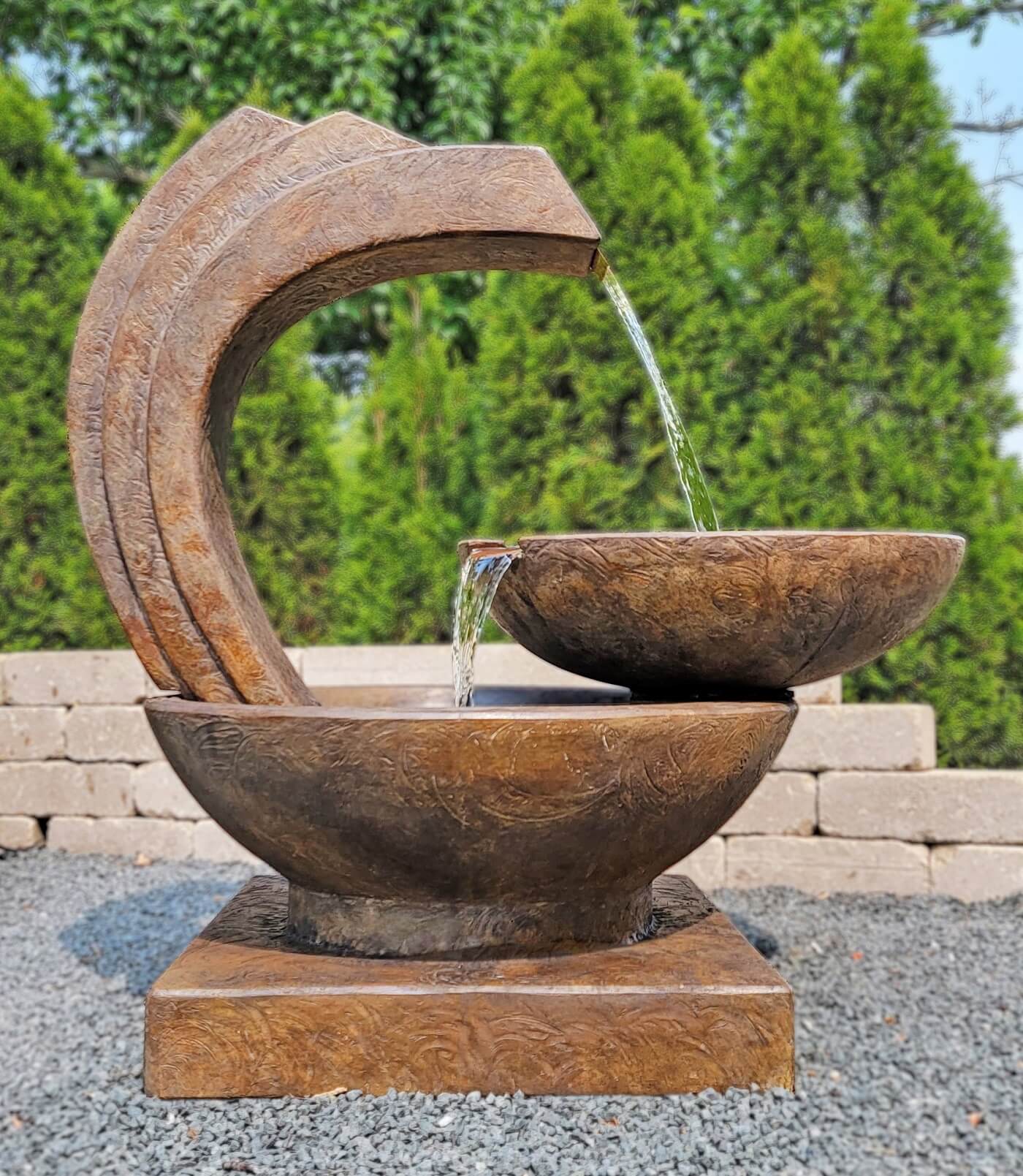
Spring Fountain Startup: Getting an Outdoor Fountain Running
Bringing your outdoor fountains back to life after winter requires a few simple steps to ensure the pump and basin are ready for the season. This guide covers how to inspect, clean, and restart your water feature safely.
Getting your outdoor fountains back in action is a rewarding task that marks the true beginning of the garden season. The process is straightforward: inspect for any cracks or debris that accumulated over winter, clean the basin and pump thoroughly, and verify your power source is ready for use. You can safely start this work once the threat of a hard freeze has passed in your area.
When is the right time to restart an outdoor fountain in spring?
Timing your fountain startup is about more than just the calendar. You need to watch your local weather patterns, specifically the nighttime lows. Even if your days reach 60 degrees, a hard freeze overnight can turn residual water in your pump or tubing into ice, which is the fastest way to damage an otherwise perfectly good motor.
If you live in the Northern states, you likely need to wait until late April or May when the ground has thawed completely. Along the Gulf Coast or in the desert, you might be ready to go in late February or March. The golden rule is simple: if frost is in the forecast, keep the fountain dry. If you restart too early, you risk trapped water expanding and cracking the plumbing or the pump casing itself.
This early spring window is also your best time to assess the overall health of your piece. If you find a crack or a leak after the winter thaw, fixing it now is much easier than trying to patch a wet basin in mid-July. If you're looking for a new addition to your yard, you might browse our Best Sellers for inspiration. Use this time to inspect the basin, the pedestal, and all stone or metal components before you add water. If you're uncertain about a specific component's condition or need a professional set of eyes, you can find a local installer to help you evaluate your setup before you commit to a full restart.
How do I safely inspect my fountain after winter?
Before you even think about adding water, give your fountain a thorough physical examination. Start by looking for hairline cracks in cast stone or fiber cement bodies. These often appear near the seams or at the base of the tiers where water might have pooled and frozen during the winter months. A small, clear sealant can often address minor surface cracks, but deep fissures may require a different approach depending on the material.
Next, focus on the pump housing. Take it apart to remove any winter debris, dried leaves, or sediment that settled in the bottom of the basin. These organic materials can decay and create an acidic environment that's hard on your pump’s impeller. Examine the power cord for any physical wear, fraying, or potential rodent damage that might have occurred while the unit was idle. If the insulation is compromised, don't plug it in.
Check the stability of the foundation. Fountains are heavy, and the freeze-thaw cycle of the ground can cause the soil underneath to shift or settle unevenly. If the fountain is tilting, it'll not recirculate water correctly, potentially causing the pump to run dry or the water to spill over one side of the basin. A level foundation is essential for preventing structural strain and ensuring the water flow stays centered. If the base has shifted significantly, you may need to adjust the leveling stones or shim the bottom of the basin to restore a level position before you fill it. For those looking to upgrade their garden decor, browse our wide selection of garden fountains to find a new center-piece if your current one has reached the end of its lifespan.
How do I clean the fountain before refilling it?
Start your spring cleaning by clearing out any debris that collected over the winter. Remove leaves, twigs, and organic sediment from the basin using a small scoop or your hands. If you find sludge or buildup, drain the unit completely and wipe the interior surfaces with a soft brush or non-abrasive sponge. Many of the high-quality Fountains.com pieces are designed to be wiped down easily to maintain their aesthetic appeal.
Avoid using harsh chemical cleaners, bleach, or acidic solutions, as these can strip the protective finish or damage stone and concrete surfaces. A mild dish soap mixed with water is usually plenty for most materials. If you notice persistent mineral deposits or calcium buildup, a weak vinegar solution often helps loosen the grime without causing harm. Rinse the basin thoroughly until no soap remains.
Clear the internal plumbing by using a garden hose to push water through the supply lines in reverse; this helps dislodge blockages or mineral crusting that might restrict flow. Finally, wipe down the exterior surfaces with a damp cloth to remove seasonal dust and soot, which restores the piece before you fill it for the season.
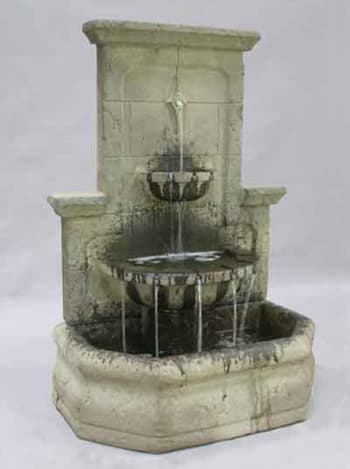
What should I check before plugging in the pump?
Before powering up, inspect the pump to ensure it’s ready. Check the intake screen for debris and remove any blockages. Gently nudge the impeller, the small propeller inside the housing, to ensure it rotates freely by hand; if it feels stiff, soak it in white vinegar for a few minutes to dissolve any remaining mineral deposits.
Place the pump securely in the basin and ensure it’s fully submerged before adding water, as running a pump dry can cause it to overheat and fail quickly. Verify your electrical setup is safe for outdoor use. The pump should plug into a grounded, outdoor-rated outlet that’s ideally protected by a GFCI. If your current outdoor setup lacks this protection, we recommend having a licensed electrician install a GFCI outlet.
If you’re preparing to add a new unit to your space and need assistance with physical placement or mounting, find a local installer to handle the heavy lifting.
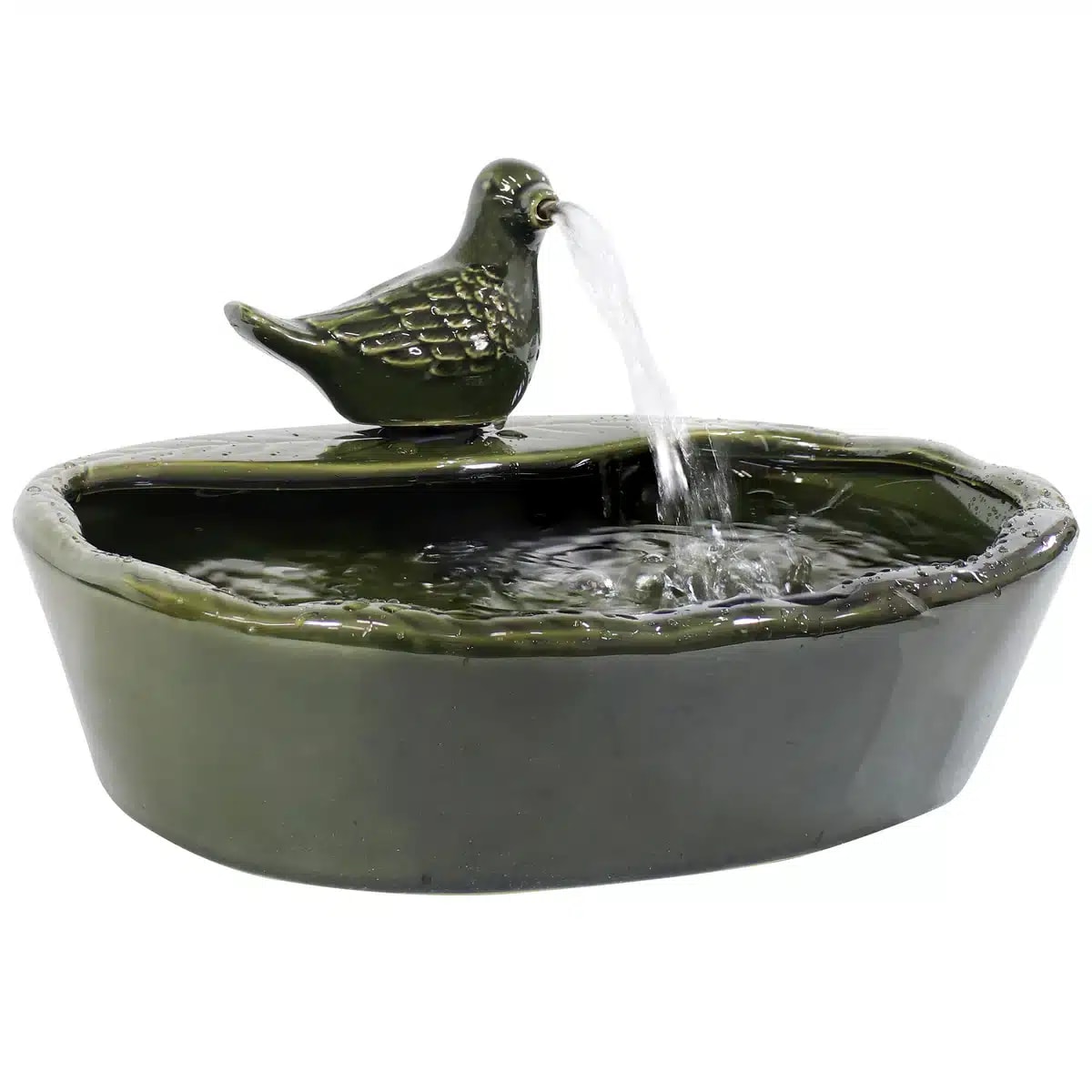 Green Glazed Ceramic Dove Solar Water Fountain
Spring Refresh: Choosing Your New Fountain
Spring is the time to evaluate your outdoor space and decide if it needs a fresh focal point. When picking a new piece, consider the scale of your patio or garden to ensure the fountain complements the area. You might browse our Garden Fountains, where you can filter by style and material to find something that matches your home's architecture.
Think about the sound you want; a single, subtle bubbler creates a gentle, quiet presence, while a tiered model provides a more pronounced, rhythmic cascading sound that helps mask ambient neighborhood noise. If you have a specific vision, unique space constraints, or are looking for a showpiece with custom dimensions, we can help you design a piece tailored exactly to your needs through our custom fountains service.
Matching the volume to your space is key.
Frequently Asked Questions
How do I start up an outdoor fountain in spring?
Starting up your fountain is a straightforward process once the weather stays consistently above freezing. Begin by clearing any debris from the basin, then inspect the pump and all tubing for cracks or signs of dry rot. Ensure the pump is fully submerged before you plug it into a grounded, outdoor-rated outlet, which we recommend be GFCI-protected. If you need help getting larger pieces set up properly, you can find a local installer to handle the heavy lifting.
Is fountain water safe for dogs and cats?
While most pets are naturally drawn to moving water, fountain water isn't intended for consumption. Outdoor fountains often collect dust, pollen, leaves, and insect larvae, which can be harmful if ingested by your pets. We recommend providing a separate, clean bowl of fresh water nearby so your pets aren't tempted to drink directly from the fountain basin.
Will birds use a fountain, and how deep should it be?
Birds frequently use fountains to bathe and drink, especially if the water is moving gently. For optimal use, a depth of 1 to 2 inches is ideal for smaller songbirds, as they prefer to stand in shallow water rather than swim in deep basins. If you have a deeper fountain, adding a few smooth stones or a shallow decorative insert can create the perfect landing spot for your feathered visitors to safely splash around.
Do fountains attract mosquitoes?
Mosquitoes lay eggs in stagnant water, so a fountain that keeps the water in constant motion is actually a deterrent. As long as your pump is running regularly and the water is circulating, it's very difficult for mosquitoes to breed in the basin. If you notice your fountain is stagnant for any reason, address the flow issue immediately or empty the basin to prevent insects from settling in.
How much water does a fountain lose to evaporation in hot weather?
Evaporation rates depend entirely on your local climate, sun exposure, and the surface area of the water. In hot, arid environments, you may lose several gallons per week, while humid, shaded areas will see significantly less loss. Keep an eye on the water level during peak summer heat to ensure your pump stays fully submerged, and consider browsing our full catalog if you want to compare models designed for different environments or discuss custom options for your specific patio space.