



Spring Fountain Startup: Getting an Outdoor Fountain Running
Refreshing your outdoor fountain for spring requires a few careful steps to ensure everything functions properly after the winter months. Learn how to clean, inspect, and safely restart your water feature for the new season.
Getting your outdoor fountains ready for spring requires a methodical approach. You've got to check the structure for any cracks or damage from winter freezing before you reconnect the pump or fill the basin. A tiny hairline fracture seems small, but it'll turn into a significant leak once water flows under pressure.
Cleaning is the next step. Remove all leaves, twigs, and sediment from the pump housing, internal tubing, and the main basin. Use a soft cloth and mild soap; that's enough for most surfaces. Most importantly, stay patient. Don't fill the fountain or power the motor until the risk of a hard freeze has passed, as residual ice deep inside can ruin the pump components.
When is it safe to turn an outdoor fountain back on?
Deciding when to turn your fountain back on depends on your local climate rather than the calendar. In regions prone to cold snaps, even one night of hard freezing can be fatal to your equipment. When water inside the pump or tubing turns to ice, it expands and often cracks the internal housing or destroys the impellers.
We recommend waiting until nightly temperatures stay consistently above 32 degrees Fahrenheit for at least one week. If you rush while the ground is frozen or temperatures fluctuate, you risk trapping ice in the hidden crevices of your basin. Before adding even one gallon of water, conduct a thorough visual inspection of the fountain. Look for new fissures or spalling on the surface, which are common signs of freeze-thaw cycles. Even if the structure looks solid, checking the bottom of the basin for hidden debris is vital, as rotting leaves can clog the pump intake the moment you provide power.
If you have questions about how a garden fountains model handles cold, check the product page for material specifications. A fountain is designed to circulate water. Once the system is live, monitor the water level frequently during the first few days of spring as initial evaporation can occur faster than you'd expect.
How do I clean my fountain before the new season?
Cleaning your fountain before the new season prevents pump failure. If you find the structure is too heavy or complex to manage, you should find a local installer to handle the placement and final setup for you. For those adding a new feature this year, consider our tabletop fountains for smaller spaces.
Over the winter, fine sediment and dust settle into the nooks of your fountain, which can turn into a thick sludge when mixed with spring rain. Drain the water entirely and wipe down the interior surfaces. Use a soft-bristled brush or a microfiber cloth to dislodge mineral scale and dirt. Never use metal wire brushes or harsh chemical cleaners, as these can permanently scar the finish of stone, copper, or painted surfaces.
Focus your attention on the pump intake. Remove the pump from its housing and open the cover to clear out any gunk or biofilm that built up during the colder months. If your fountain uses flexible tubing, take a moment to rinse the lines with clean water to push out any stagnant debris before you reconnect them. Flushing the system ensures the pump doesn't struggle against a blockage when it starts up for the first time. If you encounter heavy mineral buildup that won't come off with soap and water, you may want to consult the manual for your specific fountain material before you reassemble the piece.

What should I check before plugging the pump in?
Before you power anything up, you'll want to give the pump and housing a thorough visual check. Winter storage, even in a garage, can be tough on gear. Look at the power cord for cracks, fraying, or exposed wire, especially where it meets the pump casing. If you spot deep cuts, don't use it. Clear the intake screen of twigs, leaves, or silt, as clogs force the pump to work too hard and overheat. Ensure the impeller turns with little resistance. We recommend a GFCI-protected outlet for safety; if you don't have one, a licensed electrician can install one. You can explore a range of designs from Fountains.com to see how these systems integrate with our various materials.
- Pump Intake: Must be clear of debris to maintain a flow rate often exceeding 200 gallons per hour.
- Impeller: Should rotate freely without physical blockage or significant friction.
- Power Cord: Must be free of nicks or exposed copper for any length over 6 feet.
- Unit Weight: Ensure the fountain base can support the total wet weight, often exceeding 200 lbs for larger concrete models.
It's vital to ensure your equipment is in top shape before the season begins.

Getting the water moving again
Once you've confirmed your pump is clear and your electrical connection is safe, the process of filling your basin is critical. Never rely on the splash from a hose to fill the reservoir; instead, place your hose directly into the lowest point of the basin and fill it slowly. You want the water level to reach at least an inch or two above the pump intake before you turn anything on. If the pump runs while air is trapped in the lines, it can cavitate, which generates heat and unnecessary wear on internal components.
Once the water is topped off and the pump is fully submerged, you're ready to flip the switch. Keep an eye on the water level for the first hour of operation, as the dry plumbing lines will soak up a surprising amount of water as they saturate. If you find that your outdoor fountains require structural mounting or complex electrical work, you may want to find a local installer to handle the heavy lifting for you.
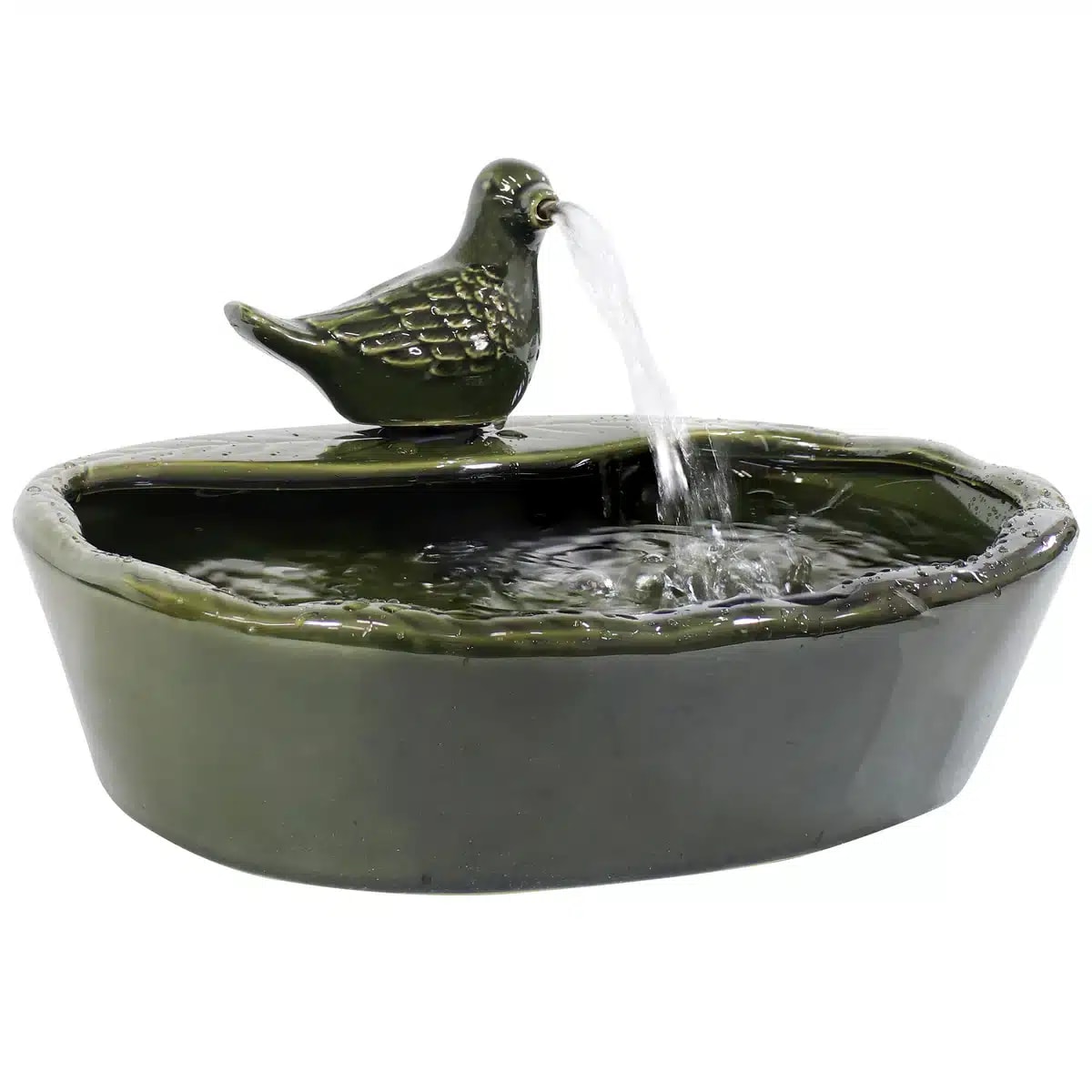 Green Glazed Ceramic Dove Solar Water Fountain
Common spring startup mistakes to avoid
The most frequent error we see is running the pump dry. If you plug the unit in before the reservoir is fully filled, the pump can reach damaging temperatures in mere seconds, leading to motor failure. Another mistake is reaching for household cleaners to scrub away winter grime. Harsh chemicals or bleach can damage the sensitive rubber seals inside your pump and strip the protective finish or sealant from stone and metal surfaces. Stick to mild dish soap and a soft-bristled brush for the exterior of your fountain.
Don't ignore small leaks that seem trivial at the start of the season. A slow drip might look minor, but it can lead to significant water loss over a full day, which keeps the pump constantly starved for volume and forces you to top off the basin far more often than necessary. If you notice a leak, address it early before it develops into a larger problem.
Frequently Asked Questions
How do I start up an outdoor fountain in spring?
Getting your fountain running again takes just a few steps to prepare for the warmer weather. You'll want to inspect the basin and outer structure for any cracks that might have formed over the winter freeze. Clear out any leaves, twigs, or loose debris from the reservoir and give the basin a thorough rinse. Check the pump intake for any gunk, connect your tubing securely, and plug it into a GFCI-protected outdoor outlet.
It's straightforward.
If you're unsure about the structural integrity of your piece or just prefer a professional's touch, you can find a local installer to handle the setup for you.
Will birds use a fountain, and how deep should it be?
Birds flock to water features, especially during the spring. They generally prefer shallow, moving water for bathing and drinking. You'll find that one to three inches of depth is ideal for most songbirds to splash around safely.
If your fountain has a deeper basin, just place a few large, flat stones inside to create a platform. This allows them to stand securely while they interact with the water.
Do fountains attract mosquitoes?
Mosquitoes only look for stagnant water, so a fountain that keeps water moving won't become a breeding ground. You should keep the pump running consistently to prevent any standing water.
If you notice the flow has slowed down, clear any debris from the pump screen right away. If you remain worried about standing water, stick to using a pet-safe water treatment designed for fountain reservoirs.
Is fountain water safe for dogs and cats?
Fountain water is fine for pets as long as it's clean, but avoid using chemicals like algaecides or bleaches that could be toxic. Stick to fresh, dechlorinated water and keep the reservoir clean to discourage algae buildup.
Keep an eye on your pets if they drink from it. You don't want them splashing out too much water, which might cause your pump to run dry and burn out.
Need more help?
If you're still choosing the right piece for your yard, look through our full selection of Garden Fountains. You can also reach out to us if you'd like to discuss custom fountains that fit your exact vision.