393.1.Fountain-from-natural-stones

Building a Fountain from Natural Stones Collected on a Hike

Introduction: The Beauty of Nature in Your Backyard

There’s something magical about hearing the gentle trickle of water flowing over natural stones. It evokes the peace of a mountain stream, the serenity of a forest spring, and the grounding feeling of being connected to nature. For those who love hiking and treasure the stones they find along the way, transforming those collected rocks into a handcrafted natural stone fountain can be one of the most rewarding DIY projects imaginable.

Unlike store-bought fountains made from resin or polished concrete, a fountain crafted from stones gathered on your hikes carries personal meaning. Each stone tells a story, where you found it, what you saw, how you felt. When arranged thoughtfully into a fountain, those memories come alive, adding not only beauty to your outdoor space but also emotional depth.

In this comprehensive guide, we’ll walk through everything you need to know about creating your own natural stone fountain, from choosing stones and designing the layout to plumbing, assembling, and maintaining it. Whether you’re a seasoned DIYer or a beginner, you’ll discover how to bring a piece of the wilderness home.

Why Build a Fountain from Natural Stones?

1. Connection to Nature

Incorporating natural materials into your garden connects you to the environment. Stones, unlike artificial materials, have character, color variations, unique textures, and organic shapes that mimic the randomness of nature.

2. Sustainability

Using found stones eliminates the need to purchase quarried materials, reducing your environmental footprint. It’s recycling at its most creative.

3. Personal Significance

Every rock you collect has its own history. Maybe it came from a memorable hike, a family camping trip, or a favorite mountain pass. Using these stones transforms your fountain into a living memory capsule.

4. Aesthetic Harmony

Natural stone fountains blend seamlessly into most landscapes, from rustic woodland gardens to minimalist modern courtyards. The irregular shapes and earthy hues complement plants, moss, and soil, creating visual balance.

5. Therapeutic Sound and Motion

Flowing water provides ambient sound that masks urban noise. The rhythmic trickle has a calming effect, reducing stress and promoting mindfulness. It’s like meditating beside a mountain brook every time you step into your garden.

Step 1: Collecting and Selecting Your Stones

Ethical and Legal Considerations

Before you start gathering stones, be sure to check local regulations. Many parks and protected areas prohibit the removal of natural materials. Instead, look for areas where collecting is permitted, such as public lands, stream beds (where allowed), or private property with permission.

Choosing the Right Stones

Not all stones are suitable for fountain building. Here’s what to look for:

  • Size Variety: Collect large, medium, and small stones for structure, accent, and filler.
  • Shape: Rounded stones (river rocks) create smooth water flow, while flat stones can form stable layers or basins.
  • Texture: Rougher stones provide visual contrast and help guide water flow.
  • Durability: Avoid soft stones like sandstone or limestone that may erode quickly. Granite, basalt, and quartzite are ideal.

Pro Tip: When collecting stones, photograph them in the environment you found them. These photos can inspire your design later, helping you recreate natural-looking arrangements.

Step 2: Designing Your Natural Stone Fountain

A successful fountain is both functional and artistic. Before building, spend time sketching ideas and visualizing how water will move.

Common Design Styles

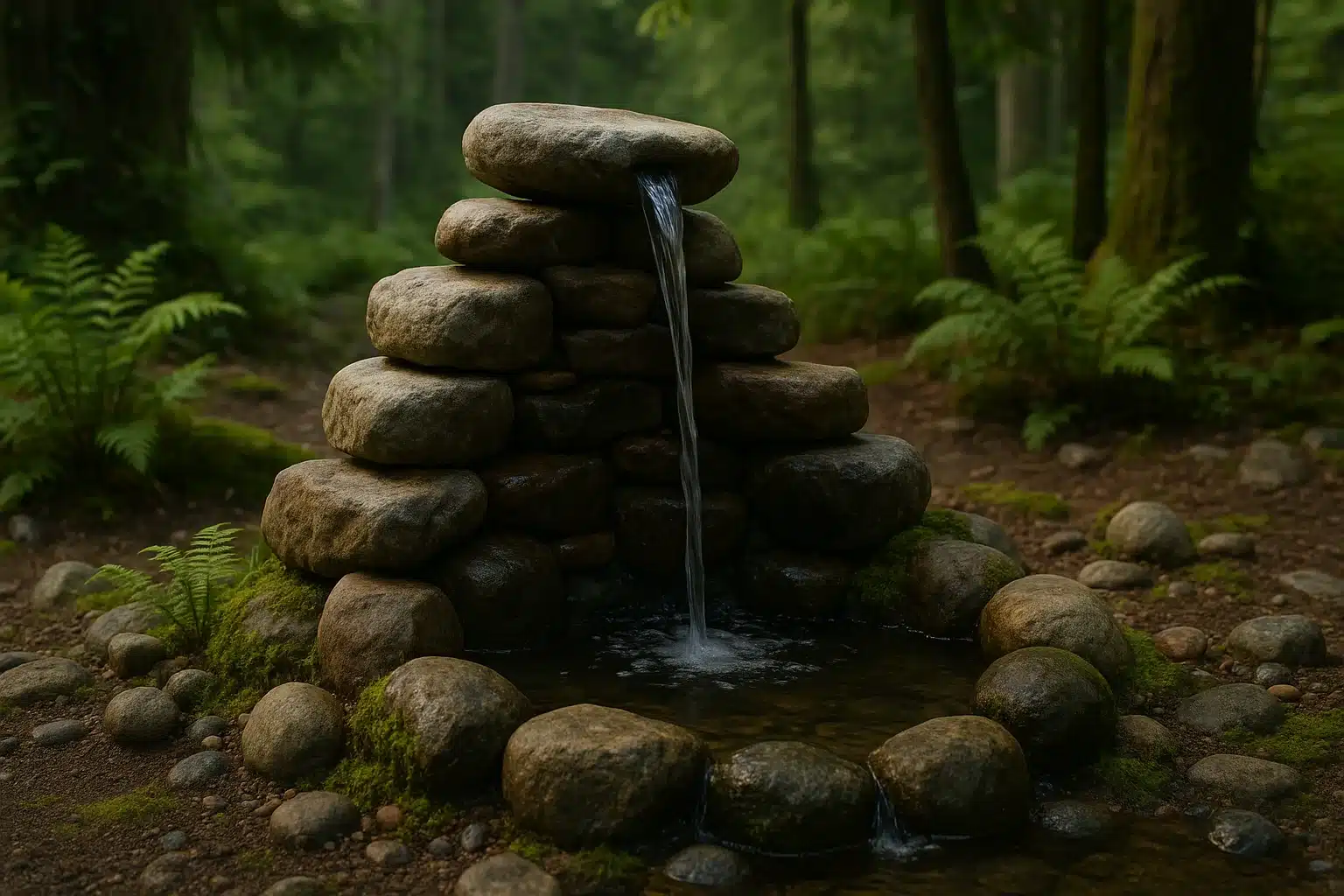
  • Stacked Column Fountain: Vertical arrangement of stones with a hidden water pipe in the center. Simple and elegant.
  • Cascading Fountain: Water flows over multiple tiers of flat stones, mimicking a small waterfall.
  • Bubbling Rock Fountain: A single large stone with a drilled hole where water bubbles up and spills over the surface.
  • Pondless Fountain: The water disappears into a bed of gravel instead of a visible pond — safer and easier to maintain.

Balancing Form and Function

  • Scale: Match the size of your fountain to your outdoor space.
  • Water Path: Water should flow naturally, avoid sharp drops that splash excessively.
  • Pump Location: Ensure easy access for maintenance.
  • Electrical Safety: Choose a weatherproof outlet and route cords discreetly.

Use a few mock arrangements on the ground before committing. Photograph each layout and select the one that feels most harmonious.

Step 3: Gathering Tools and Materials

You’ll need a combination of plumbing, construction, and landscaping tools. Here’s a checklist:

Tools

  • Shovel and trowel
  • Level
  • Drill with masonry bit (if drilling stones)
  • Rubber mallet
  • Measuring tape
  • Utility knife
  • Bucket or wheelbarrow

Materials

  • Natural stones (collected)
  • Submersible water pump
  • Flexible tubing (vinyl or rubber)
  • Reservoir or basin (plastic, fiberglass, or preformed pond liner)
  • Gravel and sand
  • Waterproof sealant or epoxy (optional)
  • Filter mesh (to keep debris out of the pump)
  • Extension cord rated for outdoor use

Step 4: Preparing the Fountain Site

Selecting the Perfect Location

Choose a spot that’s visible and accessible but also complements the natural flow of your garden. Consider:

  • Sunlight: Partial shade prevents algae overgrowth.
  • Ground Level: A flat surface ensures even water flow.
  • Accessibility: Easy to refill and clean.
  • Power Access: Near a GFCI outdoor electrical outlet.

Creating a Stable Base

  • Mark the area for the fountain and dig a hole for your basin or reservoir.
  • Add a layer of sand or pea gravel to ensure the base is level and stable.
  • Place the basin in the hole and check for evenness using a level.
  • Backfill around the edges to secure it firmly.

Step 5: Building the Fountain Structure

Building a Fountain from Natural Stones Collected on a Hike

This is where creativity meets engineering.

1. Position the Pump

Place the submersible pump at the center or base of your reservoir. Run the tubing vertically through where you plan for water to emerge, such as the top of a stone stack or hole in a rock.

2. Stack the Stones

Start with your largest, flattest stones at the bottom for stability. Build upward using progressively smaller stones. Alternate textures and colors for visual interest.

For a stacked column fountain, drill holes through the center of each stone using a masonry bit. Thread the tubing through and connect it to the pump.

For a cascading design, angle flat stones so that water flows gently from one to the next. Test the angle with a small pour of water to see how it moves.

3. Secure the Structure

While natural weight often provides stability, you can use a thin layer of outdoor epoxy or waterproof adhesive between stones if needed, especially if your area experiences frost.

4. Conceal the Basin

Surround the basin edges with smaller stones and gravel to make it appear as if the fountain naturally emerges from the earth.

Step 6: Adding Water and Testing the Flow

Once your structure is complete:

  • Fill the reservoir with clean water.
  • Plug in the pump and observe the flow. Adjust the positioning of stones or water pressure until the sound and appearance are just right.
  • Check for splashing: Excessive splashing can lead to water loss. Slightly tilt stones or reduce pump flow to control it.
  • Ensure recirculation: The pump should remain fully submerged at all times to prevent damage.

This stage is where patience pays off. Small tweaks can transform your fountain from good to breathtaking.

Step 7: Landscaping Around the Fountain

Integrate your fountain seamlessly into the environment with thoughtful landscaping.

Surrounding Plants

  • Moss and Ferns: Thrive in moist environments and blend beautifully with natural stones.
  • Hostas and Astilbes: Add lush foliage and color contrast.
  • Creeping Groundcovers: Such as thyme or ajuga, soften edges and attract pollinators.

Lighting

Add soft LED landscape lighting or solar spotlights to illuminate your fountain at night. Highlighting the flowing water creates an enchanting nighttime focal point.

Decorative Touches

Place driftwood, small pebbles, or native flowers nearby to enhance the natural aesthetic.

Step 8: Maintenance and Care

A natural stone fountain is surprisingly low-maintenance if you follow a few simple steps.

Regular Maintenance Checklist

  • Weekly: Top off water level and remove debris or leaves.
  • Monthly: Clean the pump filter and check for algae growth.
  • Seasonally: Empty and dry the fountain before freezing temperatures arrive. Store the pump indoors during winter.

Cleaning the Stones

Natural stones can accumulate mineral deposits. Use a soft brush and vinegar-water solution to gently scrub without harming their texture. Avoid harsh chemicals that can damage both stones and plants.

Pump Longevity

Keep the pump submerged and clean for optimal performance. Most quality pumps last several years with proper care.

Step 9: Custom Enhancements

Once your basic fountain is complete, you can elevate its design with creative touches:

Add a Secondary Basin or Stream

Direct overflow water into a small stream or secondary pond to create movement across a wider area.

Include a Natural Filtration System

Add aquatic plants like water lilies or papyrus to naturally filter water and attract wildlife.

Sound Optimization

Adjust rock placement and water pressure to fine-tune sound — softer trickles for a meditative mood, or stronger cascades for dramatic effect.

Integrate with Garden Design

Align your fountain with stepping stones, benches, or meditation zones to create a cohesive outdoor sanctuary.

Step 10: Enjoying the Fruits of Your Effort

Once finished, your fountain becomes more than décor, it’s a living, breathing symbol of creativity and mindfulness. Imagine sipping your morning coffee as sunlight glints off water cascading down stones you collected miles away on a favorite trail. Each gurgle is a reminder of nature’s rhythm, patient, enduring, and serene.

Invite friends to share the story of your fountain’s origins, showing them the photos of where each stone came from. It’s a conversation piece that reflects both your love of nature and your craftsmanship.

Over time, your fountain will age gracefully. Moss may grow between stones, birds will visit for a drink, and the sound of flowing water will become the heartbeat of your garden.

Common Mistakes to Avoid

  • Ignoring Pump Capacity: Match pump size to your fountain’s height and volume. Too weak, and water won’t reach the top; too strong, and you’ll get splashing and noise.
  • Poor Stone Stability: Always secure stones properly to prevent shifting.
  • Inadequate Water Level: Running the pump dry can burn it out quickly.
  • Overexposure to Sun: Direct sunlight accelerates algae growth.
  • Skipping Maintenance: A neglected fountain quickly loses its charm — clean regularly for lasting beauty.

Inspiration: Styles and Variations

  • Zen Garden Fountain: Pair smooth river stones with bamboo spouts for a minimalist Japanese feel.
  • Mountain Spring Fountain: Use rough granite boulders and moss for a rugged alpine vibe.
  • Modern Minimalist Fountain: Integrate stones into a geometric concrete base for a sleek, contemporary look.
  • Woodland Stream Fountain: Combine driftwood, pebbles, and ferns to mimic a forest brook.

Each style reflects your personality and environment, there’s no wrong approach.

Environmental Benefits

Beyond aesthetics, your fountain supports micro-ecosystems. Birds, bees, and butterflies often visit for hydration. The humid microclimate benefits nearby plants, and the soft sound of water can even mask traffic noise, improving outdoor relaxation.

By using found stones rather than quarried materials, you’re minimizing environmental impact and promoting eco-friendly craftsmanship.

Conclusion: Crafting Serenity from the Wild

Building a fountain from natural stones you’ve collected isn’t just about construction — it’s about storytelling, connection, and reflection. It’s a creative meditation that transforms raw elements of the earth into a source of peace and beauty.

Every time you hear the gentle ripple of your fountain, you’ll be reminded of open trails, mountain breezes, and the power of nature’s artistry. So lace up your boots, hit the trail, and start collecting the stones that will one day flow with water and memory in your own backyard sanctuary.

FAQs:

Yes, but it will rely on gravity (such as from a rain barrel or elevated source) and won’t have continuous flow. Pumps are recommended for consistent water circulation and sound.
Not necessarily. Most natural stones handle water exposure well. However, sealing can prevent mineral buildup or discoloration if you use softer stones like limestone.
Keep the fountain in partial shade, clean it regularly, and consider adding a small amount of non-toxic fountain treatment or barley extract to the water.