...
480.1.Non-porus-materials-for-fountains

Choosing Non-Porous Materials for Ultra-Modern Fountain Designs

Ultra-modern fountain design sits at the intersection of architecture, material science, and sensory experience. Today’s most striking water features, whether minimalist indoor fountains, dramatic wall fountains, or sculptural outdoor fountains, are defined not just by their form, but by the materials that shape their longevity and performance.

Among all design decisions, the choice of non-porous materials stands out as one of the most critical. These materials influence everything: water clarity, maintenance requirements, durability, and the crisp aesthetic that defines modern fountains.

If you’re aiming to create a refined, contemporary water feature, something that feels intentional, clean, and enduring, understanding non-porous materials is essential. This guide explores why they matter, which ones to choose, and how to use them effectively in ultra-modern fountain design.

Why Non-Porous Materials Matter in Fountain Design

At first glance, all materials might seem suitable for water features. After all, fountains have been made from stone, clay, and concrete for centuries. But ultra-modern design demands more than tradition, it demands precision, cleanliness, and control.

Non-porous materials are surfaces that do not absorb water. This simple characteristic creates a cascade of benefits:

1. Cleaner Water, Less Algae

Porous materials trap moisture, minerals, and organic debris. Over time, this leads to algae growth, discoloration, and unpleasant odors. Non-porous surfaces resist absorption, keeping water clearer and easier to maintain.

2. Reduced Maintenance

Modern lifestyles don’t allow for constant upkeep. With non-porous materials, mineral deposits sit on the surface rather than penetrating it, making cleaning faster and more effective.

3. Structural Longevity

Water infiltration is one of the leading causes of material degradation. Freeze-thaw cycles, expansion, and internal cracking are minimized when the material doesn’t absorb water.

4. Precision Aesthetics

Ultra-modern fountains rely on sharp edges, reflective surfaces, and uniform finishes. Non-porous materials maintain their appearance over time, preserving that crisp, architectural look.

The Aesthetic Philosophy of Ultra-Modern Fountains

Before diving into materials, it’s important to understand the design language you’re working within.

Ultra-modern fountains emphasize:

    • Minimalism and clean lines
    • Monochromatic or restrained color palettes
    • Reflectivity and light interaction
    • Seamless integration with architecture
    • Controlled, often geometric water flow

Whether you’re designing indoor water fountains for a luxury lobby or outdoor water fountains for a contemporary garden, the material must support this philosophy.

Top Non-Porous Materials for Modern Water Features

Let’s break down the most effective materials used in today’s high-end fountains.

1. Stainless Steel

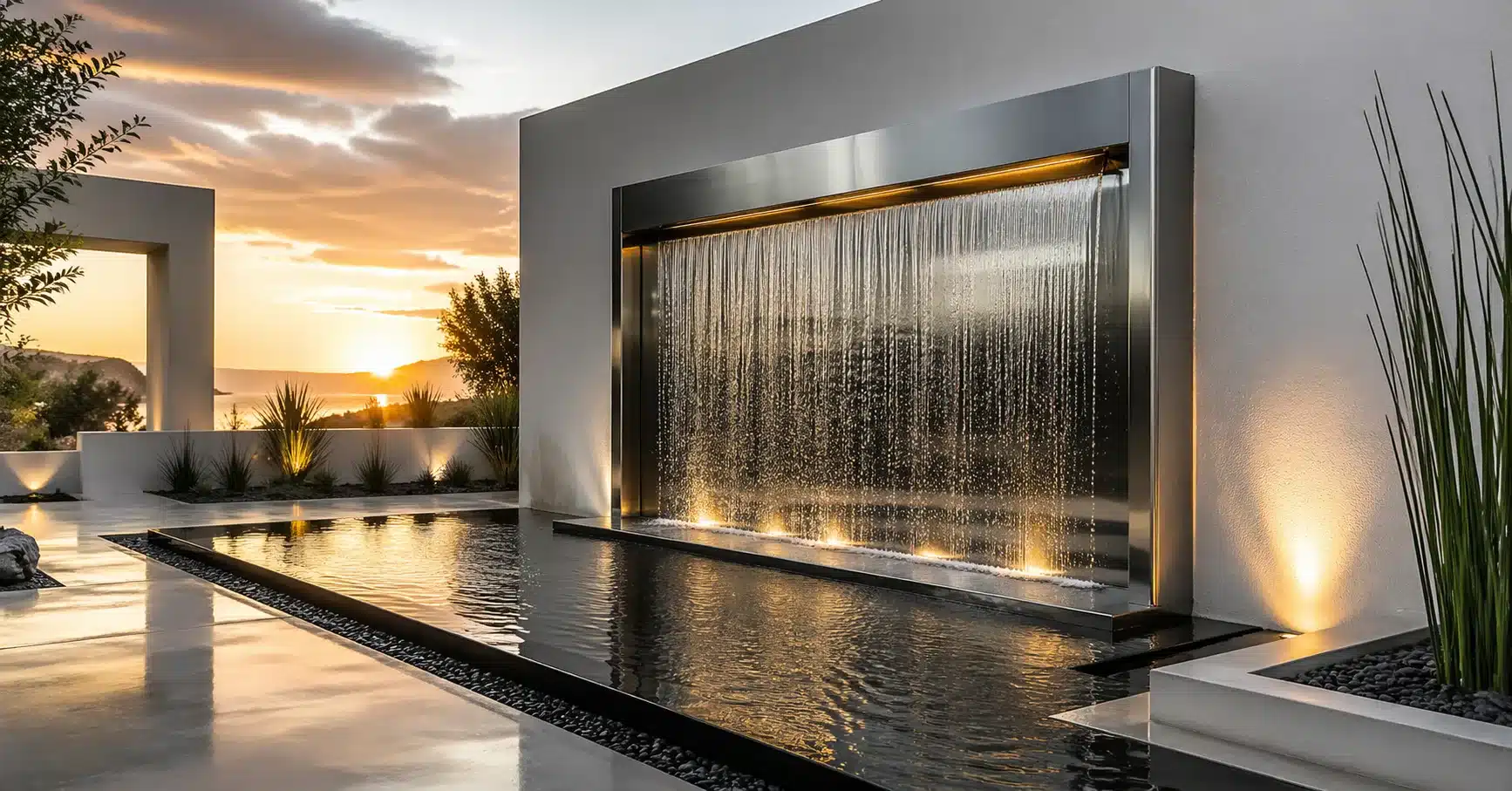
Few materials embody modernity like stainless steel. It’s a staple in wall fountains, rain curtain fountains, and sculptural outdoor installations.

Why it works:

    • Completely non-porous
    • Corrosion-resistant
    • Reflective, enhancing light and water movement
    • Durable in both indoor and outdoor environments

Best applications:

    • Wall-mounted water features
    • Rain curtain water features
    • Commercial and architectural fountains

Design insight:

Brushed finishes soften reflections, while mirror-polished steel creates dramatic visual depth. The choice affects the mood of the fountain significantly.

2. Glass (Tempered or Laminated)

Glass introduces transparency and elegance. It’s especially powerful in indoor fountains and tabletop fountains where subtlety matters.

Why it works:

    • Fully non-porous
    • Smooth surface allows controlled water flow
    • Enhances lighting effects

Best applications:

    • Indoor water fountains
    • Rain curtain fountains
    • Feature walls in modern interiors

Design insight:

Backlighting glass panels transforms a simple water feature into a luminous centerpiece. Frosted glass adds privacy while maintaining light diffusion.

3. Acrylic (Plexiglass)

Acrylic offers similar visual qualities to glass but with greater flexibility and lighter weight.

Why it works:

    • Non-porous and water-resistant
    • Easier to shape and customize
    • Impact-resistant compared to glass

Best applications:

    • Custom indoor fountains
    • Experimental or sculptural designs
    • Compact tabletop fountains

Design insight:

Acrylic allows for creative geometries that would be difficult or costly with glass, making it ideal for bespoke designs.

Choosing Non-Porous Materials for Ultra-Modern Fountain Designs

4. Polished Concrete with Sealant

Concrete itself is porous, but when treated with high-quality sealants, it becomes effectively non-porous and highly suitable for modern outdoor fountains.

Why it works:

  • Industrial aesthetic aligns with modern design
  • Strong and durable
  • Customizable in shape and scale

Best applications:

  • Large outdoor water fountains
  • Garden fountains with a minimalist edge
  • Floor fountains in public spaces

Design insight:

The finish is everything. A polished, sealed concrete surface can rival stone in elegance while maintaining a contemporary feel.

5. Natural Stone (Sealed)

While natural stone is traditionally porous, modern sealing technologies allow it to function as a non-porous surface.

Why it works:

    • Timeless texture with modern adaptability
    • Can be sealed to resist water absorption
    • Adds warmth to otherwise stark designs

Best applications:

    • Outdoor water features
    • Garden fountains
    • Transitional designs blending modern and natural elements

Design insight:

Choose stones with subtle veining or uniform coloration to maintain a modern aesthetic.

6. Ceramic and Porcelain

High-fired ceramics and porcelain are inherently non-porous and highly durable.

Why it works:

    • Smooth, easy-to-clean surfaces
    • Resistant to staining and mineral buildup
    • Available in a wide range of finishes

Best applications:

    • Indoor fountains
    • Wall fountains
    • Decorative water features

Design insight:

Matte finishes create a softer, more understated look, while glossy surfaces enhance water movement visually.

Designing with Non-Porous Materials: Practical Considerations

Choosing the right material is only part of the equation. How you design with it determines the success of the fountain.

Water Flow Behavior

Non-porous surfaces allow water to glide smoothly, creating:

    • Thin, even sheets of water
    • Controlled cascades
    • Minimal splashing

This is especially important for rain curtain fountains, where uniform flow is essential for the visual effect.

Lighting Integration

Modern fountains often incorporate LED lighting. Non-porous materials enhance this by:

    • Reflecting light (steel, glass)
    • Transmitting light (acrylic, glass)
    • Diffusing light (ceramic finishes)

Lighting turns water features into nighttime focal points.

Maintenance Planning

Even with non-porous materials, maintenance matters.

    • Use filtered water to reduce mineral buildup
    • Clean surfaces regularly to maintain clarity
    • Inspect seals and joints periodically

The advantage is not zero maintenance, it’s efficient maintenance.

Indoor vs Outdoor Applications

Material choice also depends on where the fountain will live.

Indoor Water Fountains

Indoor environments demand:

    • Quiet operation
    • Controlled humidity
    • Clean aesthetics

Best materials:

    • Glass
    • Acrylic
    • Ceramic
    • Stainless steel

These materials support refined designs like tabletop fountains or sleek wall installations.

Outdoor Water Fountains

Outdoor conditions introduce:

    • Weather exposure
    • Temperature fluctuations
    • UV radiation

Best materials:

    • Stainless steel
    • Sealed concrete
    • Sealed stone

These ensure durability without sacrificing modern design.

The Role of Scale: From Tabletop to Architectural

Non-porous materials adapt across scales:

    • Tabletop fountains: Acrylic, ceramic
    • Wall fountains: Glass, stainless steel
    • Floor fountains: Concrete, stone
    • Large outdoor water features: Steel, sealed concrete

The material must match not just the environment, but the visual weight and presence of the fountain.

Common Mistakes to Avoid

Even experienced designers can misstep when selecting materials.

1. Ignoring Sealants

Using stone or concrete without proper sealing leads to staining and degradation.

2. Overlooking Water Chemistry

Hard water can leave deposits even on non-porous surfaces. Plan for filtration.

3. Choosing Style Over Function

A beautiful material that requires excessive maintenance will quickly lose its appeal.

4. Poor Integration

The fountain should feel like part of the architecture, not an afterthought.

Future Trends in Modern Fountain Materials

The evolution of water features continues, driven by innovation.

Smart Surfaces

Materials that resist biofilm and mineral buildup are becoming more common.

Sustainable Composites

Eco-friendly, non-porous materials are emerging as alternatives to traditional options.

Integrated Technology

Sensors and automation are shaping how water flows and interacts with materials.

Final Thoughts

Choosing non-porous materials is more than a technical decision, it’s a design philosophy. It reflects a commitment to clarity, precision, and longevity.

In ultra-modern fountains, every surface matters. Every reflection, every ripple, every line of water is influenced by the material beneath it.

Whether you’re crafting intimate indoor fountains or expansive outdoor water features, selecting the right non-porous material ensures your design doesn’t just look modern, it stays modern.

FAQs:

Stainless steel is often the top choice due to its durability, corrosion resistance, and sleek appearance, especially for wall fountains and outdoor installations.
No, but they significantly reduce maintenance. Regular cleaning and proper water treatment are still necessary to keep fountains looking their best.
Yes, as long as it is properly sealed. Sealed stone can function like a non-porous material while adding texture and warmth to modern designs.
SPRING SALE: 10% OFF ALL PRODUCTS
Use Code: MAY10 | Ends MAY 31