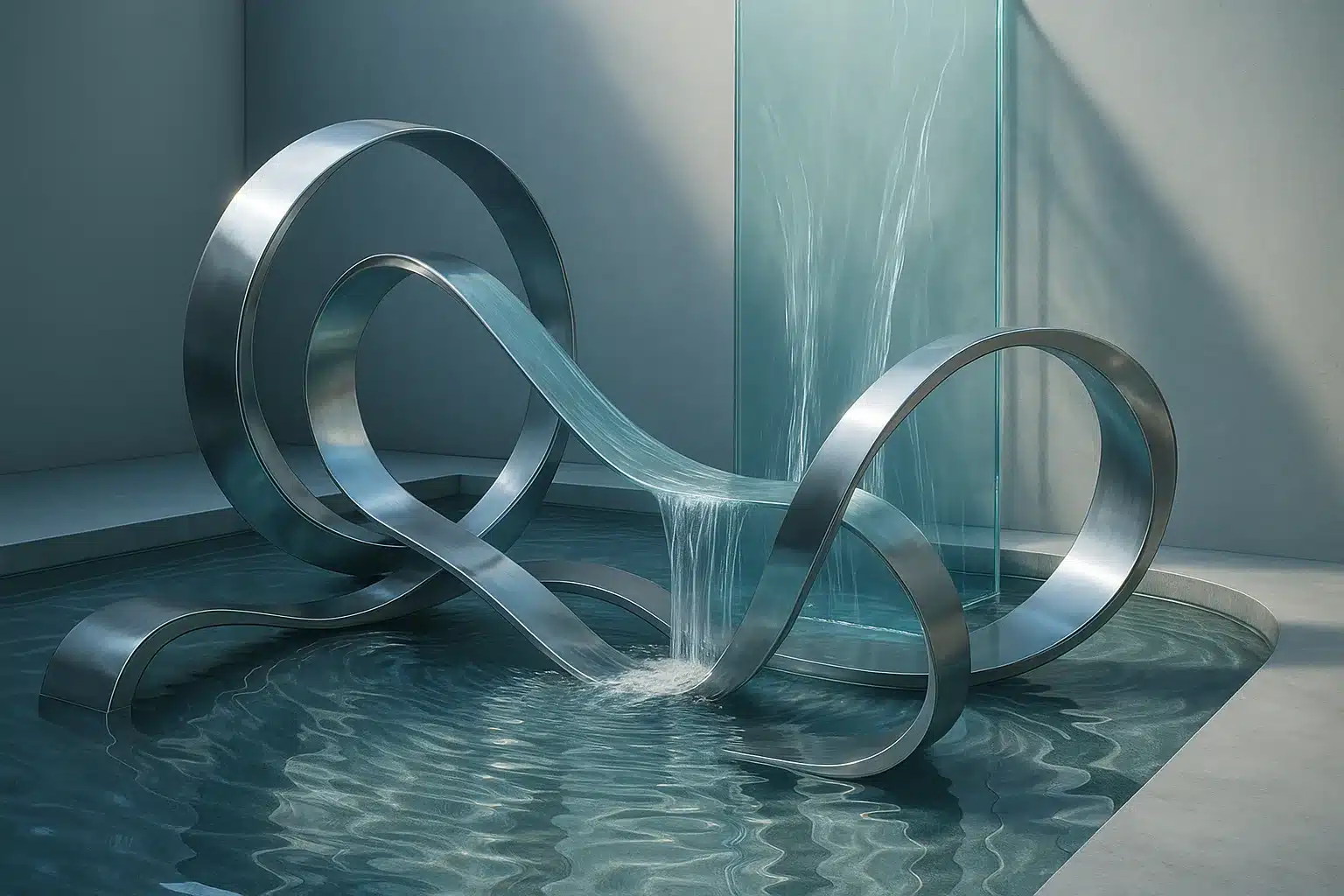
385.1.Metal-Glass-Fountains

Combining Metal and Glass: A Study in Contrast for Modern Water Art

Introduction: When Opposites Create Harmony

The combination of metal and glass in modern water art represents one of the most striking examples of contrast-driven design. It merges the strength and permanence of metal with the fragility and translucence of glass, producing a dynamic tension that feels both futuristic and timeless. This unlikely marriage of materials has become a cornerstone of contemporary sculpture, architecture, and public art installations, particularly those that incorporate the fluid, reflective qualities of water.

In the world of modern water art, this fusion goes far beyond aesthetics. It’s a dialogue between materials, one solid and industrial, the other fluid and delicate, that together mimic the natural interplay between earth, air, and water. Artists and designers use this combination to create environments that evoke serenity, power, and transformation, often blurring the boundaries between structure and movement, permanence and impermanence.

A Brief History: From Industrial Roots to Artistic Expression

The journey of metal and glass as artistic materials began in the industrial age. During the 19th century, advancements in metallurgy and glassmaking made it possible to produce large, durable structures like bridges, greenhouses, and train stations that showcased both materials’ strengths. The Crystal Palace (1851) in London, designed by Joseph Paxton, was one of the first major architectural triumphs that combined glass and iron, a precursor to today’s artful metal-glass integrations.

As the 20th century unfolded, artists began to appropriate these industrial materials for creative purposes. Sculptors like Richard Serra explored the monumental potential of steel, while glass artists such as Dale Chihuly turned molten silica into flowing, organic forms. It was only a matter of time before these two worlds collided, literally and figuratively, within the medium of water art.

By the 21st century, metal-and-glass water features became symbols of modernity and balance. Their use spread from urban plazas to private residences, corporate atriums, and luxury resorts. The combination’s versatility, capable of evoking industrial minimalism or ethereal beauty, made it a favorite among contemporary designers seeking to merge nature and technology in harmonious opposition.

The Philosophical Core: Contrast as Creative Energy

At the heart of combining metal and glass lies a fundamental design philosophy: that beauty often emerges from contrast. Each material offers qualities the other lacks, creating a balanced tension that engages both the eye and the mind.

Metal embodies structure, durability, and solidity. It grounds the piece, providing the skeleton or framework that gives the work physical and conceptual strength.

Glass, on the other hand, symbolizes lightness, fragility, and transparency. It allows for illumination and reflection, transforming light and water into dynamic, ever-changing elements.

When combined in water art, these materials create a dialogue between control and chaos. The metal framework defines boundaries, while the water and glass interplay suggest infinite motion. The result is a sensory experience that evokes calmness and vitality simultaneously, an ideal representation of modern human life, where structure and fluidity must coexist.

Material Science and Craftsmanship: Making the Impossible Work

1. Structural Engineering Considerations

Metal and glass expand and contract at different rates with temperature shifts. To prevent cracking or stress fractures, designers use flexible joints, hidden mounts, and specialized adhesives that accommodate slight movements. Stainless steel is often the metal of choice because of its corrosion resistance, while tempered or laminated glass provides safety and durability.

2. Surface Treatments

Finishing techniques play a crucial role in how the materials interact visually and functionally. Metal surfaces may be brushed, polished, or anodized to resist oxidation, while glass panels can be etched, frosted, or tinted to manipulate light diffusion. In water art installations, these treatments determine how reflections and shadows behave, shaping the overall mood.

3. Integration with Water Systems

When water is introduced, the engineering complexity increases. The flow rate, pressure, and filtration systems must be designed to complement the aesthetic intent. For example, a cascading sheet of water over glass requires uniform distribution to avoid streaks or turbulence, while a metallic spout must be precision-machined to create clean arcs or droplets.

The seamless union of these materials demonstrates how art, architecture, and engineering can merge into a singular expression of mastery.

Aesthetic Dynamics: Light, Reflection, and Movement

In modern water art, glass and metal interact not only as static forms but as dynamic surfaces that transform constantly with changing light and motion. This interplay creates a living canvas.

Light as a Sculptural Medium

Glass refracts and transmits light, while metal reflects and absorbs it. When sunlight or artificial illumination strikes these surfaces, especially through water, the result is a choreography of reflections, refractions, and distortions. The viewer perceives a dance of light that shifts with every angle and moment.

For instance:

  • A polished steel base beneath rippled water and textured glass can create a shimmering, mirror-like illusion that feels almost holographic.
  • A frosted glass panel behind a waterfall cascade softens the flow, diffusing light into a serene, dreamlike glow.

Designers often exploit these effects to evoke emotional responses, serenity, awe, or even contemplation. In corporate settings, such features can reduce stress and enhance spatial well-being. In public installations, they encourage people to pause and reflect, literally and metaphorically.

Movement as an Artistic Element

The presence of water transforms the static sculpture into a kinetic artwork. The flow’s rhythm, whether a gentle trickle or a roaring cascade, becomes the pulse of the piece. Glass channels guide the motion; metal edges frame it. Together, they choreograph water’s natural grace within human-designed order.

This duality between the organic and the engineered defines the modern aesthetic: a balance between chaos and precision, art and science.

Symbolism: Strength, Fragility, and the Fluid Nature of Existence

Art that combines metal, glass, and water often carries profound symbolic undertones. Each element speaks to an aspect of the human condition.

  • Metal represents strength, endurance, and the man-made world.
  • Glass embodies clarity, fragility, and transformation.
  • Water stands for life, motion, and renewal.

Together, they mirror the delicate balance of modern existence, our pursuit of progress tempered by our vulnerability, our need for control balanced by our connection to nature. In an age where technology and sustainability must coexist, this trio becomes a poetic metaphor for harmony through contrast.

In Buddhist and Zen-inspired installations, water flowing over glass and metal often symbolizes mindfulness: the continual passage of time and the clarity that emerges from stillness. For others, it may evoke resilience, how fragility (glass) can coexist with strength (metal) when supported by flow (water).

Applications in Modern Architecture and Design

Combining Metal and Glass A Study in Contrast for Modern Water Art

1. Public Installations and Urban Landscapes

Cities around the world now use metal-and-glass water features to soften their urban edges. Reflective pools bordered by steel, or glass fountains that double as lighting elements, transform public plazas into contemplative sanctuaries amid concrete jungles. Examples include:

  • The Crown Fountain in Chicago’s Millennium Park, which integrates glass brick towers with digital video and water.
  • The Water Mirror in Bordeaux, France, where stainless steel and shallow water create a perfect reflective illusion.

These installations invite human interaction and encourage environmental mindfulness, turning city centers into spaces for reflection, literally and figuratively.

2. Corporate and Commercial Spaces

In corporate environments, the combination exudes sophistication and balance. Glass waterfalls framed in brushed metal often serve as lobby centerpieces, symbolizing transparency and stability, key values for modern businesses. The sound of trickling water adds a sensory calm that counteracts workplace stress, while the reflective surfaces enhance natural light and spatial perception.

3. Residential and Landscape Design

In private residences, designers use smaller-scale water sculptures or fountains as focal points in gardens, courtyards, and atriums. The materials’ contrasting textures, cool metal against smooth glass, complement natural elements like stone, wood, and greenery. Outdoor pieces are frequently illuminated at night, turning homes into living art galleries that celebrate contrast and tranquility.

4. Museums and Art Galleries

Metal and glass water art has become a staple in modern galleries and sculpture parks. These installations challenge traditional notions of static art, inviting interaction through sight, sound, and even touch. By harnessing water’s unpredictable behavior, artists introduce an element of chance into otherwise controlled environments, emphasizing the impermanent beauty of the moment.

Environmental and Sustainable Design Considerations

1. Recycled Materials

Many contemporary works now utilize recycled steel and glass, reducing carbon footprints without compromising visual appeal. Reclaimed metal can bring an added layer of narrative, each scratch or patina a reminder of its previous life.

2. Water Conservation Systems

Modern water art installations often incorporate closed-loop systems that filter and reuse water, minimizing waste. Some even integrate solar pumps or rainwater harvesting systems, aligning aesthetic beauty with environmental ethics.

3. Passive Cooling and Climate Design

In hot climates, water features built with reflective glass and metal can help moderate surrounding temperatures. The evaporative cooling effect, combined with light diffusion, creates comfortable microclimates in outdoor spaces, a perfect blend of art and function.

By embracing these sustainable practices, metal-and-glass water art evolves from mere decoration into a meaningful dialogue about humanity’s relationship with nature and technology.

Case Studies: Icons of Metal and Glass Water Art

1. The Crown Fountain – Chicago, USA

Designed by Jaume Plensa, this installation features two glass-brick towers facing each other across a reflecting pool. Digital video displays human faces on the glass surfaces while water flows from their mouths, creating an engaging blend of technology, art, and human connection. The stainless-steel infrastructure ensures durability, while the transparent glass makes the piece feel alive and interactive.

2. The Glass Waterfall – Tokyo Midtown

In Tokyo’s Midtown development, a suspended glass wall cascades with a thin sheet of water, supported by a stainless-steel framework. The minimalistic design amplifies the serene aesthetic, allowing natural light to refract through the flowing surface, creating a meditative experience for visitors.

3. Private Villa Fountain – Dubai

A custom installation in a Dubai villa uses mirror-finished stainless steel panels to guide streams of water across etched glass slabs. The contrast of materials, one reflecting the desert sun, the other refracting it, creates an ethereal ambiance that shifts throughout the day. Integrated LED lighting brings the feature to life at night, transforming the courtyard into a liquid sculpture of light.

Future Directions: The Next Evolution of Material Harmony

1. Smart Water Art

With the rise of smart design, water installations can now respond to human movement, sound, or even emotion. Metal frameworks conceal sensors, while glass panels become digital canvases that react to environmental stimuli, turning water art into an immersive, personalized experience.

2. Integration with Renewable Energy

Some artists are integrating micro-hydroelectric systems or photovoltaic glass panels into their designs, allowing the artwork to generate its own power. This fusion of sustainability and art represents the future of eco-conscious design.

3. Nanotechnology and Material Innovation

Advances in nanocoatings and smart materials are enabling glass and metal surfaces to self-clean, resist corrosion, and even harvest moisture from the air. These innovations promise a new era of low-maintenance, high-impact installations that push the boundaries of what’s possible.

Conclusion: The Poetry of Contrast

The union of metal and glass in modern water art is more than a stylistic choice, it’s a metaphor for the world we live in. It embodies the balance between strength and vulnerability, the tangible and the ephemeral, the engineered and the organic. Through the medium of water, these materials communicate a universal truth: that beauty arises not from sameness, but from harmony within contrast.

As we continue to seek serenity in an increasingly complex world, such art reminds us that tension can be beautiful, and opposites, when thoughtfully combined, can create something transcendent.

FAQs:

Because they complement each other visually and structurally—metal provides strength and durability, while glass adds lightness, reflection, and transparency. Together, they create a perfect balance of contrast and harmony, especially when paired with moving water.
Stainless steel and bronze are the most common choices due to their corrosion resistance and visual appeal. They withstand constant exposure to moisture without rusting or degrading, making them ideal for both indoor and outdoor features.
They typically use tempered or laminated glass, which is significantly stronger than standard glass. Structural adhesives, flexible mounts, and precise engineering also help accommodate thermal expansion and water pressure to prevent cracking or stress.