...
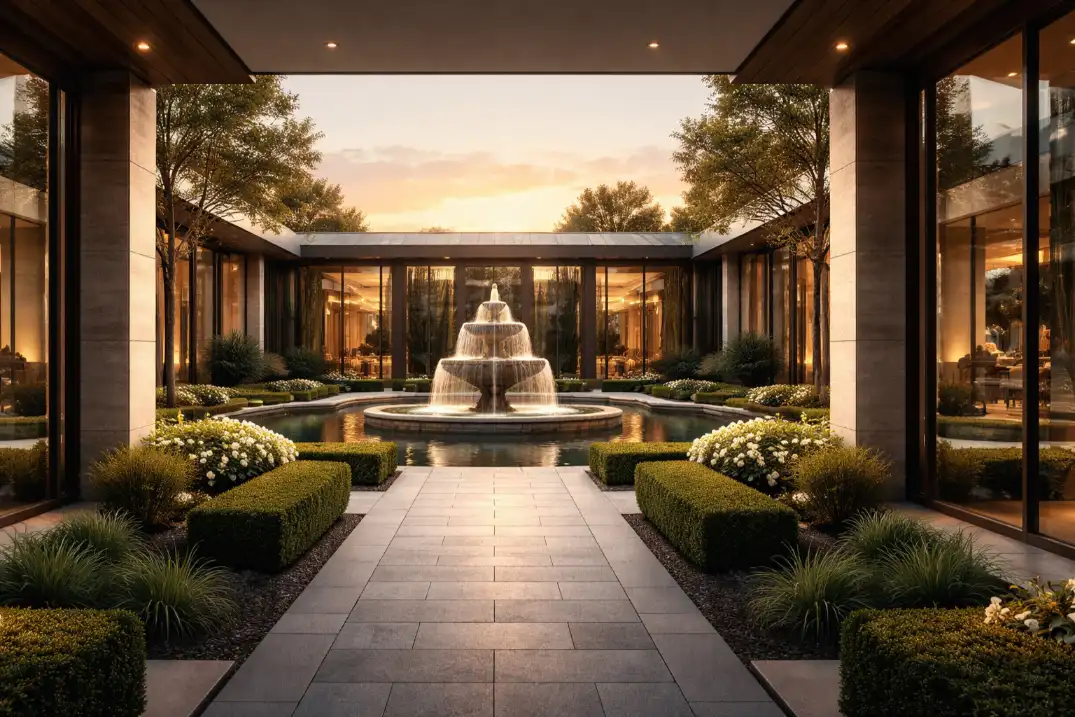
457.1.Fountain-framed-view

Creating Framed Views Using Architectural Fountain Placement

Architectural design is about guiding the eye and shaping how people experience a space. One of the most powerful techniques designers use is framing a view, intentionally directing attention toward a focal point. While plants, sculptures, and architectural elements often serve this purpose, fountains and water features provide a unique and dynamic way to create framed views that combine movement, sound, and visual elegance.
Strategic fountain placement transforms ordinary spaces into engaging, visually composed experiences.
In this guide, we explore how architects, landscape designers, and property owners can use outdoor, indoor, wall, tabletop, and floor fountains to create memorable framed views that elevate both residential and commercial environments. To begin, let’s clarify what it means to frame a view in architectural design.

Understanding the Concept of Framed Views
Framed views use spatial elements to deliberately highlight a chosen focal point for viewers.
Architects and landscape designers often create framed views using:
  • Pathways and walkways
  • Trees and hedges
  • Archways or pergolas
  • Windows or doorways
  • Structural elements
Water fountains and features elevate this concept by introducing movement and sound that naturally draw the eye.

For example:
A garden pathway framed by trees can lead to a central outdoor fountain.
A hotel lobby may align seating areas to highlight a dramatic rain curtain fountain.
A hallway might end with a sculptural wall fountain that captures attention immediately.
Because of their dynamic qualities, fountains naturally become focal points in framed views. Understanding why fountains hold such visual power helps clarify their value in architectural design.

Why Fountains Work So Well as Visual Anchors
Water naturally draws human attention. The reflective surface, continuous motion, and gentle sound make water fountains powerful focal points in design.
Here are several reasons fountains excel at creating framed views, which we will outline in the following section.

Movement Attracts the Eye
Unlike static features, water elements move continuously—whether in a cascading wall fountain or bubbling tabletop fountain—creating visual interest that draws people to the focal point.

Sound Guides Spatial Awareness
The subtle sound of water helps guide people through a space. In gardens, the sound of outdoor water fountains encourages visitors to explore and discover the source of the sound.

Light Reflection Enhances Depth
Water reflects natural and artificial light, adding depth to architectural spaces. When placed strategically, indoor fountains can create shimmering highlights that enhance the framed composition.

Emotional Connection
Water has calming psychological effects. Incorporating garden fountains or indoor water fountains into framed views creates spaces that feel tranquil and inviting.

Using Outdoor Fountains to Frame Landscape Views
Outdoor fountains serve as key visual anchors in landscape design, shaping views and experiences.

To use outdoor water fountains effectively, place them with intentionality so they guide movement, mark destinations, and reinforce landscape views.

End-of-Path Placement
One of the most classic landscape techniques is placing a garden fountain at the end of a walkway.

This approach works because:
  • The pathway acts as a visual corridor.
  • The fountain becomes the destination point.
  • Visitors naturally move toward the focal element.
This design is common in:
  • European formal gardens
  • Luxury resorts
  • Estate landscapes
  • Public courtyards
The symmetry created by the pathway and fountain enhances the sense of order and elegance.

Framing Courtyard Spaces
Courtyards are ideal settings for outdoor fountains because the surrounding architecture naturally frames the water feature.

Examples include:
  • A central tiered garden fountain within a square courtyard.
  • A modern sculptural fountain surrounded by minimalist landscaping.
  • A reflective basin positioned between architectural columns.
These compositions create a visual centerpiece visible from multiple vantage points.

Layered Garden Views
Designers often create layered views where multiple garden elements guide the eye toward a fountain.
For example:
  • Entrance gate
  • Tree-lined path
  • Decorative archway
  • Central outdoor water fountain
Each element along the way builds anticipation so that the fountain stands out as the final visual highlight of the landscape design.

Creating Interior Focal Points with Indoor Water Fountains
Indoor water fountains introduce nature-inspired focal points that elevate interior environments.
Framing techniques transform indoor fountains into striking design features.

Lobby Centerpieces
Hotels, corporate offices, and luxury residences often place floor fountains in central locations to create an immediate visual impact.
When framed by architectural elements such as columns, seating arrangements, or lighting features, these fountains establish a strong focal point for the entire space.
Benefits include:
  • Creating a memorable first impression
  • Encouraging natural traffic flow
  • Enhancing acoustics with soft water sounds
  • Hallway and Corridor Endpoints
A hallway can feel long or monotonous without visual interest. Placing a wall fountain at the end of the corridor creates a natural frame for the view.
As people walk down the corridor, the moving water draws their attention, creating a dynamic focal point that motivates them to continue walking.
This technique is widely used in:
  • Hotels
  • spas
  • wellness centers
  • luxury residential interiors
Dividing Open Interior Spaces
In large open-plan interiors, rain curtain water features act as both focal points and subtle partitions.
A rain curtain fountain creates a vertical sheet of water that visually separates spaces while maintaining transparency.
For example:
  • A rain curtain water feature dividing a lobby and a lounge
  • A restaurant entrance framed by a rain curtain installation
  • Office reception areas highlighted with falling water walls
  • These water features help organize open-plan interiors, provide eye-catching divisions, and keep spaces feeling both dramatic and open.

The Role of Wall Fountains in Framed Design
Wall fountains are effective framing elements because they align seamlessly with architectural surfaces.
Unlike floor installations, wall fountains integrate into vertical surfaces, maximizing space efficiency.

Architectural Integration
A wall fountain can be placed:
  • Within recessed wall niches
  • Between columns
  • At the center of feature walls
  • At the end of sightlines
This approach allows designers to use existing architecture as the “frame” for the water feature.

Interior and Exterior Flexibility
Wall fountains work well both indoors and outdoors.

Outdoor applications:
  • Garden retaining walls
  • courtyard walls
  • poolside installations

Indoor applications:
  • entryway accent walls
  • spa relaxation areas
  • residential living rooms

Because wall fountains save space, they allow designers to create pleasing focal points and framed views in rooms of all sizes.

Small-Scale Framing with Tabletop Fountains

Tabletop fountains create subtle, intimate focal points within smaller-scale framed views.

These compact indoor water fountains work well in:
  • office desks
  • bedside tables
  • coffee tables
  • meditation spaces

By positioning furniture and lighting around them, designers can create miniature framed views within interior environments.

Even in small spaces, tabletop fountains offer calming sights and sounds that establish subtle, memorable focal points.

Floor Fountains as Sculptural Anchors
Floor fountains function as sculptural anchors, combining form, movement, and visual prominence.

Unlike wall-mounted installations, floor fountains occupy physical space and can be viewed from multiple angles.

When positioned carefully, they create strong visual axes in interior design.

Common placement strategies include:
  • Center of atriums
  • End of major hallways
  • Intersection of pathways
  • Entrance foyers

Strategically placed floor fountains set central axes and establish a clear spatial hierarchy throughout large interiors.

Dramatic Framing with Rain Curtain Fountains
Rain curtain fountains deliver dramatic visual framing with their distinctive vertical water movement.

A rain curtain water feature produces a continuous vertical stream of falling water, resembling rainfall inside a controlled architectural frame.

Architectural Drama
Rain curtain installations are often used in:
  • luxury hotels
  • modern offices
  • shopping centers
  • high-end residential interiors

Because the water falls in a straight plane, the installation naturally creates a framed surface that captures light and movement.

Lighting Enhancements
LED lighting enhances the effect of rain curtain water features by illuminating the falling water.

This creates:
  • shimmering reflections
  • dramatic nighttime effects
  • immersive visual experiences

By framing rain curtain fountains with architectural elements, designers can establish an unforgettable visual centerpiece that anchors and unifies a space.

Design Tips for Successful Fountain Framing
When incorporating water fountains or water features into architectural framing, careful planning ensures the best results.

Align Fountains with Sightlines
Always consider where people will stand or walk. Position fountains so they align with natural sightlines, such as:
  • entrances
  • hallways
  • pathways
  • seating areas

Use Symmetry When Possible
Symmetrical designs enhance the framing effect. For example:
  • a central garden fountain at the end of a straight pathway
  • matching trees framing an outdoor fountain

Symmetry brings visual balance and highlights the importance of the framed focal point in the landscape or room.

Consider Scale and Proportion
The fountain’s size should match the scale of the surrounding space.
  • Large courtyards benefit from large outdoor fountains.
  • Small rooms may require tabletop fountains or compact wall fountains.

Combine Water with Lighting
Lighting enhances framed views, especially at night.

Use:
  • uplighting
  • spotlights
  • integrated LED systems
  • to highlight the movement of water.

Integrate Surrounding Landscape
Plants, stonework, and architecture should support the fountain rather than compete with it.
Think of the fountain as the centerpiece of the visual composition.

The Growing Popularity of Water Features in Modern Architecture

Architectural trends increasingly emphasize wellness, nature integration, and experiential design. Water features help achieve these goals by bringing natural elements into built environments.

Today’s designers incorporate:
  • indoor fountains for relaxation spaces
  • outdoor water fountains for hospitality venues
  • rain curtain fountains for dramatic architectural statements
  • garden fountains for residential landscapes

As a result, fountains continue to play an essential role in shaping memorable spaces.

Final Thoughts
Creating framed views with fountains and water features is both an art and a science. By carefully placing outdoor fountains, indoor water fountains, wall fountains, tabletop fountains, floor fountains, and rain curtain water features, designers can guide attention, enhance ambiance, and transform ordinary spaces into visually compelling environments.

Whether used in a tranquil garden, a luxury hotel lobby, or a modern office interior, fountains offer a unique combination of movement, sound, and architectural presence.

When thoughtfully integrated into the design, these water elements do more than decorate a space; they shape the entire experience of how people see and move through it.

Creating Framed Views Using Architectural Fountain Placement

FAQs:

Outdoor fountains are often placed at the end of pathways, in the center of courtyards, or as focal points within landscaped areas. Positioning them along natural sightlines helps create visually framed views.
Yes. Compact options such as tabletop fountains or wall fountains are ideal for smaller interiors while still providing the calming sound and visual appeal of moving water.
A rain curtain fountain creates a vertical sheet of falling water, producing a dramatic visual effect. These rain curtain water features are commonly used in modern architectural spaces to create striking focal points.
SPRING SALE: 10% OFF ALL PRODUCTS
Use Code: MAY10 | Ends MAY 31