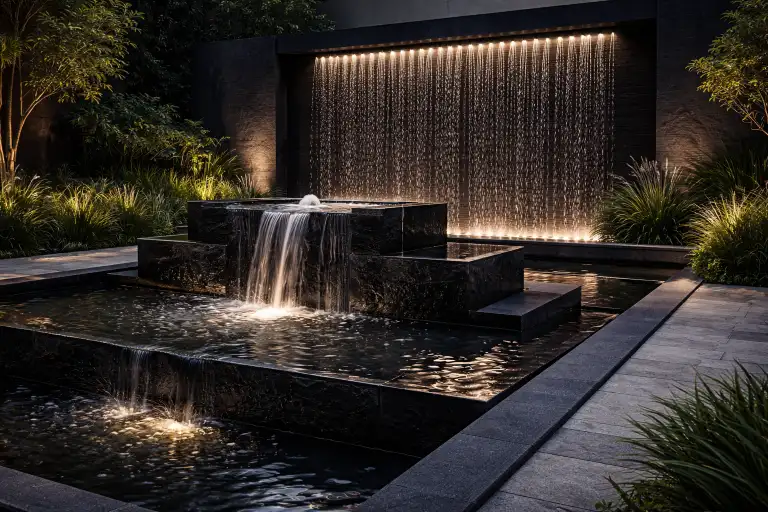
Water has always been one of the most captivating elements in architecture and landscape design. When paired with the right materials, it becomes more than a decorative feature, it becomes a focal point, a sensory experience, and a statement piece. One of the most powerful techniques designers use today is combining dark materials with flowing water to create dramatic contrast.
Whether in garden fountains, indoor water fountains, wall fountains, or rain curtain water features, dark surfaces amplify the brilliance and movement of water. The reflective shimmer of falling water against deep-toned stone, metal, or composite materials creates visual intensity that draws the eye immediately.
From contemporary courtyards to luxury hotel lobbies, the trend toward dark-toned fountains and water features continues to grow. Designers favor charcoal slate, black basalt, dark concrete, oxidized metals, and matte finishes to produce an atmosphere that feels both modern and timeless.
This article explores why dark materials create such powerful visual effects in water fountains, how they influence perception and ambiance, and how they can be incorporated into outdoor fountains, tabletop fountains, floor fountains, and rain curtain fountains for stunning results.
Why Contrast Matters in Water Feature Design
Contrast is fundamental in visual design. When light elements meet dark surfaces, the difference enhances visibility and depth. In the case of water features, contrast emphasizes movement.
Water itself is naturally reflective and luminous. Against pale stone or light concrete, it may appear subtle or almost invisible from certain angles. However, when water flows over dark materials, the droplets, ripples, and reflections become dramatically more visible.
This effect is especially powerful in:
- Outdoor water fountains
- Wall fountains
- Rain curtain fountains
- Floor fountains
- Indoor fountains
- Garden fountains
The darker the surface, the more the water appears to glow as it cascades or trickles across the structure.
Designers often refer to this as the “liquid light effect.” The water captures ambient light, sunlight, landscape lighting, or interior lighting, and reflects it across the dark surface.
The result is a striking focal point that feels dynamic, elegant, and calming at the same time.
The Rise of Dark Materials in Modern Fountains
Modern architectural design increasingly favors minimalist palettes. Instead of ornate carvings and colorful mosaics, designers now rely on texture, tone, and contrast to create visual interest.
Dark materials work beautifully within this philosophy.
Popular materials used in modern water fountains include:
- Black granite
- Basalt
- Charcoal slate
- Dark polished concrete
- Matte black metal
- Powder-coated aluminum
- Dark fiberglass composites
Each material interacts differently with water. Some create a glossy reflective sheen, while others absorb light and allow water droplets to sparkle vividly.
For instance:
- Basalt garden fountains create a natural volcanic texture that highlights thin streams of water.
- Black granite wall fountains produce a mirror-like finish that reflects water movement dramatically.
- Dark concrete floor fountains provide a modern architectural look while emphasizing the shape of the water flow.
The popularity of these materials has helped redefine how outdoor fountains and indoor fountains are designed in modern environments.
How Dark Surfaces Enhance Water Movement
Water movement is the heart of any fountain design. Whether it’s a gentle trickle or a dramatic cascade, the visibility of motion determines the overall impact.
Dark materials enhance water movement in several ways.
1. Increased Visibility of Flow
Water against dark surfaces becomes easier to see, especially in subtle flows like:
- thin sheets
- delicate streams
- rain curtain drops
- mist effects
This makes rain curtain water features particularly effective with black backgrounds.
2. Highlighted Texture
When water flows across textured stone or metal, the shadows created by the surface add depth and dimension.
This effect is commonly seen in:
- slate wall fountains
- basalt column fountains
- textured concrete outdoor fountains
The result is a visually layered water feature that appears constantly changing.
3. Enhanced Lighting Effects
Dark materials act as a stage for light reflections. LED lighting integrated into water fountains becomes more vibrant when the surrounding material is dark.
Lighting can create:
- shimmering reflections
- glowing streams
- illuminated rain curtain drops
This combination of light and dark surfaces produces a mesmerizing nighttime effect.
Outdoor Fountains: Making Landscapes Pop
In outdoor settings, fountains often compete with plants, stonework, and architecture. Using dark materials helps outdoor water fountains stand out within the landscape.
A dark fountain placed among greenery creates powerful contrast.
For example:
- A black basalt garden fountain surrounded by bright green foliage immediately captures attention.
- A charcoal concrete water feature in a modern courtyard provides a sleek architectural centerpiece.
Even in large landscapes, dark garden fountains anchor the visual composition.
Designers frequently pair dark fountains with:
- white gravel
- light stone paving
- lush plants
- bright flowers
The contrast between natural greenery and deep-toned fountain materials creates a balanced yet dramatic outdoor scene.
Indoor Water Fountains and Interior Atmosphere
The same contrast principles that work outdoors also apply beautifully indoors.
In interior spaces, indoor water fountains often serve as calming focal points that improve ambiance.
Dark materials bring sophistication and modern elegance to interior water features.
Common indoor applications include:
- wall fountains in offices
- tabletop fountains in living spaces
- floor fountains in hotel lobbies
- rain curtain water features in restaurants
When water flows over dark surfaces in controlled indoor lighting, the movement becomes even more dramatic.
For instance, a black glass wall fountain with soft LED lighting can create a relaxing visual rhythm that enhances the entire room.
Similarly, tabletop fountains with dark stone bases produce delicate reflections that draw attention without overwhelming the space.
Wall Fountains: Vertical Drama
Among all water features, wall fountains benefit the most from dark material design.
Vertical water movement becomes incredibly visible when it flows over dark surfaces.
This is especially effective in:
- slate wall fountains
- dark metal panel fountains
- black glass indoor fountains
The vertical plane allows water to glide smoothly while reflecting light across the surface.
Dark materials also hide minor mineral deposits or streaks better than lighter stone, making them practical for long-term maintenance.
In both indoor fountains and outdoor fountains, wall-mounted designs create dramatic water displays without requiring large footprints.
The Elegance of Rain Curtain Fountains
Few water features capture attention quite like a rain curtain fountain.
Instead of water flowing along a surface, these fountains release thousands of droplets that fall vertically like rainfall.
A dark backdrop dramatically enhances this effect.
The droplets appear suspended in mid-air, glimmering as they descend.
This is why many modern rain curtain water features use black or charcoal backgrounds.
The visual effect becomes almost hypnotic.
Rain curtain designs are popular in:
- luxury hotels
- office atriums
- restaurant entrances
- contemporary homes
Because the droplets are evenly spaced, the contrast between dark materials and shimmering water creates a visually rhythmic display.
Tabletop Fountains: Small Features, Big Impact
Not all dramatic water features need to be large.
Tabletop fountains bring the same design principles into compact spaces.
Dark materials help small fountains appear more sophisticated and visually striking.
A black ceramic tabletop fountain with gentle cascading water can become a calming centerpiece on a desk or side table.
The dark surface highlights every ripple and reflection.
These small indoor fountains are perfect for:
- meditation rooms
- offices
- living rooms
- bedside tables
Even at a small scale, the contrast between dark materials and flowing water produces a powerful aesthetic effect.
Floor Fountains in Contemporary Architecture
Large interior spaces often use floor fountains to create immersive water experiences. These fountains may sit flush with the ground or rise slightly above the floor plane.
Dark materials add architectural drama to these installations.
A dark granite floor fountain with vertical water jets creates sparkling motion that contrasts beautifully against the stone surface.
Floor fountains are often used in:
- hotel lobbies
- museums
- shopping centers
- corporate offices
Because the water emerges directly from the floor plane, the dark surface helps define the geometry of the water movement.
Combining Dark Materials with Natural Elements
While dark materials create bold contrast, they also pair beautifully with natural elements.
Designers frequently combine garden fountains with materials such as:
- bamboo
- river stones
- wood decking
- ornamental grasses
The dark fountain acts as a grounding anchor within the landscape.
Water flowing across black basalt or slate creates a natural look that feels organic yet refined.
This balance between nature and modern materials makes outdoor water fountains adaptable to many landscape styles.
Lighting Strategies for Dark Fountains
Lighting dramatically enhances the effect of dark fountain materials.
Some of the most effective lighting techniques include:
- Underwater LED lighting – Lights placed beneath flowing water illuminate streams and droplets.
- Backlit rain curtains – LED panels behind a rain curtain fountain highlight each falling droplet.
- Edge lighting – Subtle lights along the edges of wall fountains emphasize the water sheet as it flows downward.
Because dark materials absorb surrounding light, illuminated water becomes the visual star of the design.
Maintenance Benefits of Dark Fountain Materials
Beyond aesthetics, dark materials offer practical advantages. They tend to:
- hide mineral buildup
- conceal water stains
- resist visible wear
- maintain a consistent appearance over time
This makes them ideal for outdoor fountains exposed to environmental elements.
Additionally, modern composite materials used in indoor fountains and outdoor water fountains often include protective coatings that maintain the deep color for many years.
The Emotional Impact of Dark Water Features
Water features influence mood and atmosphere. Dark materials intensify the sensory experience.
The visual contrast creates:
- calm focus
- dramatic elegance
- architectural sophistication
Combined with the soothing sound of flowing water, these elements transform ordinary spaces into tranquil environments.
Whether in a peaceful garden, a modern patio, or an interior lounge, water fountains with dark materials create moments of quiet beauty.
Designing the Perfect Fountain with Dark Materials
When designing a fountain using dark materials, consider several key factors.
Scale
Large outdoor fountains benefit from bold dark stone or concrete. Smaller tabletop fountains may use ceramic or polished metal.
Lighting
Lighting should highlight water movement without overpowering it.
Water flow style
Choose the flow style that best matches the atmosphere: cascading sheets for wall fountains, vertical droplets for rain curtain fountains, bubbling streams for garden fountains.
Surrounding environment
The contrast between the fountain and its surroundings determines the final visual effect. A thoughtfully designed water feature can become the centerpiece of any space.
Conclusion
Dark materials have transformed the way designers approach water fountains and water features. By creating strong visual contrast, these materials highlight the beauty and movement of flowing water.
From outdoor water fountains and garden fountains to indoor fountains, wall fountains, tabletop fountains, and rain curtain water features, dark surfaces bring depth, elegance, and drama to fountain design.
As modern architecture continues to embrace minimalist aesthetics and sensory experiences, the pairing of dark materials and luminous water will remain one of the most captivating approaches to fountain design.
Whether large or small, indoor or outdoor, the right combination of water and dark materials can turn a simple fountain into an unforgettable visual experience.