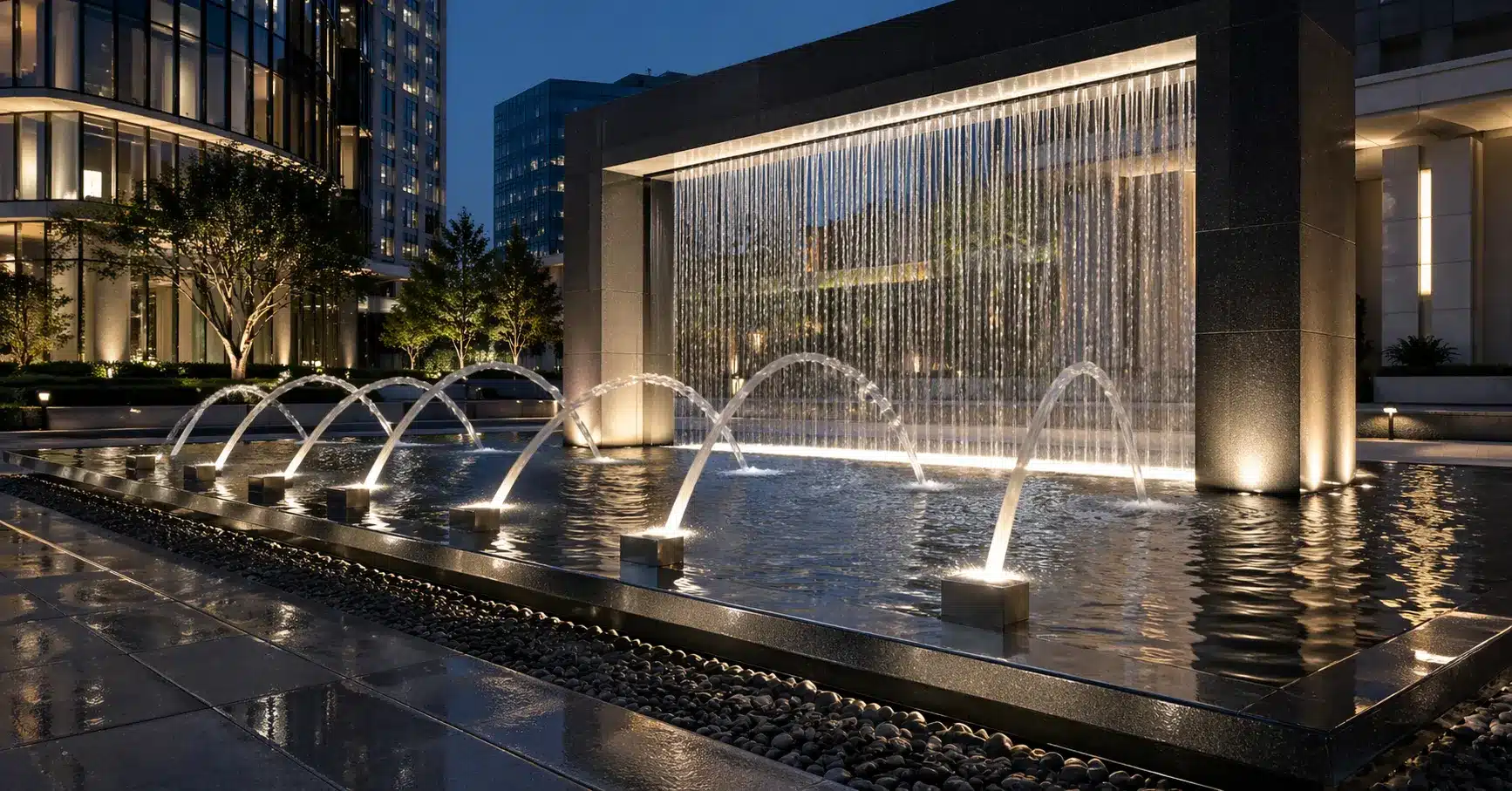
Commercial fountains are more than decorative elements—they are engineered experiences. Whether placed in luxury hotels, public plazas, corporate campuses, or retail environments, these water features are expected to operate continuously, often under demanding conditions. Designing fountains for 24/7 performance and reliability requires a balance of aesthetics, engineering precision, and long-term operational thinking.
Unlike residential garden fountains or tabletop fountains, commercial systems must handle heavy usage, environmental exposure, and strict maintenance schedules. When done right, they become signature elements—drawing attention, enhancing brand perception, and creating immersive environments that people remember.
This guide explores how to design commercial fountains that don’t just look stunning on opening day, but continue performing flawlessly for years.
The Reality of 24/7 Fountain Operation
Designing fountains for continuous operation means planning for wear, variability, and resilience. A system that runs non-stop faces challenges such as:
- Water evaporation and replenishment cycles
- Mineral buildup and scaling
- Pump fatigue and mechanical stress
- Environmental exposure (heat, wind, debris)
- Electrical system durability
Outdoor water fountains, in particular, must withstand changing climates, while indoor fountains must integrate seamlessly with HVAC systems and building infrastructure.
Reliability isn’t accidental, it’s engineered from the ground up.
Core Design Principles for Commercial Fountains
1. System Redundancy
A single point of failure can shut down an entire water feature. For commercial fountains, redundancy is essential.
Key strategies include:
- Dual or backup pumps
- Parallel filtration systems
- Backup power integration where needed
This ensures that even if one component fails, the fountain continues operating without interruption.
2. Proper Hydraulic Design
Water movement is the heart of any fountain. Poor hydraulic planning leads to uneven flow, splashing, and system inefficiencies.
Design considerations:
- Accurate flow rate calculations
- Pipe sizing to minimize pressure loss
- Balanced distribution across features like wall fountains or rain curtain fountains
In complex water features, especially large outdoor fountains, hydraulic modeling helps predict performance before installation.
3. Material Selection for Longevity
Materials define how well a fountain ages.
For commercial environments:
- Stainless steel resists corrosion in high-use systems
- Stone and concrete provide durability for outdoor water fountains
- Glass and acrylic are common in indoor fountains and rain curtain water features
The goal is to select materials that handle constant water exposure without degrading, discoloring, or requiring frequent replacement.
Designing for Different Fountain Types
Outdoor Fountains: Built for Exposure
Outdoor fountains face the harshest conditions, sun, wind, debris, and temperature fluctuations.
Design priorities include:
- Wind-resistant spray patterns
- Overflow management
- UV-resistant materials
- Drainage systems for heavy rain
Outdoor water fountains in public spaces must also account for user interaction, vandalism, and safety.
Indoor Water Fountains: Precision and Integration
Indoor fountains demand tighter control and integration with building systems.
Considerations include:
- Humidity control to protect interiors
- Noise reduction for quiet environments
- Compact filtration systems
- Seamless architectural integration
Indoor fountains, including wall fountains and floor fountains, often serve as focal points in lobbies and offices, so both aesthetics and performance must align.
Rain Curtain Fountain Systems
A rain curtain fountain is one of the most strikingly beautiful water features, but also one of the most technically demanding.
To ensure reliability:
- Use precision-engineered distribution trays
- Maintain consistent water pressure
- Integrate fine filtration to prevent clogging
- Design for easy access and maintenance
Because the water flow must remain smooth and continuous, even minor disruptions can impact the visual effect.
Pump Systems: The Engine of Performance
Pumps are the most critical mechanical component in any fountain system.
For 24/7 operation:
- Choose commercial-grade pumps rated for continuous duty
- Size pumps correctly to avoid overworking or underperformance
- Incorporate variable frequency drives (VFDs) for efficiency
VFDs allow dynamic control of water flow, reducing energy consumption and extending equipment life.
Filtration and Water Quality Management
Water quality directly affects both aesthetics and system longevity.
Without proper filtration:
- Water becomes cloudy
- Algae growth increases
- Components clog and degrade
A robust filtration system typically includes:
- Mechanical filtration (removes debris)
- Biological filtration (controls organic matter)
- Chemical treatment (balances pH and prevents scaling)
For high-visibility water features, crystal-clear water is non-negotiable.
Automation and Smart Controls
Modern commercial fountains rely heavily on automation.
Smart systems allow:
- Remote monitoring and diagnostics
- Automated water level control
- Scheduled operation adjustments
- Real-time alerts for maintenance issues
Automation reduces human error and ensures consistent performance, especially in large-scale outdoor fountains and complex indoor installations.
Energy Efficiency and Sustainability
Running a fountain 24/7 can be energy-intensive. Designing with efficiency in mind reduces operational costs and environmental impact.
Key strategies:
- Use energy-efficient pumps and motors
- Optimize water flow to minimize waste
- Integrate LED lighting systems
- Implement recirculation systems to conserve water
Sustainability is increasingly important in commercial projects, and well-designed water features can align with green building standards.
Maintenance-Friendly Design
A fountain that’s difficult to maintain will eventually fail—no matter how beautiful it is.
Design for accessibility:
- Easy access to pumps and filters
- Modular components for quick replacement
- Clear maintenance pathways
Even decorative elements like garden fountains or wall fountains benefit from maintenance-conscious design.
Routine maintenance should feel manageable, not overwhelming.
Common Failure Points, and How to Avoid Them
1. Poor Drainage Design
Leads to flooding, water loss, and structural damage.
Solution: Integrate overflow systems and proper grading.
2. Undersized Equipment
Causes system strain and premature failure.
Solution: Always design with a performance buffer.
3. Inadequate Filtration
Results in dirty water and clogged systems.
Solution: Over-spec filtration systems for commercial use.
4. Ignoring Environmental Factors
Wind and temperature can disrupt water flow.
Solution: Tailor design to the installation environment.
The Role of Aesthetics in Reliable Design
Reliability doesn’t mean sacrificing design.
In fact, the most successful fountains blend:
- Visual impact
- Acoustic experience
- Engineering precision
Whether it’s a sleek indoor fountain in a corporate lobby or a large-scale outdoor water fountain in a public square, the goal is to create a feature that performs beautifully and consistently.
Integrating Lighting for Continuous Operation
Lighting plays a major role in commercial fountains, especially those operating around the clock.
Best practices:
- Use waterproof, energy-efficient LED fixtures
- Design lighting for easy replacement
- Synchronize lighting with water movement
In features like rain curtain water systems, lighting enhances the visual drama, making the fountain a centerpiece both day and night.
Designing for User Interaction and Safety
Commercial fountains often invite interaction, especially in public spaces.
Safety considerations include:
- Non-slip surfaces
- Safe water depths
- Proper electrical insulation
- Clear boundaries where needed
Outdoor fountains in plazas or parks must balance accessibility with safety, ensuring a positive experience for all users.
Future-Proofing Your Fountain Design
Technology and expectations evolve. Designing with flexibility ensures the fountain remains relevant.
Future-proofing strategies:
- Modular system design
- Upgrade-ready control systems
- Scalable pump and filtration setups
This approach allows upgrades without complete system overhauls.
Why Reliability Defines Success
A commercial fountain is always on display. When it stops working, it becomes instantly noticeable, and often damages the perception of the space it occupies.
Reliable fountains:
- Enhance brand image
- Create memorable environments
- Require less emergency maintenance
- Deliver long-term value
The difference between a decorative feature and a landmark installation often comes down to performance over time.
Final Thoughts
Designing commercial fountains for 24/7 performance isn’t just about engineering, it’s about foresight. Every decision, from material selection to hydraulic design, contributes to how the fountain performs months and years down the line.
The most successful water features, whether indoor fountains, outdoor water fountains, or complex rain curtain fountains, share a common trait: they are built with reliability at their core.
When design and engineering align, fountains transform from simple installations into enduring experiences.