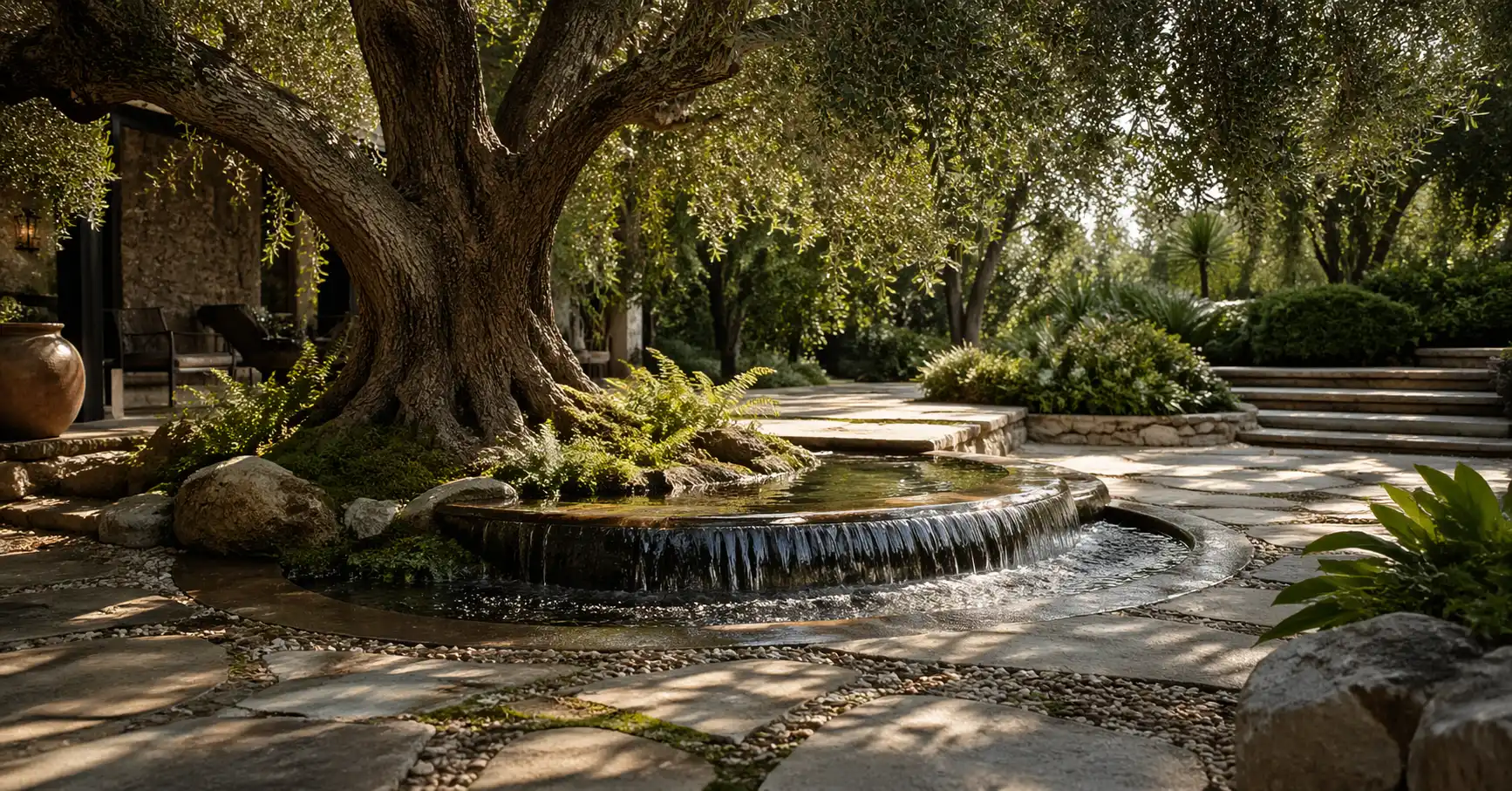
Designing fountains around mature trees is one of those landscape challenges that, when done right, feels effortless and timeless. It’s where architecture meets nature, where the quiet strength of an established tree becomes the anchor for flowing water, texture, and movement.
But let’s be honest: it’s also easy to get wrong.
Tree roots, water flow, soil health, and long-term maintenance all need to be considered carefully. A poorly planned fountain can stress or even damage a mature tree. On the flip side, a thoughtfully designed water feature can elevate the entire landscape, adding serenity, visual depth, and even increasing property value.
This guide walks you through how to design fountains around mature trees in a way that feels intentional, balanced, and sustainable.
Why Pair Fountains with Mature Trees?
Mature trees bring something that no new planting can replicate: presence. Their scale, branching patterns, and established root systems create a natural focal point. When paired with fountains, they transform a garden into a layered sensory experience.
Here’s why this combination works so well:
1. Natural Focal Point
A mature tree already commands attention. Adding a water fountain nearby enhances that focal point without competing with it.
2. Microclimate Benefits
Trees provide shade, which reduces evaporation and helps outdoor water fountains maintain stable temperatures, especially in warm climates.
3. Sound and Movement
Water introduces a dynamic element. The gentle sound of flowing water complements the stillness of a tree, creating a calming atmosphere.
4. Visual Contrast
The organic texture of bark and leaves contrasts beautifully with the smooth surfaces of stone, metal, or concrete fountains.
Understanding the Tree First
Before choosing a fountain style or layout, start with the tree itself. Designing around a mature tree means respecting its structure, both above and below ground.
Root Zones Matter
The most critical area is the critical root zone (CRZ), typically defined as a radius of about 1 to 1.5 feet per inch of trunk diameter.
- Avoid digging deeply within this zone
- Minimize heavy construction
- Never cut large roots without consulting an arborist
Soil and Drainage
Trees thrive in well-aerated soil. Installing water features incorrectly can lead to:
- Waterlogged soil
- Root rot
- Compacted ground
A successful design ensures water flows away from the trunk while still integrating the fountain visually.
Canopy Considerations
Leaves, sap, and debris will fall into your fountain. This affects:
- Maintenance frequency
- Filter systems
- Water clarity
Plan accordingly with accessible cleaning zones and efficient filtration.
Choosing the Right Fountain Style
Not all fountains work well around trees. The key is selecting a style that complements the tree without overwhelming it.
1. Low-Profile Garden Fountains
These are ideal for placing near the base of a tree without interfering with roots.
- Shallow basins
- Natural stone finishes
- Subtle water movement
They blend seamlessly into landscapes and feel almost like a natural spring emerging beneath the tree.
2. Wall Fountains (Using Nearby Structures)
If your tree is near a wall or boundary, wall fountains can add vertical interest without disturbing roots.
- Mounted on adjacent surfaces
- Minimal ground impact
- Elegant and space-efficient
This approach works especially well in courtyards or smaller gardens.
3. Ring or Crescent Layouts
Instead of placing a fountain directly at the base, design around the tree:
- Circular seating with integrated water features
- Crescent-shaped outdoor fountains that frame the trunk
- Multi-point water jets embedded in paving
This protects the root zone while creating a cohesive design.
4. Naturalistic Water Features
Think less “fountain” and more “ecosystem.”
- Stream-style water features flowing around the tree
- Rock-lined basins
- Small cascading elements
These mimic nature and work beautifully with mature trees, especially in larger gardens.
Layout Strategies That Work
Design is not just about the fountain, it’s about how everything connects.
Keep Distance Intentional
Avoid placing fountains too close to the trunk. A good rule:
- Maintain at least 3–6 feet of distance for smaller trees
- Increase spacing for larger trunks
This allows roots to breathe and reduces long-term risk.
Elevation is Your Friend
Raised fountains or above-ground basins are excellent solutions.
- No deep excavation required
- Protects root systems
- Adds visual hierarchy
Pedestal-based water fountains can be particularly effective here.
Use Permeable Materials
Around the tree and fountain, opt for:
- Gravel
- Decomposed granite
- Permeable pavers
These allow water and oxygen to reach the roots while maintaining structural integrity.
Balancing Water Flow and Tree Health
Water is both a benefit and a risk.
Avoid Overwatering
Too much moisture around roots can suffocate them.
- Ensure proper drainage systems
- Use liners to control water spread
- Avoid constant overflow near the trunk
Direct Water Thoughtfully
The fountain should not spray directly onto the tree base.
Instead:
- Angle jets outward
- Use gentle cascades
- Keep splash zones controlled
Incorporate Irrigation Strategy
If the tree already has an irrigation system, coordinate it with the fountain:
- Avoid redundant watering
- Adjust schedules seasonally
- Monitor soil moisture regularly
Materials That Complement Trees
Material choice plays a huge role in the final look.
Natural Stone
- Blends effortlessly with bark and soil tones
- Durable and timeless
- Ideal for garden fountains
- Aged Metals (Copper, Bronze)
- Develop a patina over time
- Add warmth and sophistication
- Pair beautifully with mature landscapes
- Concrete and Cast Stone
- Versatile shapes and finishes
- Can mimic natural textures
- Suitable for both modern and classic designs
Avoid overly glossy or artificial finishes, they tend to clash with the organic presence of a mature tree.
Lighting the Scene
Lighting transforms fountains into nighttime features.
- Soft Uplighting
- Highlight the tree canopy
- Create dramatic shadows
- Use warm tones for a natural feel
- Subtle Fountain Lighting
- Underwater LEDs
- Soft glow rather than bright beams
- Enhance movement without overpowering
The goal is cohesion, light should unify the tree and water feature into a single composition.
Maintenance Considerations
Designing is only half the story. Long-term care matters.
Debris Management
Mature trees shed leaves, seeds, and branches.
- Install skimmers or leaf nets
- Choose easy-access fountain designs
- Schedule regular cleaning
Filtration Systems
Invest in high-quality filtration to maintain water clarity.
- Especially important for outdoor water fountains under trees
- Reduces algae growth
- Extends pump life
- Seasonal Adjustments
- Increase cleaning in fall
- Monitor evaporation in summer
- Protect pumps in colder months
Design Ideas to Inspire You
Here are a few practical concepts that work beautifully:
The Tree-Centered Courtyard
A mature tree sits in the center, surrounded by a circular stone bench. A low-profile fountain flows gently along the perimeter, creating a calm, enclosed space.
The Layered Garden
Multiple garden fountains at different elevations lead the eye toward a large tree, creating depth and movement.
The Natural Stream Effect
A subtle water feature winds through rocks and plantings, passing near the tree without disturbing its base.
The Modern Minimalist Approach
Clean-lined outdoor fountains paired with a single mature tree in a structured landscape, simple, bold, and elegant.
Mistakes to Avoid
Even experienced designers can slip up here.
- Placing fountains too close to the trunk
- Ignoring root systems during excavation
- Overwatering the soil
- Choosing oversized or visually dominant fountains
- Forgetting about debris and maintenance
A good design respects both the tree and the water feature equally.
Final Thoughts
Designing fountains around mature trees is less about adding something new and more about enhancing what already exists.
The tree has history. It has structure. It has presence.
Your role is to complement it, using water, materials, and thoughtful design to create a space that feels balanced and alive.
When done right, the result isn’t just a garden with a fountain. It’s an experience, one that invites people to pause, listen, and stay a little longer.