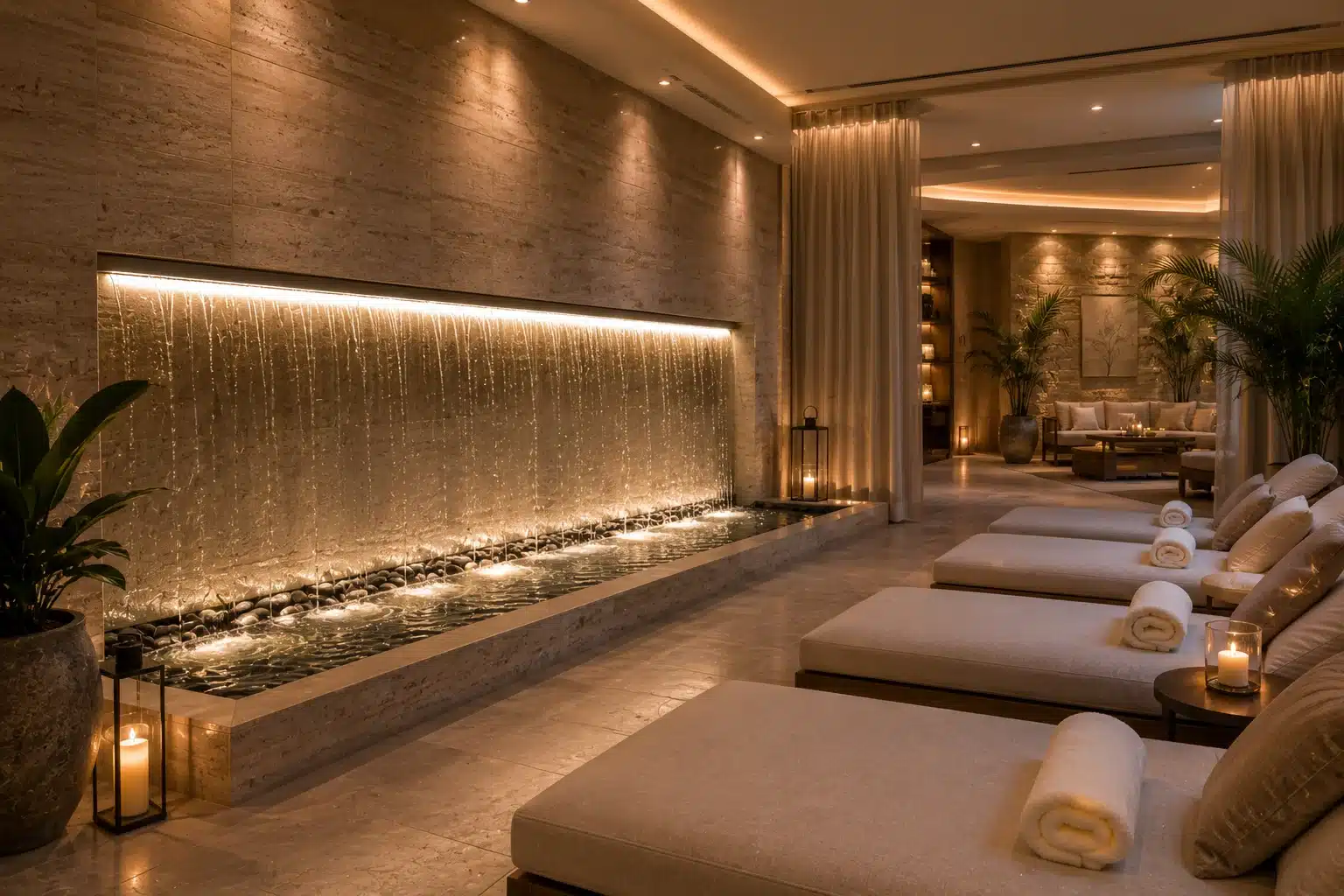
The spa environment is one of the most acoustically, visually, and hygienically demanding settings in which a water feature can be installed. Guests arrive seeking quiet, privacy, and sensory ease. Every element of the environment, including sound, scent, temperature, and light, is consciously managed toward that experience.
A poorly designed spa fountain can undermine all of it. It may be too loud, too dramatic, too chemically treated, or simply placed without understanding how sound moves through the space. A well-designed spa fountain, by contrast, becomes one of the most effective tools available to the spa designer, establishing acoustic comfort, visual calm, and a sense of refined natural quality that guests associate directly with the caliber of the experience.
Why Water Features Are Essential in Luxury Spa Design
Water has long been associated with wellness, relaxation, and sensory restoration. In modern spa environments, water features serve a purpose beyond aesthetics. They help shape the emotional atmosphere of a space while supporting acoustic comfort, visual calm, and a sense of luxury.
Well-designed indoor fountains can become defining elements of a spa experience, reinforcing the property’s wellness philosophy while creating memorable environments for guests.
The Role of Water in the Wellness Experience
Luxury spas are designed to engage multiple senses simultaneously. Lighting, scent, temperature, texture, and sound work together to create a restorative environment.
Water features contribute to this multisensory experience by introducing movement, reflection, and natural sound into the space. Unlike decorative elements that are primarily visual, water affects how a space feels and how guests emotionally respond to it.
For this reason, successful spa water feature design requires close coordination between architects, interior designers, acoustic consultants, and fountain specialists.
Understanding the Spa Acoustic Environment
Sound is the primary design criterion for spa water features, often more important than visual appearance because guests frequently experience these environments with their eyes closed.
The acoustic goal is not silence. Complete silence can amplify mechanical noise, conversations from adjacent spaces, and the self-consciousness that comes from hearing every movement.
A carefully chosen level of water sound provides acoustic masking without becoming a distraction.
The ideal acoustic character is:
- Soft and continuous rather than intermittent
- Perceptible but not attention-demanding
- Evenly distributed throughout the space
- Free from mechanical pump noise
Achieving this requires design decisions that prioritize acoustic outcome over visual drama.
A single-point waterfall that creates a loud splash may look impressive in renderings but feel intrusive in a treatment room.
Sheet water features, rain curtain fountains designed for reduced flow rates, and thin laminar water walls produce the gentle sound profiles that work best in luxury spa environments.
Humidity Management
Water features in enclosed spa environments introduce humidity into the air, making humidity control a genuine engineering challenge.
Evaporation from open water surfaces and water-in-air features can significantly increase relative humidity. In well-ventilated spaces this can be managed through HVAC design, but in enclosed relaxation rooms or hammam-style environments, unmanaged humidity can cause condensation, material deterioration, and guest discomfort.
Design considerations include:
- Coordinating with the MEP engineer on evaporative load calculations
- Using closed-surface water features with minimal aeration
- Avoiding excessive open water surfaces in enclosed spaces
- Considering the moisture sensitivity of nearby materials
Water Quality and Sanitation in Spa Environments
Spa water features require a higher hygiene standard than most commercial fountains because guests spend extended periods near the water.
Key sanitation requirements include:
- Crystal-clear water at all times
- Automated chemical dosing systems
- UV sterilization as a primary treatment supplement
- Legionella risk assessment for aerosol-producing features
- Consistent monitoring and maintenance procedures
Chlorine odor is incompatible with a luxury spa atmosphere. UV-primary treatment combined with low chemical residuals is generally preferred.
Material Selection for Spa Water Features
Material choices must balance aesthetics, durability, and maintenance requirements.
Stainless Steel (316 Grade)
Ideal for contemporary spa environments. Durable, corrosion-resistant, and available in brushed finishes that minimize glare.
Natural Stone
Natural stone remains one of the most popular materials used in custom fountains designed for luxury spa environments.
Limestone, travertine, and slate are frequently specified because they communicate warmth and authenticity. Proper sealing and drainage design are essential.
Copper
Copper develops a natural patina over time and works well in traditional spa environments. Water chemistry must be carefully managed.
Glass
Glass is commonly used in contemporary water walls and partitions but requires diligent cleaning due to mineral buildup.
Lighting in Spa Water Features
Lighting must be approached with exceptional restraint.
Spa water feature lighting should:
- Use warm color temperatures (2700K or warmer)
- Remain low in intensity
- Avoid direct glare
- Utilize dimming controls
- Minimize color-changing effects
The objective is subtle illumination that enhances the water surface without competing for attention.
Balancing Luxury and Maintainability
The most successful spa water features balance aesthetics with long-term operational performance.
A visually stunning fountain that requires constant maintenance can become a burden for spa operators. Conversely, a highly practical system that lacks visual refinement may fail to support the overall guest experience.
Design decisions should consider both guest perception and long-term fountain maintenance requirements to ensure the installation remains beautiful and functional for years to come.
Common Mistakes in Spa Fountain Design
Over-Scaling the Feature
Large water features can overwhelm small spa spaces. Modest installations often create a stronger sense of calm.
Ignoring Pump Noise
Pump noise can ruin an otherwise successful installation. Vibration isolation, remote pump placement, and VFD controls should be considered.
Choosing Materials Without Considering Cleaning
Luxury spa water features must remain immaculate. Materials should support efficient cleaning without extensive downtime.
Key Takeaway
Designing water features for five-star spa environments requires a fundamentally different approach than designing fountains for public plazas, hotels, or commercial developments.
Acoustic performance, humidity management, sanitation, material selection, lighting, and maintenance all contribute to the success of the installation.
When these elements are carefully coordinated, water features become powerful tools for supporting wellness, enhancing relaxation, and elevating the guest experience.
Work With Fountains.com
Fountains.com designs custom water features for luxury spas, wellness resorts, and hospitality environments.
Our team collaborates with architects, interior designers, spa consultants, and MEP engineers to create installations that balance aesthetics, acoustics, sanitation, and long-term operational performance.
From tranquil indoor fountains and architectural water walls to specialized custom fountains, we help create wellness environments that support both guest experience and operational reliability.
Contact our team to discuss your spa project or explore our portfolio of luxury water feature installations.
FAQs:
There is no universal answer. Acoustic performance depends on geometry, materials, room dimensions, and user expectations. Variable frequency drives allow tuning during commissioning.
Yes, but humidity loads must be incorporated into HVAC design and appropriate water management protocols must be followed.
UV sterilization combined with low chemical residuals minimizes chlorine odor while maintaining water quality.