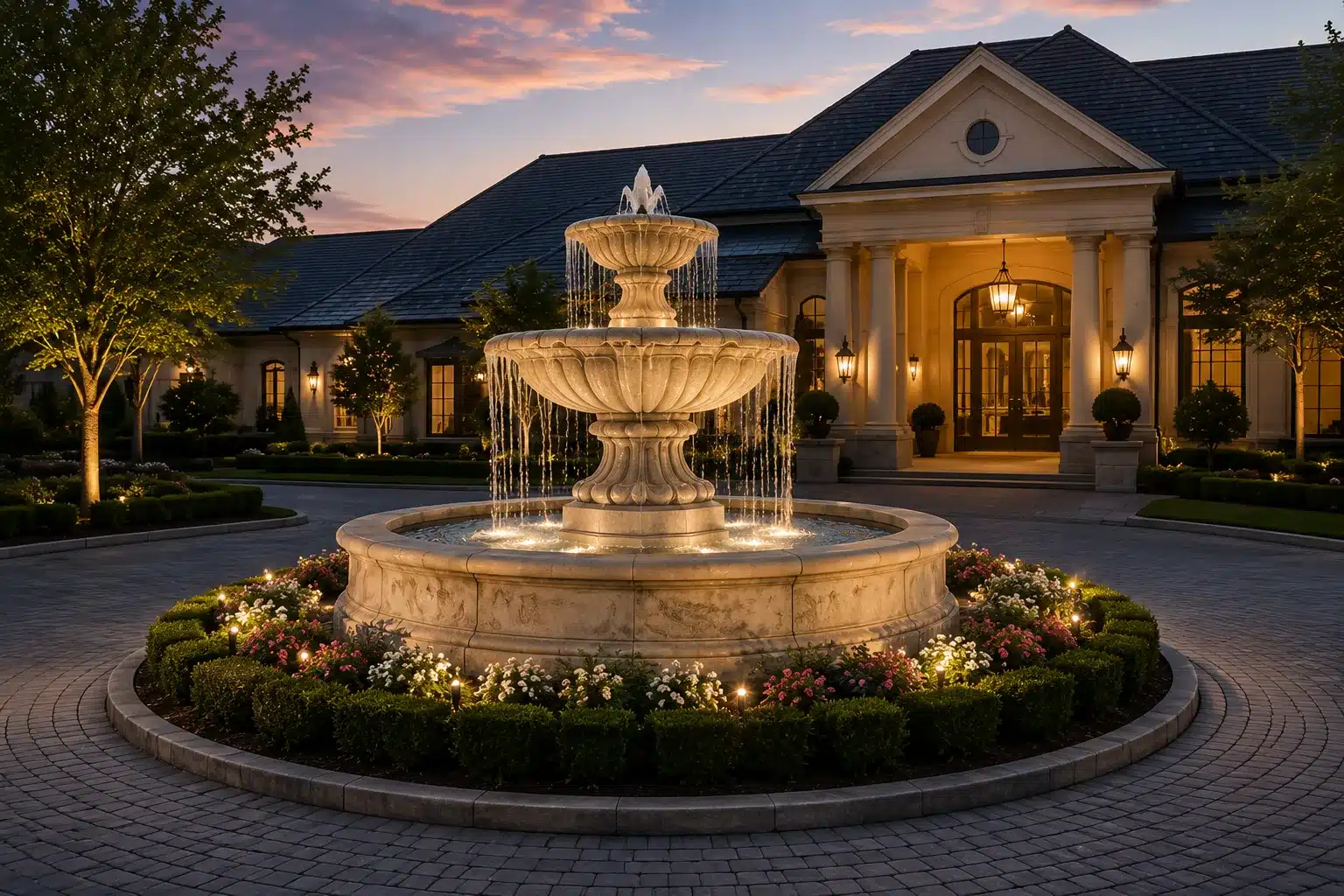
A private members’ club or country club represents tradition, exclusivity, hospitality, and lasting quality. Each architectural element, from the clubhouse to the grounds, contributes to this identity. A well-designed fountain acts as a visual landmark and reflects the club’s commitment to excellence.
Fountains in private clubs should balance elegance with restraint. They must enhance the surrounding architecture and create a sophisticated, timeless atmosphere without competing for attention.
Fountains should reinforce the club’s identity and provide reliable performance for decades, whether located at the entrance, near a golf course, or in a courtyard. This requires careful consideration of scale, materials, water movement, maintenance, and durability.
Many modern custom fountains for private clubs combine classic architectural inspiration with advanced engineering. This approach maintains traditional aesthetics while offering efficient equipment, automated water treatment, and simplified maintenance.
Quick Answer
Private members’ clubs and country clubs require fountains that emphasize timeless design, premium materials, long-term durability, and dependable operation. The most successful club fountains complement the surrounding architecture, create an exceptional member experience, require minimal day-to-day maintenance, and remain beautiful for decades through thoughtful engineering and high-quality construction.
Private Club Fountain Design at a Glance
Fountain Style | Classical or timeless contemporary |
Materials | Natural stone, bronze, stainless steel |
Scale | Proportional to surrounding architecture |
Water Sound | Gentle, relaxing ambient flow |
Lighting | Warm white programmable LED lighting |
Maintenance | Automated water treatment and easy equipment access |
Lifespan | Designed for 25 years or more with proper care |
A successful country club fountain becomes part of the club’s identity, creating a memorable first impression while blending seamlessly with the landscape and architecture.
Choosing the Right Fountain for Your Club
Different areas within a private club serve different purposes, and each location benefits from a different style of water feature.
Main Entrance or Motor Court | Grand tiered fountain |
Clubhouse Entrance | Architectural centerpiece fountain |
Dining Terrace | Courtyard fountain with gentle water sounds |
Formal Garden | Reflecting pool or sculptural fountain |
Golf Course Clubhouse | Low-profile architectural fountain |
Event Lawn | Contemporary reflecting fountain with lighting |
Choosing the right fountain begins with understanding how members use each space, rather than simply selecting the largest or most elaborate option.
Understanding the Private Club Environment
Private members’ clubs occupy a unique position within commercial development.
Unlike hotels or retail destinations that serve new visitors daily, clubs are designed for long-term members who return over many years. Each visit reinforces expectations of quality, consistency, and attention to detail.
Therefore, every architectural decision shapes the overall member experience.
A beautifully maintained fountain communicates:
- Pride of ownership
- Institutional permanence
- Exceptional craftsmanship
- Attention to maintenance
- Long-term investment
- Architectural harmony
Members may not consciously analyze the fountain, but they quickly notice when a water feature feels elegant, well maintained, and suited to its environment.
Conversely, cloudy water, faulty lighting, or visible mineral stains can reduce the perceived quality of the entire property.
For this reason, successful commercial fountains in private clubs are designed for both visual impact and reliable daily operation.
Designing Around the Member Experience
A defining characteristic of private club design is that every feature should support comfort rather than draw attention to itself.
A well-designed fountain enhances the experience by providing subtle visual movement, pleasant background sound, and a memorable sense of arrival without overwhelming the architecture.
Important considerations include:
- Comfortable viewing angles
- Safe pedestrian circulation
- Vehicle access
- Seasonal landscape changes
- Evening illumination
- Event flexibility
- Accessibility
- Long-term maintenance
Whether members arrive for golf, dining, tennis, weddings, or social events, the fountain should always reinforce the club’s identity in every season.
The Importance of Timeless Design
Design trends come and go, but private clubs often invest in facilities expected to serve members for decades.
Unlike commercial developments that may renovate every few years, many country clubs maintain their architectural identity across generations.
Timeless fountain design emphasizes:
- Balanced proportions
- High-quality craftsmanship
- Durable natural materials
- Elegant water movement
- Architectural compatibility
- Long-term durability
This approach ensures the fountain remains relevant as landscaping and amenities change over time.
Many outdoor fountains specified for country clubs draw inspiration from classical European gardens while incorporating modern mechanical systems that improve reliability and reduce maintenance.
Common Goals of Private Club Fountain Design
Although every project is unique, most clubs share several common design objectives:
- Create a memorable arrival experience.
- Complement existing architecture.
- Reinforce the club’s prestige.
- Provide relaxing ambient sound.
- Support weddings and special events.
- Require minimal daily maintenance.
- Maintain visual appeal throughout the seasons.
- Deliver reliable long-term performance.
Achieving these objectives requires close collaboration among architects, landscape architects, club leadership, and fountain specialists from the earliest planning stages.
Next: Part 2 explores entrance fountains, motor courts, courtyard and terrace water features, material selection, lighting design, maintenance planning, and the creation of lasting value for private members clubs and country clubs.
Entrance and Arrival Fountains
The entrance fountain is often the most recognizable water feature in a private members’ club. Located at the motor court or main entrance, it sets the tone for the entire property before members reach the clubhouse.
Unlike public plazas that favor dramatic displays, country club entrance fountains should convey confidence through proportion, craftsmanship, and timeless design.
An effective entrance fountain should:
- Create a memorable first impression.
- Complement the clubhouse architecture.
- Guide vehicle circulation without obstructing traffic
- Establish a welcoming atmosphere.
- Reinforce the club’s identity.
The fountain should feel integral to the property, not like an afterthought.
Many high-end custom fountains for private clubs become signature architectural features that members immediately associate with the club itself.
Scale and Proportion
Scale is one of the most important design considerations.An oversized fountain can dominate the entrance, while one that is too small may be lost in the landscape.e.
Experienced designers evaluate:
- Clubhouse size
- Motor court dimensions
- Driveway width
- Sightlines
- Vehicle turning radius
- Landscape composition
For many country clubs, maintaining at least a 20-foot turning radius around a central fountain allows vehicles to circulate comfortably while preserving the fountain as the focal point.
Instead of maximizing height, successful private club fountains feature balanced proportions that complement the surrounding architecture.
Materials That Reflect Institutional Quality
Private clubs often expect facilities to remain attractive for decades rather than years.
Material selection should prioritize durability as well as appearance.
Common choices include:
Natural Stone
Granite, limestone, marble, and other natural stones convey permanence and craftsmanship, and they age gracefully over time.
Bronze
Bronze accents, sculptures, and decorative details support traditional architecture and offer exceptional durability.
Stainless Steel
Hidden mechanical components and water-contact hardware often use 316 stainless steel for its superior corrosion resistance.
Many decorative metal fountains successfully combine bronze artwork with concealed stainless steel structural components for both beauty and longevity.
Courtyard and Terrace Fountains
Beyond the entrance, fountains serve a different purpose.
Instead of acting as dramatic landmarks, courtyard fountains create intimate spaces that encourage relaxation and conversation.
Common locations include:
- Outdoor dining terraces
- Garden courtyards
- Event lawns
- Walking gardens
- Clubhouse patios
These areas benefit from fountains that focus on atmosphere rather than spectacle.
Acoustic Comfort
The sound of water significantly enhances the member experience.
A gentle fountain can:
- Mask surrounding conversations
- Reduce traffic noise
- Create a sense of privacy.
- Improve relaxation
- Enhance outdoor dining
The goal is to create subtle background sound, not loud splashing.
Designers often adjust nozzle selection and flow rates to produce water sounds appropriate for dining, social gatherings, and quiet garden settings.
Lighting Design
Many private clubs host weddings, dinners, charity events, and evening social functions.
Thoughtful lighting design extends the fountain’s visual impact well into the evening.
Warm white LED lighting is preferred because it complements traditional architecture and creates a welcoming atmosphere.
Programmable lighting systems also allow clubs to celebrate holidays, tournaments, and special events without altering the fountain’s architecture.
Maintenance Planning
Private clubs expect every part of the property to be immaculate for every member visit.
Therefore, fountains should be designed with maintenance in mind from the outset.
Important considerations include:
- Automated water treatment
- Easy equipment access
- Accessible pump rooms
- Simple control systems
- Reliable filtration
- Efficient chemical dosing
- Clear maintenance documentation
Routine fountain maintenance preserves both the appearance and long-term performance of the installation while minimizing disruptions to club operations. Many commercial properties that renovate frequently, such as country clubs, often invest in facilities expected to serve members for decades.
Planning for long-term durability includes:
- High-quality construction materials
- Corrosion-resistant hardware
- Accessible mechanical systems
- Energy-efficient pumps
- Automated monitoring
- Future equipment replacement access
Designing for a 25- to 30-year service life usually offers greater value than minimizing initial construction costs.
Common Design Mistakes
Even well-designed fountains can fall short if practical considerations are overlooked.
Common mistakes include:
- Oversized fountains that overwhelm the architecture
- Trend-driven designs that quickly become dated
- Loud water displays near dining areas
- Difficult-to-access equipment rooms
- Poor nighttime lighting
- Limited maintenance access
- Inadequate water treatment
- Ignoring seasonal operation in colder climates
Addressing these issues during design ensures the fountain remains an asset, not an operational burden.
Example: Private Country Club Renovation
A private golf club renovated its entrance to create a stronger first impression for members and guests.ed a carved limestone tiered fountain positioned within the center of the motor court.
The project also incorporated:
- Automated water treatment
- Energy-efficient pumps
- Warm white LED lighting.
- Concealed mechanical equipment
- Easy-access maintenance vaults
The completed fountain became the architectural centerpiece of the entrance and required minimal daily attention from the club’s facilities team.
This example shows how thoughtful engineering and timeless design create lasting value.
Sustainability and Long-Term Value
Luxury and sustainability are now integrated design goals.
Modern fountain systems help reduce environmental impact through:
- Energy-efficient pumps
- Variable Frequency Drives (VFDs)
- LED lighting
- Automated water treatment
- Efficient filtration
- Durable natural materials
- Long equipment life
Reducing maintenance needs and extending equipment lifespan lowers lifecycle costs without compromising the member experience.
Work With Fountains.com
Each private members’ club has its own architectural character, history, and expectations.
Designing a fountain that feels like a natural extension of the property requires thoughtful planning, premium materials, and engineering for reliable long-term operation.
At Fountains.com, we work with architects, landscape architects, club management, developers, and design professionals to create timeless water features that complement private clubs and simplify long-term ownership.Whether you’re planning a new clubhouse, renovating an entrance, or restoring an existing water feature, our team can help design a fountain that reflects your club’s identity and delivers lasting performance.
Explore our:
Contact our team to discuss your private members’ club or country club fountain project.
Frequently Asked Questions
Tiered fountains, formal reflecting pools, and classical architectural fountains constructed from natural stone remain the most popular choices because they complement traditional clubhouse architecture and provide timeless appeal.
The fountain should be proportional to the size of the motor court and surrounding buildings. It should create a welcoming focal point while maintaining safe vehicle circulation and pedestrian access.
Natural granite, limestone, bronze, and 316 stainless steel are among the most durable materials for private club fountain installations when properly maintained.
Yes. Many older fountains can be upgraded through pump replacement, waterproofing repairs, lighting improvements, stone restoration, and modern water treatment systems rather than complete replacement.
That depends on the local climate. In colder regions, many outdoor fountains are seasonally winterized to protect pumps, piping, and finishes while maintaining the appearance of the surrounding landscape.
Key Takeaway
A successful private members’ club fountain does more than decorate the landscape. It reinforces the club’s identity, enhances the member experience, and demonstrates a commitment to quality that members recognize from the moment they arrive.
By combining timeless design, premium materials, thoughtful engineering, and long-term maintenance planning, private clubs can create water features that remain elegant, reliable, and welcoming for generations.