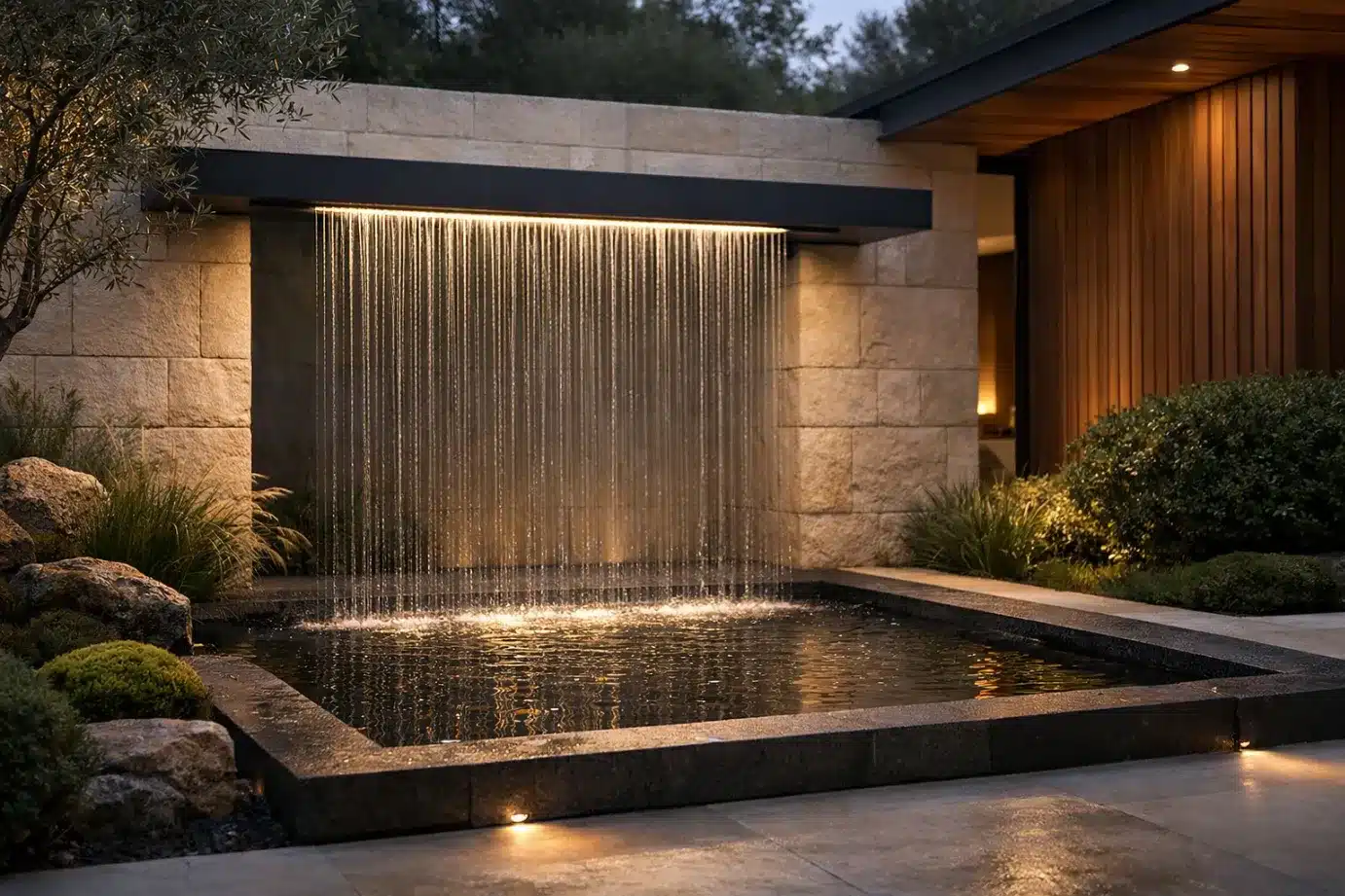
...
Personal-Luxury-Fountains

Designing Luxury Fountains That Feel Personal, Not Performative

Luxury has changed.

Once, luxury was about spectacle, bigger statements, louder gestures, and unmistakable displays of wealth. Today, true luxury whispers. It is felt more than seen. It prioritizes emotion, restraint, and authenticity over excess. Nowhere is this shift more apparent than in the world of fountains and water features.

Modern clients no longer want fountains that exist purely to impress passersby. They want outdoor fountains, indoor water fountains, and architectural water features that feel personal, intentional, and deeply connected to their space. They want water that tells a story—not water that performs.

This article explores how to design luxury fountains that feel soulful rather than showy, refined rather than performative, and timeless rather than trendy. From garden fountains and wall fountains to rain curtain fountains and floor fountains, we’ll look at how thoughtful design transforms water into an emotional experience.

The Problem with Performative Luxury

Performative luxury is easy to spot.

It’s the fountain that overwhelms its environment. The water feature that dominates instead of complements. The installation that exists solely to announce status rather than enhance daily life.

In fountains, performative design often shows up as:

  • Excessive scale with no contextual relevance
  • Overly complex water choreography
  • Loud, aggressive water sounds
  • Materials chosen for cost rather than meaning
  • Designs that photograph well but feel hollow in person

These fountains may impress for a moment, but they rarely age well. Over time, they feel disconnected, objects placed on a space instead of designed for it.

True luxury fountains do the opposite. They integrate seamlessly, elevate subtly, and invite long-term emotional connection.

Personal Luxury Begins with Listening

The most personal fountains are not designed first, they are understood first.

Designing meaningful water fountains begins with asking deeper questions:

  • How is this space used daily?
  • Where does stillness already exist?
  • What emotions should the water evoke, calm, grounding, inspiration?
  • Is the fountain meant to be seen, heard, touched, or simply sensed?

A garden fountain for quiet morning rituals requires a different approach than a rain curtain water feature in a corporate atrium. A tabletop fountain in a private study must feel intimate, while an outdoor water fountain in a courtyard should support conversation rather than overpower it.

When designers listen closely, the result feels bespoke, even if the design is minimalist.

Scale as an Emotional Decision, Not a Budget One

Bigger does not equal better.

One of the most common misconceptions in luxury fountain design is that scale alone communicates value. In reality, scale should serve emotion.

A small indoor fountain placed precisely can feel more luxurious than a massive installation with no purpose.

A narrow wall fountain with gentle flow can create serenity that a towering cascade cannot.

A refined floor fountain can ground a space without demanding attention.

Luxury fountains feel personal when they respect human scale. They invite proximity rather than intimidation. They allow the viewer to exist with the water, not beneath it.

Sound Design: The Most Overlooked Luxury Element

Water is not just visual, it is auditory.

One of the defining differences between performative and personal fountains lies in sound design. Thoughtful water features are tuned, not simply installed.

Consider the spectrum:

  • Sharp splashing creates energy and movement
  • Soft sheeting produces calm and consistency
  • Gentle dripping adds intimacy and rhythm

For indoor water fountains, sound is especially critical. Water should never compete with conversation, music, or thought. Instead, it should soften edges, mask unwanted noise, and create a subtle sensory backdrop.

In outdoor fountains, sound interacts with wind, architecture, and plant life. A well-designed fountain adapts throughout the day, quiet in the morning, richer in the evening, and restful at night.

Luxury is when water sounds intentional, not accidental.

Material Honesty Creates Emotional Connection

Luxury fountains feel personal when materials are chosen for meaning, not flash.

Natural stone, bronze, glass, concrete, steel, each material carries emotional weight. When used honestly, materials connect the fountain to its environment and to time itself.

Examples:

  • Stone garden fountains that weather naturally feel alive rather than static
  • Metal wall fountains that patina over time tell a story of age and permanence
  • Glass rain curtain fountains introduce lightness and movement without visual noise

Performative fountains often rely on overly polished, reflective surfaces that demand attention. Personal fountains allow materials to breathe, age, and evolve.

Luxury clients increasingly value how a fountain will feel ten years from now, not just on installation day.

The Power of Negative Space

What you leave out matters as much as what you include.

Minimalism in luxury fountain design is not about simplicity, it’s about intention. Negative space allows water to be the hero without overwhelming the senses.

A restrained rain curtain fountain with generous spacing feels more refined than a dense waterfall. A wall fountain with clean margins feels architectural rather than decorative. A tabletop fountain with minimal form feels contemplative, not cluttered.

Negative space creates room for emotion, reflection, and stillness.

Designing Luxury Fountains

Indoor Fountains as Emotional Anchors

Indoor water fountains are no longer novelties, they are emotional tools.

In homes, hotels, spas, and private offices, indoor fountains help regulate mood, focus, and atmosphere. They:

  • Reduce stress
  • Encourage slower movement
  • Create sensory continuity between rooms

Popular forms include:

  • Wall fountains as sculptural focal points
  • Tabletop fountains for desks and meditation spaces
  • Subtle floor fountains integrated into architecture

The most successful indoor fountains feel like they belong to the building itself. They don’t interrupt, they enhance.

Outdoor Fountains That Blend with Nature

Luxury outdoor fountains should feel inevitable, as though the landscape grew around them.

The best outdoor water fountains:

  • Follow existing sightlines
  • Reflect surrounding materials
  • Complement plant movement and light
  • Respond to seasonal changes

Garden fountains in particular benefit from restraint. A single, well-placed water feature often creates more impact than multiple competing elements.

Water should feel discovered, not announced.

Rain Curtain Fountains: Drama with Discipline

The rain curtain fountain is one of the most visually striking water features available, but also one of the easiest to overdo.

When designed thoughtfully, a rain curtain water feature feels meditative, architectural, and immersive. When designed poorly, it feels theatrical and overwhelming.

Keys to personal rain curtain design:

  • Controlled water density
  • Clean, precise edges
  • Integration with lighting, not reliance on it
  • Purposeful placement within circulation paths

Luxury rain curtains often act as thresholds, between indoor and outdoor spaces, public and private zones, or noise and quiet.

Technology That Disappears

True luxury hides complexity.

Modern fountains rely on advanced pumps, filtration, automation, and water management systems. But the best designs make technology invisible.

When a client notices:

  • The way water moves
  • The calm it creates
  • The way it feels at different times of day

rather than the mechanics behind it, the design has succeeded.

Smart systems should support personalization without turning the fountain into a gadget.

Customization Without Excess

Personal fountains don’t shout individuality, they express it subtly.

Customization can include:

  • Unique water flow patterns
  • Bespoke materials
  • Custom dimensions
  • Lighting tuned to circadian rhythms

Luxury is offering choice without overwhelming. The fountain should feel curated, not complicated.

Why Timeless Design Is the Ultimate Luxury

Trends fade. Water remains.

Performative fountains often rely on trends, LED excess, dramatic choreography, novelty forms. Personal fountains focus on principles that never age:

  • Balance
  • Proportion
  • Harmony
  • Sensory comfort

A timeless water feature becomes part of the client’s daily life, not a statement piece that demands replacement.

Final Thoughts: Water as a Reflection of the Owner

At its best, a fountain is not about water at all, it’s about the person who lives with it.

Luxury fountains that feel personal reflect values:

  • Appreciation for craftsmanship
  • Desire for calm over chaos
  • Respect for nature and space
  • Confidence without the need for display

Whether designing indoor water fountains, outdoor fountains, garden fountains, or refined architectural water features, the goal is the same: create water that feels like it belongs.

  • Not performative.
  • Not excessive.
  • Just deeply, unmistakably personal.

FAQs:

A personal fountain prioritizes emotional experience, integration with space, sound quality, and long-term relevance over size or spectacle.

Yes, when designed with restraint. A well-proportioned rain curtain fountain can feel calming and architectural rather than dramatic.
Absolutely. Minimalist indoor fountains, especially wall and floor fountains, enhance modern spaces when materials and sound are carefully controlled.