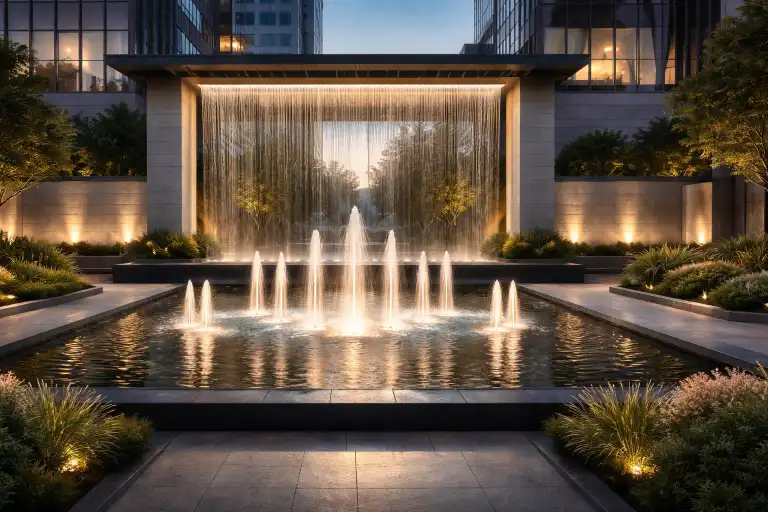
When a development becomes iconic, it rarely happens by accident.
Architecture, landscape, lighting, and spatial planning all play their roles, but there is often one defining element that captures attention, invites emotion, and anchors memory: water.
Signature fountains are more than decorative elements. They are identity-makers. They turn plazas into gathering spaces, lobbies into experiences, gardens into sanctuaries, and developments into landmarks. In today’s competitive real estate and hospitality markets, thoughtfully designed water features are no longer optional luxuries, they are strategic investments.
As both a marketer and fountain maker, I’ve seen firsthand how the right water fountain can elevate perception, increase foot traffic, boost property value, and create a visual signature that becomes synonymous with a brand.
Let’s explore how designing signature fountains transforms iconic developments, and how to do it right.
Why Signature Fountains Matter in Iconic Developments
Iconic developments, whether luxury residences, five-star hotels, mixed-use complexes, cultural centers, or corporate headquarters, compete not only on function, but on feeling.
A signature water feature delivers:
- Instant visual impact
- Emotional resonance
- Brand differentiation
- Increased dwell time
- Enhanced property value
Water activates a space. It introduces motion into static architecture. It softens hard surfaces. It reflects light. It cools the air. It creates soundscapes that mask urban noise.
But most importantly, water creates memory.
Think about the world’s most recognizable places. Many feature monumental outdoor fountains or immersive indoor fountains that define the experience. These installations become social media backdrops, meeting points, and architectural anchors.
A signature fountain is not an accessory, it’s a statement.
The Foundation: Concept Before Construction
Before discussing materials, jets, lighting, or scale, we must begin with concept.
Designing a signature fountain starts with five critical questions:
- What story does this development tell?
- What emotional response should visitors feel?
- Where is the natural focal point of the space?
- Is the fountain viewed from above, at eye level, or in motion?
- How does water interact with architecture and landscape?
A luxury residential tower may call for elegant, reflective floor fountains in the lobby. A shopping destination might benefit from an interactive plaza fountain. A corporate campus may prefer minimal, architectural wall fountains that reinforce modern branding.
Every development has a personality. The fountain must embody it.
Outdoor Fountains: Defining Public Identity
When designing outdoor fountains, scale and context are everything.
Outdoor environments provide the opportunity for dramatic expression:
- Grand arrival fountains at porte-cochères
- Sculptural centerpieces in public plazas
- Linear reflecting pools that guide pedestrian flow
- Interactive splash fountains for family-friendly developments
Strategic Placement
An iconic outdoor water fountain often sits at:
- The main entrance
- A central courtyard
- A roundabout
- A rooftop terrace
- A waterfront edge
The goal is visibility and flow. The fountain should enhance circulation, not obstruct it.
Engineering for Longevity
Outdoor installations must withstand:
- Temperature fluctuations
- Wind loads
- Water evaporation
- Mineral buildup
- Long operational hours
Durable materials like stainless steel, granite, engineered stone, and treated concrete ensure longevity. Precision pump systems maintain performance while optimizing energy efficiency.
When executed correctly, garden fountains and large-scale plaza fountains can operate seamlessly for decades.
Indoor Fountains: Creating Immersive First Impressions
While outdoor fountains define public identity, indoor water fountains create intimacy and atmosphere.
The moment someone enters a luxury hotel, corporate lobby, or residential tower, the experience begins. Sound, scent, lighting, and spatial design all contribute—and water becomes a powerful sensory layer.
Popular Indoor Fountain Types
- Wall fountains for vertical elegance
- Sculptural centerpieces
- Reflective basins
- Rain curtain fountains
- Floor fountains integrated into lobby designs
- Architectural water walls
Indoor fountains must balance beauty with acoustic control. Too much splash can overwhelm. Too little movement can feel static.
The magic lies in controlled flow, where the sound is soothing, not distracting.
The Rise of the Rain Curtain Fountain
One of the most compelling contemporary installations is the rain curtain fountain.
Unlike traditional jets, a rain curtain water feature creates a continuous sheet or curtain of falling water. The effect is mesmerizing, like a living veil of liquid glass.
Why developers love rain curtain designs:
- They provide a dramatic vertical statement.
- They create immersive entrances.
- They function beautifully in both indoor and outdoor environments.
- They photograph exceptionally well.
A rain curtain water feature can also be customized with:
- LED lighting integration
- Digital control systems
- Branding projections
- Programmable patterns
For iconic developments seeking modern sophistication, rain curtain fountains are transformative.
Integrating Fountains into Landscape Architecture
A signature fountain should never feel added-on. It must feel integrated.
Landscape architects and fountain designers must collaborate early in the planning process. When water features are incorporated into grading, circulation paths, and planting schemes, the result is seamless.
Garden Fountains: Intimate and Timeless
For residential developments and boutique hospitality properties, garden fountains offer a softer, more personal approach.
- Enhance courtyards
- Anchor meditation gardens
- Frame walking paths
- Provide acoustic buffering
In these environments, scale is less about monumentality and more about mood.
Natural stone, bronze elements, and subtle spillways often work best.
Branding Through Water
Developers often underestimate the branding power of signature fountains.
Water is emotion-driven. It can communicate:
- Luxury
- Innovation
- Serenity
- Sustainability
- Energy
- Cultural identity
For example:
- A minimalist black granite reflecting pool suggests modern elegance.
- A dynamic choreographed fountain implies innovation and vitality.
- A rain curtain installation suggests contemporary sophistication.
From a marketing standpoint, a well-designed water fountain becomes free advertising. Visitors share photos. Influencers post content. The development becomes instantly recognizable.
In a digital-first world, photogenic design is a competitive advantage.
Sustainability and Smart Technology
Modern iconic developments demand responsible design.
Today’s signature fountains integrate:
- Recirculating systems to minimize water waste
- Smart pumps with variable frequency drives
- Filtration systems for efficiency
- Rainwater harvesting integration
- Low-energy LED lighting
Sustainable design does not mean compromising visual impact. In fact, sustainability can enhance brand value.
Water features can also improve microclimates, reduce urban heat island effects, and increase perceived comfort in public spaces.
Sound Design: The Overlooked Element
When designing water features, visual appeal often dominates discussions. But sound design is equally important.
Different fountain styles create different sound profiles:
- Gentle spillways offer calm ambiance.
- High jets create energetic white noise.
- Rain curtain fountains produce immersive vertical sound.
- Wall fountains provide controlled acoustic layering.
In hospitality and residential environments, sound must support conversation, not overpower it.
Sound is the invisible architecture of water.
Scaling Signature: From Monumental to Micro
Not every iconic development needs a massive plaza fountain. Sometimes, smaller-scale installations deliver more powerful impact.
Tabletop Fountains in VIP Spaces
Tabletop fountains can elevate private lounges, executive offices, and penthouse suites. These compact indoor fountains provide:
- Subtle movement
- Ambient sound
- Visual sophistication
While small in size, they maintain the design language of larger installations.
Floor Fountains: Architectural Integration
Floor fountains embedded flush with surfaces create seamless transitions between architecture and water.
They can:
- Guide foot traffic
- Define zones
- Create interactive play areas
- Add elegance to lobbies
When integrated into lighting design, floor fountains become nighttime showpieces.
Designing for Interaction
Iconic developments increasingly prioritize experience.
Interactive outdoor water fountains encourage:
- Family engagement
- Event programming
- Seasonal activation
- Community gathering
Digital controls allow choreographed performances synchronized with music and lighting. These installations turn water into spectacle.
However, interaction must balance safety, maintenance, and operational complexity.
Designing for people always comes first.
Materials that Define Longevity
Signature fountains must age gracefully.
Common premium materials include:
- Stainless steel
- Bronze
- Natural stone
- Tempered glass
- Engineered composite panels
- Textured concrete
Material selection influences:
- Water clarity
- Reflectivity
- Maintenance frequency
- Perceived luxury
In rain curtain fountains, glass panels and precision nozzles must align perfectly to create a smooth, uninterrupted cascade.
Quality craftsmanship is non-negotiable.
Lighting: Where Water Becomes Drama
Daytime elegance is important, but nighttime drama defines iconic status.
Underwater LED systems allow:
- Color customization
- Dynamic sequences
- Event-based programming
- Seasonal themes
Lighting transforms outdoor fountains into evening landmarks.
For indoor installations, warm lighting enhances tranquility, while cooler tones emphasize modern design.
Water and light together create theatre.
Maintenance Planning: Designing for the Long Term
A fountain that dazzles on day one but deteriorates by year three damages brand perception.
Proper planning includes:
- Accessible pump rooms
- Clear filtration systems
- Automated monitoring
- Maintenance training
- Water treatment strategies
High-end developments view fountains as long-term assets. Budgeting for maintenance protects both aesthetics and investment.
The Future of Signature Water Features
The future of iconic fountain design lies in integration and intelligence.
We are seeing:
- AI-controlled performance fountains
- Sensor-responsive installations
- Sustainable greywater integration
- Digital branding through water projection
- Hybrid installations combining fire and water
As architecture evolves, so do water features.
But one principle remains constant: emotional impact drives iconic status.
Final Thoughts: Designing Legacy Through Water
Designing signature fountains for iconic developments is both art and engineering. It requires vision, precision, collaboration, and storytelling.
Whether it’s monumental outdoor water fountains in civic plazas, serene garden fountains in private courtyards, immersive indoor water fountains in hospitality spaces, sculptural wall fountains, modern rain curtain water features, or elegant tabletop fountains, each installation carries the power to transform space into experience.
Water has shaped civilizations for thousands of years.
In modern developments, it continues to shape identity.
When thoughtfully designed, a fountain does not simply decorate a project, it defines it.