...
Civic-Fountain

Designing the Civic Fountain: How Water Shapes Collective Experience

Introduction: Why Civic Fountains Still Matter

Across civilizations and centuries, fountains have served as far more than decorative objects. They are civic symbols, social magnets, and emotional anchors in public space. From ancient Roman forums to contemporary urban plazas, water fountains have consistently shaped how people gather, rest, celebrate, and remember.

In an age dominated by screens, speed, and density, the presence of water offers something profoundly human: pause. A well-designed civic fountain transforms a space into a destination. It invites lingering, conversation, reflection, and play. It becomes part of the collective memory of a city, where people meet, protest, celebrate victories, grieve losses, and take photographs that define place.

This article explores the deeper role of civic fountain design and how water, through sound, motion, and form, shapes shared human experience. Drawing insights from outdoor fountains, architectural water features, and modern innovations like the rain curtain fountain, we’ll examine how water creates emotional resonance, cultural identity, and inclusive public spaces.

The Civic Fountain as Social Infrastructure

More Than Ornamentation

While garden fountains, tabletop fountains, and indoor fountains often serve personal or aesthetic functions, civic fountains operate at an entirely different scale of meaning. They are pieces of social infrastructure, designed not just to be seen, but to be experienced collectively.

A civic fountain:

  • Creates a visual anchor within urban space
  • Encourages spontaneous interaction
  • Softens hard architectural environments
  • Improves microclimate through evaporative cooling
  • Serves as a landmark for orientation and identity

In many cities, the fountain is the heart of the plaza. Remove it, and the space often loses vitality.

Gathering, Not Passing Through

Unlike benches or signage, outdoor water fountains encourage people to stop. The movement and sound of water slow the pace of urban life, subtly shifting a space from a corridor into a destination.

Children run through floor fountains, couples sit along the edge, street performers position themselves nearby, and tourists instinctively gravitate toward the sound of water. These behaviors are not accidental, they are the result of centuries of human-water interaction encoded into design.

The Psychology of Water in Shared Spaces

Biophilia and Collective Calm

Humans are biologically wired to respond positively to water. Known as biophilic response, this connection explains why water features reduce stress, increase dwell time, and improve perceived safety in public areas.

In civic environments, water:

  • Masks traffic noise
  • Creates rhythmic, calming soundscapes
  • Reflects light, adding visual dynamism
  • Signals abundance and care in urban design

A fountain is often the emotional counterbalance to concrete and steel.

Sound as Social Glue

The sound profile of a fountain is just as important as its visual form. Gentle cascades promote conversation, while dramatic splashes energize plazas and event spaces.

Designers carefully select water flow rates to:

  • Encourage quiet reflection in memorial spaces
  • Support lively social interaction in urban squares
  • Create white noise that allows privacy in public

Whether it’s a cascading wall fountain or a playful splash pad, sound shapes how people use space together.

Historical Evolution of Civic Fountains

Ancient Roots of Public Water

The earliest civic fountains were functional. Roman aqueduct-fed fountains provided drinking water and symbolized imperial power and engineering mastery. These were early water fountains in their purest form, life-sustaining and communal.

Over time, symbolism grew:

  • Renaissance fountains celebrated art and myth
  • Baroque fountains displayed dominance and drama
  • Industrial-era fountains emphasized hygiene and order

Today’s civic fountains blend function, sustainability, art, and interaction.

From Monument to Experience

Modern civic design has shifted away from purely monumental fountains toward participatory experiences. People no longer just observe water, they move through it, touch it, and interact with it.

Examples include:

  • Floor fountains that double as open plazas
  • Interactive jets responding to movement
  • Programmable light and water choreography

This evolution reflects a broader shift toward human-centered urban design.

Design Principles for Successful Civic Fountains

Context Is Everything

A fountain must belong to its environment. A dramatic sculptural fountain may suit a grand civic square, while a minimalist rain curtain water feature may better complement a modern cultural center.

Key contextual considerations:

  • Surrounding architecture
  • Pedestrian flow
  • Climate and seasonal use
  • Cultural symbolism

A fountain that ignores context risks becoming visual noise rather than a civic asset.

Accessibility and Inclusion

Great civic fountains are democratic. They are designed for all ages, abilities, and backgrounds.

Inclusive features include:

  • Barrier-free access
  • Non-slip surfaces
  • Visual and auditory cues
  • Safe interaction zones

Interactive outdoor fountains often become informal playgrounds, particularly in dense urban neighborhoods where green space is limited.

Water as Identity and Memory

The Fountain as a City Icon

Think of Rome’s Trevi Fountain, Chicago’s Buckingham Fountain, or Barcelona’s Magic Fountain. These are not just water features, they are identity markers.

Civic fountains:

  • Appear in postcards and social media
  • Become meeting points (“Let’s meet at the fountain”)
  • Anchor festivals and public rituals

Emotional Imprinting Through Experience

People remember how a place made them feel. A civic fountain often becomes the emotional backdrop to life events, first dates, family outings, protests, celebrations.

This emotional layering transforms water from a design element into a shared memory device.

civics

Modern Innovations in Civic Fountain Design

The Rise of the Rain Curtain Fountain

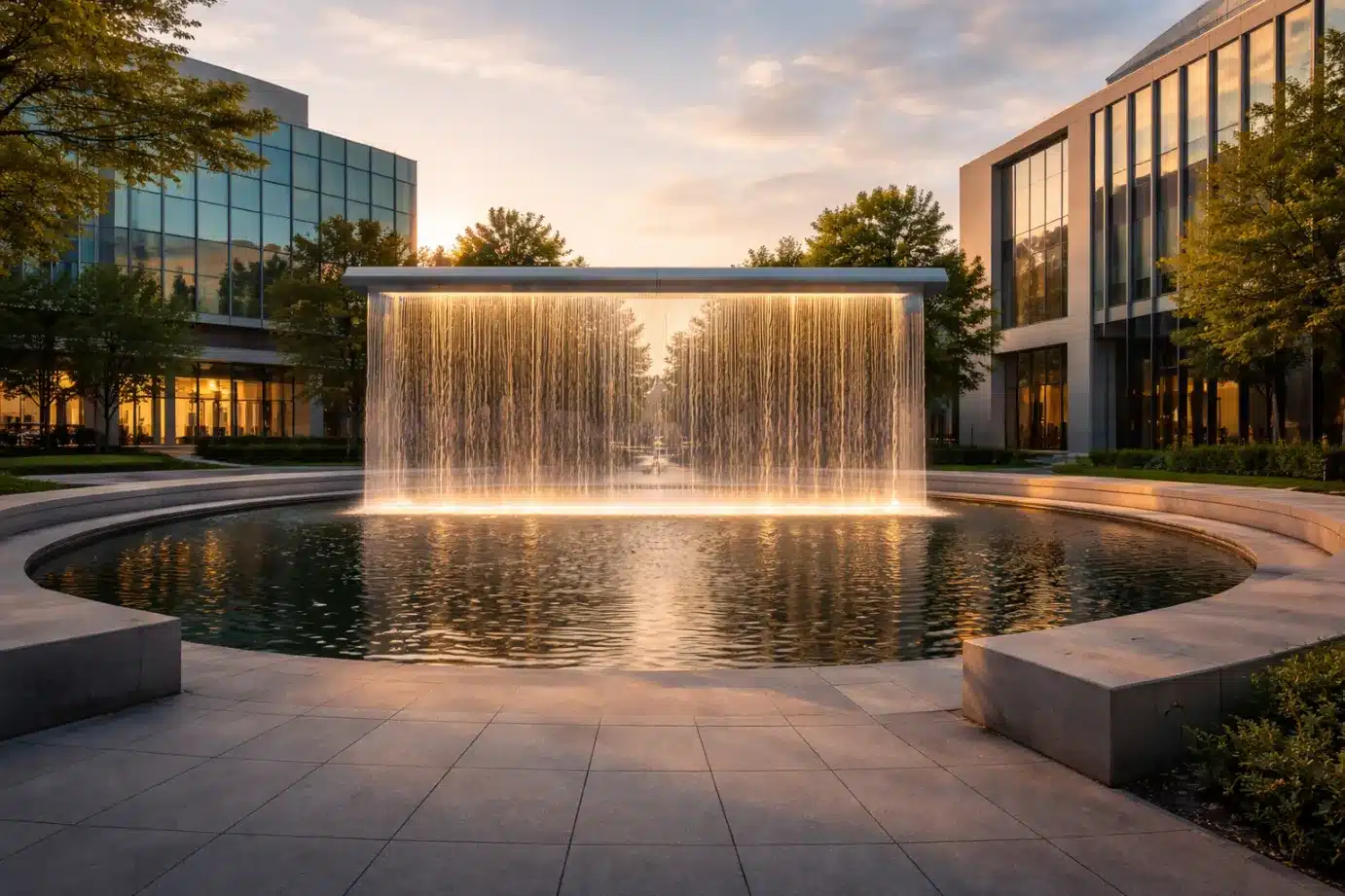
The rain curtain fountain represents a modern fusion of architecture and water. Thin vertical streams create walk-through experiences that blur the boundary between structure and fluidity.

Benefits include:

  • Minimal visual obstruction
  • Interactive engagement
  • Dramatic lighting opportunities
  • Strong architectural integration

As a rain curtain water feature, it’s especially effective in contemporary civic buildings, museums, and transit hubs.

Technology-Driven Water Features

Advancements in control systems allow fountains to respond dynamically:

  • Motion sensors trigger water jets
  • Programmable LED lighting adapts to events
  • Music synchronization enhances festivals

These technologies turn civic fountains into performance spaces rather than static objects.

Sustainability and Responsibility in Civic Water Design

Water Conservation Strategies

Modern outdoor water fountains must address environmental responsibility. Closed-loop systems, filtration, and smart controls drastically reduce water use.

Sustainable practices include:

  • Rainwater harvesting
  • Low-evaporation designs
  • Efficient pump systems
  • Automated shutoff during wind or low traffic

Responsible design ensures that fountains symbolize stewardship, not waste.

Climate-Responsive Design

In hot climates, fountains provide cooling through evaporation. In colder regions, designers incorporate seasonal transformations, dry plazas in winter, active fountains in summer.

Flexibility ensures year-round relevance.

The Relationship Between Civic and Domestic Water Features

While civic fountains operate at a large scale, they influence trends in private design as well.

Urban inspiration often translates into:

  • Wall fountains in commercial lobbies
  • Indoor water fountains in offices and healthcare spaces
  • Tabletop fountains for stress relief at home

Similarly, public spaces increasingly borrow intimacy from garden fountains and residential water features, blurring the line between civic and personal experience.

Civic Fountains as Cultural Storytellers

Reflecting Local Narrative

Water features can tell stories, through materials, inscriptions, or symbolic forms. Indigenous patterns, historical references, or ecological narratives can be embedded directly into fountain design.

This transforms a fountain into a cultural artifact rather than a generic installation.

Art, Collaboration, and Community

Many successful civic fountains are created through collaboration between architects, artists, engineers, and communities. Public engagement ensures the fountain resonates with those who use it daily.

Community-informed design leads to stronger stewardship and pride.

Looking Forward: The Future of Civic Fountains

As cities face increasing density, climate challenges, and social fragmentation, the role of shared spaces becomes more critical. Civic fountains offer a rare combination of beauty, function, and emotional connection.

Future trends point toward:

  • Multi-use water plazas
  • Climate-adaptive water features
  • Greater interactivity and programmability
  • Deeper integration with public art

At their best, fountains remind us that cities are not just systems, but shared experiences shaped by water, sound, and presence.

Conclusion: Water as the Heart of Collective Experience

Designing a civic fountain is not simply an architectural exercise, it is an act of social design. Water has the power to soften cities, bring strangers together, and create moments of joy and reflection.

From monumental outdoor fountains to minimalist rain curtain fountains, these water features shape how we experience place and each other. They remind us to pause, gather, and connect.

In a world that moves fast, the civic fountain invites us to slow down, together.

FAQs:

Civic fountains are designed for collective experience in public spaces, focusing on social interaction, identity, and accessibility rather than purely decorative or private use.

Yes. Most modern fountains use closed-loop systems, efficient pumps, and smart controls to conserve water and reduce energy use.

A rain curtain water feature uses thin vertical streams of water to create a curtain-like effect, often allowing people to walk through or interact with it safely.

SPRING SALE: 10% OFF ALL PRODUCTS
Use Code: MAY10 | Ends MAY 31