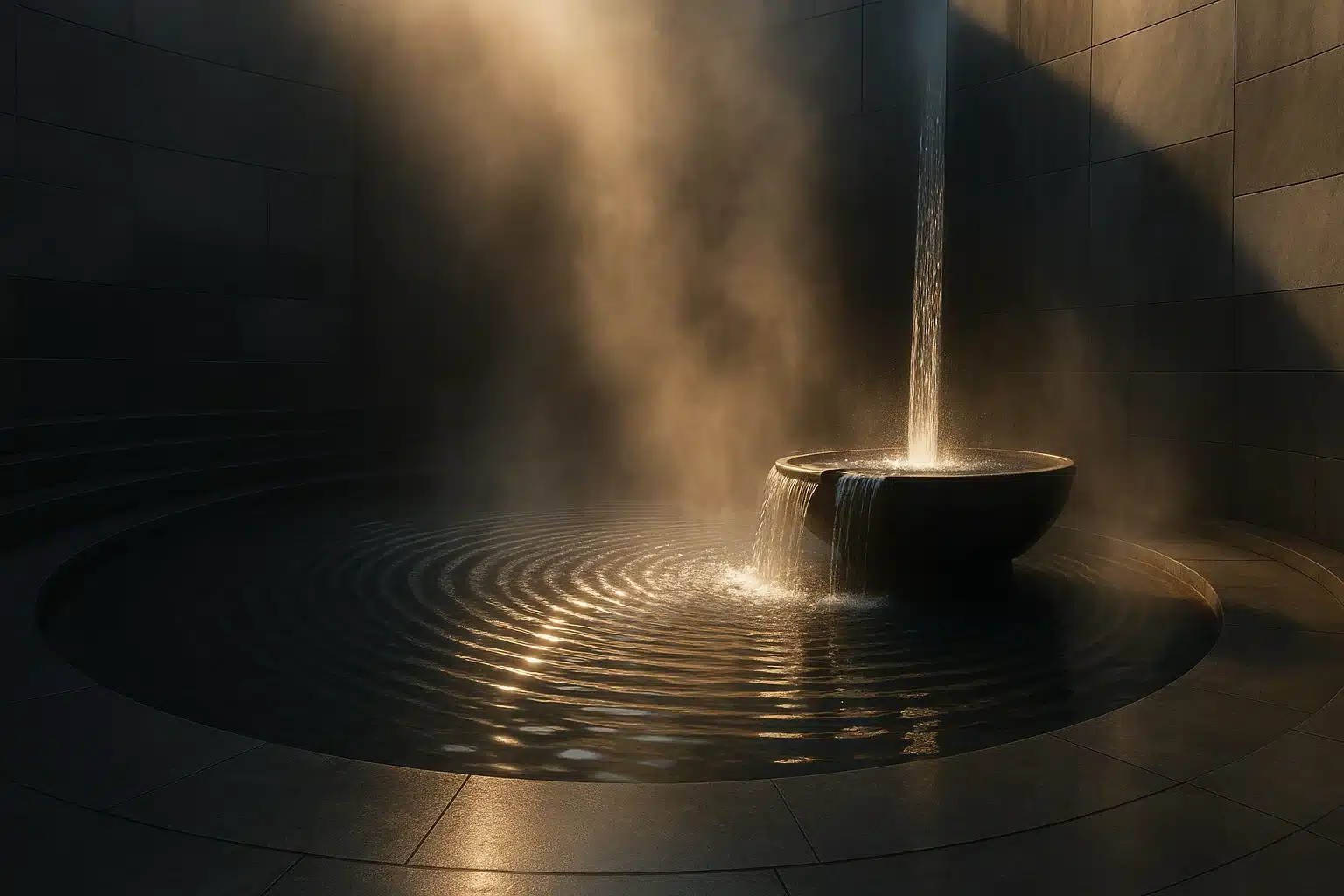
Introduction: The Sound of Flow
Water has always been music in motion. From the whisper of a forest stream to the rhythmic pulse of an urban fountain, flowing water evokes emotion, presence, and peace. Yet beyond its visual beauty, a fountain’s soundscape, the way it resonates, echoes, and fills space, defines much of its magic.
In landscape architecture and acoustic design, the concept of the “echo chamber” is being reimagined, not as a metaphor for repetition, but as a tool for amplification. Modern fountain designers are exploring how to sculpt sound as much as they sculpt stone and steel. By understanding how water interacts with materials, space, and geometry, we can create fountains that become natural amplifiers, architectural symphonies that harmonize with their environment.
This article explores the art and science behind designing fountains that amplify natural sound, a journey through physics, aesthetics, and emotional design.
1. The Language of Water: Understanding Its Acoustic Nature
Before designing a sound-amplifying fountain, we must first understand how water speaks.
Every droplet, ripple, and cascade creates a vibration. These vibrations interact with surfaces, air, and ambient noise to create what we perceive as sound. The key parameters in this dialogue include:
- Flow rate: Faster water creates higher-frequency sounds (trickles and splashes), while slower flows produce deeper, bass-like tones.
- Drop height: The distance water falls influences its impact sound, a short fall creates a whisper; a long drop yields a resonant splash.
- Volume and surface area: The amount of water moving affects overall sound intensity. More water means more energy, and more sound.
The designer’s task, therefore, is to manipulate these variables within an environment that complements and enhances the desired auditory experience.
2. What Is an Echo Chamber — And How Does It Apply to Fountains?
Traditionally, an echo chamber refers to a space where sound reflects repeatedly, amplifying or prolonging its presence. In acoustics, this effect is controlled using materials, shapes, and boundaries that influence how sound waves behave.
When applied to fountain design, an echo chamber isn’t a literal enclosed room but a carefully designed spatial and material configuration that encourages sound reflection without distortion. The result is a fountain whose voice is amplified naturally, without electronics or speakers.
Key Echo Chamber Principles in Fountain Design:
- Resonance: Creating cavities or hollows where sound can reverberate.
- Reflection: Positioning hard surfaces (like stone or concrete) to bounce sound waves outward.
- Diffusion: Using curves, steps, or varying textures to scatter sound evenly through space.
- Absorption Control: Balancing reflective materials with soft landscaping or porous stone to prevent harsh echoes.
In essence, a well-designed fountain functions as a musical instrument, with the surrounding architecture serving as its amplifier.
3. The Science Behind Acoustic Amplification in Water Features
Sound amplification through design relies on principles of acoustics, fluid dynamics, and geometry. Let’s look at some of the scientific underpinnings.
a. Resonant Cavities
These are enclosed or semi-enclosed spaces, such as hollow bases beneath a fountain bowl or dome, that trap sound waves and let them oscillate before releasing them. The size of the cavity determines the tone: smaller cavities enhance high frequencies, while larger ones deepen the resonance.
b. Reflective Surfaces
Smooth, dense materials like granite, marble, or concrete reflect sound waves effectively. When strategically angled, they direct sound toward specific listening zones, enhancing perception without increasing physical volume.
c. Water-Air Interplay
Sound travels differently in water than in air — about 4.3 times faster in water. Designers use this property to create “dual-medium” sound effects where certain frequencies bounce through both air and liquid, creating a layered auditory experience.
d. Spatial Geometry
Convex and concave surfaces have profound effects on sound distribution:
- Concave walls (like domes or basins) focus sound toward a single point.
- Convex structures disperse sound broadly, ideal for public spaces.
By combining these elements, designers can create fountains that literally project their voice across plazas, courtyards, or gardens.
4. Materials Matter: The Sonic Palette of Fountain Design
Choosing the right material determines not only the visual aesthetic but also the acoustic signature of a fountain. Below is a guide to how different materials shape sound:
| Material | Acoustic Quality | Best For |
|---|---|---|
| Marble | Smooth reflection, soft reverberation | Classical designs, indoor atriums |
| Granite | Deep resonance, strong projection | Large public spaces |
| Concrete | Balanced reflection, warm tone | Urban installations |
| Metal (Bronze, Copper) | Bright, ringing timbre | Sculptural fountains |
| Glass | Sharp resonance, crisp echoes | Contemporary or interactive features |
| Wood | Absorptive, warm resonance | Natural or meditative spaces |
| Ceramic Tiles | Diffusive, tunable tone | Decorative water walls |
The key is harmony, combining materials that complement the fountain’s intended soundscape rather than clash with it.
5. Designing for Place: Contextual Acoustics
A fountain doesn’t exist in isolation; it’s part of an ecosystem of sound. Wind, vegetation, surrounding architecture, and even human activity shape how its voice carries.
When designing an echo chamber fountain, context is crucial:
a. Urban Settings
Cities are dense with hard surfaces that can create harsh reflections. Here, designers may use angled baffles, acoustic screens, or vegetation buffers to refine the sound. The goal: create an oasis of fluid tranquility amid urban chaos.
b. Courtyards and Enclosed Spaces
In courtyards, the boundaries themselves act as amplifiers. Concave walls or vaulted ceilings can turn even a modest trickle into an enveloping murmur.
c. Natural Landscapes
In open gardens or forests, softer materials and porous rocks help blend the fountain’s sound seamlessly with nature’s background, birdsong, rustling leaves, distant rain.
d. Indoor Fountains
For interior spaces, controlling echo is as important as creating it. Designers often employ acoustic dampening panels or hidden resonant chambers that enhance low tones while preventing overwhelming reverb.
6. The Art of Flow: Shaping Water for Sound
The physical form of a fountain determines how water behaves, and therefore, how it sounds. Let’s explore some of the most effective configurations.
a. Cascades and Tiered Fountains
Multiple levels break water into rhythmic sequences of drops, producing a melody-like pattern. By varying tier diameters and heights, designers can fine-tune tone and tempo.
b. Waterfalls and Curtain Fountains
These features generate broad, continuous sounds, powerful yet soothing. By curving the fall surface, designers can manipulate how the water “hugs” or separates from the wall, influencing resonance.
c. Bubbling Fountains
Air-infused jets create percussive pops and gurgles — ideal for small courtyards. By placing these over resonant bowls, the sound can be amplified without increasing volume.
d. Spiral or Helical Flows
Emerging in modern fountain art, spiral designs let water swirl within sculpted chambers, creating oscillating echoes that mimic natural springs or ocean tides.
e. Interactive Sound Fountains
With advancements in hydroacoustics, designers are experimenting with fountains that respond to environmental changes, wind speed, temperature, even footsteps, creating dynamic soundscapes that evolve through the day.
7. Historical Inspirations: Echo and Water Through Time
Echo chambers aren’t new. Ancient architects intuitively understood how to use stone, water, and geometry to craft auditory experiences.
Roman baths often featured domed ceilings and flowing fountains that magnified gentle echoes, creating spaces of rejuvenation.
Islamic courtyard fountains in Alhambra and Persian gardens used tiled basins to amplify water’s shimmer, symbolizing divine reflection.
Japanese tsukubai (stone basins) paired trickling water with surrounding hollows, focusing subtle sounds for meditative effect.
Baroque fountains such as those in Versailles employed vast stone terraces to reflect and diffuse the roaring sound of engineered cascades.
Today’s designers are rediscovering these principles, merging ancient wisdom with modern acoustic engineering.
8. Designing the Modern Echo Chamber Fountain: Step-by-Step
Here’s a practical framework for architects, landscape designers, or DIY enthusiasts looking to create sound-amplifying fountains.
Step 1: Define the Emotional Goal
Ask: What feeling should this fountain evoke?
Calm and meditative? Opt for low-frequency, rhythmic flows.
Energizing and lively? Choose higher frequencies and multiple splashes.
Step 2: Map the Acoustic Environment
Use 3D modeling or simple site observation to identify reflective surfaces, wind patterns, and noise sources. Determine where sound should travel, and where it shouldn’t.
Step 3: Choose Materials and Geometry
Select materials that produce your desired tone. Pair concave forms (to focus sound) with hard surfaces like stone or tile for projection.
Step 4: Sculpt the Flow
Experiment with drop heights and nozzle types. Even a 1-inch change in fall distance can alter perceived tone.
Step 5: Build Resonant Cavities
Incorporate hollow chambers beneath basins or behind walls to enhance depth. Lining these with smooth materials like concrete increases resonance.
Step 6: Integrate with Nature
Use plants, pebbles, and wood to soften or filter certain frequencies. Bamboo, for instance, absorbs high-pitched splashes beautifully.
Step 7: Test and Tune
The sound of a fountain evolves as water pressure, temperature, and air humidity change. Tuning, adjusting flow rate and angles — refines the auditory balance.
9. Case Studies: Fountains That Speak Through Sound
a. The Whispering Fountain – Kyoto, Japan
Hidden in a temple garden, this fountain channels water through underground bamboo tubes into a small stone bowl. The resonant chamber amplifies each drop, turning a quiet trickle into a deep, meditative heartbeat.
b. The Crown Fountain – Chicago, USA
Though primarily visual, its design demonstrates how urban materials shape sound. The granite towers and shallow reflecting pool distribute ambient echoes evenly across Millennium Park, creating a balanced hum of water and laughter.
c. The Sonic Bloom – Seattle, USA
An interactive sculpture-fountain hybrid that combines acoustic resonance with kinetic petals. The stainless-steel surfaces reflect both light and sound, creating an immersive sensory experience.
d. The Villa d’Este Fountains – Tivoli, Italy
Centuries old, these fountains remain a masterclass in echo design. Terraced basins, stone vaults, and water pressure all combine to create a natural orchestra of cascading sound.
10. Emotional and Psychological Impact of Sound-Amplifying Fountains
Why go through all this effort to design sound? Because the sound of water deeply influences human emotion.
a. Stress Reduction
Studies show that natural water sounds lower cortisol levels and induce calmness, more effectively than silence or white noise.
b. Spatial Perception
Sound-rich environments feel larger and more immersive. Amplified water tones can make small courtyards feel vast.
c. Biophilic Design Connection
By integrating the sound of nature into built environments, designers strengthen human-nature bonds, the cornerstone of biophilic design philosophy.
d. Cultural Symbolism
Echoing water evokes continuity, reflection, and purity. Many cultures use its resonance as a metaphor for spiritual depth or the cyclical flow of life.
11. Sustainability and Smart Sound Design
The beauty of echo chamber fountains is that they amplify naturally, reducing the need for mechanical pumps or electronic speakers.
a. Low-Energy Systems
Because sound carries more efficiently, designers can use lower water flow rates — saving power and water.
b. Recycled Materials
Concrete echo chambers can be built using recycled aggregates, maintaining acoustic quality while promoting sustainability.
c. Smart Monitoring
IoT-enabled valves can adjust water pressure automatically to maintain consistent sound levels as environmental noise changes throughout the day.
Sustainability, therefore, isn’t just about saving resources. it’s about listening smarter.
12. Future Innovations: The Acoustic Fountains of Tomorrow
As technology and environmental design merge, expect to see fountains that listen as well as speak.
- Adaptive Acoustics: AI-driven systems that adjust flow and resonance to maintain harmony in changing soundscapes.
- Material Engineering: New composites that mimic natural stone but with tunable acoustic properties.
- Sound Mapping in VR: Designers already use virtual reality to simulate how a fountain will sound before construction, allowing real-time tuning.
- Eco-Acoustic Art: Fountains integrated with sensors that translate environmental data (wind, bird calls, rainfall) into sound-responsive water patterns.
In this evolution, echo chambers become not static designs, but living sound organisms, responding, evolving, and resonating with the world around them.
Conclusion: The Poetry of Resonance
Designing fountains that amplify natural sound is more than an acoustic exercise; it’s an act of listening. It invites us to hear water not just as background noise but as a conversation partner, one that speaks in tones of flow, reflection, and renewal.
When stone, geometry, and flow align, we don’t just build fountains; we compose liquid symphonies. And in their echoes, we rediscover one of design’s oldest truths: that harmony is not made by silencing nature, but by letting it sing.