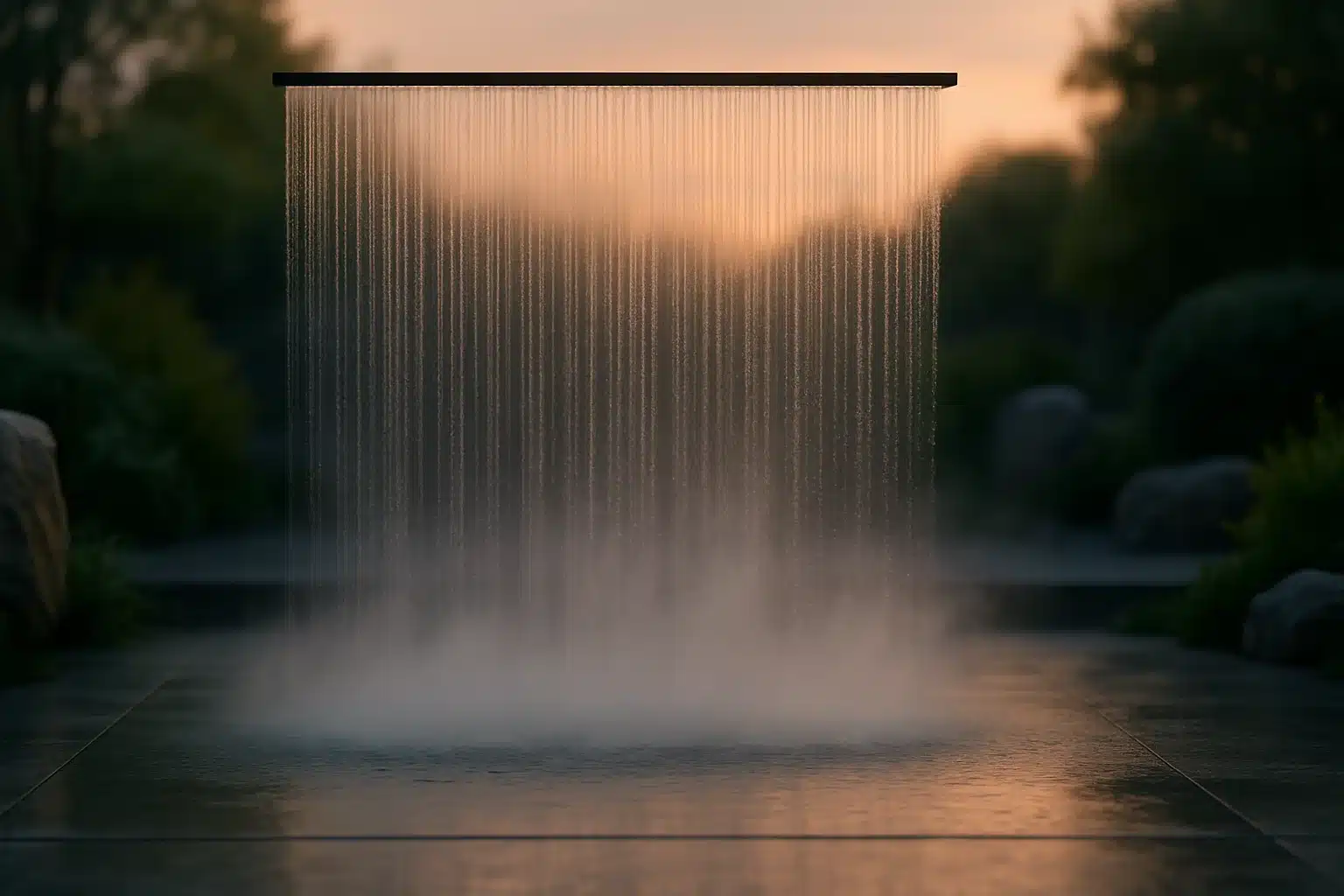
Ephemereal-fountain

Ephemeral Beauty: Fountains Designed to Exist Only for a Moment

The Allure of Impermanence

In a world that increasingly celebrates permanence, enduring structures, timeless art, and long-lasting materials, there exists a growing fascination with the opposite: the fleeting, the transient, the beautifully temporary. Among the most captivating expressions of impermanence are ephemeral fountains: fountains designed to exist only for a moment before disappearing as if they were never there at all.

Whether created from mist, rainfall-like sheets of water, dissolving structures, or digitally orchestrated streams, these momentary water fountains push the boundaries of art, engineering, and environmental design. They challenge our sense of time, presence, and beauty. In a particularly poetic way, ephemeral fountains remind us that the most stunning experiences are often those that last only briefly.

In this long-form exploration, we dive deep into the world of ephemeral water features: how they are conceptualized, what makes them unique, how they transform the spaces they inhabit, and why they matter in the broader landscape of contemporary art and architectural design. Along the way, we will also explore the connection between traditional fountains, outdoor water fountains, indoor fountains, rain curtain fountains, and the ever-evolving innovations that give rise to these extraordinary temporary installations.

What Makes a Fountain “Ephemeral”?

Ephemeral fountains are fundamentally different from traditional garden fountains, tabletop fountains, or even permanent water features integrated into modern architecture. Their defining characteristic is their temporary nature, existing for a short duration and then vanishing completely.

Common Traits of Ephemeral Fountains

  • Temporal Presence: They may appear for seconds, minutes, or hours, but they are not designed to last days or years.
  • Minimal Structural Footprint: Some ephemeral fountains have no physical structure at all, only water, air, and light.
  • Environmental Responsiveness: They often depend on weather, sunlight, humidity, or user interaction.
  • Sustainability: Because they leave no physical trace, they often use less material and can operate with recycled or reclaimed water.
  • Artistic Intent: Many ephemeral fountains are created as part of exhibitions, performances, or installations where impermanence is part of the message.

Ephemeral fountains blend the worlds of art, fluid dynamics, and experiential design, offering a new type of storytelling where water becomes both the medium and the moment.

A Brief History of Momentary Water Art

Although the term ephemeral fountain is modern, the concept dates back centuries.

Ancient Civilizations

Early fountain builders in Rome, Persia, India, and China all used water theatrically, jets that rose and fell, cascades that shifted with pressure or flow, and natural springs that appeared only during certain seasons.

Renaissance Europe

European gardens often included trick fountains, hidden jets that activated unexpectedly, wetting unsuspecting visitors and bringing a moment of joy or surprise. These were not ephemeral in structure, but ephemeral in effect.

20th and 21st Century Art

Artists like Olafur Eliasson, Ned Kahn, and Japanese collective teamLab took ephemeral water art into new territory by exploring:

  • mist as sculpture
  • controlled rainfall
  • disappearing surfaces
  • interactive water curtains

Their work lays the foundation for today’s ephemeral fountain movement, which embraces digital control, sustainable design, and environmental awareness.

Types of Ephemeral Fountains

Ephemeral fountains come in many forms, from purely natural to highly engineered. Below are some of the most compelling categories.

1. Mist and Fog Fountains

These fountains use ultrafine water droplets to create a drifting, cloudlike effect. They appear for moments and disappear as the mist dissipates.

Why They’re Ephemeral:
Mist evaporates quickly, leaving no trace behind.

Where You’ll See Them:

  • botanical gardens
  • art festivals
  • zen-inspired spaces
  • urban plazas seeking respite from heat

2. Rain Curtain Water Features

A rain curtain fountain or rain curtain water feature consists of thin, vertical streams of water that fall from a linear nozzle to create a shimmering sheet of “rain.” When the system powers off, the entire feature disappears.

Ephemeral Qualities:

The water wall exists only when the pump runs.
Light, wind, and sound constantly reshape it.
Rain curtains can be installed temporarily, making them popular in exhibitions or stage design.

3. Programmable Water Curtains

These digitally controlled fountains release precise droplets in patterns, creating words, symbols, waves, or animations that exist only as falling water.

Key Features:

  • Computer-controlled valves
  • Rapid cycling on/off
  • Interactive sensors

Once the water hits the ground, the message disappears forever: a perfect metaphor for fleeting communication.

4. Temporary Outdoor Water Fountains

These portable or pop-up outdoor fountains are installed only for events, festivals, or seasonal attractions.

Examples include:

  • travelling sensory exhibits
  • urban pop-up parks
  • temporary cooling stations
  • event-specific art installations

Their “ephemeral” nature comes from their short duration in public life.

5. Disappearing Floor Fountains

These innovative floor fountains (also known as flush fountains) are embedded in level ground. When inactive, the fountain isn’t visible at all, people can walk directly across it.

When activated, jets shoot up from the pavement, creating an unexpected but mesmerizing water feature.

6. Performance-Based Water Sculptures

Some artists create water structures by hand or with simple tools, arcs, spirals, temporary whirlpools, that exist only during the performance.

Examples include:

  • dancers interacting with jets
  • choreographed water movement shows
  • theatrical rain effects

The fountain becomes a living moment rather than a physical object.

7. Natural Ephemeral Fountains

Nature itself creates temporary fountains such as:

  • geysers after an earthquake
  • seasonal springs
  • glacial meltwater bursts
  • tide-driven spouts

These inspire the principles behind modern ephemeral water design.

Why Ephemeral Fountains Matter in Today’s World

Ephemeral Beauty

Beyond aesthetics, ephemeral fountains carry profound cultural and environmental significance.

1. They Celebrate Impermanence

In many cultures, particularly Japanese and Buddhist traditions, beauty is found in the transient. Ephemeral fountains emphasize:

  • mindfulness
  • presence
  • the art of the moment

2. They Encourage Sustainable Practices

Because they don’t require permanent installation or heavy materials, ephemeral fountains often:

  • use less energy
  • depend on recycled water
  • require minimal structural intervention
  • leave no environmental footprint

3. They Transform Public Spaces

Even a few moments of unexpected water movement can:

  • cool overheated urban areas
  • create emotional resonance
  • draw attention to undervalued spaces
  • provide sensory relief

4. They Expand the Definition of Fountain Art

Traditional fountains, such as indoor water fountains, garden fountains, and wall fountains, are no longer the only way to experience water as art. Ephemeral fountains invite new forms of expression that blend technology, nature, and creativity.

Ephemeral vs. Permanent Water Features

To understand their role in modern design, it helps to compare ephemeral fountains with traditional permanent fountains.

Permanent Water Features Ephemeral Water Features
Visible year-round Exist only temporarily
Built with stone, metal, or concrete Often structure-free
Require long-term maintenance Minimal upkeep
Used in homes, gardens, plazas Used for events, performances, exhibitions
Examples: indoor fountains, wall fountains, outdoor water fountains Examples: mist installations, rain curtains, pop-up jets

Both serve valuable roles, but ephemeral fountains offer a refreshing flexibility that permanent fountains cannot.

Where Ephemeral Fountains Are Most Commonly Found

1. Art Museums and Installations

Interactive, multisensory exhibits frequently use ephemeral water features to embody themes of:

  • fluidity
  • identity
  • climate
  • motion

2. Music Festivals and Outdoor Events

Pop-up outdoor fountains create immersive environments that cool, entertain, and inspire large crowds.

3. Public Parks and Urban Spaces

Cities use temporary fountains to make spaces more inviting during:

  • heat waves
  • holiday celebrations

community events

4. Wellness & Meditation Retreats

Mist fountains, rain curtains, and rippling water patterns support relaxation and mindfulness.

5. Architectural Showcases

Innovative designers use ephemeral water elements to demonstrate:

  • new technologies
  • sustainable engineering
  • sensory architecture

The Engineering Behind Ephemeral Fountains

Though ephemeral in result, these fountains can be technologically complex.

Essential Components

  • Precision Pumps: Allow short bursts or patterned flows.
  • Smart Nozzles: Create mist, rain, fans, spirals, or sheets.
  • Sensors: Detect motion, temperature, sound, or proximity.
  • Control Systems: Computerized logic sequences patterns and timing.
  • LED Lighting: Enhances the visual moment, especially at night.

Water Recycling

Even temporary fountains often use closed-loop systems to minimize waste.
Adaptability

Ephemeral fountains can be customized to fit:

  • indoor spaces
  • open plazas
  • small gardens
  • large theatrical stages

Their flexibility is part of their appeal.

Can Ephemeral Fountains Exist in Homes?

Absolutely, although in smaller forms.

1. Tabletop Fountains

Small, portable, and soothing, tabletop fountains can create momentary effects with:

  • mist
  • gentle bubbling
  • small cascades
  • tiny rain curtains

These can be turned on and off, making them “ephemeral” by design.

2. Indoor Water Fountains

Some modern indoor fountains use diffusers, foggers, or micro-pumps to produce soft, shifting water patterns that vanish once the power stops.

3. Wall Fountains

A wall fountain with a programmable sheet of water can create temporary displays inside modern homes or offices.

4. Mini Rain Curtain Water Features

Scaled-down versions can be installed in:

  • spas
  • bathrooms
  • living rooms
  • atriums

They offer the calming sensation of rain, without permanence.
Emotional and Sensory Impact of Ephemeral Fountains

Ephemeral fountains evoke powerful emotional responses because they:

  • surprise us
  • delight us
  • calm us
  • remind us of nature
  • emphasize transience

Their sensory contributions include:

  • gentle white noise
  • changing reflections
  • cooling sensations
  • soft breezes
  • immersive humidity

These qualities make ephemeral fountains uniquely effective at transforming mood and atmosphere.

The Future of Ephemeral Fountain Design

As technology advances, ephemeral fountains will become more dynamic and accessible.

Trends to Watch

  • Eco-first engineering: lower water usage, solar integration, and natural filtration.
  • AI-designed water sequences: adaptive patterns based on audience behavior.
  • Interactive public art: fountains triggered by footsteps, sound, or biometric data.
  • Holographic water displays: combining projection with mist or rain curtains.
  • Augmented Reality Water Features: virtual fountains layered onto physical space.

The line between physical and digital water art will continue to blur, opening new creative horizons.

Conclusion: In Praise of the Moment

Ephemeral fountains remind us that beauty does not need to last to be meaningful. Like a sunset, a snowflake, or a fleeting melody, their power lies in their impermanence. These momentary water features, from shimmering rain curtain fountains to delicate mists and pop-up floor fountains, redefine how we interact with water, space, and emotion.

By embracing the temporary, ephemeral fountains invite us to pause, breathe, and appreciate the wonder unfolding right now, before it disappears.

FAQs:

An ephemeral fountain is a temporary or momentary water feature designed to appear briefly, using mist, rain curtains, jets, or programmed water patterns, and then disappear without leaving a permanent structure.

Yes! Small indoor water fountains, tabletop fountains, and mini rain curtain water features can be set up for temporary, customizable water displays. Many modern models are portable and easy to install.
Often, yes. Their temporary nature means they typically use fewer materials, require minimal construction, and often recycle water in closed-loop systems, making them highly sustainable compared to larger permanent outdoor fountains.