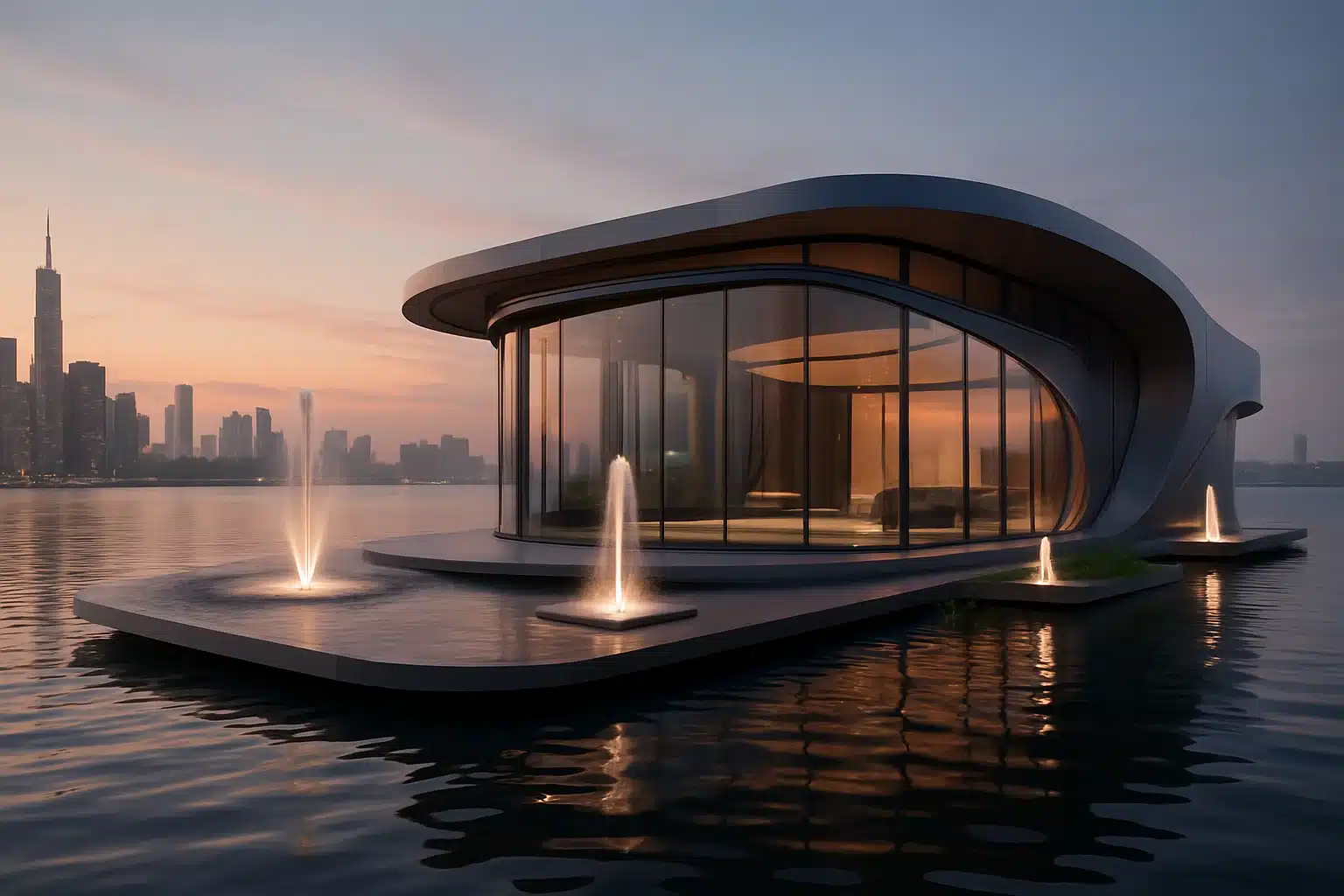
395.1.Floating-Architecture

Floating Architecture: The Rise of Water-Based Urban Installations

Introduction: From Fountains to Floating Cities

For centuries, humans have built monuments around water, from the tranquil courtyards of Roman villas to the grand fountains of Versailles. Water has always symbolized life, beauty, and motion. But as modern cities face new environmental realities, our relationship with water is evolving beyond aesthetic pleasure into architectural necessity.

This transformation has given rise to floating architecture, water-based installations that blend design, sustainability, and engineering. Interestingly, the same artistry and precision behind custom fountains and architectural water features now influence how we build entire communities that float.

In essence, the art of fountains has become the science of cities. Companies like fountains.com, known for custom fountains, outdoor fountains, and indoor fountains, are part of this broader movement that connects aesthetic water design with sustainable floating environments.

The Connection Between Fountains and Floating Architecture

Before the first floating home or city was ever built, fountains represented humanity’s earliest attempt to tame, celebrate, and choreograph water. Floating architecture extends that same philosophy, but on an urban scale.

1. Water as an Element of Design

Just as fountains shape the mood of a public plaza or hotel atrium, floating buildings use water as a structural and emotional element. Architects now treat water not as a constraint but as a foundation. Imagine an outdoor fountain that doesn’t just decorate a courtyard, but is the courtyard itself, floating gracefully over the surface of a lake.

2. The Evolution from Decorative to Functional

Traditional fountains have always balanced beauty with function, circulating, cooling, and humidifying air in urban spaces. Floating installations follow this lineage, combining visual artistry with environmental performance. Whether it’s a floating café powered by hydrodynamic energy or a floating park with integrated fountains, the line between art installation and infrastructure is blurring.

3. Shared Technology and Craftsmanship

The same technologies used in custom water features, such as submersible pumps, LED lighting, and filtration systems, are now integral to floating platforms. Many designers collaborate with fountain manufacturers to integrate water choreography into floating walkways, plazas, and art installations.

Floating Architecture: The New Age of Water-Based Urban Installations

Floating architecture represents a new paradigm, a form of urban design that embraces water instead of resisting it. But at its core, it still shares the soul of the fountain: fluidity, motion, and serenity.

1. The Concept of Buoyant Design

Like the basin of a grand outdoor fountain, floating platforms rely on carefully calculated buoyancy and balance. Architects engineer concrete pontoons or recycled-plastic bases to keep structures level, while water features are incorporated into plazas or façades as dynamic art elements.

2. Sustainability Through Water Harmony

Sustainable cities no longer seek to push water away. Instead, they integrate it through rain-harvesting systems, floating wetlands, and aesthetic fountains that serve ecological functions, oxygenating water, supporting aquatic life, and cooling the urban microclimate.

3. The Beauty of Movement

Fountains have always symbolized movement. Floating buildings take that symbolism literally: they move with the tides, rise with sea levels, and adapt with changing weather. The result is a living architecture, constantly shifting yet eternally serene.

Iconic Projects Blending Floating Architecture and Fountain Design

1. The Floating Pavilion, Rotterdam

A prototype for future floating cities, this structure integrates interactive water features that respond to environmental conditions. Its design mirrors the tranquil flow of an outdoor fountain, proving that sustainability can also be poetic.

2. The Maldives Floating City

The Maldives is creating a network of floating platforms inspired by coral geometry, with public plazas designed around custom fountains and reflective pools. The aesthetic draws heavily from resort-style water installations, combining luxury and resilience.

3. Marina Bay Floating Stage, Singapore

Singapore’s floating stage includes a dramatic fountain choreography visible from the city’s waterfront promenade. This installation demonstrates how urban fountains and floating structures can function as both cultural symbols and sustainable infrastructure.

4. Schoonschip, Amsterdam

Europe’s most sustainable floating neighborhood uses water as both foundation and ornament. Homeowners have installed custom water features on decks and communal spaces, reflecting the Dutch tradition of blending function and beauty in water design.

The Role of Fountain Designers in Floating Urban Landscapes

Floating Architecture The Rise of Water-Based Urban Installations

The rise of floating architecture is not just a win for architects and engineers, it’s an opportunity for fountain designers and water artisans.

1. Crafting Emotion Through Water

Just as indoor fountains bring tranquility to corporate lobbies and spas, large-scale water installations can shape the emotional tone of floating communities. Designers are increasingly using soundscapes, lighting effects, and custom water choreography to create interactive experiences.

2. Integrating Fountains Into Floating Infrastructure

From floating gardens with mist fountains to harbor parks with kinetic water walls, fountain specialists now collaborate directly with urban planners to design water-based public art that complements floating platforms.

3. The New Market for Custom Floating Fountains

Companies like fountains.com are expanding their expertise into floating water features, offering fountains that can anchor on lakes, rivers, or ocean harbors. These installations combine artistry, engineering, and sustainability, making them perfect for floating resorts and eco-cities.

Sustainability: Fountains as Eco-Engines in Floating Cities

Sustainability is the heart of floating architecture, and fountains are more than just decoration in this vision. They’re environmental tools that improve water quality, reduce heat, and support ecosystems.

1. Water Circulation and Oxygenation

Floating fountains help aerate water, preventing stagnation and supporting aquatic life. These same principles are used in floating architecture to maintain healthy ecosystems beneath platforms.

2. Renewable Energy Integration

Many modern fountains use solar-powered pumps, a technology now being scaled for floating cities. By generating renewable energy directly on water surfaces, floating installations can reduce dependence on land-based grids.

3. The Aesthetic of Ecology

Eco-conscious design doesn’t have to be minimal or industrial. Through custom outdoor fountains, green roofs, and reflective water façades, architects are reimagining sustainability as something visually inspiring and emotionally engaging.

Indoor and Outdoor Floating Spaces: The New Design Language

Floating architecture isn’t limited to large-scale cities. The same principles can transform homes, hotels, and commercial properties through floating pavilions, pond decks, and indoor water installations.

1. Indoor Floating Aesthetics

Imagine walking into a lobby where indoor fountains blend seamlessly into reflective flooring, giving the illusion of floating walls. Designers are merging interior water features with architectural lighting to create sensory experiences that mimic the calm of floating environments.

2. Outdoor Floating Terraces and Courtyards

Outdoor fountains and floating decks can turn ordinary backyards or public parks into mini ecosystems. As materials like composite decking and floating pontoons become more accessible, homeowners can install personalized water-based retreats inspired by architectural innovation.

3. Custom Fountains as Transitional Elements

In both residential and commercial spaces, custom fountains now serve as bridges between land and water, softening the visual boundary and symbolizing adaptability in design.

The Aesthetic Philosophy: Serenity Meets Innovation

Floating architecture and fountains share an emotional vocabulary. Both celebrate serenity, reflection, and rhythm. Both invite us to pause, observe, and reconnect with nature.

Architects and fountain artists often speak of water as “liquid architecture”, a medium that responds to light, sound, and time. In floating installations, that phrase becomes literal. The architecture doesn’t just use water as decoration; it rests upon it, breathes with it, and lives because of it.

This synergy is redefining modern urban aesthetics: movement as stability, reflection as transparency, and sound as structure.

Economic and Cultural Dimensions of Floating Fountains

1. Tourism and Public Engagement

Cities that integrate floating installations and fountain spectacles see measurable boosts in tourism. From Dubai’s floating fountain shows to the musical installations in Seoul’s Han River, water-based architecture has become a global attraction.

2. Branding and Identity

Luxury resorts, eco-hotels, and cultural districts use custom outdoor fountains as iconic symbols. A well-designed fountain installation becomes a city’s signature, much like Sydney’s Opera House or Chicago’s Cloud Gate.

3. Investment and Real Estate Innovation

Floating real estate and waterfront developments gain value when combined with artistic water features. Developers now collaborate with companies like fountains.com to integrate sculptural water systems that enhance property aesthetics and sustainability metrics.

The Future: Where Floating Cities and Fountain Design Converge

The future of floating architecture will likely see fountain design playing a central role, both functionally and symbolically.

  • Smart fountains will regulate water temperature and quality in floating neighborhoods.
  • Interactive installations will connect residents through synchronized lighting and water displays.
  • Floating green parks will feature mist fountains that cool the air and nourish plant life.

Ultimately, the fusion of art, architecture, and technology will turn floating cities into living fountains, breathing, shimmering, and sustaining life.

Conclusion: The Fluid Future of Urban Design

Floating architecture represents a bold reimagining of our relationship with water. What began as ornamental artistry in fountains has evolved into a blueprint for climate-resilient living.

From custom outdoor fountains that anchor waterfronts to indoor installations that inspire calm within urban spaces, water remains both muse and medium. Whether in a private garden or a floating metropolis, the principles are the same: harmony, movement, and renewal.

As cities around the world embrace water-based design, the artistry behind fountains.com and other innovators continues to shape a more reflective, adaptive, and sustainable future.

FAQs:

Floating architecture refers to structures that rest on water, using buoyant foundations. It shares design principles with fountains, both blend art, engineering, and water flow to create sustainable and beautiful spaces.
Absolutely. Many floating developments integrate outdoor fountains and water features to enhance aesthetics, regulate temperature, and promote biodiversity.
Indoor fountains are designed for controlled environments, often focusing on ambience and acoustics. Outdoor or floating fountains must withstand elements like wind and waves, often doubling as environmental tools that circulate and oxygenate water.