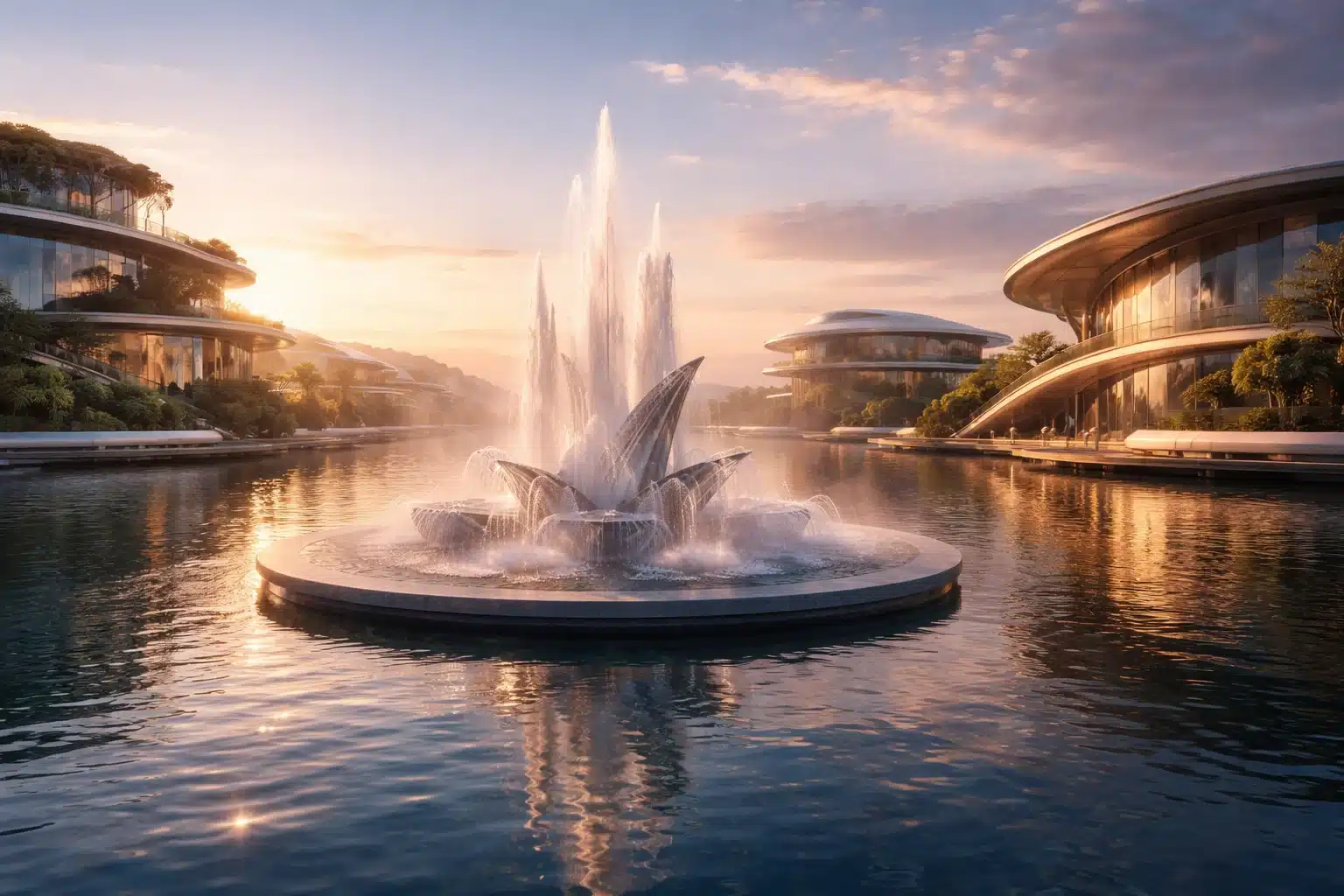
Water has always been more than a natural resource, it is a symbol, a medium, a sculptural element, and a transformative force. Across civilizations, water has shaped landscapes and architecture, acting as a bridge between built environments and the natural world. Today, as modern architects and designers continue to push boundaries, water-based architecture, structures that incorporate or exist harmoniously with water, has evolved into a sophisticated art form. At the heart of this evolution lies a signature design element: fountains.
Fountains are no longer mere decorative features. They are immersive spatial tools, emotional triggers, cooling systems, soundscapes, interactive installations, and in some cases, the core identity of a building itself. They create floating worlds, spaces where architecture and water become inseparable.
This comprehensive guide explores the philosophy, engineering, and aesthetics of designing fountains for water-based architecture. You’ll learn how these features can transform environments, influence behavior, enhance sustainability, and shape the future of architectural design.
1. The Philosophy of Water-Based Architecture
Water-based architecture isn’t just about placing a building on or near water. Instead, it is an approach that acknowledges water as an active participant in spatial design. When fountains are incorporated, this philosophy expands: water is shaped, choreographed, illuminated, and given voice.
1.1 Water as Experience
Architect Peter Zumthor famously described architecture as “experience before form,” and fountains embody this idea completely. A well-designed fountain doesn’t call attention to itself, it draws attention to how one feels around it.
- The soft splash of cascading water brings calm.
- Reflective pools create contemplative atmospheres.
- High jets generate excitement and movement.
- Mist features evoke playfulness and discovery.
- The fountain becomes not an object, but an environment.
1.2 Water as Storytelling
Water tells stories, of origin, transformation, movement, and flow. From ancient Roman piazzas to Dubai’s towering choreographed water spectacles, fountains anchor cultural identity and community gathering.
Architects use fountain elements to:
- reference local traditions
- connect structures to natural water bodies
- evoke historic or spiritual symbolism
- communicate a brand or thematic narrative
In modern water-based architecture, the story is not simply told, it is performed.
2. The Role of Fountains in Water-Based Environments
Fountains serve multipurpose roles that go far beyond aesthetics.
2.1 Environmental Cooling and Air Quality
Flowing water naturally cools the surrounding environment, making fountains ideal for:
- hot climates
- dense urban districts
- courtyards and atriums
- landscape features surrounding buildings
Evaporative cooling, combined with air circulation patterns induced by fountain dynamics, can lower air temperatures while improving humidity balance.
2.2 Acoustic Design
One of the most overlooked aspects of fountains is sound engineering. Water can mask traffic noise, soften large architectural volumes, and create acoustic focal points.
Designers shape acoustics by manipulating:
- water flow rate
- height of drop
- surface texture
- basin materials
A fountain can be a soft hum, a steady rhythm, or a powerful presence.
2.3 Spatial Orientation and Wayfinding
Fountains are natural landmarks. They shape circulation routes and help users intuitively navigate space. In large complexes or waterfront developments, fountains can:
- mark entrances
- anchor plazas
- frame sightlines
- create “destination moments”
They guide users through a fluid experience, literally and figuratively.
2.4 Emotional and Psychological Effects
Numerous studies associate the sound and presence of water with:
- reduced stress
- increased relaxation
- improved creativity
- enhanced perceptual clarity
In this sense, a fountain is a built form of well-being.
3. Designing Fountains: Principles and Best Practices
To design a fountain that integrates seamlessly with water-based architecture, architects must balance artistry with technical precision.
3.1 Consider the Relationship Between Water and Structure
Fountains should feel native to the architecture, not an add-on. This involves:
- designing fountains concurrently with structural planning
- ensuring visual alignment with facades, columns, and rooflines
- integrating waterlines, pumps, and electrical systems early
- thinking about fountains as spatial “rooms,” not objects
Water wants to move. Architecture must make room for that movement.
3.2 Proportion, Scale, and Balance
A fountain must complement, not overwhelm, its environment.
Key questions include:
- Does the fountain frame or disrupt sightlines?
- Does its scale correspond to the surrounding architectural volume?
- Are water jets sized appropriately for wind conditions?
- Does the fountain feel purposeful, not excessive?
The design must be visually striking yet contextually grounded.
3.3 Hydraulics and Pump Systems
Engineering is the invisible hero of fountain design.
Critical elements include:
- pump sizing
- flow rate calibration
- filtration and water quality management
- pressure regulation
- energy usage optimization
Poor hydraulic planning results in uneven jets, excessive noise, or inefficient operation.
3.4 Lighting and Nighttime Design
Modern lighting transforms fountains into dramatic nighttime features.
Options include:
- underwater LEDs
- fiber optics
- projection mapping
- chromatic sequencing
- reflective architecture-light synergy
- Lighting defines mood, atmosphere, and
- visibility.
3.5 Safety and Access
Safety is essential, especially for public or interactive fountains.
Consider:
- slip-resistant surfaces
- shallow or zero-depth basins
- water sanitation
- mechanical component shielding
- safe electrical grounding
The goal is to create wonder without risk.
4. Types of Fountains in Water-Based Architecture
4.1 Reflective Pools
Elegant and minimal, reflective pools use still water to mirror architecture. They are ideal for:
- museums
- memorial sites
- plazas
- cultural institutions
They create a surreal “floating” aesthetic.
4.2 Cascading Waterwalls
Waterwalls combine movement with verticality.
Benefits:
- cooling
- sound masking
- visual drama
- indoor/outdoor versatility
They can be naturalistic or modern.
4.3 Interactive Ground Fountains
Often found in plazas or waterfront walkways, these features invite play and social interaction.
They emphasize:
- accessibility
- sensory engagement
- community bonding
With programmable jets, these fountains adapt to users.
4.4 Floating or Floating-Illusion Fountains
These create the sense of levitation, using underwater supports or illusions.
Innovations include:
- floating platforms
- submerged pump assemblies
- LED halo effects
They reinforce the theme of “floating worlds.”
4.5 Kinetic and Choreographed Fountains
These fountains move water, or appear to, through:
- programmable jets
- synchronized lighting
- rotational platforms
- dancer-like sequencing
They turn architecture into performance art.
5. Sustainability in Fountain and Water Based Architecture Design
Modern fountain design must be environmentally conscious.
5.1 Closed-Loop Circulation
Most contemporary fountains recycle water in a closed system, drastically reducing consumption.
5.2 Energy-Efficient Pumping
Tech advancements include:
- variable-speed pumps
- low-energy filtration
- solar-powered units
- This minimizes operational costs.
5.3 Water Harvesting Integration
Fountains can be integrated with:
- rainwater harvesting
- greywater systems
- natural filtration beds
- This turns a decorative element into an ecological asset.
5.4 Natural Plant Integration
Wetland-inspired designs use aquatic plants to:
- purify water
- support biodiversity
- create a soft natural aesthetic
This hybrid design blurs lines between landscape and architecture.
6. Case Studies: The Floating World Effect
6.1 The Louvre Pyramid and Reflective Pools
Here, still water magnifies the geometric beauty of the glass pyramid, creating a doubled illusion that blends earth and sky.
6.2 The Dubai Fountain
The pinnacle of choreographed water performance—an example of large-scale integration, digital control, and architectural spectacle.
6.3 Modern Corporate Headquarters
Tech companies increasingly use waterwalls and reflective pools to create calm, biophilic work environments.
Each case underscores the versatility and emotional impact of fountain-based design.
7. Future Trends in Fountain Design
The next evolution of water-based architecture will merge digital innovation with sustainability.
7.1 Holographic and Projection Fountains
Water droplets become canvases for imagery, perfect for brand storytelling or public art.
7.2 Smart Adaptive Fountains
These systems adjust flow, light, and movement based on:
- weather
- time of day
- pedestrian presence
They are responsive environments.
7.3 Augmented Reality Water Features
Visitors may interact with fountains via AR overlays, creating hybrid digital-physical experiences.
7.4 Zero-Edge Architectural Pools
These minimalist fountains emphasize infinite horizons and seamless transitions between water, ground, and sky. The floating world aesthetic becomes more immersive than ever.
8. How to Begin Designing Your Own Floating World
For architects, designers, or developers aiming to incorporate fountains into water-based architecture, consider the following steps:
Begin with the narrative: What emotional experience should your fountain evoke?
- Integrate early: Don’t design a fountain after the building is complete water must shape the architecture.
- Collaborate closely: Work with engineers, landscape architects, hydrologists, and lighting designers.
- Prototype water behaviors: Test flows, jet heights, and patterns in controlled environments.
- Prioritize sustainability: Make ecological stewardship part of the design story.
- Celebrate the sensory: Think beyond sight, consider sound, touch, movement, and atmosphere.
A fountain is not a decoration. It is a living system, one that brings architecture to life.
Conclusion
Designing fountains for water-based architecture is an opportunity to shape environments that feel alive, fluid, and immersive. Whether creating reflective pools that hold the sky, cascading waterwalls that cool and calm, or interactive plazas that invite community play, fountains offer unparalleled depth to architectural design.
They are dynamic, emotional, and symbolic. They create floating worlds where built form and water coexist in harmony, a testament to the power of integrating nature and creativity.
By understanding the principles, technologies, and philosophies behind fountain design, architects and designers can craft experiences that resonate deeply with users and elevate the spaces we inhabit.
FAQs:
Water-based architecture incorporates water as a core design element, either by situating buildings on or near water or by integrating features like fountains, pools, or waterwalls directly into the structure.
Yes. Modern fountains typically use closed-loop systems that recycle water, energy-efficient pumps, and filtration technologies. They can also integrate rainwater harvesting or natural purification.