...
468.1.Fountains-as-gallery-pieces

Fountains as Gallery Pieces in Contemporary Commercial Spaces

In contemporary commercial architecture, design no longer serves only functional purposes. Offices, hotels, retail environments, and public venues increasingly emphasize atmosphere, emotional experience, and visual storytelling. One design element that has gained remarkable momentum in recent years is the fountain, not merely as decoration, but as a gallery-worthy art installation.

From sleek indoor fountains in corporate lobbies to dramatic rain curtain water features in luxury hotels, modern water fountains are redefining how businesses shape spatial experiences. These installations operate at the intersection of sculpture, architecture, and environmental design. In many commercial settings, fountains function as gallery pieces, commanding attention much like contemporary art.

This shift reflects a broader trend: businesses are investing in memorable environments that enhance brand identity, encourage longer visits, and create shareable visual moments. As a result, water features have evolved from traditional courtyard elements into sophisticated artistic statements.

Let’s explore how fountains and water features are transforming commercial spaces into immersive design galleries.

The Evolution of Fountains in Commercial Design

Historically, fountains served practical and symbolic purposes. Ancient civilizations built them as water sources and civic monuments. Later, European estates popularized garden fountains as ornamental centerpieces that expressed wealth and refinement.

Modern architecture has reinterpreted these traditions. In today’s commercial design landscape, fountains operate as sculptural installations integrated into architectural concepts rather than added afterward.

Several key shifts have fueled this transformation:

1. Experience-Driven Architecture

Businesses recognize that environments shape customer behavior. Hotels aim for memorable entrances, corporate offices seek calming atmospheres, and retail spaces encourage visitors to linger.

A thoughtfully designed water fountain creates:

  • visual movement
  • ambient sound
  • sensory engagement
  • emotional calm

These elements make a space feel curated rather than purely functional.

2. The Rise of Artistic Water Features

Many contemporary water features resemble kinetic sculptures. Designers combine stainless steel, glass, stone, and LED lighting to create installations that rival museum pieces.

Examples include:

  • illuminated rain curtain fountains
  • geometric floor fountains
  • textured wall fountains
  • minimalist indoor water fountains

Each installation can function as the focal artwork of an entire room.

3. Integration with Architecture

Modern fountains are rarely standalone objects. Instead, they integrate seamlessly into architecture, embedded in walls, flooring, ceilings, and even staircases.

For example:

  • wall fountains merge with lobby architecture
  • rain curtain water features cascade from ceilings
  • floor fountains emerge directly from polished stone

This architectural integration strengthens the idea of fountains as gallery installations within built environments.

Why Businesses Are Treating Fountains as Art

The appeal of fountains in commercial spaces extends beyond aesthetics. When designed strategically, they provide several benefits that align with business goals.

Creating Instant Visual Impact

In many commercial settings, the entrance or lobby must immediately communicate brand identity. A dramatic water feature accomplishes this with elegance.

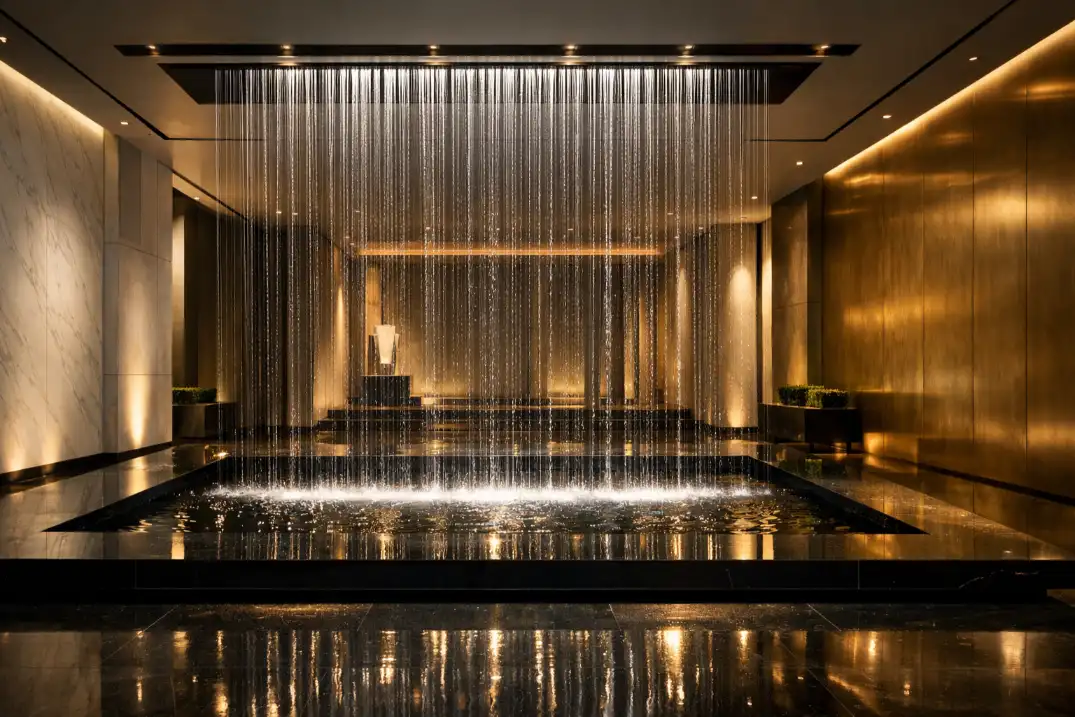
Consider a hotel lobby featuring a towering rain curtain fountain. Water flows in delicate strands from the ceiling into a reflective basin below, illuminated by soft lighting. The effect resembles a living sculpture, one that draws guests into the space and creates a memorable first impression.

This kind of installation becomes a signature visual landmark for the building.

Encouraging Relaxation and Well-Being

Modern workplaces increasingly prioritize wellness. The sound of flowing water has a natural calming effect, helping reduce stress and improve concentration.

As a result, many offices incorporate indoor fountains in:

  • reception areas
  • breakout spaces
  • quiet lounges
  • collaborative zones

Even smaller tabletop fountains can contribute to a soothing atmosphere in meeting rooms or executive offices.

Research consistently shows that environments featuring water elements promote relaxation and mental clarity, qualities highly valued in contemporary workplaces.

Enhancing Brand Identity

Design communicates values. Businesses use water fountains to reinforce their brand narrative.

For example:

  • Luxury hotels may choose dramatic wall fountains or expansive floor fountains that evoke elegance and sophistication.
  • Eco-conscious companies often install water features that highlight sustainability and natural beauty.
  • Retail environments sometimes use playful tabletop fountains or artistic indoor water fountains to create immersive shopping experiences.

These design choices signal identity without relying on words.

Types of Gallery-Style Fountains in Commercial Spaces

Several fountain styles have become particularly popular in modern commercial architecture. Each offers unique visual characteristics and spatial possibilities.

Rain Curtain Fountains

Among the most visually striking installations is the rain curtain fountain. In this design, water falls in thin, uniform strands from a concealed source, creating the appearance of suspended rain.

The effect is mesmerizing. Unlike traditional fountains that spray upward, rain curtain water features emphasize vertical motion and delicate texture. Designers often illuminate the falling water with LED lighting, allowing colors and patterns to shift throughout the day.

Rain curtain installations work particularly well in:

  • hotel atriums
  • shopping centers
  • corporate headquarters
  • museum entrances

Because they resemble kinetic art, rain curtain fountains naturally function as gallery pieces.

Wall Fountains

Wall fountains offer a refined approach to integrating water into architecture. These installations feature water flowing across textured surfaces such as glass, slate, marble, or metal panels.

Common design elements include:

  • illuminated panels
  • etched artwork
  • cascading water sheets
  • layered stone textures

In commercial spaces where floor area is limited, wall fountains provide visual impact without occupying valuable space.

They are commonly installed in:

  • reception areas
  • restaurant interiors
  • spa entrances
  • conference centers

Their sculptural appearance makes them ideal for environments seeking understated elegance.

Floor Fountains

Floor fountains blur the boundary between architecture and water feature. Instead of traditional basins, water jets emerge directly from the ground, often flush with the flooring.

These installations are particularly popular in:

  • luxury shopping malls
  • urban plazas
  • entertainment venues

Interactive versions allow visitors, especially children, to walk through the water jets. More formal designs create choreographed patterns with lighting and programmable movement.

From a design perspective, floor fountains resemble living installations embedded within the architecture itself.

Indoor Water Fountains

Large-scale indoor water fountains can transform an entire lobby into an artistic environment. These fountains often combine multiple elements:

  • cascading water
  • sculptural structures
  • lighting effects
  • reflective pools

Because indoor spaces allow controlled lighting and acoustics, designers can create immersive experiences that resemble curated gallery exhibits.

These installations often become the defining feature of a commercial building.

Outdoor Water Fountains

Outside the building, outdoor fountains extend the artistic experience into courtyards, plazas, and entrances.

Well-designed outdoor water fountains establish a sense of arrival. They draw attention from a distance and guide visitors toward the building.

Popular commercial applications include:

  • corporate campus entrances
  • hotel driveways
  • public plazas
  • restaurant terraces

In landscaped settings, garden fountains can complement natural elements like stone pathways, greenery, and seating areas.

These outdoor installations serve as the first artistic impression visitors encounter.

Tabletop Fountains

While large installations dominate lobbies and plazas, smaller tabletop fountains play an important role in interior design.

These compact indoor fountains work well in:

  • executive offices
  • meeting rooms
  • reception desks
  • boutique retail environments

Tabletop designs often emphasize craftsmanship and material quality, making them miniature sculptures that enhance workspace aesthetics.

Design Considerations for Commercial Fountain Installations

Fountains as Gallery Pieces in Contemporary Commercial Spaces

Material Selection

Materials strongly influence the visual character of a fountain.

Common materials include:

  • natural stone
  • stainless steel
  • glass panels
  • bronze sculptures
  • polished concrete

Each material interacts differently with water and light, producing distinct aesthetic effects.

Lighting Integration

Lighting plays a crucial role in modern fountains and water features.

LED systems allow designers to:

  • change colors dynamically
  • highlight flowing textures
  • create dramatic nighttime displays

For example, a rain curtain fountain illuminated from above can create shimmering reflections that transform the entire room.

Acoustic Balance

While the sound of water is soothing, excessive noise can disrupt conversation in commercial spaces.

Designers carefully calibrate water flow to achieve the desired ambiance. Gentle cascades produce soft background sound, while more dramatic fountains generate lively acoustic energy.

Maintenance Planning

High-quality water fountains require proper filtration, circulation, and maintenance.

Modern systems often include:

  • automated filtration
  • UV sanitation
  • programmable pumps
  • energy-efficient components

These technologies ensure fountains remain visually pristine while minimizing operational demands.

Fountains as Social Media Landmarks

An unexpected benefit of artistic water features is their role in digital culture.

In today’s world, visually striking environments quickly become social media attractions. Visitors photograph dramatic indoor fountains, illuminated wall fountains, or towering rain curtain water features, sharing them online.

For businesses, this visibility provides valuable marketing exposure.

Some hotels and shopping centers intentionally design signature fountains specifically to encourage photography and online sharing. These installations function simultaneously as architecture, art, and branding tools.

Sustainability and Modern Water Features

Contemporary fountain design increasingly prioritizes sustainability.

Advanced systems recycle water continuously, minimizing waste. Energy-efficient pumps and LED lighting reduce power consumption.

Some installations also incorporate:

  • rainwater harvesting
  • smart monitoring systems
  • eco-friendly materials

These innovations ensure that water fountains remain environmentally responsible while delivering powerful visual impact.

The Future of Fountains in Commercial Spaces

As technology and design continue to evolve, fountains are becoming more interactive and dynamic.

Future trends may include:

  • programmable water choreography
  • responsive lighting systems
  • digital projection on water surfaces
  • interactive rain curtain installations

These innovations will push fountains even further into the realm of immersive art installations.

Rather than passive decorations, tomorrow’s water features will engage visitors in multisensory experiences that blur the line between architecture and performance art.

Conclusion

In contemporary commercial design, fountains have transcended their traditional decorative role. They now function as gallery pieces, combining sculpture, architecture, light, and movement into captivating installations.

From elegant wall fountains to dramatic rain curtain fountains, these water features transform ordinary spaces into memorable environments. Businesses benefit from enhanced aesthetics, improved atmosphere, and stronger brand identity.

Whether placed indoors as monumental indoor water fountains, integrated into architecture as floor fountains, or welcoming visitors through grand outdoor fountains, these installations demonstrate the enduring power of water as a design element.

As commercial spaces increasingly focus on experience and emotional connection, the role of fountains and water features will only continue to grow.

FAQs:

Fountains create visual impact, calming sound, and memorable design experiences. Businesses use water features to enhance atmosphere, improve visitor impressions, and reinforce brand identity.
Common indoor options include wall fountains, rain curtain fountains, tabletop fountains, and floor fountains. Each style integrates water movement with architectural design.
Modern water fountains and water features often use recirculating systems, energy-efficient pumps, and LED lighting, making them sustainable and water-efficient when properly designed.
SPRING SALE: 10% OFF ALL PRODUCTS
Use Code: SPRING10 | Ends April 30