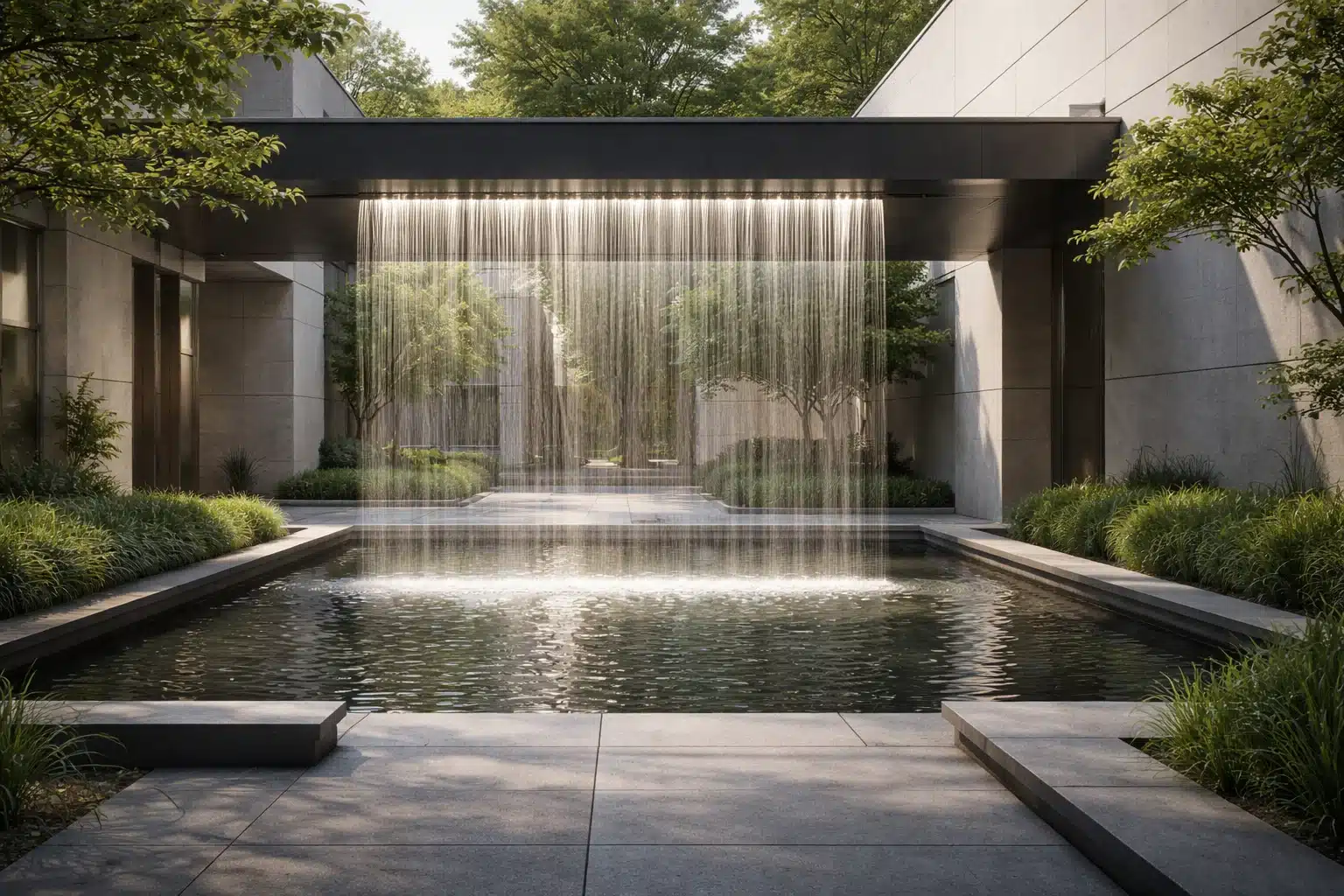
Fountains-as-spatial-anchor

Fountains as Spatial Anchors: How Water Directs Movement and Pause

Introduction: Water as a Silent Guide in Space

From ancient Roman forums to contemporary urban plazas, fountains have played a role far greater than decoration. They are not merely aesthetic additions or luxury embellishments; fountains are spatial anchors, elements that subtly organize space, direct movement, and invite pause. Whether manifested as outdoor water fountains in public squares, garden fountains in private landscapes, or indoor water fountains in corporate atriums, water has a unique capacity to influence how people move, gather, linger, and feel.

In spatial design, an anchor is any element that provides orientation, focus, and meaning. Fountains excel at this role because they engage multiple senses simultaneously: sight, sound, touch, and even microclimate. A rain curtain fountain can slow a hurried pedestrian; a wall fountain can guide circulation along a corridor; tabletop fountains can establish calm within confined interiors. Across scales and contexts, water features shape behavior without signage or instruction.

This article explores fountains as spatial anchors, how they guide movement, define thresholds, encourage pause, and structure both indoor and outdoor environments. We will examine historical precedents, design psychology, typologies such as floor fountains and rain curtain water features, and practical considerations for architects, landscape designers, and property owners seeking to harness the power of water in space.

The Concept of Spatial Anchors in Design

A spatial anchor is a focal element that helps users understand and navigate a space. Anchors provide:

  • Orientation: helping people know where they are
  • Hierarchy: distinguishing primary from secondary spaces
  • Rhythm: creating pauses and transitions
  • Memory: making spaces recognizable and meaningful

Unlike walls or signage, custom water fountains operate on an intuitive level. People are drawn toward moving water almost instinctively. Evolutionarily, water signals safety and life. In built environments, this instinct translates into attention, movement, and gathering.

When strategically placed, fountains become reference points: “Meet me by the fountain.” This simple phrase reveals how deeply fountains embed themselves in spatial cognition.

A Brief History: Fountains as Organizers of Civilization

Ancient Foundations

In ancient cities, fountains were essential infrastructure. Roman water fountains distributed potable water through aqueduct systems and marked civic importance. Their placement was deliberate, at crossroads, forums, and public baths, making them early examples of spatial anchors that combined utility and symbolism.

Islamic Gardens and Controlled Movement

In Islamic garden design, water features such as linear channels and wall fountains structured movement and contemplation. Visitors followed the flow of water through courtyards, slowing their pace and heightening sensory awareness. These gardens demonstrate how water can choreograph movement while reinforcing spiritual and cultural meaning.

Renaissance and Baroque Grandeur

European garden fountains during the Renaissance and Baroque periods became tools of power and spectacle. Large outdoor fountains anchored vast axes, guiding visitors through palatial grounds. The sound and motion of water reinforced processional movement, while grand basins invited pause and admiration.

Why Water Directs Movement So Effectively

Visual Attraction and Motion

The human eye is naturally drawn to movement. Unlike static sculptures, fountains are dynamic. Flowing, falling, or rippling water creates visual cues that pull attention across space. A rain curtain fountain, for example, acts like a living wall, transparent yet animated, drawing people toward it while subtly guiding circulation around or through it.

Sound as Spatial Guidance

The sound of water operates like an acoustic beacon. In noisy urban environments, outdoor water fountains mask traffic noise and create auditory comfort zones. Indoors, wall fountains or indoor fountains generate white noise that guides people toward quieter, calmer areas.

Sound also has range. People often hear water before they see it, which means water features can lead movement across distance.

Microclimate and Comfort

Water cools the surrounding air through evaporation. In warm climates, garden fountains and outdoor water fountains naturally attract people seeking relief. This environmental comfort reinforces their role as gathering points and pauses within circulation networks.

Fountains and the Act of Pause

Movement is only half the story. Equally important is how fountains encourage stillness.

Psychological Impact of Flowing Water

Studies in environmental psychology show that moving water reduces stress and increases dwell time. People linger longer near fountains than near static landscape elements. This is why water features are commonly placed in:

  • Hotel lobbies
  • Hospital courtyards
  • Corporate campuses
  • Retail plazas

Indoor water fountains, including tabletop fountains, are especially effective in spaces designed for waiting or reflection.

Pause as a Design Strategy

In spatial planning, pause points prevent monotony and fatigue. A floor fountain embedded in a plaza invites people to stop, observe, and interact. Children play; adults watch; social energy builds. These moments of pause transform transitional spaces into destinations.

Typologies of Fountains as Spatial Anchors

Outdoor Fountains and Outdoor Water Fountains

Outdoor fountains are perhaps the most recognizable spatial anchors. Placed at entrances, plazas, and intersections, they define centers of gravity within landscapes. Large outdoor water fountains establish civic identity, while smaller garden fountains personalize private spaces.

Key roles include:

  • Marking arrival points
  • Organizing pedestrian flow
  • Creating social gathering hubs

Garden Fountains: Intimacy and Orientation

Garden fountains operate at a more human scale. They often anchor seating areas, pathways, or courtyards. In residential landscapes, a garden fountain can visually terminate a path, encouraging exploration and slowing movement.

Because of their scale, garden fountains are particularly effective at blending aesthetics with sensory comfort.

Indoor Fountains and Indoor Water Fountains

Indoor fountains bring the anchoring power of water into enclosed environments. They are commonly used in:

  • Office lobbies
  • Shopping centers
  • Museums
  • Wellness spaces

Wall fountains work well in corridors, guiding linear movement while maintaining floor space. Indoor water fountains soften hard architectural lines and provide orientation within complex interiors.

Tabletop Fountains: Micro-Anchors

Tabletop fountains may be small, but they function as micro spatial anchors. On desks, reception counters, or waiting tables, they create localized zones of calm. While they don’t direct large-scale movement, they influence posture, attention, and emotional state.

Wall Fountains: Vertical Orientation

Wall fountains anchor space vertically. They draw the eye upward or along a plane, making them ideal for narrow spaces or transitional zones. In both indoor and outdoor contexts, wall fountains guide movement parallel to their surface, subtly shaping circulation paths.

Floor Fountains: Interactive Anchors

Floor fountains are immersive and playful. Integrated directly into walking surfaces, they blur the line between movement and pause. People slow down, navigate around jets, or stop entirely to engage. These fountains are particularly effective in public plazas and family-oriented environments.

Rain Curtain Fountain and Rain Curtain Water Feature

A rain curtain fountain is one of the most powerful spatial tools available to designers. Acting as a semi-transparent wall of water, it defines space without fully enclosing it. People can walk around it, near it, or sometimes through it.

Rain curtain water features are often used to:

  • Separate zones without solid barriers
  • Create dramatic entrances
  • Slow movement at thresholds

Because they combine sound, motion, and visual permeability, rain curtain fountains are exceptional spatial anchors.

Fountains as Wayfinding Tools

Fountains as Spatial Anchors

Traditional wayfinding relies on signs and graphics. Fountains offer an intuitive alternative.

Landmarks and Memory

People remember fountains. They are landmarks that anchor mental maps. In large complexes such as campuses or resorts, water features help visitors orient themselves without conscious effort.

Sequential Anchoring

Multiple water features can create a sequence, guiding movement through space. For example:

  • Entry fountain → courtyard fountain → interior wall fountain

This progression reinforces direction and narrative, making spaces feel cohesive and intentional.

Cultural and Social Dimensions of Water Features

Social Gathering and Interaction

Water fountains naturally attract people. In public spaces, they become informal meeting points. The shared experience of watching water fosters social interaction, even among strangers.

Symbolism and Identity

Fountains often carry symbolic meaning, purity, renewal, abundance. Incorporating culturally resonant water features strengthens place identity and emotional connection.

Design Considerations for Using Fountains as Anchors

Scale and Proportion

An anchor must be proportionate to its space. A small tabletop fountain would be lost in a grand atrium, just as an oversized outdoor fountain could overwhelm a quiet garden.

Placement and Sightlines

Fountains should be visible from key approaches. Their effectiveness as spatial anchors depends on clear sightlines and acoustic reach.

Maintenance and Sustainability

Modern water features should prioritize:

  • Recirculating systems
  • Energy-efficient pumps
  • Responsible water use

Sustainable design ensures that fountains remain assets rather than liabilities.

The Future of Fountains in Spatial Design

As cities densify and interiors become more digital, the need for sensory grounding increases. Water features provide a counterbalance to screens and hard surfaces. Advances in technology now allow for programmable fountains, interactive floor fountains, and customizable rain curtain water features that respond to users.

In biophilic design, a growing movement that reconnects people with nature, fountains are essential tools. They anchor space not just physically, but emotionally.

Conclusion: Water as a Quiet Architect

Fountains are not passive decorations. They are active participants in spatial experience. By directing movement, inviting pause, and shaping memory, water fountains function as some of the most powerful spatial anchors available to designers today.

Whether through outdoor fountains defining civic space, indoor water fountains calming interiors, or rain curtain fountains creating dramatic thresholds, water features quietly choreograph how we move through the world. In doing so, they remind us that the most effective design often speaks softly, through flow, sound, and reflection.

FAQs:

Fountains attract visual and auditory attention, naturally guiding people toward them. Their placement can direct circulation, mark destinations, and slow movement where pause is desired.
Yes. Indoor fountains, including wall fountains and tabletop fountains, help with orientation, reduce stress, and create identifiable zones within complex interiors.
A rain curtain fountain acts as a semi-transparent wall of water, defining space without solid barriers. It is especially effective for transitions, entrances, and spatial separation while maintaining openness.