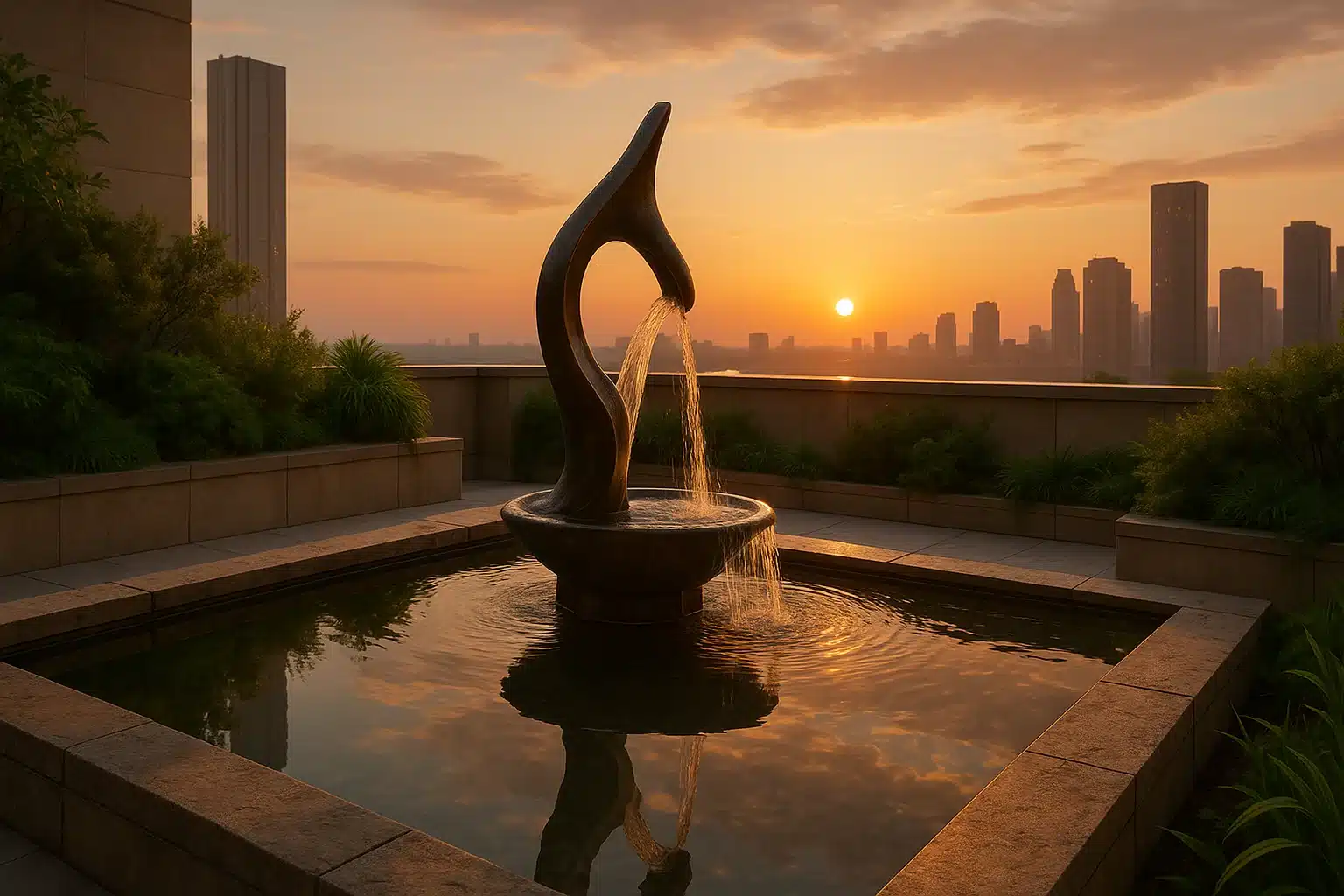
Introduction: The New Era of Elevated Living
Penthouses have long represented the pinnacle of urban luxury, panoramic views, private terraces, and an air of exclusivity. But in recent years, a new element has been making waves in high-rise living: water design. More specifically, fountains for penthouses are redefining what it means to live above the city skyline.
From subtle minimalist cascades to sculptural centerpieces, rooftop fountains offer a sensory experience that marries sound, movement, and light, turning concrete rooftops into tranquil oases. They symbolize balance amid chaos and nature amid architecture.
In this in-depth guide, we’ll explore how water design has taken to the skies, the different types of fountains suited for penthouses, the technical and design considerations behind them, and how to bring one to life in your own elevated space.
The Allure of Water in the Sky
1. Serenity and Sensory Experience
The sound of trickling water has a meditative quality. It softens the hum of the city below and introduces a natural rhythm to the environment. When placed on a penthouse terrace or balcony, a fountain can create an immediate sense of calm, a private escape above the world.
Research in environmental psychology suggests that the presence of moving water reduces stress and promotes focus. For city dwellers, this is a priceless addition. A rooftop fountain isn’t just décor, it’s an antidote to the constant urban buzz.
2. Statement of Luxury
Luxury today is as much about experience as it is about exclusivity. A penthouse fountain delivers both. Whether it’s a sleek infinity-edge water wall that mirrors the skyline or a sculptural centerpiece surrounded by lush greenery, a well-designed fountain signals refinement, taste, and attention to sensory detail.
High-end developments and hospitality spaces have embraced this idea. Now, private homeowners are bringing the same ethos to their penthouses, blurring the line between architecture and art.
3. Connection with Nature
In an urban jungle, a rooftop fountain is a symbolic connection to the elements — wind, light, and water. It softens the harsh edges of concrete and glass, bringing an organic touch to modern architecture. Combined with planters or rooftop gardens, water features help create micro-ecosystems that attract birds and butterflies, infusing life into high-rise living.
Types of Fountains Ideal for Penthouses
While space, weight, and plumbing constraints are real considerations, designers today have countless creative solutions. Here are some of the most popular fountain types suited for penthouses and rooftop terraces:
1. Wall-Mounted Fountains
Perfect for compact terraces or balconies, wall-mounted fountains save space while offering elegance. Water flows down a textured or reflective surface, creating a soft and continuous cascade.
- Best For: Contemporary spaces or minimalist designs.
- Material Options: Stainless steel, glass, stone, or copper panels.
- Bonus Tip: Integrate LED backlighting to create a stunning nighttime feature that highlights texture and motion.
2. Tabletop and Sculptural Fountains
When space is limited, tabletop fountains offer versatility. These portable installations bring the beauty of water to coffee tables, entryways, or balcony corners.
- Best For: Indoor-outdoor continuity and flexible design.
- Design Styles: Zen bowls, art deco sculptures, or modern geometries.
- Maintenance Level: Low — ideal for apartments with limited access to water lines.
3. Reflecting Pools
A reflecting pool on a penthouse terrace introduces a dramatic sense of stillness. It reflects the sky and skyline, creating a surreal blend of architecture and nature.
- Best For: Large terraces or open rooftop spaces.
- Design Options: Infinity edges or geometric layouts with floating stepping stones.
- Pro Tip: Use dark stone or tile finishes to enhance the mirror effect.
4. Infinity-Edge or Overflow Fountains
Borrowed from luxury pool design, infinity-edge fountains allow water to spill over seamlessly, giving the illusion of endless flow. When paired with city views, the visual effect is breathtaking.
- Best For: High-end, contemporary penthouses with open layouts.
- Ideal Placement: Near seating areas or adjacent to panoramic glass walls.
5. Column and Tiered Fountains
For those who prefer traditional elegance, tiered fountains or columnar designs bring a classical touch to modern architecture. Their rhythmic sound contrasts beautifully with city noise.
- Best For: Rooftops with garden landscapes or European-inspired design themes.
- Material Options: Carved stone, resin composites, or weather-resistant concrete.
Designing a Fountain for a Penthouse: Key Considerations

Creating a water feature at rooftop level isn’t as simple as placing a garden fountain. The elevation, wind exposure, weight limits, and drainage must all be addressed with precision. Below are essential design and engineering factors to consider:
1. Weight and Structural Load
Water is heavy, approximately 8.3 pounds per gallon. Even a modest fountain can add hundreds of pounds to your rooftop. Before installation, consult a structural engineer to ensure the building can safely bear the load.
- Lightweight Alternatives: Use fiberglass basins or modular water systems.
- Tip: Distribute the load evenly over structural beams, not unsupported decking.
2. Water Circulation and Plumbing
Most rooftop fountains operate on a closed-loop system, meaning the same water is continuously filtered and circulated. This minimizes waste and simplifies plumbing.
- Ensure easy access to electrical outlets for pumps.
- Install anti-splash guards or water baffles to reduce wind-driven spray.
- Consider an automatic refill system connected to your water line for convenience.
3. Weather Resistance
- Penthouses are exposed to extreme elements, sunlight, wind, and temperature fluctuations.
- Use UV-resistant materials like marine-grade stainless steel or treated stone.
- For colder climates, add drainage systems and consider removable fountains that can be winterized.
- Always seal joints and basins properly to prevent water infiltration into the structure.
4. Wind Control
- High-rise wind can distort water flow, causing splashing or misting.
- Choose laminar flow designs or low-profile fountains that minimize vertical spray.
- Position the fountain where architectural walls or plants offer partial shielding.
5. Lighting Integration
- Lighting transforms a fountain from a daytime feature to a nighttime spectacle.
- Use underwater LED lights to highlight flow and texture.
- Opt for warm tones for a cozy ambiance or cool blues for a modern edge.
- Connect lighting to smart home systems for dynamic control.
6. Sound Design
The acoustics of water are often underestimated. Too loud, and it’s overwhelming; too soft, and it’s lost to city noise.
- Wall cascades create a gentle murmur.
- Tiered fountains produce rhythmic splashes.
- Bubble or spillover designs create soothing white noise ideal for relaxation areas.
Integration with Architecture and Interior Design
1. Minimalist Modernism
Clean lines, reflective materials, and a focus on simplicity define this style. Think black stone basins, mirror-polished steel, and subtle laminar flows. The water becomes part of the architecture rather than a decorative afterthought.
2. Biophilic Design
Biophilic design connects people to nature, even in skyscrapers. Pair a small reflecting pool with vertical gardens, bamboo screens, or natural rock formations. The interplay of greenery and water brings calm and oxygen to high-altitude spaces.
3. Art as Water
In some penthouses, the fountain itself is a sculptural centerpiece, a kinetic artwork. Designers collaborate with artists to create installations that move, shimmer, and react to light. These fountains blur the boundaries between fine art, architecture, and engineering.
4. Seamless Indoor-Outdoor Flow
Open-plan penthouses often use fountains to bridge indoor and outdoor spaces. For example, a water wall might begin inside the living area and extend through glass walls onto the terrace — symbolizing continuity.
The Technical Side: Installation and Maintenance
1. Installation Phases
- Structural Assessment – Confirm weight limits and water load distribution.
- Waterproofing – Apply multi-layer waterproof membranes to prevent leaks.
- Plumbing and Electrical Setup – Install concealed pipes, pumps, and control units.
- Assembly and Sealing – Place basins, panels, or sculptures securely.
- Testing and Calibration – Run water cycles to test flow, pressure, and noise levels.
Professional installation is highly recommended — even small rooftop leaks can cause costly damage.
2. Maintenance Tips
- Regular Cleaning: Prevent algae or mineral buildup by using distilled or filtered water.
- Pump Maintenance: Clean filters every few weeks. Replace pumps annually if heavily used.
- Seasonal Adjustments: Drain and cover the fountain during extreme cold or heat.
- Smart Controls: Use timers or app-controlled systems to optimize energy and water use.
A well-maintained fountain can last decades and retain its aesthetic brilliance.
Eco-Friendly and Sustainable Options
- Solar-Powered Pumps: Ideal for rooftops with direct sun exposure, these systems reduce electricity use.
- Rainwater Harvesting Integration: Use collected rainwater to refill or top up your fountain.
- Low-Evaporation Designs: Closed-loop systems with minimal surface area reduce water loss.
- Natural Filtration: Incorporate aquatic plants like water lilies to help maintain clear water naturally.
Eco-luxury is not just a design statement, it’s a forward-thinking approach to urban living.
Case Studies: Inspiring Rooftop Fountains
1. The Manhattan Mirage
A New York penthouse overlooking Central Park features a sleek infinity-edge fountain aligned with the city skyline. At night, fiber-optic lighting gives the illusion of stars reflecting in the water, blending urban lights with natural reflection.
2. The Dubai Oasis
In Dubai’s ultra-luxury apartments, designers have integrated cooling water mists and shallow reflective pools into terraces. This not only enhances aesthetics but also lowers ambient temperature, a practical and visual marvel.
3. The Tokyo Terrace Garden
Japanese architects often integrate Zen-inspired water bowls surrounded by bonsai and rock arrangements. In high-rise Tokyo penthouses, these designs create an intimate space for tea rituals and meditation, a spiritual retreat above the city bustle.
The Emotional Dimension: Why Water Resonates
Water is universal, tranquil yet powerful, reflective yet dynamic. In feng shui and holistic design, water symbolizes abundance, clarity, and energy flow.
In penthouses, fountains serve as both aesthetic and emotional anchors. They remind inhabitants to slow down, breathe, and reconnect. The rhythm of flowing water counterbalances the mechanical pulse of modern cities, offering equilibrium between manmade and natural worlds.
Design Collaboration: Bringing Experts Together
Creating a rooftop fountain isn’t a solo effort, it’s a multidisciplinary collaboration between:
- Architects: Ensure integration with structural and aesthetic design.
- Landscape Designers: Curate plant pairings and materials.
- Hydraulic Engineers: Handle water circulation, flow rates, and filtration.
- Lighting Specialists: Design nighttime illumination.
- Interior Designers: Align the fountain’s look with the home’s overall theme.
When these professionals collaborate early, the result is a holistic water experience — one that feels organic and effortless.
Future Trends in Sky-High Water Design
- Smart Water Systems – IoT-enabled pumps and sensors that automate cleaning and refill cycles.
- Interactive Water Features – Fountains that respond to movement, sound, or light.
- Vertical Water Walls – Integrated into glass facades or partitions, creating interior waterfalls.
- Hybrid Eco Features – Combining fountains with hydroponic systems or air-purifying vegetation.
As technology evolves, water design is becoming more responsive, efficient, and customizable, ensuring that penthouse fountains remain a hallmark of modern luxury.
Conclusion: The Art of Living Above Water
Fountainsfor penthouses are more than ornamental luxuries, they’re architectural expressions of tranquility. They symbolize balance in chaos, serenity amid speed, and the integration of natural beauty into urban life.
Whether it’s a sculptural cascade reflecting the skyline or a minimalist water wall murmuring softly beside a terrace garden, a well-designed penthouse fountain transforms space, and spirit.
When crafted thoughtfully, water doesn’t just flow, it elevates.