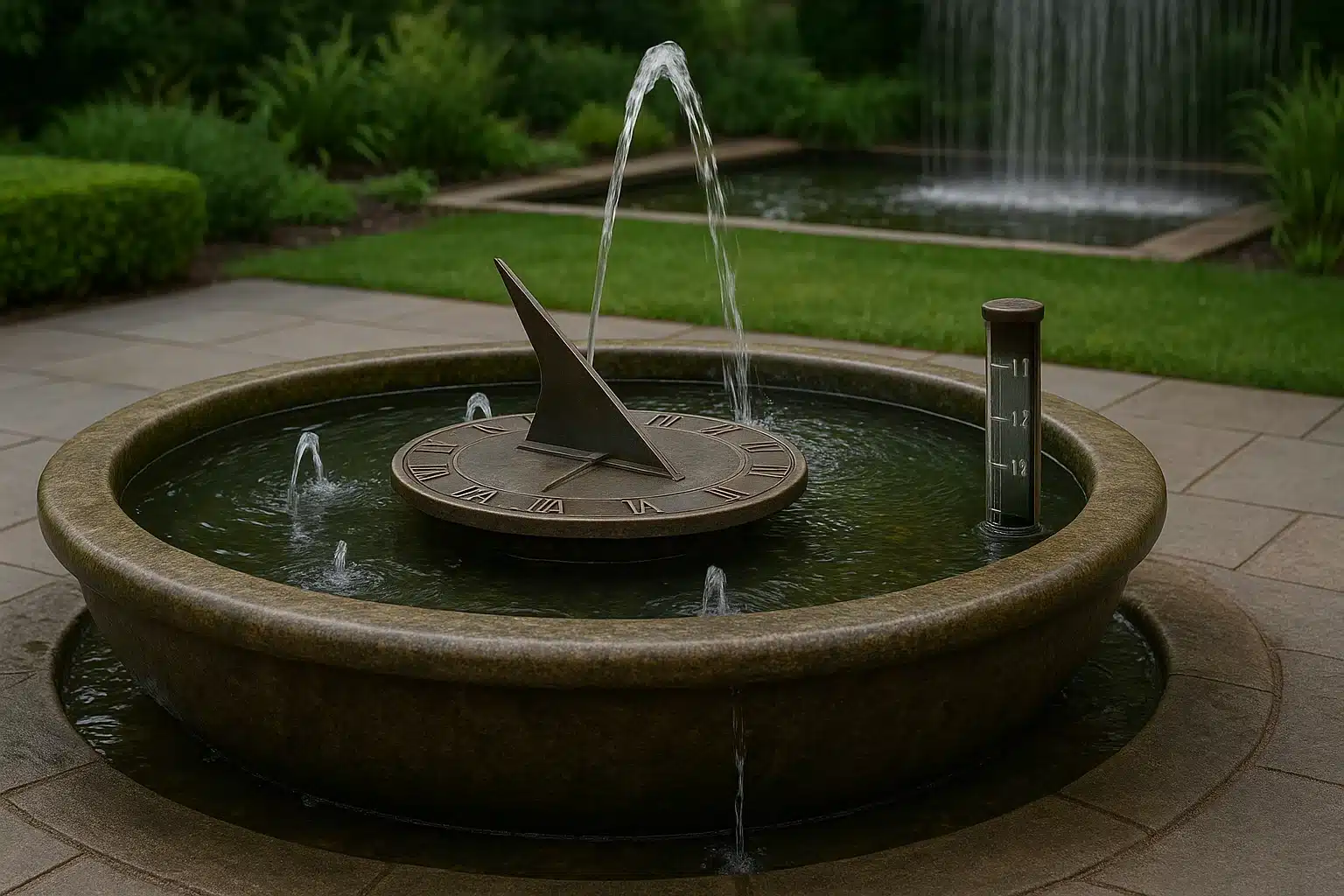
320.1.Solar-clock-fountain

Fountains That Tell Time: Incorporating Sundials and Water Clocks into Design

Fountains have always been more than just decorative elements. Throughout history, water features have combined beauty, utility, and symbolism. From outdoor fountains gracing public squares to indoor water fountains soothing private spaces, their purpose often extends beyond aesthetics. One fascinating dimension of fountain design is the integration of timekeeping elements — namely sundials and water clocks — into water features, creating unique and memorable installations.

This comprehensive guide explores how fountains that tell time can elevate spaces, blending ancient technology with modern design trends. Whether you’re seeking to enhance garden fountains, rain curtain fountains, tabletop fountains, or grand floor fountains, incorporating timekeeping devices opens up new creative possibilities.

Why Fountains Make the Perfect Timekeepers

Water has been used to measure time for thousands of years. Ancient civilizations, from Egypt to China, developed ingenious water clocks (or clepsydras) that used the flow of water to track hours. Sundials, relying on shadows cast by the sun, were equally common and symbolic of mankind’s attempt to bring order to nature.

Water fountains, with their continuous flow and central place in outdoor spaces, naturally complement these timekeeping devices. By adding a sundial or water clock element to a fountain, designers not only create a functional feature but also tell a story — a link between the passage of time and the flow of water.

Benefits of Combining Fountains with Timekeeping Features

1. Functional Art

Outdoor water fountains with integrated sundials or water clocks function as both sculptures and instruments. They invite visitors to interact, observe, and contemplate the passage of time.

2. Educational Value

In public parks, schools, or museums, garden fountains designed as timekeepers serve as educational exhibits, sparking interest in history, science, and design.

3. Symbolism

The combination of flowing water and time resonates deeply. It reflects life’s transience, nature’s cycles, and human ingenuity.

4. Added Visual Interest

Sundials cast striking shadows and add a dynamic element to outdoor fountains, while water clocks intrigue with their mechanical elegance and motion.

Design Ideas: Fountains That Tell Time

Sundial Fountains

Sundial fountains are a popular choice for outdoor water fountains and garden fountains. A sundial, typically made of bronze, stone, or stainless steel, is mounted at the center or on a pedestal within the fountain basin.

Classic Tiered Fountain with Sundial Top

Install a traditional three-tiered garden fountain and replace the finial with a working sundial. This combines old-world charm with functionality.

Modern Rain Curtain Water Feature and Sundial

In sleek contemporary settings, a rain curtain water feature with a suspended sundial plate above the falling water creates a captivating, kinetic installation.

Tabletop Fountains with Mini Sundials

Small sundials can also be incorporated into tabletop fountains or indoor fountains, ideal for desks or shelves where natural light reaches.

Tips for Sundial Integration

  • Position sundials in areas with full sun exposure.
  • Align the gnomon (the shadow-casting arm) accurately for the location’s latitude.
  • Choose materials that resist water and weather corrosion, like bronze or stainless steel.

Water Clock Fountains

Water clocks, more complex than sundials, measure time based on controlled water flow or fill rate. Modern versions can still be designed using simple mechanisms or digital adaptations.

Indoor Water Fountains with Water Clock Face

Wall fountains or floor fountains can include vertical channels with water levels that rise to indicate the hour, like a barometer of time.

Outdoor Water Features with Stepped Reservoirs

A series of basins that fill sequentially to mark hours can serve as both a garden fountain and timepiece.

Rain Curtain Fountain as a Water Clock

Water curtains with laser-projected time displays or etched hour markers behind the falling water give a high-tech twist to a centuries-old concept.

Tips for Water Clock Integration

  • Design for maintenance access to avoid clogging and ensure accurate flow.
  • Use clear water and filtration systems to keep time markings visible.
  • Illuminate key elements for nighttime visibility.

Best Settings for Timekeeping Fountains

  • Public Parks & Squares: Large outdoor fountains with sundials or water clocks draw crowds and create iconic landmarks.
  • Botanical Gardens: Garden fountains enhanced with timekeeping elements reflect the harmony of nature and science.
  • Corporate & Institutional Spaces: Wall fountains and floor fountains with integrated time elements make a statement in lobbies and courtyards.
  • Private Gardens & Patios: Tabletop fountains or small outdoor water fountains with sundial accents add personal charm to residential spaces.
  • Museums & Educational Centers: Indoor fountains that incorporate water clocks can illustrate historical technology in action.

Material & Style Choices

Material & Style Choices

  • Classic & Traditional: Use stone, marble, or cast iron with ornate details to complement historic architecture.
  • Modern & Minimalist: Stainless steel, glass, and polished surfaces are ideal for sleek designs like rain curtain water features.
  • Rustic & Natural: Bronze or weathered stone sundials pair well with naturalistic garden fountains surrounded by lush planting.

Combining Time and Sound

Both sundials and water clocks are visual elements, but when paired with the gentle sound of flowing water from indoor water fountains or outdoor installations, the effect is multi-sensory. The rhythmic gurgle of a rain curtain fountain or the soft splash of a wall fountain alongside moving shadows or rising water levels enhances the sensory experience.

Maintaining Fountains with Time Elements

Because timekeeping components are functional, proper maintenance is essential:

  • Clean sundial surfaces regularly to keep markings legible.
  • Check water flow rates to maintain water clock accuracy.
  • Use appropriate water treatment to prevent algae or scale buildup on garden fountains and indoor fountains alike.

The Future of Timekeeping Fountains

With the advent of digital technology and interactive design, fountains that tell time are evolving:

  • Digital displays synchronized with flowing water.
  • Solar-powered sundials with embedded lighting.
  • Interactive apps that let visitors engage with the fountain’s timekeeping features.

These innovations ensure that while the tradition of sundials and water clocks endures, modern technology adds fresh dimensions to water features.

Conclusion:

Fountains that tell time are a stunning fusion of art, science, and nature. By thoughtfully integrating sundials and water clocks into outdoor water fountains, garden fountains, indoor fountains, and even wall fountains or rain curtain water features, you create spaces that not only captivate but also educate and inspire. Time flows like water — and your fountain can beautifully remind everyone of that eternal truth.

FAQs:

Yes! Miniature sundials are available and can be elegantly incorporated into tabletop fountains, provided there is adequate light to cast a shadow.
Water clocks can be designed for indoor fountains if they use clear water, a compact mechanism, and are properly lit and maintained for easy readability.
Absolutely. Rain curtain fountains and rain curtain water features can display laser-etched hour markings or project digital time displays, combining beauty and functionality.