...
Fountain-Spacial-Tool

From Feature to Framework: How Fountains Are Becoming Spatial Tools

Introduction: The Quiet Shift in How We See Fountains

For centuries, fountains have been admired as symbols of beauty, abundance, and engineering prowess. From Roman aqueduct-fed plazas to ornate palace courtyards, fountains were historically celebrated as features, objects meant to be admired, photographed, and remembered. But something fundamental has changed in the way designers, architects, and planners approach fountains today.

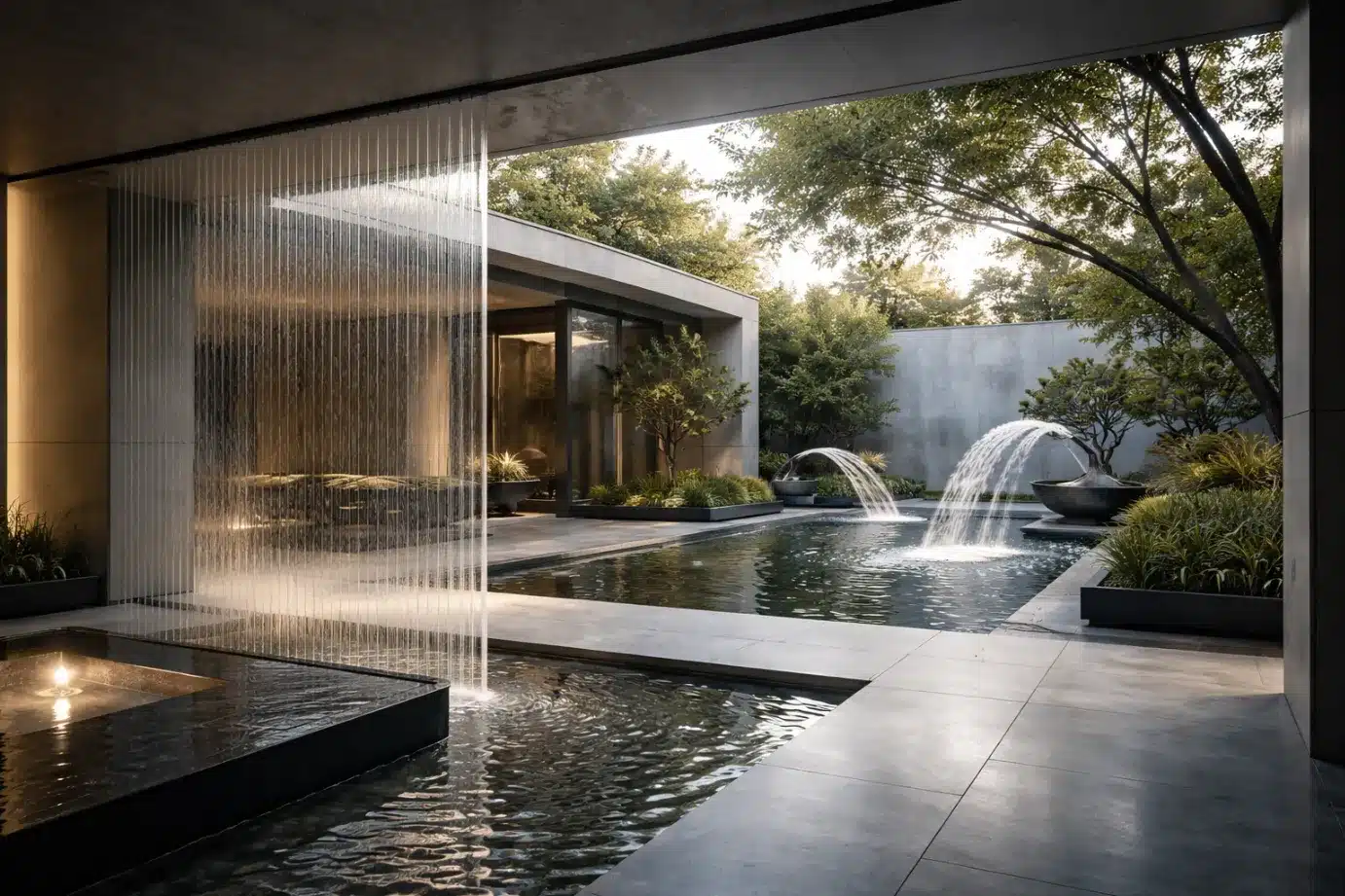
Modern fountains are no longer just ornamental water features. They are becoming frameworks, spatial tools that organize movement, influence behavior, define zones, and shape emotional experiences. Whether it’s outdoor fountains guiding pedestrian flow in an urban plaza, indoor water fountains creating acoustic privacy in open offices, or rain curtain water features acting as transparent walls, fountains are increasingly performing architectural and psychological functions.

This evolution is not accidental. It reflects broader changes in how we design spaces: more experiential, more human-centered, and more multi-sensory. In this article, we’ll explore how fountains, across indoor fountains, outdoor water fountains, wall fountains, floor fountains, tabletop fountains, and rain curtain fountains, are transforming from static features into dynamic spatial tools.

The Traditional Role of Fountains: Decoration and Display

Historically, fountains served three primary purposes:

  • Water supply and distribution
  • Symbolism and status
  • Aesthetic enhancement

In gardens and courtyards, garden fountains provided focal points. In palaces and civic spaces, large water fountains signaled power, control over nature, and technological advancement. Even early indoor fountains were often about luxury and prestige rather than function.

These fountains were objects within space, not contributors to how the space functioned.

But as cities densified and interior environments became more complex, designers began asking a new question:

What if water features could do more than decorate?

The Rise of Experiential Design and Multi-Sensory Spaces

Modern spatial design prioritizes experience over appearance. Sound, movement, texture, temperature, and emotional response are now central design considerations. Water naturally engages all of these senses:

  • Sound: White noise, rhythmic movement, acoustic masking
  • Motion: Dynamic flow, reflection, visual depth
  • Touch: Cooling effects, humidity control
  • Emotion: Calm, focus, awe, playfulness

This makes fountains uniquely positioned to become spatial tools rather than static decor.

In both outdoor fountains and indoor water fountains, water is now used to:

  • Define boundaries without walls
  • Guide circulation and wayfinding
  • Create micro-environments
  • Control acoustics
  • Establish brand identity

From Object to Organizer: Fountains as Spatial Frameworks

1. Defining Zones Without Physical Barriers

One of the most powerful ways fountains function as spatial tools is through soft zoning.

Instead of walls, fences, or partitions, designers use water features to subtly define areas:

  • A rain curtain fountain separates a lobby from a lounge while maintaining visibility
  • A wall fountain delineates a waiting area from a corridor
  • A line of floor fountains establishes a threshold between public and semi-private zones

Unlike solid barriers, these water features preserve openness while still signaling transition.

This is particularly effective in:

  • Hotels
  • Corporate offices
  • Airports
  • Museums
  • Mixed-use developments

2. Guiding Movement and Wayfinding

In large spaces, people intuitively move toward sound and motion. Designers now leverage this instinct by using fountains as spatial anchors.

Examples include:

  • Outdoor water fountains placed at key intersections in plazas
  • Linear water features guiding pedestrians through campuses
  • Indoor fountains marking vertical circulation points like elevators and stairs

Unlike signage, fountains communicate direction emotionally and intuitively. People don’t feel instructed, they feel drawn.

Outdoor Fountains as Urban Infrastructure

Reimagining the Public Plaza

Outdoor fountains are no longer just centerpieces. In contemporary urban design, they act as infrastructure for social life.

Modern outdoor water fountains often:

  • Encourage lingering and gathering
  • Reduce perceived heat in urban heat islands
  • Mask traffic noise
  • Create landmarks for orientation

Interactive and walk-through fountains, especially floor fountains, blur the line between sculpture, landscape, and play space.

Cities increasingly use water features as tools for:

  • Community engagement
  • Climate adaptation
  • Public wellness

Climate Responsiveness and Cooling Effects

As global temperatures rise, outdoor fountains are being re-evaluated for their microclimate benefits.

Evaporative cooling from fountains can reduce surrounding temperatures, making plazas and courtyards more comfortable. When paired with shade structures and seating, water features become functional climate moderators rather than aesthetic luxuries.

This is one reason why outdoor fountains and garden fountains are seeing renewed interest in urban planning.

Indoor Fountains and the New Workplace

Acoustic Control in Open Spaces

Open-plan offices are notoriously noisy. Instead of adding more walls, designers are increasingly turning to indoor water fountains as acoustic tools.

The sound of moving water:

  • Masks distracting conversations
  • Reduces perceived noise levels
  • Improves concentration and well-being

Wall fountains and rain curtain water features are especially effective because they combine vertical presence with sound diffusion.

Emotional Regulation and Wellness

Indoor fountains are also tied to the growing emphasis on workplace wellness. Research consistently shows that exposure to natural elements, especially water, reduces stress and improves mood.

As a result, indoor fountains now appear in:

  • Corporate lobbies
  • Healthcare facilities
  • Hotels and spas
  • Residential developments

Even tabletop fountains, once seen as novelty decor, are being reintroduced in meditation rooms, therapy spaces, and executive offices as tools for focus and calm.

Spatial Tools 

Wall Fountains: Vertical Space as Experience

Wall fountains deserve special attention because they represent one of the clearest examples of fountains becoming spatial frameworks.

Unlike freestanding water features, wall fountains:

  • Integrate directly into architecture
  • Define edges and boundaries
  • Activate otherwise passive surfaces

In both indoor fountains and outdoor fountains, wall-mounted water features are used to:

  • Elongate corridors
  • Anchor reception areas
  • Add texture to blank facades

They transform walls from separators into experiences.

Rain Curtain Fountains: Transparent Architecture

The rain curtain fountain is perhaps the most literal expression of water as a spatial tool.

Unlike traditional fountains, rain curtain water features create a vertical plane of water that can function as:

  • A visual divider
  • A dramatic entrance element
  • A sensory threshold

Because rain curtain fountains are transparent, they maintain sightlines while still marking separation. This makes them ideal for:

  • Luxury retail
  • Corporate headquarters
  • Hospitality environments

They challenge the very idea of what a “wall” can be.

Garden Fountains and the Psychology of Retreat

In residential and hospitality settings, garden fountains are increasingly designed to shape experience, not just aesthetics.

Rather than placing a single decorative fountain, designers now use multiple water features to create:

  • Sequences of discovery
  • Zones for reflection and rest
  • Transitions between indoor and outdoor spaces

Water becomes a narrative device, guiding users through a landscape both physically and emotionally.

The Role of Technology in Fountain Design

The evolution from feature to framework is also driven by technology.

Modern fountains benefit from:

  • Programmable pumps and lighting
  • Motion sensors and interactivity
  • Water-efficient circulation systems
  • Smart controls integrated with building systems

These advancements allow water features to respond dynamically to time of day, occupancy, and environmental conditions, further reinforcing their role as active spatial elements.

Branding, Identity, and the Fountain as Signature

For commercial and civic projects, fountains are increasingly used as identity markers.

A custom-designed fountain can:

  • Reinforce brand values (calm, innovation, sustainability)
  • Create a memorable first impression
  • Serve as a recognizable landmark

From corporate campuses to luxury hotels, water features are no longer generic. They are bespoke spatial statements.

From Decoration to Design Strategy

The shift from feature to framework represents a broader change in design thinking:

  • From object-based to experience-based
  • From static to dynamic
  • From visual to multi-sensory

Fountains, whether indoor fountains, outdoor water fountains, wall fountains, or rain curtain fountains, are uniquely positioned to support this evolution because they engage space, people, and emotion simultaneously.

They don’t just sit in space anymore.

They actively shape it.

Conclusion: The Future of Fountains as Spatial Tools

As architecture and design continue to prioritize human experience, fountains will only grow more relevant, not less.

Far from being outdated or decorative, modern water features are becoming essential components of spatial strategy. They organize movement, define zones, influence mood, and create meaning.

The next generation of fountains won’t ask, “How does it look?”

They’ll ask, “How does it work, for people, for space, and for experience?”

That’s the true transformation, from feature to framework.

FAQs:

Fountains are used to define zones, guide movement, control acoustics, and shape emotional experiences without relying on solid walls or barriers.

Indoor water fountains like wall fountains, rain curtain fountains, and tabletop fountains are ideal for acoustic control, wellness, and visual impact in interior spaces.

Yes. Modern outdoor fountains provide cooling, reduce noise, encourage social interaction, and act as landmarks, making them valuable functional elements in cities.