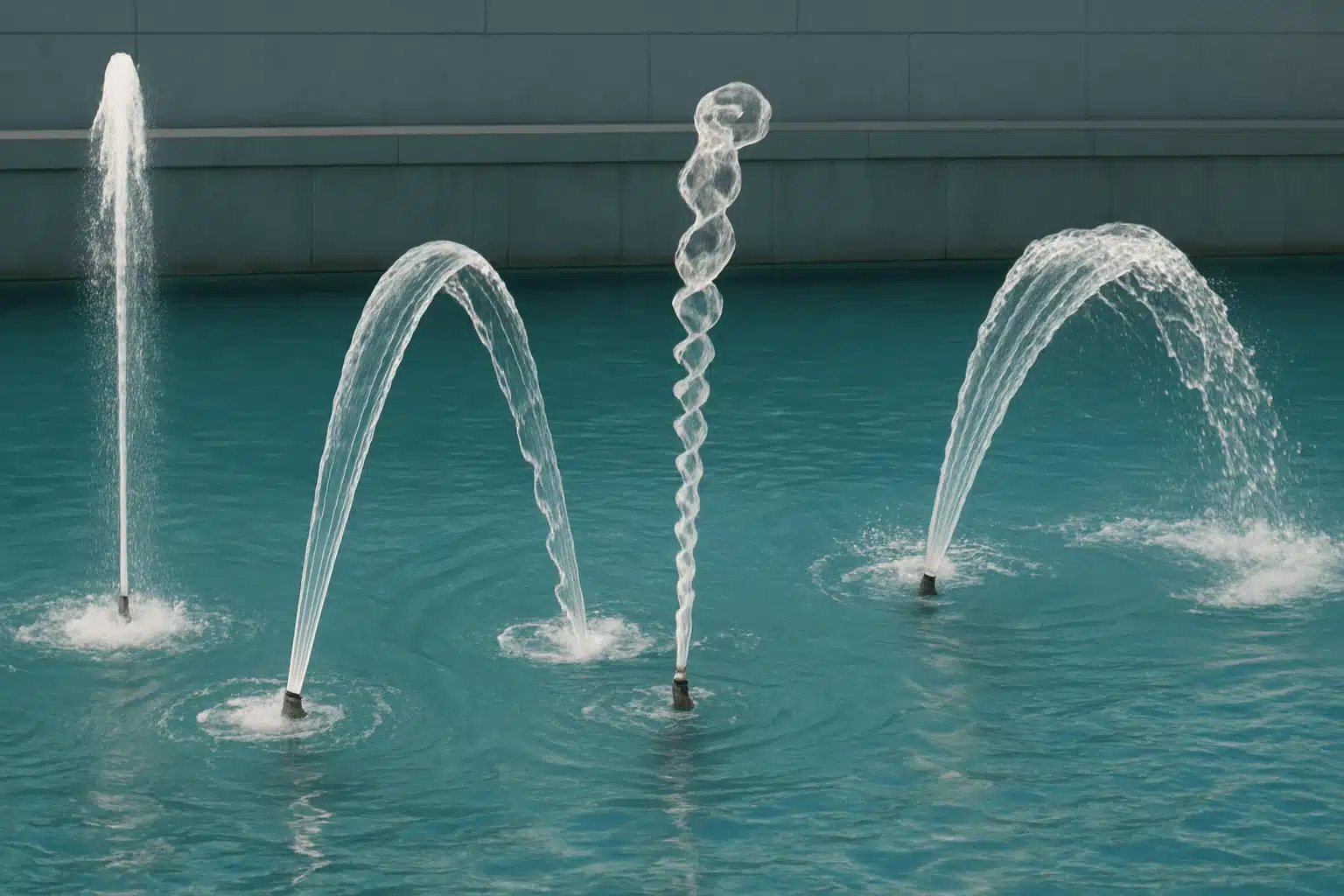
Introduction: Why Flow Patterns Matter in Fountain Design
When most people imagine a fountain, they picture a single vertical jet shooting water into the air, perfectly straight and shimmering in sunlight. While this traditional image has its beauty, today’s fountain design goes far beyond the simple upward jet. Designers, engineers, and artists now experiment with water in motion, creating flow patterns that range from clean linear arcs to mesmerizing spirals, waves, and choreographed displays.
The artistry of fountains lies not only in the basin, sculpture, or lighting but also in the way water itself moves. Flow patterns can change the entire emotional experience of a public square, hotel courtyard, corporate plaza, or amusement park. Straight jets suggest elegance and order, spirals convey playfulness and creativity, while dancing waves embody energy and vitality.
This post explores how fountain jets have evolved from straight lines to more complex patterns, the science and engineering behind them, and how designers can harness these patterns to enhance spaces.
The Classic: Straight Line Jets
Timeless Elegance
Straight line jets are the most recognizable pattern in fountains. They project water directly upward or at a consistent arc, creating a visual sense of symmetry and clarity. Iconic fountains like the Trevi Fountain in Rome or Buckingham Fountain in Chicago incorporate linear jets as core elements, giving structure to the overall display.
Engineering Simplicity
Straight jets are the easiest to design and maintain. They require minimal mechanical complexity and rely primarily on pump pressure and nozzle size. The simplicity makes them reliable for projects where longevity and low maintenance are priorities.
Applications
- Formal gardens with symmetrical layouts
- Corporate courtyards emphasizing order and professionalism
- Memorials and monuments where solemnity is key
Straight jets, while simple, remain essential in fountain design. But what happens when creativity pushes beyond linearity?
The Evolution: Curved and Arcing Jets
From Static to Dynamic
Curved arcs introduce motion and grace without overcomplicating the design. By adjusting nozzle angles, water can sweep across basins, leap from one tier to another, or frame sculptures.
Technical Considerations
Nozzle placement and water pressure determine how far an arc extends. Engineers often use laminar nozzles to create smooth, glass-like arcs with minimal turbulence. These arcs can be short and playful or long, bridging wide spaces for dramatic effect.
Design Impact
Arcing jets soften rigid landscapes and bring organic movement. They mimic natural water streams and waterfalls, making them ideal for garden fountains and interactive water play zones.
Enter the Spiral: Twisting Water into Art
The Geometry of Spirals
Spiral jets add a sense of wonder and play. They twist water streams around a central axis, creating corkscrew shapes that shimmer in sunlight. This movement evokes energy and creativity, drawing the eye in continuous motion.
How It Works
Spiral nozzles are engineered to impart a rotational force on the water as it exits. Some use vane systems inside the nozzle, while others employ angled exits to create the spin. The result: a flowing helix of water that looks alive.
- Where Spirals Shine
- Modern plazas with artistic installations
- Amusement parks where whimsical effects delight visitors
- Night fountains paired with colored lighting to enhance the twisting effect
Spiral jets are not just visual, they also invite interaction. People instinctively follow the curves with their eyes, creating a deeper sensory engagement.
Beyond Spirals: Waves, Fans, and Choreographed Motion
Wave Jets
Wave jets oscillate back and forth, creating rhythmic patterns that resemble ocean surf. These nozzles often rely on mechanical or pneumatic systems to move the water stream in controlled motions.
Fan-Shaped Jets
Fans spread water into thin sheets that open like peacock feathers. They’re perfect for framing sculptures, providing background effects, or creating reflective surfaces for lighting.
Dancing and Choreographed Jets
The pinnacle of fountain artistry lies in programmable jets synchronized with music and lights. Using digital controls and servo-driven nozzles, designers can choreograph entire performances. Think of the Bellagio Fountains in Las Vegas, where jets leap, bow, and twist in harmony with music.
The Science Behind Flow Patterns
Fluid Dynamics
Water flow patterns are shaped by fluid dynamics, the study of how liquids behave under pressure and movement. Engineers must consider velocity, turbulence, and air resistance to achieve desired patterns.
Nozzle Design
Nozzles are the unsung heroes of fountain design. A small change in nozzle geometry can dramatically alter flow:
- Straight nozzles = clean vertical streams
- Laminar nozzles = glass-like arcs
- Spiral nozzles = corkscrew flows
- Oscillating nozzles = rhythmic movements
Pump and Pressure Systems
The strength and stability of a pattern depend on water pressure. Too much pressure can break the jet into spray, while too little creates sagging lines. Pumps are carefully calibrated to balance performance with energy efficiency.
Artistic Uses of Flow Patterns
Emotional Impact
- Straight lines = order, power, and solemnity
- Arcs = grace, softness, and continuity
- Spirals = playfulness and creativity
- Waves = rhythm, energy, and life
- Choreographed jets = drama, storytelling, and immersion
Spatial Integration
Designers often match patterns to architectural elements. Straight jets suit geometric plazas, while spirals complement modern art installations. Wave jets may echo the rhythm of nearby music venues, and arcs can soften the look of corporate buildings.
Light and Sound Pairings
Lighting and music elevate flow patterns into full sensory experiences. LEDs highlight arcs and spirals at night, while synchronized soundtracks transform moving water into a living performance.
The Future of Fountain Flow Patterns
Interactive Technology
Motion sensors and pressure pads are already allowing visitors to control jets with gestures or movement. Expect future fountains to offer even more personalized flow experiences.
Sustainable Engineering
New nozzle designs aim to recycle water efficiently while reducing energy use. Engineers experiment with aerated jets (mixing water and air) to create dramatic effects with less water volume.
Hybrid Designs
Tomorrow’s fountains will likely combine multiple flow patterns—straight lines transforming into spirals midair, or arcs shifting into waves through digital programming. The goal: never-ending variety that keeps audiences captivated.
Practical Tips for Designers
Start with Purpose – Match flow patterns to the mood of the space. A hospital courtyard might benefit from calm arcs, while a festival plaza thrives on spirals and waves.
Balance Complexity with Maintenance – Intricate jets are beautiful but may require more upkeep. Consider long-term costs.
Leverage Lighting – Patterns gain new dimensions under LEDs and projection mapping.
Think Interaction – Public fountains often succeed when they invite people to approach, touch, or play.
Use Patterns in Combination – The most captivating fountains layer multiple flow types for variety and rhythm.
Conclusion: Water as Sculpture in Motion
From straight jets that symbolize elegance and order to spirals, waves, and choreographed displays that embody creativity and rhythm, fountain design is ultimately about turning water into art. Flow patterns are the brushstrokes, and fountains are the canvases where engineering meets imagination.
Every fountain tells a story through its jets, whether it’s a solemn tribute, a joyful celebration, or a spectacular performance. As technology advances, designers gain even more control, transforming water into dynamic sculptures that delight, inspire, and engage.
The future of fountains lies not just in structure or sculpture but in the endless possibilities of water’s movement. And as designers continue to play with flow, from straight lines to spirals, the stories fountains tell will only grow richer.