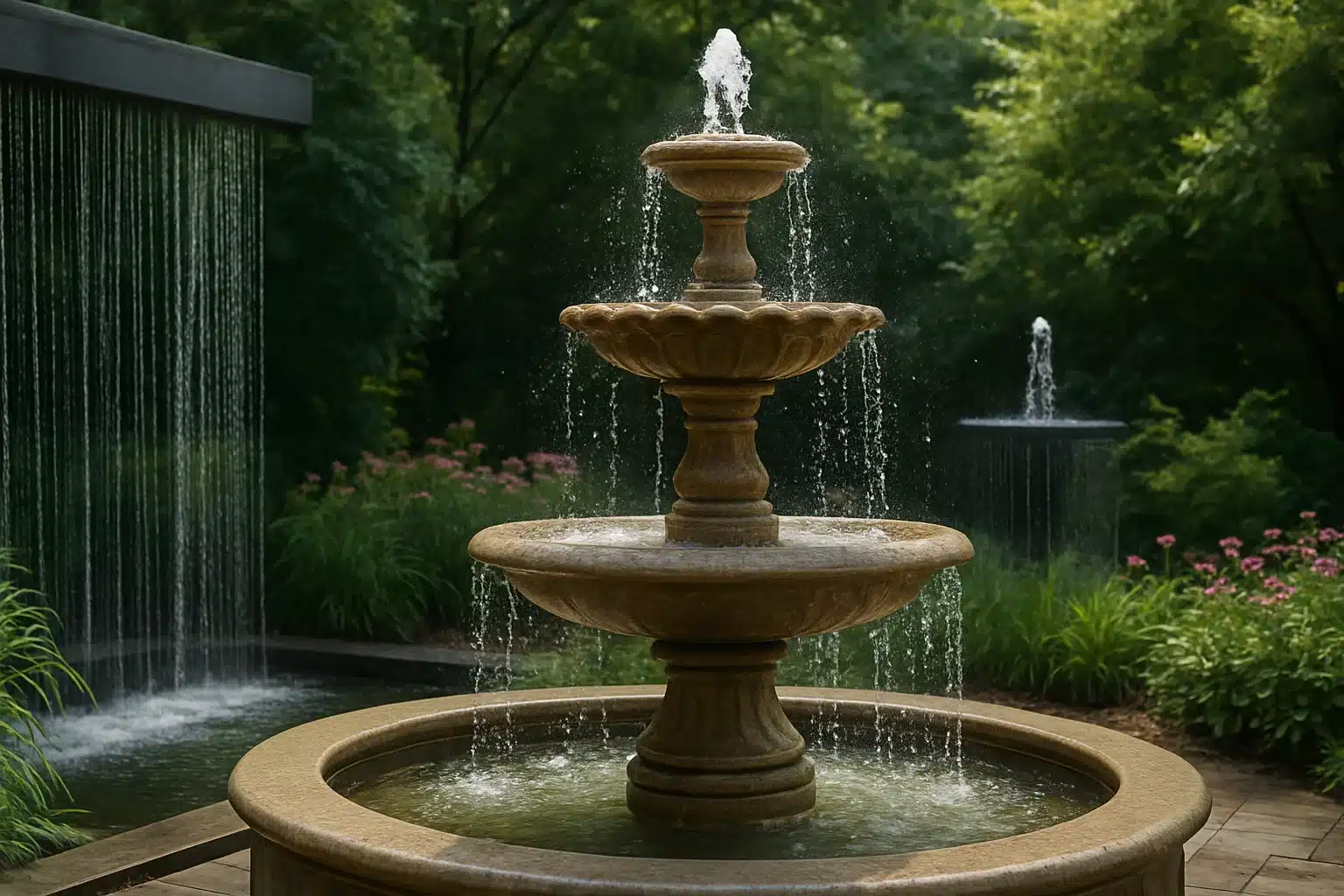
Fountains have long been celebrated for their beauty, elegance, and calming sounds. But did you know that water fountains—whether outdoor fountains, garden fountains, wall fountains, or even small tabletop fountains—can actually improve the air quality around them? It’s not just an aesthetic benefit: the science of negative ions produced by flowing water reveals a hidden health advantage of these water features. In this in-depth guide, we’ll explore how fountains enhance air quality, the role of negative ions, and why investing in indoor water fountains or outdoor water features is not only good for your space but also your well-being.
The Science of Negative Ions
What Are Negative Ions?
Negative ions are invisible molecules that are created naturally when water, air, sunlight, and Earth’s natural radiation interact. In nature, negative ions are abundant in places like waterfalls, oceans, and after thunderstorms. Essentially, they are oxygen atoms charged with an extra electron.
Research has shown that negative ions can have beneficial effects on human health. They’re believed to improve mood, reduce stress, and even help purify the air by binding to pollutants, allergens, and dust particles, causing them to fall to the ground and out of the breathable air.
How Water Features Generate Negative Ions
When water splashes, breaks, or flows rapidly, it creates friction that leads to the formation of negative ions. That’s why the air near waterfalls or rainstorms feels so refreshing. Outdoor water fountains, rain curtain fountains, and rain curtain water features replicate this process in a controlled, decorative way.
Even indoor fountains like wall fountains, floor fountains, or tabletop fountains—produce measurable amounts of negative ions. While they may not reach the levels of a large waterfall, they still contribute to creating a cleaner, fresher indoor atmosphere.
Benefits of Negative Ions from Fountains
1. Air Purification
Negative ions attach to positively charged particles like dust, pollen, smoke, and bacteria. Once bound, these heavier particles fall out of the air, reducing airborne allergens and pollutants. This effect is particularly valuable in urban areas where indoor and outdoor air quality can be poor.
For those with allergies or asthma, adding indoor water fountains or rain curtain water features to living or work spaces may help reduce triggers and improve breathing comfort.
2. Mood Enhancement
Studies suggest that negative ions may help alleviate symptoms of depression, particularly Seasonal Affective Disorder (SAD), by increasing serotonin production in the brain. This is why many people feel invigorated after a thunderstorm or by the beach.
By installing garden fountains or indoor fountains in your home or office, you can bring some of these mood-boosting benefits indoors.
3. Increased Energy and Focus
Some research indicates that exposure to negative ions may enhance alertness and mental energy. Offices, where air is often stagnant, can benefit greatly from indoor wall fountains or tabletop fountains to improve employee focus and productivity.
Outdoor Fountains and Air Quality
How Outdoor Water Fountains Contribute
Outdoor fountains, garden fountains, and rain curtain fountains are not only striking landscape features but also functional. In gardens or courtyards, outdoor water fountains help freshen the air and reduce localized dust and pollen levels. This is especially advantageous in dry climates or areas prone to air pollution.
The larger the fountain and the more vigorous the water movement, the greater the production of negative ions and the wider the radius of influence. Rain curtain water features, which create a gentle yet continuous sheet of falling water, are particularly effective in producing a high volume of ions.
Placement Matters
Placing outdoor fountains strategically—in high-traffic areas or near seating—ensures that people reap the most benefits from improved air quality and calming sound. Garden fountains tucked among greenery not only look harmonious but can also help cleanse the air of nearby plant allergens.
Indoor Fountains: Breathing Better Inside
Why Indoor Air Needs Help
Indoor air can be up to five times more polluted than outdoor air, due to factors like dust, chemicals from cleaning products, and poor ventilation. Indoor water fountains, whether floor fountains, wall fountains, or tabletop fountains, help counteract this by releasing moisture and negative ions.
Best Types of Indoor Fountains
- Wall fountains: Save space while providing a beautiful, cascading water display that cleans and humidifies the air.
- Floor fountains: Standalone units that add grandeur to any room and improve the air in larger spaces.
- Tabletop fountains: Compact yet effective, these are ideal for desks, nightstands, or small shelves.
Each of these indoor fountains creates negative ions and contributes to a cleaner, more refreshing indoor environment.
Choosing the Right Fountain for Air Quality
Consider the Water Flow
The more turbulent the water flow, the more negative ions are produced. Rain curtain fountains and rain curtain water features are excellent choices due to their continuous, dynamic water movement.
Size and Space
For outdoor areas, larger outdoor water fountains or garden fountains with significant water flow will cover more area. Indoors, choose the largest wall fountain, floor fountain, or tabletop fountain that comfortably fits your space.
Maintenance for Maximum Benefits

To keep your fountain functioning at its best:
- Clean it regularly to prevent mold or mineral build-up.
- Use clean water to avoid introducing additional pollutants.
- Ensure the pump is working efficiently to maintain water movement.
Combining Aesthetics and Health
Fountains, whether outdoor or indoor, seamlessly blend beauty and function. Garden fountains can serve as a serene centerpiece while cleaning the air. A rain curtain fountain can become a modern architectural feature that also improves workplace wellness.
By selecting fountains thoughtfully, you create spaces that not only look beautiful but also contribute to better breathing, clearer minds, and improved well-being.
This optimization ensures that readers searching for information about the health benefits of fountains and their impact on air quality can find this comprehensive guide.
Summary Table: Types of Fountains and Their Air Quality Benefits
FAQs:
Yes! Indoor fountains release negative ions, which bind to dust and allergens in the air, helping them settle and making the air cleaner to breathe.
Fountains with more vigorous water flow, such as rain curtain fountains and rain curtain water features, tend to produce higher levels of negative ions.
Absolutely. Outdoor water fountains and garden fountains help reduce dust and pollen levels in the immediate area while adding a refreshing feel to your garden.