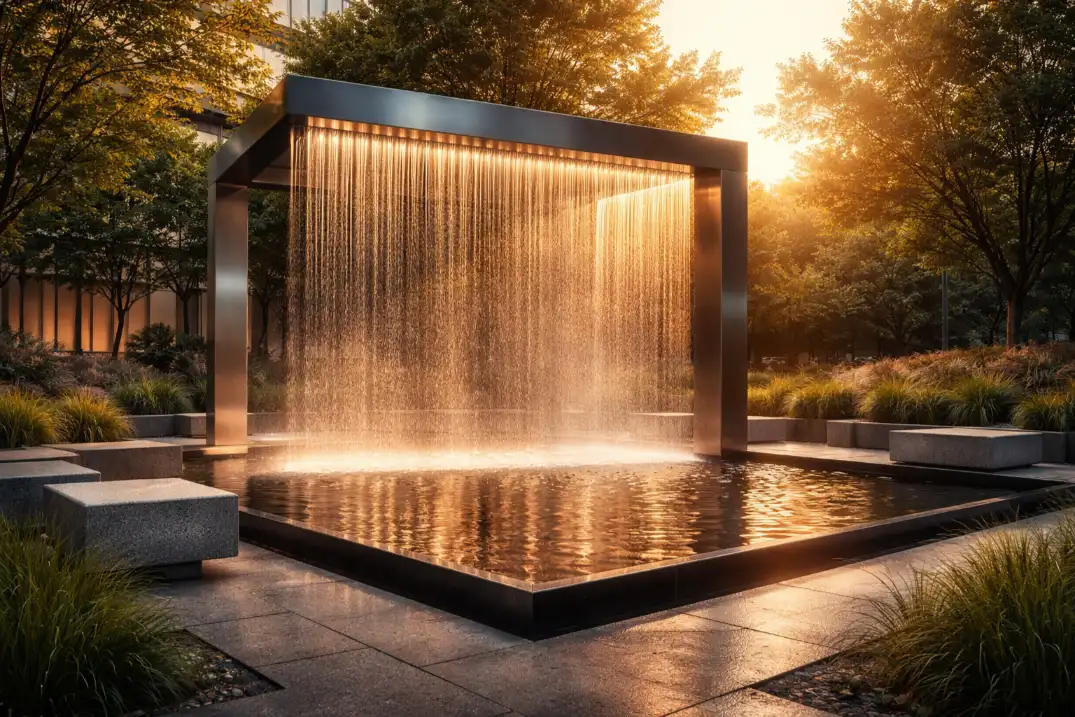
Public spaces thrive when people choose to stay. Whether it is a city plaza, shopping district, hotel courtyard, airport terminal, or corporate campus, the longer visitors remain in a space, the more vibrant, profitable, and socially dynamic that environment becomes. Designers, architects, and urban planners continually search for ways to encourage people to linger rather than simply pass through.
One of the most powerful yet often underestimated tools for increasing dwell time is the presence of fountains and water features.
From large outdoor water fountains in civic plazas to elegant wall fountains inside commercial buildings, water installations naturally draw people in. The sound of moving water, the visual motion of cascading streams, and the cooling microclimate created by water elements all contribute to a more inviting environment.
Modern installations such as the rain curtain fountain and rain curtain water feature further elevate the impact of water in public design. These contemporary fountains transform water into an architectural element that shapes how people interact with space.
This article explores the psychology, environmental benefits, and design principles behind how fountains increase dwell time in public spaces, and why they remain one of the most effective features in landscape architecture.
The Psychology of Water: Why Fountains Attract People
Humans have a natural affinity for water. Environmental psychologists refer to this connection as biophilia, the innate human tendency to seek connections with nature.
When people encounter water fountains in public spaces, several psychological responses occur:
1. Sensory Relaxation
The gentle sound of flowing water triggers a calming effect in the brain. Unlike urban noise, traffic, machinery, or crowds, the rhythmic movement of water masks harsh sounds and creates a relaxing auditory environment.
Indoor fountains, wall fountains, and tabletop fountains often use this effect intentionally in offices, hotels, and healthcare spaces.
This calming sensory experience encourages visitors to remain longer because the environment feels comfortable rather than overwhelming.
2. Visual Movement and Curiosity
Water constantly moves, reflects light, and changes shape. This dynamic quality captures attention far more effectively than static elements.
For example:
- Outdoor fountains create dramatic visual landmarks in plazas.
- Rain curtain fountains produce mesmerizing vertical sheets of falling water.
- Floor fountains create interactive surfaces where water emerges directly from pavement.
The continuous movement encourages people to pause and observe, increasing dwell time.
3. Emotional Comfort
Water is strongly associated with tranquility, cleanliness, and renewal.
When people encounter garden fountains or outdoor water fountains, the space often feels more welcoming and human-centered. This emotional comfort reduces the urge to leave quickly. Instead, visitors naturally slow down.
Environmental Effects: How Water Changes Microclimates
Cooling the Surroundings
Evaporation from water surfaces naturally lowers air temperature. In hot climates, this cooling effect can significantly improve outdoor comfort.
Large outdoor water fountains in plazas or parks can reduce surrounding temperatures, creating microclimates where people prefer to sit or gather.
This is one reason water features are commonly used in:
- public squares
- hotel courtyards
- shopping districts
- resort landscapes
When visitors feel physically comfortable, they stay longer.
Humidity Balance in Indoor Spaces
In large interior environments such as shopping malls or atriums, indoor water fountains help balance humidity levels.
A rain curtain water feature inside a commercial building not only creates visual drama but also improves air quality and comfort.
This combination encourages visitors to explore rather than move quickly through the space.
Fountains as Social Anchors in Public Design
Well-designed water features act as natural gathering points.
People instinctively use fountains as meeting spots, resting areas, or photo locations.
Urban planners frequently place outdoor fountains at the center of plazas because they help organize movement and social activity.
Examples include:
- children playing near floor fountains in parks
- couples sitting beside garden fountains in botanical spaces
- tourists photographing large outdoor water fountains
These activities extend the amount of time people spend within the environment.
The Role of Interactive Water Features
Interactive fountains dramatically increase dwell time by inviting participation.
Unlike traditional decorative fountains, interactive features encourage people to engage directly with water.
Floor Fountains
Floor fountains integrate jets into pavement, allowing visitors to walk through the water streams.
Children especially enjoy these installations, and families often remain in the area for extended periods while kids play.
Rain Curtain Fountain Installations
A rain curtain fountain produces vertical streams of falling water that create an immersive visual experience.
Visitors frequently:
- walk around the curtain
- take photos
- watch the patterns of falling water
Because these installations combine architecture and water movement, they become signature features of the space.
Digital Water Walls
Some wall fountains integrate programmable water flows that form shapes or text. These dynamic displays captivate audiences and naturally increase dwell time.
The Economic Impact of Increased Dwell Time
For commercial environments, dwell time directly influences revenue.
When visitors remain longer in a location, they are more likely to:
- visit additional shops
- purchase food or beverages
- explore nearby attractions
This is why many shopping centers invest in prominent water fountains and artistic water features.
Retail Centers
A central outdoor fountain in a shopping plaza encourages visitors to relax between shopping trips. This pause often leads to additional spending.
Hospitality Venues
Hotels frequently install elegant wall fountains, indoor fountains, or rain curtain water features in lobbies to create memorable first impressions. Guests tend to linger in visually appealing environments.
Restaurants and Cafés
Dining spaces with nearby garden fountains or tabletop fountains feel more relaxing, encouraging guests to stay longer and order more.
Design Strategies for Maximizing Fountain Impact
Strategic Placement
The location of outdoor water fountains significantly affects their impact.
The most successful placements include:
- central plazas
- entry points
- gathering areas
- pedestrian intersections
Positioning fountains where people naturally pause increases engagement.
Scale and Visibility
Large spaces benefit from dramatic outdoor fountains that serve as landmarks.
Smaller environments often use:
- wall fountains
- tabletop fountains
- compact indoor fountains
Each scale influences how people interact with the feature.
Lighting and Nighttime Appeal
Lighting transforms fountains into nighttime attractions.
LED lighting enhances:
- falling water patterns
- reflections
- architectural forms
A rain curtain fountain illuminated at night becomes a powerful visual centerpiece that attracts evening visitors.
Fountains in Different Public Environments
City Plazas
Urban plazas often feature large outdoor water fountains as central design elements. These fountains encourage visitors to gather, rest, and socialize.
Parks and Gardens
Garden fountains enhance landscapes by introducing sound and movement. They create peaceful areas where visitors sit, read, or relax.
Airports and Transportation Hubs
Large transportation facilities often incorporate dramatic indoor fountains or rain curtain water features to reduce travel stress. Passengers frequently pause to watch these installations while waiting.
Corporate Campuses
Corporate environments increasingly use water features to create wellness-focused outdoor spaces. Employees tend to spend more time outdoors when fountains are present.
The Growing Popularity of Contemporary Water Features
Modern fountain design has expanded far beyond traditional basin fountains.
Architects now treat water as a flexible architectural material.
Some of the most popular installations include:
- rain curtain fountains
- programmable wall fountains
- minimalist floor fountains
- sculptural outdoor fountains
These contemporary features blend art, engineering, and landscape design. Their unique visual qualities draw visitors and encourage extended engagement.
Indoor Fountains and Dwell Time in Commercial Interiors
Lobby Design
Hotel lobbies with indoor water fountains often become informal gathering areas. Guests relax, socialize, and wait comfortably near water features.
Retail Environments
Shopping malls frequently include large indoor fountains to create focal points between retail zones. These spaces encourage visitors to pause rather than exit the building.
Offices and Workspaces
Even smaller tabletop fountains can influence workplace comfort. Water sound reduces stress and promotes relaxation, increasing time spent in shared spaces.
Sustainability and Water Feature Design
Modern fountain technology emphasizes sustainability and efficiency.
Recirculating systems allow water fountains to reuse the same water continuously, minimizing consumption.
Many outdoor water fountains now incorporate:
- energy-efficient pumps
- smart water management systems
- LED lighting
- filtration technology
These innovations allow cities and developers to enjoy the benefits of water features without excessive environmental impact.
Why Fountains Continue to Shape Public Spaces
Throughout history, fountains have served as gathering points for communities.
Ancient Roman plazas, Renaissance gardens, and modern urban parks all share one design element: flowing water.
Today, the integration of innovative installations such as rain curtain fountains, artistic wall fountains, and interactive floor fountains ensures that water remains central to public design.
The presence of fountains transforms ordinary environments into memorable destinations.
By combining psychological comfort, visual interest, environmental cooling, and social interaction, water features significantly increase the amount of time people spend in public spaces.
For cities, businesses, and developers seeking to create vibrant environments, fountains are not simply decorative elements, they are powerful tools for shaping human behavior.