...
How Luxury Resorts Use Water Features to Define the Guest Journey

How Luxury Resorts Use Water Features to Define the Guest Journey

In luxury resort design, water is not merely decorative. It serves as essential infrastructure, as intentional and integral to the guest experience as the lobby ceiling or the quality of the linens.

Leading resort properties approach water features as a coordinated system that enhances the guest experience throughout their stay, rather than as isolated visual elements. From arrival to the final evening by the pool, water influences guests’ perceptions and deepens their connection to the property.

Understanding this approach and its commercial importance is essential for hospitality developers, architects, and interior designers in the luxury market.

Water as Arrival Choreography

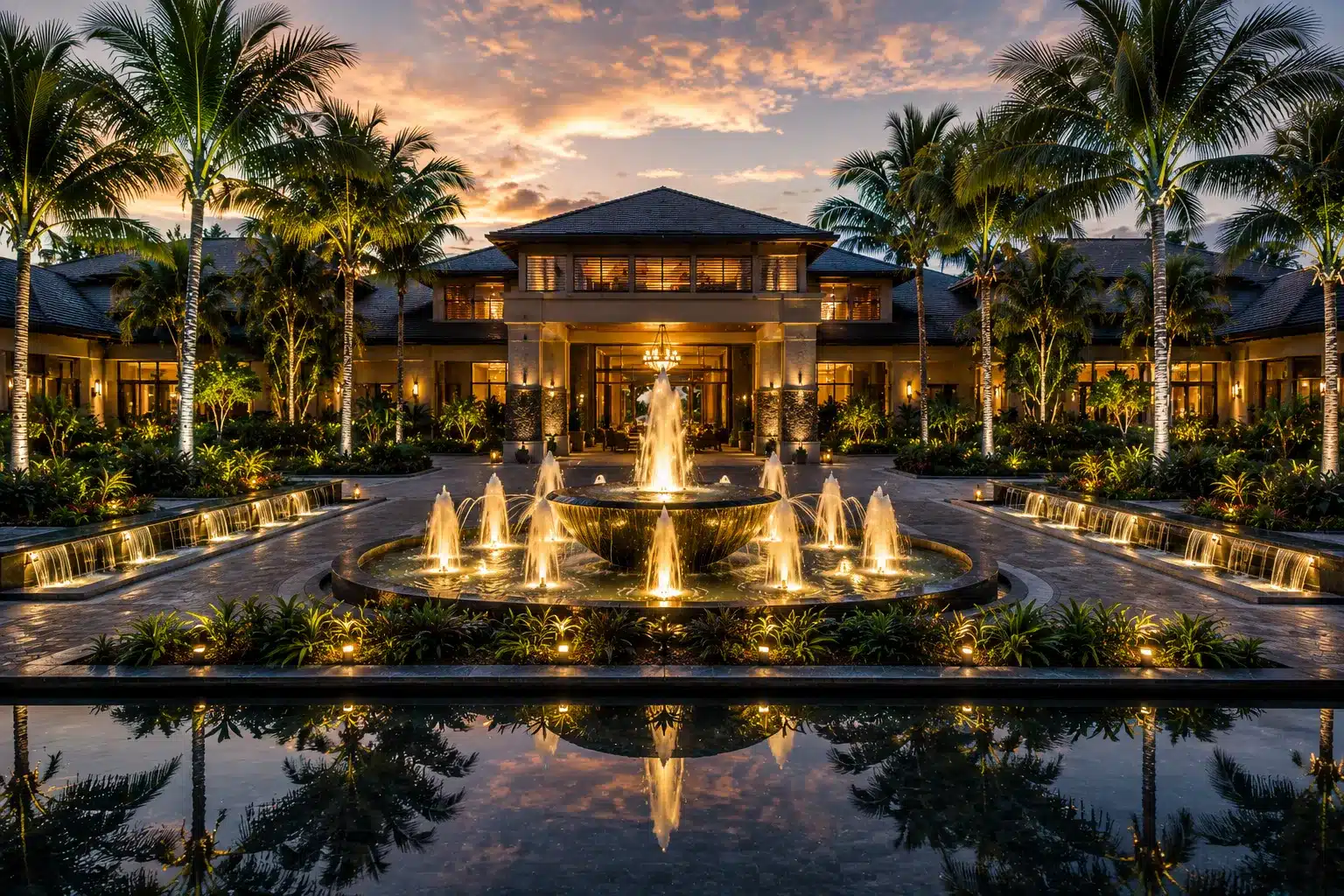
The guest journey begins before reaching the front door. In top luxury resorts, the arrival sequence is intentionally designed to transition guests from the outside world into the resort environment, with water playing a key role in this process.

A sound-first approach is common: guests often hear moving water before seeing the building. The acoustic qualities of a fountain or water rill signal a transition from the noise of travel to a quieter, more composed setting. This shift provides a sense of hospitality before any staff interaction.

The visual impact of arrival water features is equally important. A central fountain in a motor court provides a focal point, encouraging guests to pause. Flanking rills along the entry path create a sense of procession, while a reflecting pool at the facade enhances the architecture’s sense of permanence and scale.

These are intentional design choices that establish a property’s emotional tone within the first minute of a guest’s experience.

The Lobby: Water as Transition

Inside, the lobby water feature serves a distinct purpose. While the arrival fountain introduces the property, the lobby fountain encourages guests to pause, offering a moment of orientation before proceeding to check-in, dining, or guest rooms.

Effective lobby water features in luxury resorts are often understated. Large, dramatic displays suit resorts focused on entertainment, but where calm, privacy, and refinement are priorities, lobby fountains rely on sound, reflection, and subtle movement rather than spectacle.

Examples include a shallow reflecting pool beneath a skylight, a thin sheet of water behind the reception desk, or a rain curtain visible through glass at the corridor’s end. These features create impact through presence rather than performance.

Pool Environments: Water Within Water

The resort pool environment presents a unique design challenge: how can architectural water features be integrated into a space already defined by water?

The solution is differentiation. Architectural water features in pool environments provide contrast: they move where the pool is still, rise where the pool is level, and are contained where the pool is expansive. These features also serve an acoustic purpose, as the sound of a cascade or water wall masks ambient noise and creates a sense of privacy that guests associate with luxury.

Common architectural water features in luxury resort pool environments include:

  • Infinity edge systems that dissolve the pool boundary and create visual continuity with landscape or ocean views
  • Raised spa spillways that create the sound of falling water adjacent to relaxation areas
  • Freestanding water walls that provide privacy screening between pool zones
  • Decorative water jets that animate the pool perimeter without disrupting the primary swimming area

Each feature contributes to the layered experience that sets a luxury resort pool apart from a standard hotel pool.

Landscape Water Features: Continuity and Discovery

Beyond the main arrival and lobby experiences, memorable luxury resorts incorporate additional water features throughout the landscape, offering smaller, more intimate encounters that encourage exploration.

Examples include a stone basin fountain in a garden courtyard, a narrow rill running alongside a path before disappearing beneath plantings, or a small cascade audible from a guest room balcony. These secondary features create a sense of discovery, rewarding guests who explore the property closely.

This distributed approach to water feature design requires coordination across the entire site plan, rather than focusing on individual installations. It involves considering water holistically, as a unifying element that connects different areas of the property through a consistent sensory experience.

The Operational Commitment

Water features in luxury resorts are highly visible and come with high expectations. A fountain that appears degraded, such as with cloudy water, malfunctioning lights, or non-functioning areas, undermines the intended guest experience. In luxury settings, poor maintenance directly impacts brand perception.

Therefore, operational requirements for water features must be integrated into the initial design. Systems should be engineered for reliable, continuous operation. Maintenance access must allow for service without disrupting guests, and water treatment should be automated to reduce manual intervention.

Luxury resort water features that remain reliable over time are those designed with operational considerations from the outset.

Long-Term Value

For luxury resort developers, water features offer one of the highest returns on investment. They enhance a property’s visual appeal and social media presence, are frequently mentioned in guest reviews, and create the unique atmosphere that encourages repeat visits and guest loyalty beyond what room amenities can achieve.

A resort without water lacks a distinctive sensory identity. Leading properties recognize this and invest in water features to define their brand experience.

Work With Fountains.com

Fountains.com designs and builds custom water features for luxury resorts and hospitality environments, including arrival court fountains, lobby installations, pool areas, and landscape features. We collaborate with developers, architects, and hospitality designers from concept to commissioning.

Contact our team to discuss your resort project, or explore our commercial fountain capabilities and custom fountain portfolio.

FAQs:

Water features should be part of the design concept from the earliest schematic phase. They influence site planning, structural design, landscape architecture, and MEP coordination — late integration compromises results.

Through deliberate maintenance scheduling (early morning during lowest occupancy) and design that allows service access without entering guest areas. Automated systems significantly reduce the frequency of manual intervention.

Naturalistic features — cascades, rills, and stone basin elements — tend to integrate most successfully with tropical resort landscapes. Rain curtain and contemporary architectural features work well in modern resort typologies.

Dramatically. Water features are among the most photographed elements at any resort property. They appear in virtually every professional photography set, and they generate significant organic social media content from guests.

Yes, though integration requires careful coordination with existing infrastructure. The most successful retrofit projects engage a fountain designer with experience working in operational properties without disrupting the guest experience

SUMMER SALE: 10% OFF ALL PRODUCTS
Use Code: SUMMER10