373.1.Illusion-fountains

Illusion Fountains: Playing with Mirrors, Glass, and Hidden Water Sources

Introduction: The Fascination with Illusion in Water Features

For centuries, water has been at the heart of human architecture and garden design. From ancient Roman aqueducts to Mughal palace fountains and Japanese zen water basins, flowing water has always symbolized purity, life, and tranquility. But in modern landscaping and art, water is no longer just a symbol, it has become a medium for illusion.

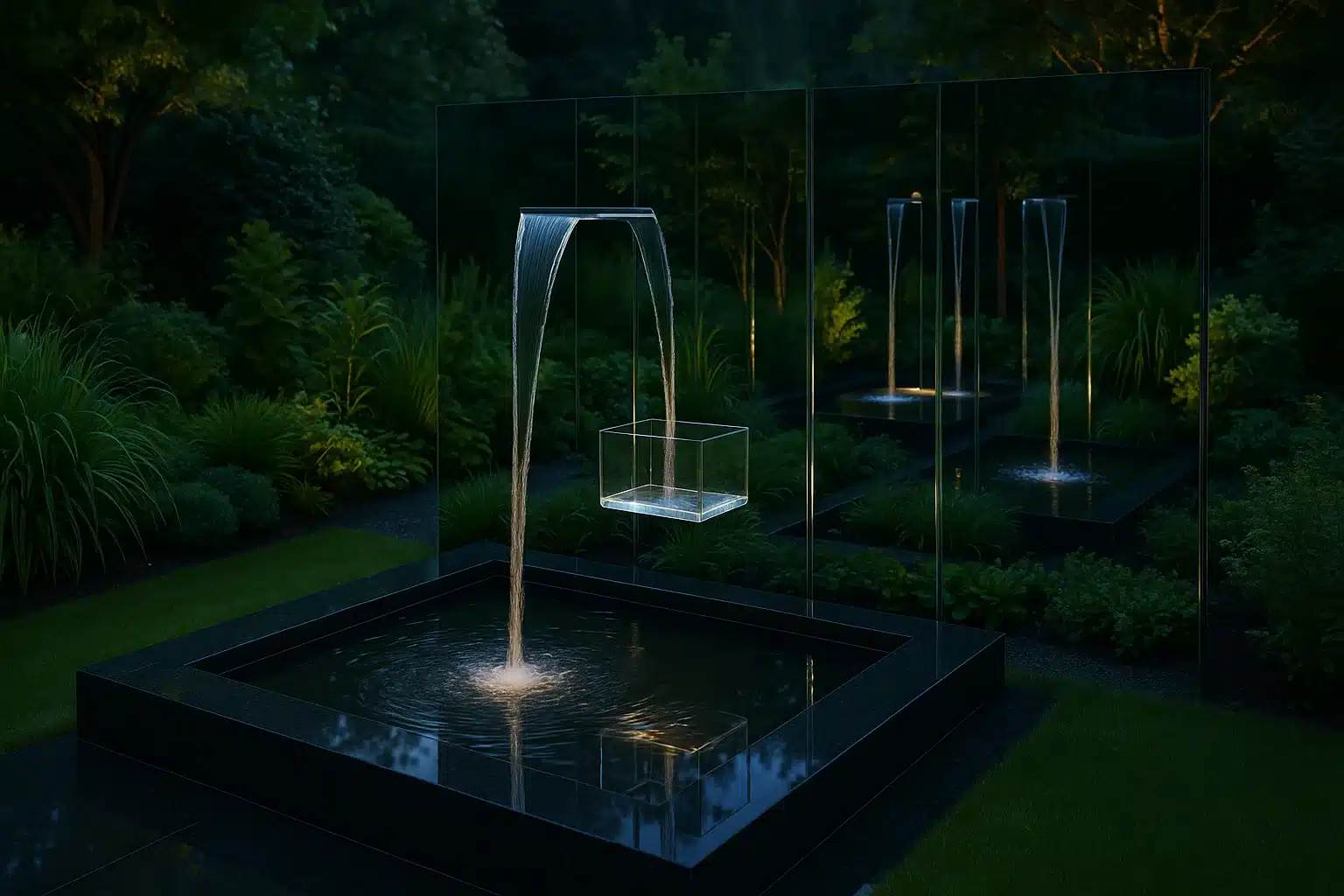
Illusion fountains push beyond the traditional. They defy expectations by using carefully hidden water sources, transparent glass panes, and cleverly angled mirrors to trick the eye into seeing the impossible: floating streams, levitating droplets, or water that seems to vanish and reappear. These installations combine artistry, engineering, and optics to deliver not just a fountain, but an immersive experience.

In this article, we’ll explore how illusion fountains are designed, the principles behind their visual tricks, and why they’ve become such powerful tools in both private gardens and public art.

The Art of Deception: Why Illusions Captivate Us

Humans are hardwired to be fascinated by illusions. Our brains constantly try to reconcile what we see with what we know. Illusion fountains play directly on this tension. When we witness water appearing to flow in mid-air or into an invisible reservoir, our minds pause and engage in a playful puzzle: How is this possible?

Just as magicians use sleight of hand, designers of illusion fountains use sleight of physics. But instead of hiding cards or coins, they manipulate water streams, light reflections, and visual perception. This marriage of science and art transforms fountains from static features into living spectacles.

Core Elements of Illusion Fountains

To understand how illusion fountains work, it’s important to look at the three key materials and design strategies most commonly used: mirrors, glass, and hidden water sources.

1. Mirrors: Creating Infinite Depth and Reflection

Mirrors have long been used in art and design to expand spaces and create visual tricks. In fountains, mirrors can:

  • Reflect water streams, making them appear doubled or tripled.
  • Create the illusion of water flowing from nowhere by hiding the source behind reflective surfaces.
  • Extend the apparent depth of shallow pools by reflecting their surfaces downward.

A simple example is a mirrored panel behind a thin sheet of falling water. The mirror hides the plumbing while making the flow seem continuous and infinite.

2. Glass: The Invisible Wall

Glass plays a dual role: structural support and optical deception. Ultra-clear, low-iron glass can be nearly invisible, especially when paired with flowing water. Designers use glass to:

  • Hold vertical sheets of water without visible boundaries.
  • Guide streams along hidden channels, making them appear to float.
  • Support cantilevered water displays that seem unsupported.

One of the most striking uses of glass is the “water curtain,” where streams cascade down a perfectly clear pane. Visitors perceive water flowing in mid-air, though in reality, the glass is the unseen stage.

3. Hidden Water Sources: The Sleight of Hand

Perhaps the most important ingredient in illusion fountains is concealment. Plumbing, pumps, and reservoirs are tucked into bases, walls, or underground chambers, ensuring the mechanics are invisible.

Some common techniques include:

  • Vanishing reservoirs: Water seems to disappear into gravel or stone, but actually drains into a hidden basin.
  • Perimeter nozzles: Jets are placed at the edges of structures, making it appear as though water emerges magically from solid surfaces.
  • Subsurface pumps: By placing pumps underground, designers maintain the illusion of water emerging without mechanical aid.

Famous Examples of Illusion Fountains Around the World

The Floating Faucet Fountains (Spain, Belgium, Japan)

These whimsical installations feature a giant faucet hovering above the ground, pouring an endless stream of water. The trick? A transparent pipe hidden within the water stream supports the faucet while supplying water. The result is a playful illusion that has become a tourist favorite.

The Water Cube Fountain (China)

At Beijing’s Olympic Park, designers used transparent acrylic and glass to channel water in geometric patterns. Visitors perceive water flowing inside invisible boxes, a marvel of material engineering and hidden plumbing.

The Magic Tap in Aqualand, Cádiz, Spain

Suspended above a pool, the tap pours water endlessly. The pipe within the stream is completely hidden by the water itself, creating a surreal floating effect.

Digital Rain Curtains (Global Installations)

In luxury hotels and modern lobbies, programmable rain curtains drop water in precise patterns, sometimes spelling words, creating logos, or forming moving images. The illusion lies in the precise timing of water droplets and strategic lighting.

The Science Behind the Illusion

Illusion Fountains Playing with Mirrors, Glass, and Hidden Water Sources

Illusion fountains rely on physics and optics as much as artistry. Let’s break down some of the scientific principles at work:

  • Refraction of Light: When light passes through water or glass, it bends. This bending can make glass panes nearly invisible, helping fountains disguise their structural supports.

  • Laminar Flow:
    Smooth, non-turbulent streams of water look like glass rods, making them easier to manipulate and disguise. Laminar jets are essential for fountains where streams appear to “float.”

  • Reflection:
    Mirrors and still water surfaces create the illusion of depth and continuity, tricking the brain into perceiving more than what’s there.

  • Hidden Symmetry:
    By aligning water sources with structural elements, designers make mechanical parts vanish from view. For example, water emerging from the exact corner of a wall appears magical, though it’s just careful alignment.

Designing Your Own Illusion Fountain

Illusion fountains aren’t only for large-scale public projects, they can be adapted to private gardens or indoor spaces. Here are some design tips for those interested in creating one:

Step 1: Decide on the Illusion

Do you want water that appears to vanish, float, or multiply? Each concept requires a different combination of materials.

Step 2: Choose the Right Materials

Opt for low-iron glass to maximize transparency.
Use mirrors with protective coatings for outdoor durability.
Hide pumps and basins underground or within surrounding walls.

Step 3: Plan the Plumbing

The illusion only works if the mechanics are invisible. Work with a landscape architect or fountain engineer to integrate plumbing seamlessly.

Step 4: Enhance with Lighting

LED lighting can dramatically increase the illusion—illuminating water streams while leaving supports in shadow. Colored lighting can add mood and atmosphere.

Step 5: Maintain Carefully

Illusions break when supports or mechanics become visible. Regular cleaning of glass, mirrors, and nozzles ensures the magic remains intact.

Why Illusion Fountains Matter Beyond Aesthetics

While illusion fountains are undeniably beautiful, they also serve deeper purposes:

  • Engagement: They spark curiosity and conversation, making them perfect for public spaces.

  • Mindfulness:
    Watching impossible water flows can draw people into a meditative state, encouraging them to pause and reflect.

  • Innovation Showcase:
    These fountains highlight how art, design, and engineering can intersect, serving as educational tools.

  • Sustainability Awareness:
    Many illusion fountains use closed-loop water systems, minimizing waste while maximizing impact.

Future Trends in Illusion Fountains

The field is evolving with advances in technology:

  • Interactive Fountains: Motion sensors allow fountains to respond to human presence, making illusions dynamic and personalized.

  • Digital Projections:
    Augmented reality (AR) and projection mapping can overlay moving images on water sheets, blending digital and physical illusions.

  • Eco-Friendly Illusions:
    Solar-powered pumps and water-recycling technologies ensure sustainability doesn’t get lost in spectacle.

  • Miniature Indoor Illusions:
    With compact pumps and glass innovations, illusion fountains are becoming popular in office lobbies and even private homes.

Conclusion: Where Art Meets Wonder

Illusion fountains are more than water features, they’re modern expressions of humanity’s love for wonder. By playing with perception through mirrors, glass, and hidden water sources, these fountains transform ordinary spaces into stages for the extraordinary. Whether installed in a public plaza or a private garden, they remind us that beauty lies not only in what we see, but in the mysteries hidden just out of sight.

The next time you encounter a custom fountain where water appears to float, vanish, or emerge from nowhere, take a moment to appreciate the invisible dance of engineering and artistry that makes the illusion possible.

FAQs:

Floating faucet fountains are supported by a transparent pipe concealed within the flowing stream of water. This pipe both holds the faucet in place and supplies the water, making the faucet appear to float.
Yes, smaller-scale illusion fountains can be designed for gardens or interiors. They typically require specialized glass, hidden basins, and careful plumbing integration to maintain the illusion.
Many illusion fountains operate on closed-loop systems, recycling the same water continuously. With proper design and modern pumps, they can be both visually striking and eco-friendly.