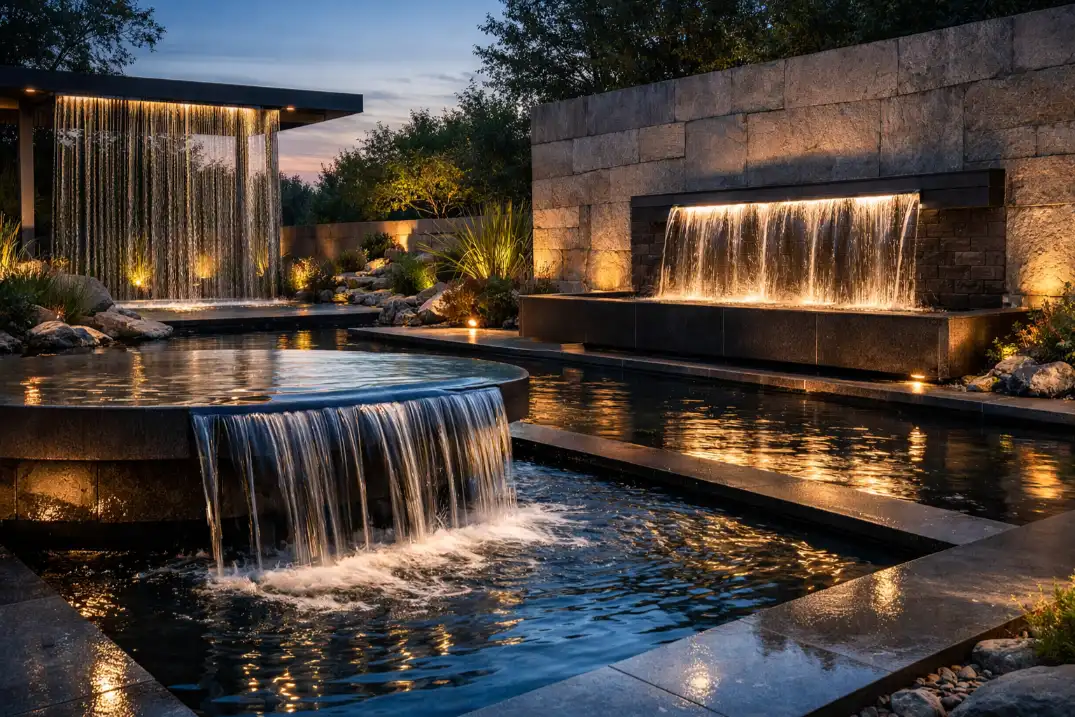
Modern landscape design is evolving far beyond simply placing decorative elements in a garden. Today, the most compelling outdoor environments are created when landscape architecture and fountains are designed together as a single concept. Rather than treating fountains as an afterthought, integrated design approaches consider water fountains, garden fountains, outdoor water fountains, and other water features as central structural elements of the space.
When fountains and landscapes are conceived as one unified composition, the result is a seamless environment where water, plants, stone, and architecture interact naturally. This approach enhances aesthetics, improves spatial flow, and creates immersive sensory experiences that elevate both residential and commercial properties.
Among contemporary water features, rain curtain fountains and rain curtain water features have become especially popular in modern architecture.
Unlike traditional fountains that spray or cascade water, a rain curtain fountain releases thin vertical streams of water that resemble falling rain.
These features are commonly integrated into:
Why Integrated Fountain and Landscape Design Matters
Traditionally, many landscapes were designed first, with water fountains added later as decorative pieces. While this approach can still produce attractive results, it often limits the potential impact of water features. Integrated design reverses the process. Instead of asking where a fountain could fit, designers ask:- How can water define the landscape structure?
- How can garden fountains shape movement and circulation?
- How can the sound and visual motion of water enhance the environment?
- Spatial layout
- Plant selection
- Hardscape materials
- Lighting design
- Visitor experience
The Role of Fountains as Landscape Anchors
In integrated designs, fountains often serve as visual and spatial anchors. These anchors help organize the landscape and guide how people move through the environment.Central Courtyard Fountains
A large garden fountain placed at the center of a courtyard can define the entire composition of the space. Walkways, seating areas, and plantings radiate outward from the fountain, creating symmetry and balance.Entry Fountains
In commercial or hospitality settings, outdoor fountains frequently mark entrances, creating an immediate sense of arrival. The movement of water naturally draws attention and establishes a welcoming atmosphere.Axis Fountains
Many classical landscapes use aligned outdoor water fountains along a central axis, creating dramatic visual corridors that guide visitors through the space. By treating fountains as structural elements, designers can transform landscapes into cohesive visual narratives rather than collections of individual features.Harmonizing Water Features with Natural Elements
Water and Plant Integration
Plants can amplify the beauty of garden fountains and outdoor water fountains. Designers often choose plant species that complement the moisture and reflective qualities of water features. Examples include:- Ferns and ornamental grasses near cascading fountains
- Aquatic plants around reflective pools
- Flowering plants framing wall fountains
Stone and Architectural Materials
Materials used in hardscapes should complement the style of the fountain. For example:- Modern wall fountains pair well with sleek concrete or metal surfaces.
- Classic garden fountains work beautifully with natural stone or carved limestone.
- Rain curtain fountains integrate seamlessly into contemporary architectural walls.
Outdoor Fountains as Experiential Elements
One of the greatest benefits of integrated design is the creation of multi-sensory experiences. Water engages visitors through:- Visual movement
- Sound
- Reflections
- Cooling effects
Sound Design with Water
The sound of flowing water plays an important role in landscape ambiance. Soft bubbling garden fountains create peaceful environments ideal for meditation gardens and private courtyards. In contrast, cascading outdoor water fountains can produce stronger sounds that mask urban noise. Designers intentionally adjust:- Water flow rate
- Drop height
- Basin shape
Rain Curtain Fountains: Modern Architectural Water Features
- Architectural walls
- Entryways
- Hotel lobbies
- Public plazas
- Luxury residences
- Visual partitions
- Backdrops for seating areas
- Interactive focal points
Wall Fountains and Vertical Water Design
Wall fountains represent another powerful tool for integrated landscape design. Unlike freestanding fountains, wall fountains:- Save space
- Emphasize vertical surfaces
- Integrate easily with architectural elements
- Classical carved stone designs
- Modern stainless-steel sheets
- LED-lit glass panels
- Contemporary rain curtain fountain installations
Floor Fountains and Interactive Water Features
Floor fountains are increasingly used in urban and commercial landscapes, particularly in plazas and public gathering areas. These fountains are typically embedded into the ground and feature water jets that rise directly from the pavement. Their integrated nature allows them to blend seamlessly into the surrounding environment. When the water is turned off, the space can still function as a walkway or gathering area. Benefits of floor fountains include:- Interactive experiences for visitors
- Flexible use of space
- Dramatic nighttime lighting possibilities
Integrating Indoor Water Fountains into Architectural Landscapes
While outdoor environments receive most attention in landscape design, indoor water fountains can also play a major role in integrated architectural concepts. Interior water features bring the calming effects of water indoors while maintaining continuity between exterior and interior environments. Common indoor fountain types include:- Wall fountains installed in entry lobbies
- Indoor fountains integrated into atriums
- Rain curtain water features used as room dividers
- Floor fountains in luxury hotels
Tabletop Fountains: Small-Scale Water Features with Big Impact
Even small-scale environments can benefit from integrated water design. Tabletop fountains are miniature water features that provide soothing water sounds and visual movement without requiring large spaces. These fountains are ideal for:- Offices
- Home interiors
- Meditation rooms
- Reception desks
Sustainable Fountain Design in Modern Landscapes
Sustainability is increasingly important in landscape architecture, and modern fountains are designed with environmental efficiency in mind. Integrated fountain systems often include:- Recirculating water systems
- Energy-efficient pumps
- Smart water level monitoring
- Filtration systems
Lighting Design for Water Features
Lighting is essential for maximizing the impact of fountains. Integrated lighting transforms water fountains and outdoor water fountains into dramatic nighttime focal points. Common lighting techniques include:- Submersible LED lighting inside basins
- Backlit wall fountains
- Color-changing illumination for rain curtain fountains
- Underwater lighting in floor fountains
Designing a Cohesive Water Landscape
Creating an integrated landscape-and-fountain design requires careful planning. Key design principles include:- Early Concept Integration – Water features should be considered during the earliest stages of landscape planning, not added later.
- Visual Hierarchy – Designers must determine which fountain acts as the primary focal point and which serve as supporting elements.
- Scale and Proportion – The size of outdoor fountains and water features must match the surrounding architecture and landscape.
- Circulation and Interaction – Fountains should influence how people move through the space and how they interact with it.
The Future of Integrated Fountain Landscapes
As technology advances and design philosophies evolve, integrated fountain landscapes will continue to grow in popularity. Emerging trends include:- Interactive digital fountains
- Smart fountain systems controlled by mobile apps
- Sustainable water management technologies
- Artistic architectural water installations
FAQs:
Integrated landscape and fountain design is an approach where water fountains and landscape architecture are planned together from the beginning, ensuring that fountains, plants, and hardscapes form a cohesive environment.
Many types can be used, including garden fountains, wall fountains, outdoor water fountains, rain curtain fountains, floor fountains, and tabletop fountains, depending on the size and style of the space.
Yes. Many modern water features and outdoor fountains use recirculating systems, energy-efficient pumps, and smart filtration, allowing them to operate sustainably while conserving water.