...
Invisible-systems-fountains

Invisible Systems: How Cultural Fountains Hide Advanced Technology

Introduction: When Water Becomes a System You Don’t See

At first glance, fountains feel timeless. Whether it’s a stone basin in a historic plaza, a rain curtain water feature cascading in a luxury hotel, or a quiet tabletop fountain on a desk, fountains appear simple, water moving through space, guided by gravity and design.

But beneath the visible beauty of fountains lies something far more complex.

Modern water fountains, both indoor and outdoor, are not just decorative objects. They are invisible systems, carefully engineered networks of hydraulics, electronics, materials science, and cultural storytelling. The most successful outdoor fountains, indoor fountains, and architectural water features hide this complexity so completely that viewers never notice the technology at all.

This is not accidental. Across cultures and centuries, the highest form of fountain design has always been to conceal the mechanism and amplify the experience. Today, that philosophy continues, enhanced by digital controls, smart sensors, and sustainable systems that remain almost entirely unseen.

In this article, we’ll explore how cultural fountains hide advanced technology, why invisibility matters in fountain design, and how everything from garden fountains to rain curtain fountains quietly relies on cutting-edge innovation.

The Cultural Role of Fountains: Beauty First, Mechanism Last

Fountains as Cultural Storytellers

Historically, fountains were never just about water. They symbolized:

  • Power and abundance (Roman aqueduct-fed fountains)
  • Spiritual purity (Islamic courtyard fountains)
  • Balance and harmony (East Asian garden fountains)
  • Civic pride (European town squares)

In every case, the technology behind the fountain, pipes, gravity systems, reservoirs, was intentionally hidden. The viewer was meant to feel awe, calm, or reverence, not curiosity about pumps.

This cultural expectation still defines modern outdoor water fountains and indoor water fountains today.

A fountain that reveals its mechanics feels industrial. A fountain that hides them feels magical.

Invisible Hydraulics: The Secret Life of Moving Water

Closed-Loop Water Systems

Most modern fountains operate as closed-loop systems. Water is continuously recycled, filtered, and recirculated through hidden plumbing.

This applies to:

  • Large outdoor fountains in plazas
  • Residential garden fountains
  • Compact tabletop fountains
  • Vertical wall fountains
  • Dramatic floor fountains

The goal is always the same: seamless water movement with no visible source or endpoint.

Precision Flow Engineering

Advanced hydraulic design ensures:

  • Even water distribution across wide surfaces
  • Consistent flow in rain curtain fountains
  • Splash control in indoor water fountains
  • Wind resistance in outdoor water fountains

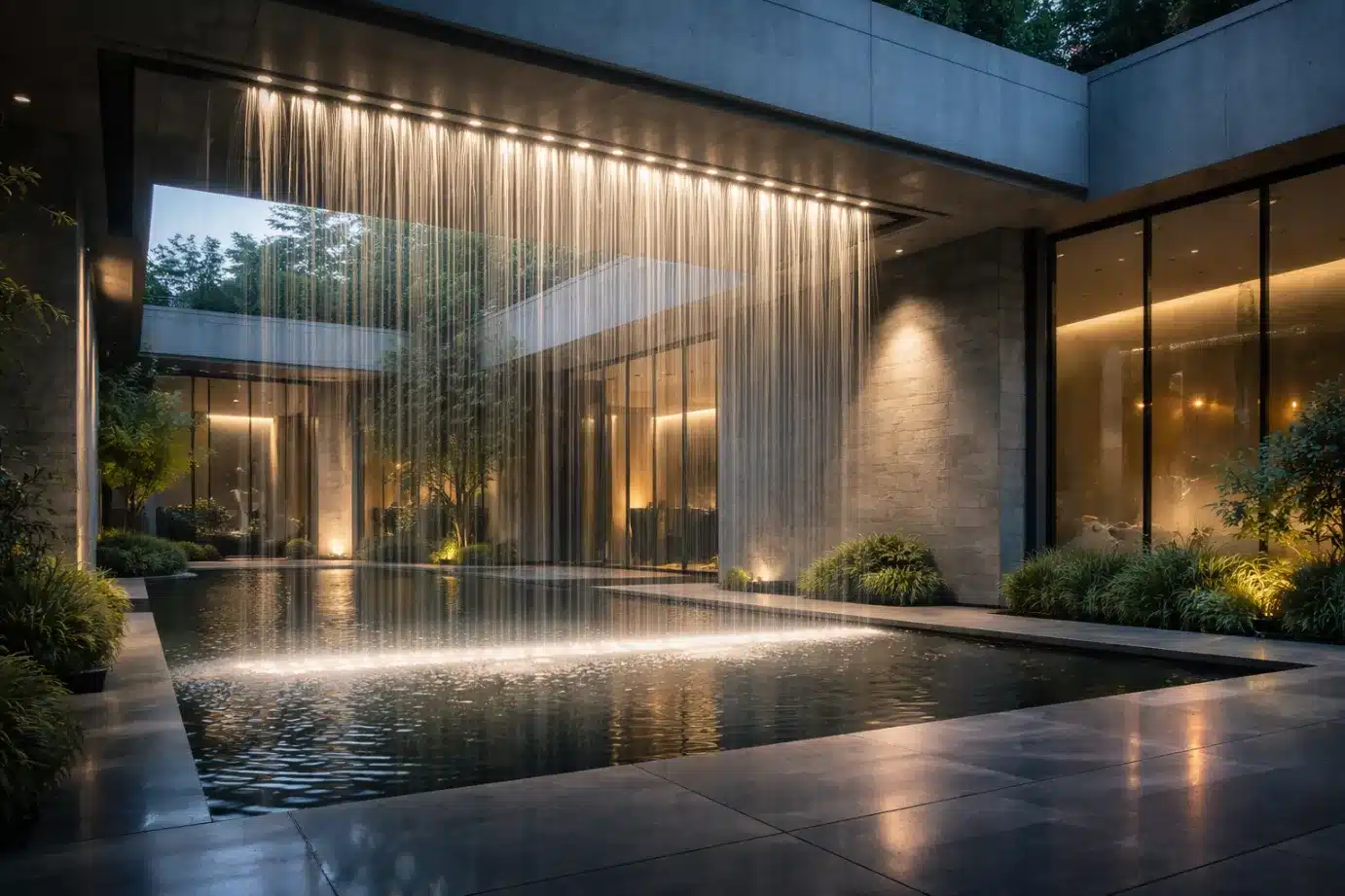
For example, a rain curtain fountain requires micro-calibrated manifolds and flow regulators hidden within ceiling tracks or architectural frames. To the viewer, it looks like water falling naturally from air, but the precision behind it rivals aerospace engineering.

The Rain Curtain Illusion: Technology Disguised as Nature

Why Rain Curtain Water Features Are So Compelling

A rain curtain water feature creates the illusion of rain frozen in time, perfect lines of water falling in parallel sheets or droplets.

Achieving this requires:

  • Laser-cut distribution plates
  • Pressure-balanced pumps
  • Anti-turbulence chambers
  • Real-time flow stabilization

All of this is hidden above the visible curtain or beneath the floor.

Whether installed as:

  • An indoor rain curtain fountain in a hotel lobby
  • A rain curtain fountain integrated into a facade
  • A rain curtain water feature dividing interior spaces

…the technology must remain invisible. If the viewer notices uneven streams or hears mechanical noise, the illusion collapses.

Outdoor Fountains: Battling Nature Without Showing It

Environmental Challenges

Outdoor water fountains face constant threats:

  • Wind distortion
  • Temperature fluctuations
  • Evaporation
  • Algae growth
  • Debris intrusion

Smart Systems in Outdoor Fountains

Modern outdoor fountains may include:

  • Wind sensors that reduce spray height
  • Temperature sensors that shut systems down before freezing
  • Automated filtration cycles
  • UV sterilization units hidden underground
  • Remote monitoring and diagnostics

To visitors enjoying a public plaza or homeowners relaxing near garden fountains, none of this is visible. The fountain simply works, day after day.

That invisibility is intentional. The more hostile the environment, the more advanced (and hidden) the system must be.

Indoor Water Fountains: Engineering Quietness and Calm

Silence Is Technology

One of the hardest challenges in indoor fountains is sound control. Pumps, vibration, and turbulence can quickly ruin the calming effect.

Hidden solutions include:

  • Magnetic-drive pumps
  • Acoustic insulation chambers
  • Vibration-isolated mounting systems
  • Laminar flow design

Whether it’s a wall fountain, a floor fountain, or a compact tabletop fountain, the technology is designed to disappear into silence.

Air Quality and Climate Control

Some advanced indoor water fountains also contribute to:

  • Humidity regulation
  • Air ionization
  • Microclimate creation

These systems operate invisibly, enhancing comfort without drawing attention away from the aesthetic experience.

Wall Fountains: Vertical Design, Hidden Complexity

Gravity Working Sideways

Wall fountains look deceptively simple: water emerges from a slot, flows down a surface, and disappears into a basin.

Behind that simplicity:

  • Water must be evenly distributed across a horizontal plane
  • Surface tension must be controlled to avoid streaking
  • Pumps must overcome vertical lift while remaining silent

The plumbing is hidden within walls, architectural panels, or custom frames. In luxury interiors, the fountain often appears to be part of the wall itself, a perfect example of invisible systems at work.


Invisible Systems

Floor Fountains: Technology Beneath Your Feet

The Illusion of Emerging Water

Floor fountains create a powerful effect: water appearing to rise directly from the ground.

To achieve this safely and beautifully:

  • Drainage systems are layered beneath the surface
  • Non-slip materials are engineered into stone or metal
  • Structural supports protect hidden reservoirs
  • Electronics are sealed against moisture

In public spaces, floor fountains often double as interactive installations. Sensors detect movement, triggering jets or lighting, all controlled invisibly beneath the surface.

Tabletop Fountains: Small Scale, Same Philosophy

Miniature Systems, Maximum Calm

Even tabletop fountains rely on invisible systems:

  • Micro-pumps
  • Hidden reservoirs
  • Internal filtration
  • Balanced flow paths

Because they’re viewed up close, imperfections are more noticeable. This makes invisibility even more important at small scales.

The best tabletop fountains feel organic and effortless, despite being tightly engineered systems operating within inches of the viewer.

Materials Science: Making Technology Disappear

Surfaces That Control Water

Modern water features rely on advanced materials to guide water invisibly:

  • Treated glass for rain curtain fountains
  • Engineered stone for garden fountains
  • Stainless steel alloys that resist staining
  • Coated metals that reduce mineral buildup

These materials aren’t chosen just for appearance, they actively shape how water behaves while hiding the technological role they play.

Lighting Systems: When Technology Becomes Atmosphere

Invisible Illumination

LED lighting is now integral to many fountains, yet the fixtures themselves are rarely visible.

Hidden lighting systems:

  • Enhance depth in indoor fountains
  • Create nighttime drama in outdoor fountains
  • Animate rain curtain water features
  • Highlight texture in wall fountains

Sustainability: Advanced Systems with No Visual Footprint

Green Technology Behind the Scenes

Modern fountain design increasingly prioritizes sustainability:

  • Water-saving recirculation systems
  • Solar-assisted pumps
  • Smart evaporation control
  • Low-energy lighting
  • Rainwater harvesting integration

These technologies rarely change how the fountain looks, but they dramatically change how it performs environmentally.

In many cases, the more sustainable the fountain, the less visible the technology becomes.

Why Invisibility Matters in Fountain Design

Emotional Impact Over Mechanical Curiosity

People don’t gather around fountains to admire pumps or pipes. They gather to:

  • Relax
  • Reflect
  • Socialize
  • Feel grounded

By hiding advanced technology, water fountains preserve emotional authenticity. The viewer connects with water, not machinery.

Cultural Continuity

Invisible systems allow modern fountains to honor ancient traditions while benefiting from contemporary innovation. A rain curtain fountain in a modern office still echoes centuries-old relationships between water, space, and human emotion.

The Future of Invisible Fountain Technology

Looking ahead, fountain technology will become even more hidden:

  • AI-controlled flow optimization
  • Predictive maintenance systems
  • Adaptive designs responding to crowds or weather
  • Fully integrated architectural water features

Yet the visual experience will remain timeless. Water will still fall, flow, shimmer, and calm—just as it always has.

The greatest success in fountain design will continue to be this paradox: the more advanced the technology, the less visible it becomes.

Conclusion: The Art of What You Never See

From monumental outdoor water fountains to intimate tabletop fountains, from vertical wall fountains to immersive rain curtain water features, fountains are masterclasses in invisible systems.

  • They hide complexity to reveal beauty.
  • They conceal technology to express culture.
  • They transform engineering into emotion.

The next time you pause beside a fountain, indoors or outdoors, remember: what moves you most is not just the water you see, but the unseen systems working perfectly beneath the surface.

FAQs:

Modern fountains use advanced pumps, sensors, filtration, and smart controls, but these technologies are intentionally hidden to preserve a timeless, natural appearance.
Yes, indoor rain curtain fountains are popular in hotels, offices, and homes because they create a dramatic visual effect while using precise, quiet, and concealed systems.
Well-designed indoor water fountains are low-maintenance thanks to closed-loop systems, hidden filtration, and modern materials that reduce mineral buildup and noise.