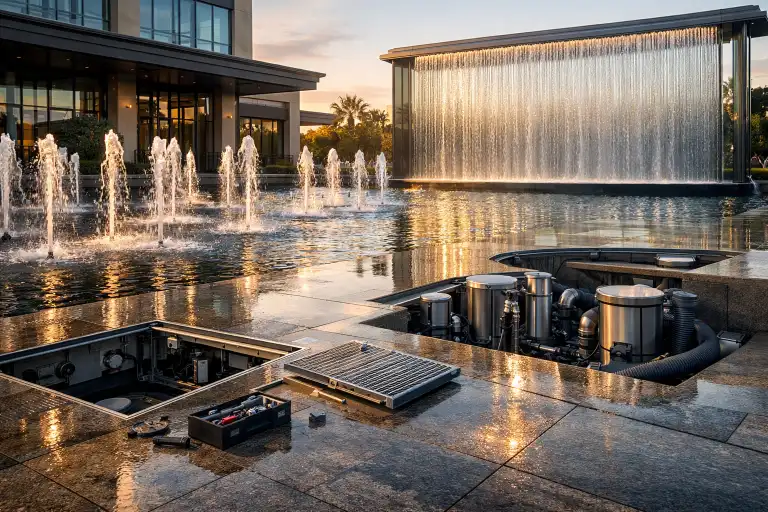
Architectural fountains play a powerful role in modern design. Whether installed in public plazas, luxury resorts, commercial developments, or residential landscapes, well-designed water fountains bring movement, sound, and atmosphere to a space. Large-scale outdoor fountains, dramatic wall fountains, elegant rain curtain fountains, and tranquil garden fountains all rely on one crucial factor to maintain their beauty and performance: proper maintenance planning.
Without a structured maintenance strategy, even the most impressive water features quickly lose their visual impact. Algae growth, pump failure, water quality issues, and lighting malfunctions can all disrupt a fountain’s operation. Over time, neglected maintenance may also lead to costly repairs.
For architects, property managers, and facility operators, planning ahead helps preserve the function, safety, and aesthetics of large-scale outdoor water fountains and architectural water installations. This guide explores how to develop an effective maintenance plan for complex fountain systems, ensuring long-term performance and reliability.
Why Maintenance Planning Matters for Architectural Fountains
Large architectural water fountains operate as complex mechanical and hydraulic systems. Pumps, filtration systems, plumbing networks, lighting components, and digital controls must work together seamlessly.
A thoughtful maintenance plan ensures:
- Consistent visual performance of water features
- Clean and safe water quality
- Efficient energy consumption
- Longer lifespan of pumps and mechanical equipment
- Reduced risk of system downtime
- Lower long-term repair costs
Whether the installation includes towering floor fountains, contemporary wall fountains, or decorative garden fountains, routine maintenance protects both the investment and the visual impact of the fountain.
For public or commercial spaces, reliability also affects visitor experience. When outdoor water fountains stop operating or appear poorly maintained, the surrounding environment can feel neglected.
Understanding the Components of Large-Scale Fountain Systems
Effective maintenance begins with understanding how a fountain system operates. Most architectural water fountains consist of several integrated components:
Pump Systems
Pumps drive the movement of water through the fountain. High-capacity pumps are required for large outdoor fountains, vertical jet displays, and dramatic rain curtain water feature installations.
Pump maintenance involves:
- Checking motor performance
- Monitoring vibration or noise
- Inspecting seals and bearings
- Ensuring proper water flow
Filtration Systems
Clean water is essential for every type of fountain, including indoor water fountains, tabletop fountains, and monumental plaza fountains.
Filtration systems remove debris, algae, and contaminants that can clog plumbing or damage equipment. Typical filtration components include:
- Mechanical filters
- Sand filters
- Cartridge filters
- UV sterilizers
Routine cleaning and replacement prevent water quality problems.
Water Treatment Systems
Water chemistry must remain balanced to prevent scale buildup, corrosion, and biological growth.
Water treatment plans usually include:
- Algaecides
- Scale inhibitors
- Chlorination or sanitizing treatments
Maintaining proper chemical balance protects pumps, plumbing, and surfaces across all water features.
Lighting Systems
Lighting transforms architectural fountains into dramatic nighttime attractions. LED lighting systems highlight water movement in floor fountains, illuminate wall fountains, and enhance the visual effect of rain curtain fountains.
Lighting maintenance includes:
- Replacing failed LEDs
- Inspecting underwater fixtures
- Checking wiring and waterproof seals
- Updating lighting control programs
Plumbing and Nozzles
The plumbing network distributes water to jets, cascades, and specialty features. Nozzles shape the visual appearance of the fountain. Mineral buildup or debris can distort spray patterns.
Regular inspection ensures proper operation of:
- Jet nozzles
- Cascade outlets
- Rain curtain channels
- Decorative water spouts
Creating a Preventive Maintenance Schedule
Preventive maintenance forms the backbone of a reliable fountain system. Rather than waiting for problems to occur, routine inspections keep outdoor fountains operating smoothly.
A well-designed schedule typically includes daily, weekly, monthly, and seasonal tasks.
Daily Maintenance
For large public water fountains, daily inspections are often necessary. Daily checks may include:
- Visual inspection of water clarity
- Monitoring water levels
- Checking pump operation
- Removing visible debris
- Observing spray patterns
Weekly Maintenance
Weekly tasks focus on maintaining water quality and mechanical performance. Typical weekly maintenance may involve:
- Cleaning skimmer baskets
- Testing water chemistry
- Adjusting chemical treatment
- Inspecting nozzles for blockages
- Verifying lighting operation
Monthly Maintenance
Monthly inspections provide deeper system analysis. Tasks often include:
- Backwashing filters
- Inspecting pumps and valves
- Cleaning intake screens
- Testing automation systems
- Reviewing electrical components
Seasonal Maintenance
Seasonal maintenance is especially important for outdoor fountains located in climates with temperature fluctuations. Seasonal tasks may include:
- Winterizing plumbing systems
- Draining water lines
- Inspecting waterproofing
- Restarting systems after winter shutdown
- Performing structural inspections
Special Maintenance Considerations for Rain Curtain Fountains
A rain curtain fountain or rain curtain water feature requires specialized maintenance due to its unique design. Unlike traditional jet fountains, rain curtain installations rely on carefully controlled water flow across a linear outlet system. The effect creates a smooth vertical sheet or droplets that resemble falling rain.
Maintenance priorities include:
- Cleaning distribution channels
- Preventing mineral buildup
- Ensuring consistent water pressure
- Inspecting overflow and catch basins
Even small obstructions can disrupt the uniform curtain effect. Indoor installations also require attention to humidity control and splash containment.
Maintenance Planning for Indoor Fountains
While outdoor installations face weather exposure, indoor water fountains present their own operational challenges.
Indoor environments demand strict water quality management to prevent odors, algae growth, and mineral buildup. Maintenance strategies for indoor fountains typically include:
- Frequent water testing
- Careful humidity monitoring
- Cleaning decorative surfaces
- Maintaining filtration systems
- Preventing mineral scaling on glass or stone
Managing Water Quality in Fountain Systems
Water quality affects both aesthetics and equipment longevity. Poor water conditions lead to:
- Algae growth
- Cloudy water
- Scale deposits
- Corrosion
- Pump damage
Maintaining proper water balance involves monitoring several parameters:
- pH level
- Alkalinity
- Hardness
- Sanitizer levels
- Total dissolved solids
Professional maintenance teams often implement automated dosing systems for large water features, improving reliability and reducing manual monitoring requirements.
Addressing Common Fountain Maintenance Problems
Algae Growth
Algae develops quickly when sunlight, nutrients, and warm water combine, particularly in garden fountains and exposed outdoor fountains. Solutions include:
- Regular chemical treatment
- UV sterilization
- Improved filtration
- Reduced nutrient buildup
Mineral Scaling
Hard water can cause mineral deposits on surfaces, nozzles, and plumbing components, affecting spray patterns, pump efficiency, and surface appearance. Water softening or scale inhibitors help prevent buildup.
Pump Failures
Pumps are the mechanical heart of any fountain. Failure can result from debris blockage, overheating, seal damage, or electrical problems. Routine inspection and preventive replacement schedules reduce pump-related downtime.
Clogged Nozzles
- Debris and mineral buildup may clog fountain nozzles.
- This problem alters water patterns and affects the appearance of water fountains.
- Regular cleaning restores proper flow.
The Role of Automation in Fountain Maintenance
Modern architectural water features increasingly rely on automation systems to manage:
- Pump operation
- Lighting sequences
- Water levels
- Chemical dosing
- Weather response
Automation helps facility managers monitor performance remotely, detect maintenance issues quickly, and reduce labor while improving operational safety.
Maintenance Planning for Different Fountain Types
Garden Fountains
Maintenance includes clearing leaves, cleaning basins, and managing algae growth.
Wall Fountains
Priorities include cleaning vertical surfaces, preventing splash marks, and maintaining pump circulation.
Floor Fountains
Maintenance includes frequent water treatment, nozzle cleaning, and pump inspections.
Tabletop Fountains
Require periodic cleaning to prevent mineral buildup and pump damage.
Developing a Long-Term Fountain Maintenance Strategy
A long-term strategy should include:
- Equipment lifecycle planning
- Spare parts inventory
- Scheduled pump replacement
- Budget allocation for repairs
- Documentation of maintenance activities
Professional service contracts with specialized fountain maintenance companies may be necessary for large public water features.
Sustainability Considerations for Fountain Maintenance
Efficient systems reduce water consumption and energy use while maintaining the beauty of architectural fountains. Strategies include:
- Recirculating water systems
- Energy-efficient pumps
- LED lighting
- Rainwater harvesting
- Smart water level controls
Preserving the Beauty of Architectural Fountains
Large-scale outdoor water fountains represent significant investments in design, engineering, and construction. Their visual impact depends on careful planning and consistent maintenance.
From dramatic rain curtain fountains to tranquil indoor fountains, every installation benefits from a proactive maintenance strategy. Routine inspections, water quality management, and equipment monitoring help ensure reliable performance for years to come.
When maintenance becomes part of the design and operational planning process, architectural water features continue to enhance public spaces, commercial environments, and private landscapes with movement, sound, and beauty.