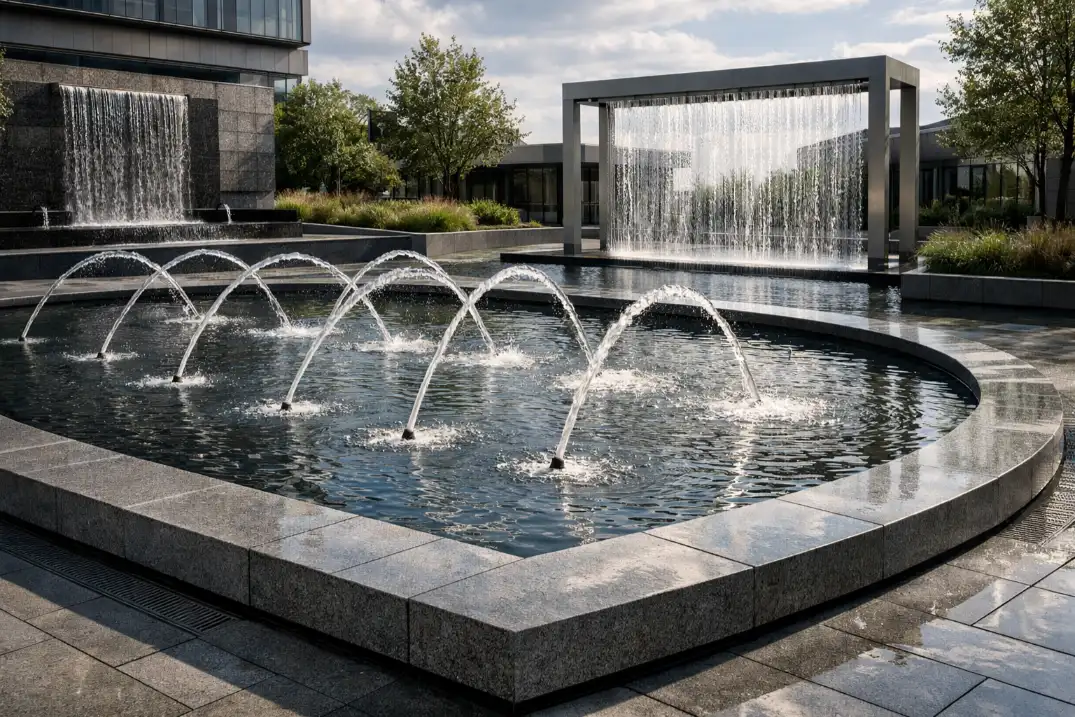
Public fountains and decorative water features bring movement, sound, and life to public spaces. From plazas and parks to shopping centers, airports, and hotels, well-designed water fountains can transform ordinary spaces into memorable experiences. However, one challenge often overlooked in the design phase is splash management, especially in high-traffic environments.
Splash zones, the areas where water droplets land around a fountain or water feature, can quickly create safety hazards, maintenance issues, and design frustrations if not properly managed. In busy public areas where thousands of people may pass by daily, controlling splash becomes essential for maintaining both safety and aesthetic appeal.
Whether installing outdoor water fountains, dramatic rain curtain fountains, or interactive floor fountains, designers and facility managers must account for splash behavior, pedestrian movement, materials, and environmental factors.
This guide explores the strategies, technologies, and design principles used to effectively manage splash zones around fountains in high-traffic public environments.
Why Splash Management Matters in Public Water Features
Water movement is what makes water fountains captivating. The sound of flowing water, the shimmering reflections, and the cooling microclimate are all part of the appeal. However, every water display generates splash in some form.
When splash zones are poorly managed, several issues can arise:
1. Safety Risks
Wet surfaces increase slip hazards. In crowded public areas, uncontrolled splash from outdoor fountains can create dangerous conditions for pedestrians.
2. Maintenance Problems
Excess splash means excess water loss. Facilities may experience:
- Increased water consumption
- Higher chemical use
- More frequent cleaning
- Water damage to nearby surfaces
3. Structural Damage
Constant water exposure can degrade surrounding materials such as stone, wood, metal, and concrete.
4. Guest Experience Issues
Visitors enjoy being near water features, but not necessarily being sprayed by them. Poor splash control can lead to discomfort, complaints, and restricted access to areas around the installation.
Proper splash management ensures outdoor water fountains remain both beautiful and functional.
Understanding Splash Zones
A splash zone is the perimeter area where water droplets travel beyond the primary basin or feature.
The size and behavior of a splash zone depends on several factors:
- Fountain height
- Water velocity
- Wind exposure
- Basin size and depth
- Surface materials
- Crowd proximity
For example, floor fountains often have very small splash zones because the jets are flush with the ground and programmed for controlled arcs. Meanwhile, tall architectural wall fountains or rain curtain water features may produce wider splash patterns if improperly calibrated.
Designing splash zones requires both engineering precision and creative foresight.
Types of Water Features and Their Splash Characteristics
Different fountain styles generate unique splash patterns. Understanding these differences helps designers anticipate splash zones.
Outdoor Fountains
Outdoor fountains in parks, plazas, and commercial centers typically feature larger water displays. These installations may include:
- Vertical jets
- Cascades
- Tiered bowls
- Sculptural spillways
Because outdoor installations are exposed to wind and weather, splash control becomes more complex.
Design strategies often include wider basins, deeper pools, and carefully tuned nozzle pressure to contain water movement.
Rain Curtain Fountain
A rain curtain fountain creates a vertical sheet of water that falls from a hidden channel or overhead trough.
These dramatic water features are common in hotels, luxury retail spaces, and corporate lobbies. When installed indoors, splash control is easier due to the absence of wind.
However, the falling water must still land in a properly designed catch basin to avoid spray.
A well-engineered rain curtain water feature often includes:
- precision laminar flow
- deep catch basins
- splash-absorbing surfaces
- controlled water velocity
When properly designed, these features produce minimal splash while maintaining a striking visual effect.
Wall Fountains
Wall fountains are frequently installed in courtyards, building entrances, and indoor spaces.
Water flows down a vertical surface, often stone, glass, or metal, before collecting in a basin below.
These installations naturally reduce splash because the water remains in contact with the wall surface during descent. However, improper flow control can still cause droplets to scatter outward.
Textured materials, splash lips, and basin depth all play important roles in splash containment.
Floor Fountains
Interactive floor fountains are popular in urban plazas and family-friendly public areas.
Jets emerge directly from pavement, allowing visitors, especially children, to walk through the water.
Because there is no visible basin, designers must carefully engineer splash containment below the surface.
Key elements include:
- recessed drain systems
- underground catch basins
- programmable jet pressure
- anti-slip pavement materials
These systems allow outdoor water fountains to remain interactive while keeping surrounding areas safe.
Indoor Water Fountains
Splash control is especially critical for indoor water fountains, where excess moisture can damage flooring, furniture, and electrical systems.
Indoor installations such as tabletop fountains, lobby features, or decorative wall fountains must maintain precise water flow rates.
Indoor systems often rely on:
- laminar flow technology
- controlled pump pressure
- splash guards
- basin depth optimization
Because indoor environments lack wind interference, properly designed systems can achieve extremely low splash levels.
Engineering Strategies for Splash Control
Designing splash-resistant fountains requires collaboration between landscape architects, engineers, and fountain specialists.
Here are the most effective engineering strategies used in modern fountain design.
Basin Design and Depth
The basin acts as the primary splash containment system.
Shallow basins may look elegant, but they often allow water to escape. Deeper basins provide a larger capture area for falling water.
Typical basin considerations include:
- depth-to-height ratios
- basin width relative to jet height
- overflow management
- integrated drainage systems
For large outdoor water fountains, basins are often designed wider than the visible water pattern to account for wind drift.
Laminar Flow Technology
Laminar jets produce smooth, glass-like streams of water that travel in precise arcs.
Because the flow is smooth and stable, laminar streams create far less splash when they land in the basin.
Laminar jets are commonly used in:
- luxury garden fountains
- architectural water features
- interactive plaza fountains
They are particularly effective for installations where splash control is critical.
Nozzle Selection
The type of nozzle used dramatically influences splash behavior.
Common nozzle types include:
- foam jets (minimal splash)
- laminar jets (controlled splash)
- aerated jets (higher splash potential)
- cascade spillways
Careful nozzle selection helps designers balance visual drama with splash containment.
Water Velocity Control
High-pressure water jets create beautiful displays but also increase splash radius.
Modern fountain systems often include programmable pumps that allow operators to adjust water velocity based on conditions.
For example:
- lower pressure during windy conditions
- higher pressure during calm weather
- programmable display sequences
These systems allow outdoor fountains to maintain visual appeal without creating excessive splash.
Environmental Factors Affecting Splash Zones
Even perfectly engineered fountains must account for environmental conditions.
Wind
Wind is the largest variable affecting splash behavior in outdoor water fountains. Strong winds can carry droplets several feet beyond the intended splash zone.
Design strategies to combat wind include:
- shorter jet heights
- wind sensors
- wind-reactive fountain programming
- protective landscaping
Some advanced fountain systems automatically reduce jet height when wind speeds increase.
Pedestrian Traffic Patterns
High-traffic areas require wider safety buffers around water fountains.
Designers often analyze pedestrian movement patterns to determine optimal fountain placement.
For example:
- keeping splash zones away from walkways
- creating seating areas outside splash boundaries
- directing foot traffic around the feature
This ensures that the fountain enhances the space rather than disrupting circulation.
Climate and Evaporation
Hot climates increase evaporation rates and splash dispersion.
Design considerations include:
- reduced jet height
- deeper basins
- shaded installations
These adjustments help maintain efficient water use while controlling splash.
Materials for Splash Zone Durability
Slip-Resistant Materials
Safety surfaces include:
- textured stone
- brushed concrete
- slip-resistant tile
- permeable pavers
These materials reduce slip risk in areas where splash cannot be completely eliminated.
Water-Resistant Finishes
Nearby structures must also be protected from moisture exposure.
Water-resistant finishes may include:
- sealed stone
- marine-grade stainless steel
- waterproof coatings
These materials extend the lifespan of surrounding architecture.
Smart Technology in Modern Water Features
Technology now plays a major role in splash management.
Smart fountain systems can monitor environmental conditions and automatically adjust performance.
Common smart features include:
- wind sensors
- automated flow control
- remote monitoring
- programmable displays
These technologies help ensure outdoor water fountains remain safe and efficient in busy public environments.
Designing Splash Zones for Different Fountain Types
Garden Fountains
Decorative garden fountains in public parks often emphasize tranquility rather than dramatic water movement.
Lower flow rates and cascading water designs naturally reduce splash.
These fountains are ideal for spaces where visitors sit close to the feature.
Tabletop Fountains
Although typically used indoors, tabletop fountains demonstrate how small-scale water features can control splash through precise flow design.
Their small basins and controlled pumps create minimal splash.
The same principles scale up for larger installations.
Indoor Fountains
Indoor fountains require extremely controlled splash zones to prevent damage to flooring and nearby surfaces.
Careful basin design, low-pressure pumps, and splash guards keep water contained.
Maintenance Practices That Reduce Splash
Even well-designed fountains require ongoing maintenance.
Regular inspections help maintain splash control by ensuring systems operate properly.
Key maintenance tasks include:
- cleaning nozzles
- checking pump pressure
- monitoring basin levels
- inspecting drains
- maintaining filtration systems
Blocked nozzles or incorrect pump pressure can dramatically increase splash.
Routine maintenance keeps water features operating safely.
Balancing Beauty and Safety
Splash management does not mean sacrificing visual impact.
The best water fountains achieve both artistic expression and functional performance.
When splash zones are thoughtfully designed, fountains can safely become the centerpiece of public spaces.
Whether it’s an elegant rain curtain fountain, interactive floor fountains, or sculptural wall fountains, careful engineering ensures the installation enhances the environment without creating hazards.
As cities continue to invest in public spaces, fountains will remain a powerful design element, bringing movement, cooling, and atmosphere to busy urban environments.
Managing splash zones effectively ensures these installations remain both beautiful and safe for everyone who encounters them.