...
484.1.Material-and-fountain-system-choice

Material and System Choices for Long-Term Commercial Durability

When designing commercial fountains and water features, durability is not just a technical requirement, it’s a financial and brand decision. A well-built installation communicates quality, stability, and long-term value, while a poorly chosen system can quickly turn into a maintenance burden and reputational liability.

From hotels and corporate campuses to retail plazas and public parks, outdoor water fountains must withstand environmental stress, heavy usage, and evolving expectations around sustainability and efficiency. The difference between a feature that thrives for decades and one that fails within years lies in two core decisions: material selection and system design.

This guide explores both in depth, helping developers, architects, and facility managers make smarter choices that extend lifespan, reduce operational costs, and preserve aesthetic impact.

Why Durability Matters in Commercial Water Features

Commercial environments are unforgiving. Unlike residential installations, outdoor fountains in public or semi-public spaces face:

    • Continuous operation cycles
    • Exposure to UV radiation, wind, and temperature fluctuations
    • Mineral-heavy or treated water sources
    • High foot traffic and occasional misuse
    • Strict maintenance schedules and budget constraints

Durability directly influences:

    • Lifecycle cost (repairs, replacements, labor)
    • Brand perception (clean, functional features vs. neglected ones)
    • Operational downtime (which affects user experience)

Choosing the right combination of materials and systems ensures that your water fountains remain visually striking and operationally efficient for years.

Core Material Considerations

Material selection defines how a fountain resists corrosion, weathering, and structural fatigue. Each material carries trade-offs in cost, appearance, and longevity.

1. Stainless Steel: Precision Meets Longevity

Stainless steel is one of the most widely used materials in commercial water features, particularly in modern architectural settings.

Advantages:

    • Exceptional corrosion resistance (especially marine-grade 316 stainless steel)
    • Clean, contemporary aesthetic
    • High structural strength
    • Low maintenance when properly finished

Challenges:

    • Higher upfront cost
    • Requires proper fabrication to avoid weld corrosion
    • Surface can show water spots if not maintained

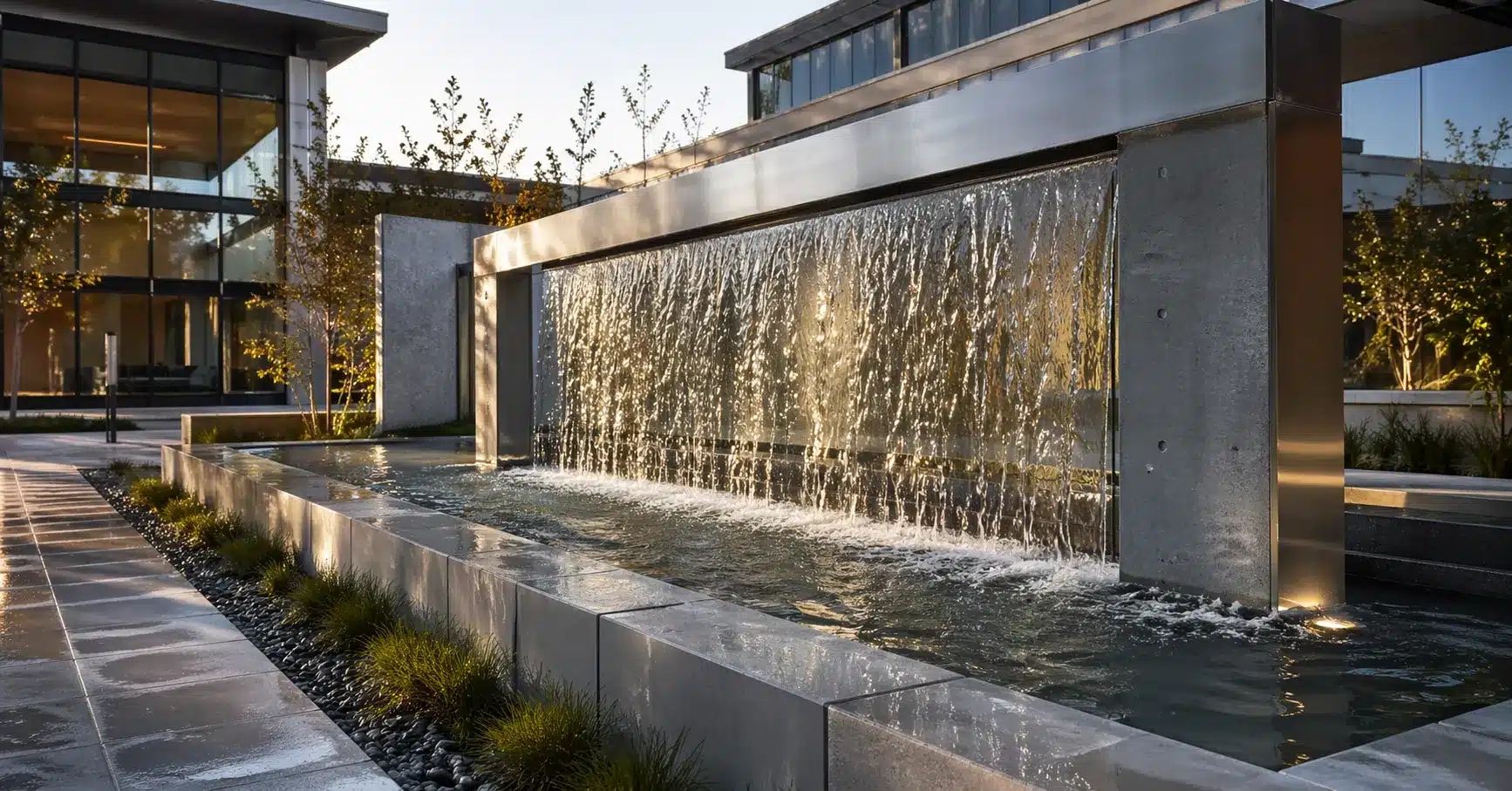
Stainless steel is especially effective for wall fountains, rain curtain fountains, and sleek urban installations where minimalism and durability intersect.

2. Natural Stone: Timeless but Demanding

Granite, marble, and limestone bring a sense of permanence and luxury to garden fountains and large-scale installations.

Advantages:

    • Natural beauty and unique texture
    • High compressive strength
    • Resistant to UV degradation

Challenges:

    • Porosity can lead to staining or water absorption
    • Heavy weight increases structural requirements
    • Requires sealing and periodic maintenance

Stone works best in environments where maintenance teams are equipped to handle its needs, such as resorts or high-end commercial landscapes.

3. Precast Concrete: Versatility and Strength

Precast concrete offers flexibility in design while maintaining durability, making it a popular choice for outdoor water fountains.

Advantages:

    • Customizable shapes and finishes
    • Strong and weather-resistant
    • Cost-effective for large installations

Challenges:

    • Susceptible to cracking if not reinforced properly
    • Requires waterproof coatings
    • Can develop surface wear over time

With proper sealing and reinforcement, concrete can deliver decades of performance.

4. Fiberglass and Composites: Lightweight Efficiency

Modern composites are increasingly used in indoor fountains and certain outdoor applications.

Advantages:

    • Lightweight and easy to install
    • Resistant to corrosion
    • Lower cost compared to metal or stone

Challenges:

    • Less premium appearance
    • Can degrade under prolonged UV exposure
    • Lower structural strength

These materials are ideal for indoor water fountains, tabletop fountains, or areas where weight and cost are primary concerns.

5. Glass: Visual Impact with Precision Engineering

Glass is often used in rain curtain water features and vertical installations.

Advantages:

    • Creates dramatic visual effects
    • Smooth surface for water flow
    • Resistant to chemical corrosion

Challenges:

    • Requires precise engineering and support
    • Vulnerable to impact damage
    • Needs frequent cleaning to maintain clarity

Glass installations demand a high level of system integration to ensure both durability and safety.

System Design: The Hidden Engine of Durability

While materials form the visible structure, the system design determines how well a fountain performs over time.

1. Pump Selection and Configuration

The pump is the heart of any water fountain. Poor pump selection leads to inefficiency, noise, and premature failure.

Key considerations:

    • Flow rate matched to design intent
    • Energy efficiency ratings
    • Redundancy for critical installations
    • Ease of maintenance access

Commercial systems often benefit from variable-speed pumps, which adapt to usage patterns and reduce wear.

2. Filtration Systems: Preventing Long-Term Damage

Water quality directly impacts durability. Without proper filtration, debris and minerals can damage surfaces and clog components.

Effective systems include:

    • Mechanical filtration (removes debris)
    • Biological filtration (controls algae)
    • Chemical treatment (balances pH and minerals)

A well-designed filtration system protects both materials and mechanical components.

3. Plumbing and Piping Materials

The internal plumbing network must resist corrosion and pressure fluctuations.

Common choices:

    • PVC (cost-effective and corrosion-resistant)
    • Stainless steel piping (for high-end systems)
    • Flexible tubing (for smaller or indoor systems)

Proper installation, avoiding sharp bends and ensuring secure connections, is just as important as material choice.

4. Waterproofing and Sealing

Even the strongest materials fail without proper sealing.

Best practices:

    • Use commercial-grade waterproof membranes
    • Apply sealants compatible with chosen materials
    • Inspect and reapply coatings periodically

Water infiltration can compromise structural integrity and lead to costly repairs.

5. Electrical Systems and Controls

Modern outdoor fountains often include lighting, automation, and interactive elements.

Durability factors:

    • Weatherproof enclosures
    • Surge protection
    • Smart control systems for monitoring performance

Automation can reduce wear by optimizing operating schedules and detecting issues early.

Designing Commercial Fountains for 24-7 Performance and Reliability


Environmental Factors That Influence Material and System Choices

Durability isn’t universal, it depends heavily on the installation environment.

Climate Considerations

  • Cold climates: Freeze-thaw cycles require flexible materials and proper drainage
  • Hot climates: UV resistance and evaporation control become critical
  • Coastal areas: Salt exposure demands corrosion-resistant materials like stainless steel

Water Source Quality

Hard water, high mineral content, or recycled water systems can accelerate wear.

Solutions include:

    • Water softening systems
    • Anti-scale treatments
    • Regular cleaning schedules

Usage Intensity

High-traffic areas require more robust designs. Public installations often need:

    • Reinforced structures
    • Tamper-resistant components
    • Redundant systems to avoid downtime

Designing for Maintenance and Longevity

Durability is not just about resisting damage, it’s about making maintenance easier and more predictable.

Accessibility

Systems should be designed so technicians can easily access:

    • Pumps
    • Filters
    • Electrical components

Poor accessibility increases labor costs and delays repairs.

Modular Design

Using modular components allows for quick replacement without dismantling the entire system.

Documentation and Monitoring

Detailed system documentation and digital monitoring tools help track performance and anticipate issues.

Balancing Aesthetics with Performance

Commercial water features must look impressive, but aesthetics should never compromise durability.

For example:

    • A rain curtain fountain may require precision engineering to maintain a consistent flow
    • Wall fountains must integrate structural support with water distribution systems
    • Floor fountains in public spaces need slip-resistant surfaces and robust drainage

The most successful designs align visual goals with engineering realities.

Indoor vs. Outdoor Considerations

While indoor fountains face fewer environmental challenges, they still require thoughtful material and system choices.

Indoor Water Fountains

    • Lower exposure to weather
    • Greater emphasis on noise control
    • More flexibility in materials like glass and composites

Outdoor Water Fountains

    • Must withstand weather and UV exposure
    • Require more robust filtration and drainage
    • Demand stronger structural materials

Emerging Trends in Durable Fountain Design

The industry is evolving, with new technologies improving both durability and efficiency.

Smart Monitoring Systems

Sensors can track water levels, pump performance, and system health in real time.

Sustainable Materials

Recycled composites and eco-friendly coatings are gaining traction.

Energy Efficiency

Advanced pumps and LED lighting reduce operational costs while extending system life.

Making the Right Choice: A Strategic Approach

Choosing materials and systems for commercial fountains should never be reactive. A strategic approach includes:

    • Defining performance expectations
    • Evaluating environmental conditions
    • Balancing upfront cost with lifecycle value
    • Consulting with experienced designers and engineers

The goal is not just to build a fountain, but to build one that lasts.

Conclusion

Durability in commercial water fountains is the result of intentional decisions, not chance. By carefully selecting materials and designing robust systems, you create installations that stand the test of time, both structurally and visually.

Whether it’s a dramatic rain curtain water feature, a serene garden fountain, or a modern architectural centerpiece, the principles remain the same: prioritize quality, plan for maintenance, and align design with real-world conditions.

In the end, the most durable fountains are those that seamlessly combine engineering precision with thoughtful material selection, delivering beauty and performance year after year.

FAQs:

Stainless steel (especially marine-grade 316) and reinforced concrete are among the most durable options, offering strong resistance to corrosion and weathering.

Routine maintenance should occur weekly or biweekly, with deeper inspections and servicing scheduled quarterly or biannually depending on usage.
Yes, indoor water fountains typically face fewer environmental challenges, making them easier to maintain, though they still require proper filtration and system care.