...
458.1.Expansion-Contraction-Fountain-Materials

Material Expansion and Contraction in Climate-Sensitive Fountain Projects

Designing fountains and water features requires balancing artistic vision with engineering to ensure structures that last. While aesthetics are visible, how materials handle expansion and contraction is critical to durable fountains.
When temperatures change, materials expand and contract. In places with large seasonal swings, this movement can stress structures, plumbing, pumps, and finishes. If not planned for, it can cause cracks, leaks, misalignment, and early equipment failure.
Whether working on an outdoor, indoor, or complex feature, understanding how materials move with temperature changes helps create fountains that last.
This article explains why understanding expansion and contraction in fountain materials is crucial for long-term performance and outlines practical design strategies for climate resilience.

Why Expansion and Contraction Matter in Fountain Design

All materials get bigger when heated and shrink when cooled. The change might seem small, but over several feet or meters, it can add up and become a real issue.
For example, a stainless steel part in an outdoor fountain can get very hot in the sun during the day and cool down quickly at night. Over time, this repeated change can put stress on the hardware, seals, and joints.
Fountain systems are particularly vulnerable because they combine multiple elements:
  • Structural materials (stone, metal, concrete)
  • Plumbing components
  • Waterproof membranes
  • Pumps and mechanical systems

Decorative finishes

Since each material reacts differently to temperature changes, mixing them in a fountain demands thoughtful design to avoid damage from tension over time.
In regions with seasonal freezing, the challenge becomes even more pronounced. Ice formation adds additional expansion pressure inside pipes, basins, and surfaces.

Climate Factors That Influence Fountain Materials

Different climates affect fountain materials in different ways. Designers need to look at local conditions before choosing materials for outdoor or indoor fountains.
Key climate factors include:

Temperature Range

Places with big temperature changes put more stress on materials. For example, a fountain that faces temperatures from 15°F in winter to 95°F in summer will expand and contract much more than one in a mild climate.

Sun Exposure

Direct sunlight can heat surfaces unevenly. Metal panels in a rain curtain fountain might heat up quickly in the midday sun and expand more than the shaded parts of the structure.

Freeze-Thaw Cycles

In cold areas, water that gets into tiny holes in materials can freeze, expand, and crack the surface. This often happens in stone garden fountains and concrete basins.

Humidity and Moisture

Humidity also affects how materials behave. When water features are always wet, they wear out faster, can corrode, and seals may break down sooner.

Common Fountain Materials and Their Thermal Behavior

Understanding how different materials react to temperature changes helps designers pick the right parts for projects in different climates.r material for garden fountains and architectural water fountains because of its natural beauty and durability.
But stone is also porous. In areas with freezing and thawing, water can enter tiny pores, freeze, and expand, eventually cracking the stone.
Granite holds up better than limestone or sandstone because it has fewer pores. Even so, designers often add drainage and sealants to protect stone surfaces.
Concrete
Concrete is commonly used for the main structure in outdoor fountains and large water features.
Concrete is strong, but it expands and contracts a lot when temperatures change. Without expansion joints, big concrete basins in fountains can crack from the stress.
Modern fountain construction typically includes:
  • Reinforcement steel
  • Expansion joints
  • Flexible waterproof coatings
These steps let the structure move a little without getting damaged.
Stainless Steel
Stainless steel is often used in modern wall fountains, rain curtain fountains, and other new water features.
Metal expands more than stone or concrete, so designers must account for this in planning.
Engineers address this through:
  • Floating mounts
  • Expansion gaps
  • Flexible plumbing connections
These methods let metal panels move without causing problems for the rest of the structure.
Glass
Glass panels are used in many indoor fountains, decorative water walls, and rain curtain features.
Glass doesn’t expand as much as metal, but it can still be affected by sudden temperature changes. Tempered glass is less likely to break, and special mounts let it move a little as it expands.
Acrylic
Acrylic panels are common in modern tabletop fountains and lighted indoor water features.
Acrylic is clear and flexible for design, but it expands more than glass. Designers need to leave extra space in the mounts to prevent warping.

Thermal Movement in Outdoor Fountain Systems

Outdoor fountains deal with the toughest conditions. Besides temperature changes, they also have to handle rain, wind, sunlight, and sometimes snow and ice.
Some parts of outdoor fountain systems are especially at risk.
Plumbing Connections
Plumbing that doesn’t bend can crack or come apart when materials move. Flexible connectors help absorb this movement and stop leaks.
Basin Structures
Big basins in garden fountains and plaza features need expansion joints. Without them, temperature changes can cause cracks in the floor or walls.
Decorative Panels
Metal or glass panels in wall fountains and rain curtains expand differently from the masonry around them. The mounts need to let them move a little to prevent cracks.
Pump Chambers

Pump chambers need to remain aligned with the plumbing. When the structure moves with temperature changes, it can shift parts and put stress on the fittings.

Managing Expansion in Indoor Fountain Installations

Material Expansion and Contraction in Climate-Sensitive Fountain Projects

While indoor fountains experience more stable temperatures than outdoor installations, expansion and contraction still occur.

Heating and air conditioning systems can create daily temperature variations. Materials located near large windows may experience solar heating during the day and cooling at night.

Common indoor installations include:

  • Wall fountains
  • Floor fountains
  • Tabletop fountains
  • Lobby water features

To accommodate thermal movement indoors, designers use flexible mounting systems, vibration isolators, and adaptable plumbing.

In tabletop fountains, acrylic or resin components often expand slightly when exposed to heat from lighting elements or nearby windows. Proper spacing prevents warping.

For large floor fountains in commercial spaces, expansion joints within flooring materials ensure surrounding surfaces remain intact.

Special Considerations for Rain Curtain Fountains

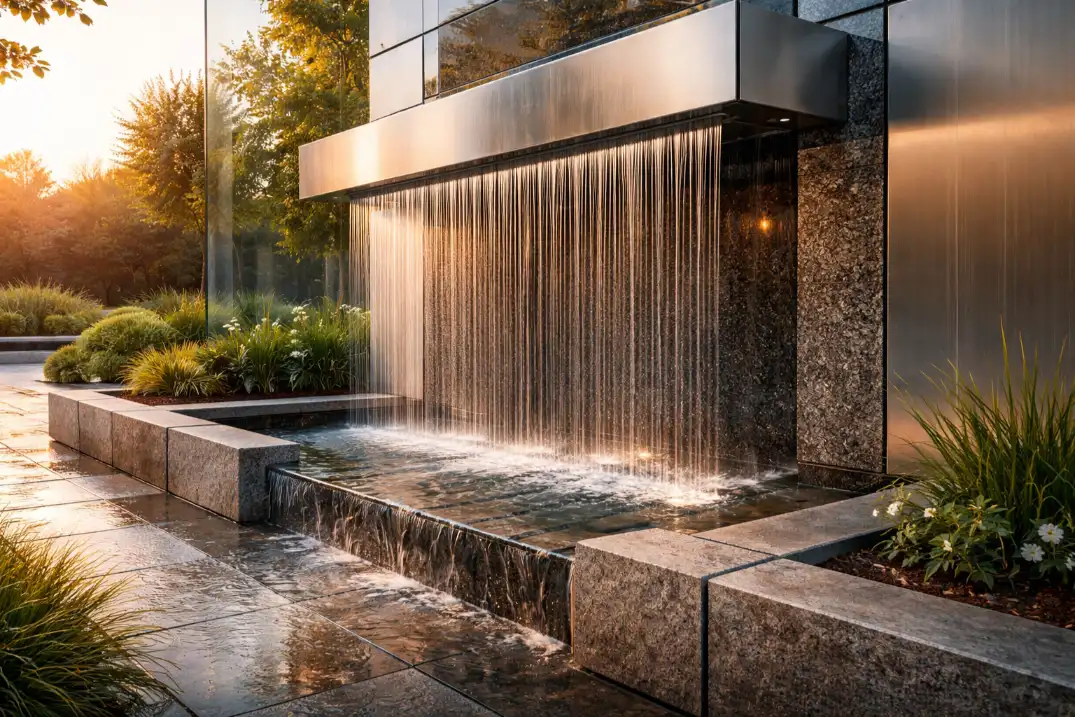
A rain curtain fountain creates a vertical sheet of water flowing from a slot or nozzle system. These installations require extremely precise alignment for water to fall evenly.

Thermal expansion presents unique challenges in these systems.

Even minor movement can disrupt water flow patterns, causing uneven streams or splashing.

Design solutions include:

  • Adjustable mounting brackets
  • Floating stainless steel headers
  • Expansion-tolerant nozzle assemblies

In a rain curtain water feature, the header trough, where water begins its descent, often expands under direct sunlight. Engineers incorporate sliding mounts or flexible supports so the system can move without altering the water curtain.

Structural Design Strategies for Climate-Sensitive Fountains

To ensure durability in water fountains, designers integrate multiple strategies to manage thermal movement.

Expansion Joints

Expansion joints allow concrete and stone surfaces to move independently. These joints are filled with flexible materials that compress and expand as temperatures change.

Large outdoor fountains often contain multiple expansion joints throughout the basin.

Flexible Sealants

Sealants placed between panels, tiles, or stone elements must remain flexible over time. Rigid sealants eventually crack when exposed to expansion and contraction.

Modern polyurethane and silicone sealants provide the elasticity needed for long-term performance.

Floating Mount Systems

Decorative components in wall fountains or rain curtain fountains are often mounted using floating brackets. These systems hold components securely while allowing slight movement.

Flexible Plumbing

Instead of rigid pipe connections, many water features use flexible hoses or couplings to absorb movement without breaking.

Proper Drainage

Water trapped inside materials can freeze and expand. Drainage systems prevent water accumulation and reduce freeze-thaw damage.

Maintenance Considerations for Long-Term Performance

Even the best-designed garden fountains and outdoor water fountains require ongoing maintenance.

Thermal movement may gradually loosen fittings, sealants, or fasteners. Routine inspections help identify small issues before they become costly repairs.

Maintenance should include:

  • Inspecting expansion joints
  • Checking flexible sealants
  • Monitoring plumbing connections
  • Verifying alignment of decorative panels
  • Cleaning mineral buildup

For indoor water fountains, maintenance also involves checking pump vibration and ensuring structural mounts remain secure.

Regular maintenance preserves both the beauty and functionality of fountain installations.

The Role of Engineering in Modern Water Features

Today’s architectural water features combine artistic design with advanced engineering.

Computer modeling allows designers to predict how materials behave across temperature ranges. Engineers can calculate thermal movement and determine where expansion joints or flexible mounts are necessary.

This approach ensures that outdoor fountains, indoor fountains, and rain curtain water features maintain structural integrity for decades.

From small tabletop fountains to monumental civic installations, thoughtful engineering ensures water continues to flow gracefully regardless of climate conditions.

Conclusion

Material expansion and contraction play a critical role in the longevity of fountains and architectural water features. Temperature fluctuations affect every component — from structural basins to decorative panels and plumbing systems.

By understanding how materials behave in different climates, designers can prevent cracking, leaks, and structural stress.

Whether building garden fountains, elegant wall fountains, dramatic rain curtain fountains, or serene indoor water fountains, accounting for thermal movement is essential.

Through careful material selection, flexible mounting systems, expansion joints, and proper maintenance, climate-sensitive fountain projects can remain beautiful and functional for many years.

As demand for innovative water fountains and outdoor water fountains continues to grow, integrating engineering principles with artistic design ensures these captivating water features stand the test of time.

FAQs:

Fountains often crack due to freeze-thaw cycles. Water trapped in porous materials expands when it freezes, placing pressure on stone or concrete in outdoor fountains and garden fountains.
Yes. Even indoor fountains and tabletop fountains experience thermal movement due to heating, cooling, and sunlight exposure. Proper mounting systems help accommodate these small changes.
Yes. A rain curtain fountain requires precise alignment for smooth water flow. Thermal expansion in the header or support structure can disrupt the water curtain if not properly managed.
SPRING SALE: 10% OFF ALL PRODUCTS
Use Code: MAY10 | Ends MAY 31