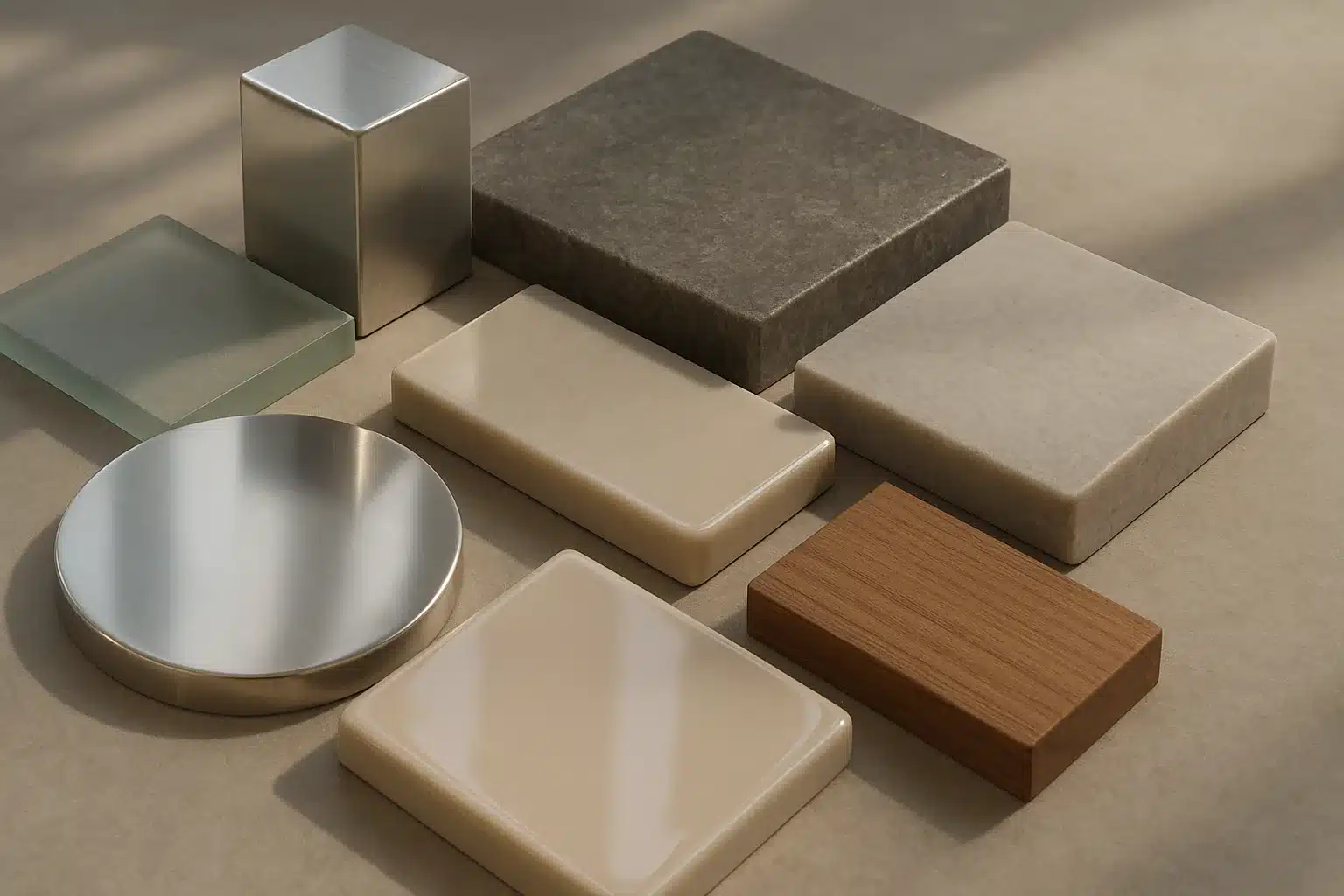
383.1.Fountain-material

Material Matters: How Finish Impacts Reflection and Shine

Introduction: Why Surface Finish Matters

When you look at a gleaming marble countertop, a matte black car, or the satin finish of a wooden floor, you’re not just seeing color, you’re seeing light, and how the surface finish manipulates it. The finish of a material determines how it reflects, diffuses, or absorbs light, influencing not only aesthetics but also functionality, perception, and even mood.

In design, architecture, and product manufacturing, surface finish is often the unsung hero. It can transform a raw material into a luxurious focal point or a subdued backdrop. Whether you’re working with metal, wood, glass, or stone, the way a surface interacts with light, its reflection, gloss, and texture, can define the entire experience of the object or space.

Let’s dive deep into how finish impacts reflection and shine, exploring the science, psychology, and practical implications behind this fascinating aspect of material design.

1. The Science of Reflection and Shine

1.1. Understanding Reflection

Reflection occurs when light hits a surface and bounces back. The quality of that reflection depends on the smoothness and microstructure of the surface.

Specular Reflection: Found on smooth, mirror-like surfaces, where light bounces off uniformly.

Diffuse Reflection: Seen on rougher textures, where light scatters in multiple directions, reducing shine.

The smoother the surface, the more predictable and intense the reflection. This is why a polished chrome faucet gleams brightly, while brushed nickel looks more subdued despite being the same base material.

1.2. The Role of Surface Microtexture

Even surfaces that appear smooth to the naked eye have microscopic peaks and valleys. These microstructures determine how much light is absorbed versus reflected.

A high-gloss finish minimizes these microstructures, creating clear, mirror-like reflections.

A matte finish has more pronounced irregularities, diffusing light for a soft, non-reflective appearance.

Advanced finishing techniques, such as buffing, coating, and chemical etching, can precisely control this texture to achieve the desired aesthetic.

1.3. The Physics of Shine

“Shine” isn’t just about reflection; it’s about the perception of brightness and clarity of reflected light. Human vision interprets shine based on:

  • Luminance contrast between reflective highlights and shadows.
  • Surface curvature, which affects how highlights move.
  • Material refractive index, or how light bends as it enters or exits the surface layer.

A glossy ceramic tile looks shiny because it reflects light in a concentrated way, while a matte stone surface scatters it, appearing flatter and more muted.

2. The Spectrum of Finishes

2.1. Matte Finish

Matte finishes absorb more light than they reflect, creating a soft, velvety appearance. They’re ideal for subtle, understated designs where distraction from glare is unwanted.

Common Uses:

  • Architectural walls and ceilings
  • Automotive paints (for stealthy looks)
  • Furniture and cabinetry

Pros:

  • Hides fingerprints and imperfections
  • Provides a calm, modern aesthetic

Cons:

  • Can appear dull in low light
  • Harder to clean if porous

2.2. Satin Finish

Satin sits between matte and gloss. It reflects a moderate amount of light, giving materials a smooth, elegant sheen without overwhelming brightness.

Common Uses:

  • Wood furniture and floors
  • Metal fixtures
  • Paints and coatings

Pros: Balances durability and elegance, offers subtle light play.

Cons: May show slight streaks when improperly cleaned.

2.3. Semi-Gloss Finish

Semi-gloss finishes are noticeably reflective but less mirror-like than high-gloss. They’re often used where resilience and easy cleaning are important.

Common Uses:

  • Trim and molding
  • Kitchen and bathroom surfaces
  • Appliances

Pros: Reflects more light, brightening spaces; resistant to moisture and stains.

Cons: Highlights surface flaws more than satin or matte.

2.4. High-Gloss Finish

High-gloss is the most reflective of all finishes, creating brilliant highlights and a polished appearance.

Common Uses:

  • Modern furniture
  • Automotive finishes
  • Stone countertops and glass

Pros: Maximizes light and perceived depth; enhances color saturation and luxury feel.

Cons: Easily shows fingerprints and scratches; demands perfect surface preparation.

3. Material-by-Material Breakdown

3.1. Metal

  • Polished Metal: Acts like a mirror, ideal for high-end fixtures.
  • Brushed Metal: Has fine lines that diffuse light for a soft glow.
  • Anodized or Powder-Coated: Alters reflectivity through chemical or pigment layers.

3.2. Wood

  • Matte or Oiled Wood: Feels natural and warm, absorbing light.
  • Satin Wood: Highlights grain subtly.
  • High-Gloss Lacquer: Creates a deep, reflective surface that enhances color richness.

3.3. Glass

  • Polished Glass: Offers mirror-like shine and crisp reflections.
  • Frosted or Etched Glass: Scatters light, ensuring privacy with elegance.

3.4. Stone

  • Honed (Matte): Smooth but non-reflective, showcasing texture.
  • Polished: Glossy, emphasizing veining and color depth.
  • Leathered: A tactile, low-sheen surface that diffuses light beautifully.

3.5. Ceramics and Composites

  • Glossy Glazes: Intensify color and ease of cleaning.
  • Matte Textures: Add traction and modern appeal.

4. The Psychology of Reflection and Shine

4.1. Brightness and Perception of Space

Highly reflective surfaces can make spaces appear larger and more open by bouncing light around. In contrast, matte finishes create visual stillness and intimacy.

4.2. Emotional Associations

  • Glossy finishes evoke luxury, modernity, and precision.
  • Matte surfaces convey calmness, authenticity, and sophistication.
  • Satin sheens strike balance, approachable yet refined.

4.3. The Role of Context

The “right” finish depends on context. A glossy black piano commands attention, but a glossy kitchen wall might cause unwanted glare. Matte automotive paint looks elegant under daylight but may lack vibrancy in low light.

5. How Designers Use Finish Strategically

5.1. Highlighting Focal Points

Glossy finishes draw the eye. Designers often apply them selectively, on key features like countertops, fixtures, or accent walls, to create visual hierarchy.

5.2. Creating Depth and Contrast

Combining different finishes in one space (e.g., matte walls with gloss trim) creates textural contrast and depth, even in monochrome color schemes.

5.3. Controlling Light and Mood

Lighting interacts with finish dramatically. Direct lighting enhances gloss and specular reflection, while diffuse lighting softens matte textures. By adjusting both finish and illumination, designers sculpt how a space feels at different times of day.

6. Practical Considerations: Durability, Maintenance, and Function

6.1. Durability

Glossy surfaces resist stains and moisture but can scratch easily. Matte surfaces hide damage better but might absorb oils or dirt. Choosing between them depends on use; bathrooms favor gloss, high-traffic floors favor satin.

6.2. Cleaning and Care

  • High-gloss: Requires regular wiping and scratch prevention.
  • Matte: Use gentle cleaners to avoid residue buildup.
  • Satin/Semi-gloss: Easiest to maintain overall balance.

6.3. Environmental Factors

Humidity, UV exposure, and temperature affect finish longevity. Outdoor materials benefit from UV-stabilized or anti-glare coatings to prevent fading and discoloration.

7. Trends and Innovations in Surface Finishes

Material Matters How Finish Impacts Reflection and Shine

7.1. Nano-Coatings and Smart Surfaces

Advances in nano-engineering have created self-cleaning, anti-reflective, and fingerprint-resistant coatings, ideal for electronics, glass facades, and appliances.

7.2. Hybrid Textures

Designers are experimenting with mixed finishes, such as matte-gloss gradients or laser-etched patterns, that play with light dynamically, creating movement across a surface.

7.3. Sustainable Finishing Processes

Eco-friendly finishing methods, like water-based lacquers and powder coatings, are replacing solvent-heavy ones. They reduce environmental impact while maintaining reflection quality.

8. Choosing the Right Finish: A Quick Guide

Goal Recommended Finish Effect on Light
Maximize brightness High-gloss Strong, mirror-like reflection
Minimize glare Matte / Honed Soft, diffused reflection
Balanced elegance Satin / Semi-gloss Gentle glow, moderate reflection
Highlight color Gloss / Lacquered Deepens and enriches tones
Hide imperfections Matte Reduces light bounce and visibility
Add depth Combination of matte + gloss Layered, dynamic reflections

9. Industry Applications

9.1. Automotive

Car manufacturers use finish to define brand personality. A metallic gloss conveys sportiness and prestige, while a matte wrap signals modern sophistication. High-gloss paints enhance color depth and body curvature, whereas matte reduces glare and emphasizes contour lines differently.

9.2. Interior Architecture

In interior design, finish selection can change how natural light behaves. For example, polished stone floors brighten dim hallways, while matte wall paints prevent glare in sunlit living rooms.

9.3. Product Design

In consumer electronics, finish affects tactile experience as much as appearance. Brushed aluminum laptops feel premium but resist fingerprints better than glossy ones. Designers often prototype multiple finish variants to test user preference.

10. The Future of Reflection

The line between form and function is blurring. As materials evolve, finishes are becoming intelligent interfaces, capable of adjusting reflectivity, temperature, or transparency in response to stimuli. Imagine a wall that turns from matte to glossy at sunset to reflect ambient light, or car paint that adapts to weather for visibility. These ideas are no longer far-fetched—they’re being developed through photochromic coatings, smart glass, and adaptive polymers.

Conclusion: The Art and Science of Surface Finish

Finish is far more than a superficial detail, it’s a language of light. Whether you’re polishing metal, sealing wood, or glazing ceramics, you’re crafting how the world sees and feels that surface. A thoughtful approach to finish transforms ordinary materials into sensory experiences, guiding how light moves, how spaces feel, and how we connect with objects. In the end, shine is perception, and finish is its translator.

FAQs:

Reflection refers to how light bounces off a surface, while shine describes how bright and focused that reflection appears. Smooth surfaces create strong, clear reflections (and thus high shine), while rough ones scatter light for a matte look.
Glossy surfaces reflect light uniformly, making smudges and oils stand out sharply. Matte finishes scatter light, minimizing the visibility of fingerprints.
Absolutely! Combining matte, satin, and glossy finishes creates depth, contrast, and visual interest. Designers often use this technique to highlight focal points or control how light interacts across surfaces.