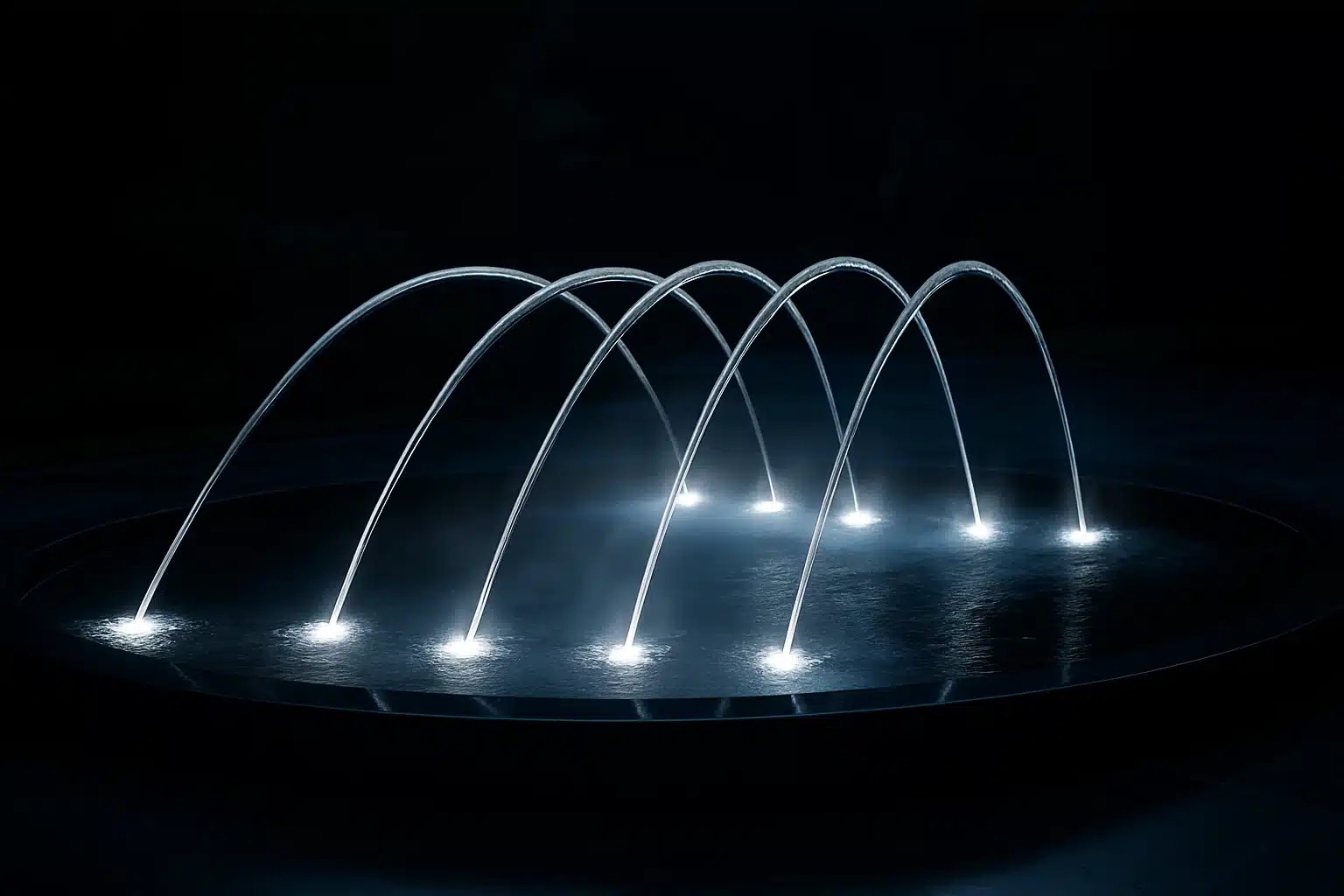
Designing fountains has always been a discipline where art and engineering converge, but designing fountains that exist primarily for the night—where their magic is intended to bloom only after dark, requires an entirely different philosophy. In the daytime, such fountains may appear understated, minimalistic, or even deliberately plain, but the moment the sky dims, they awaken. Light bends across water, reflections shimmer against surfaces, mist becomes illuminated sculpture, and the fountain becomes less a built structure and more a living nocturnal performance.
This long-form exploration dives into the creative, technical, and sensory considerations behind crafting night-only fountain aesthetics, including lighting strategy, material selection, water behavior, spatial choreography, and experiential storytelling. If you’re designing for resorts, public plazas, luxury residences, or immersive art installations, night-dominant fountains present a rare opportunity: they turn darkness into a collaborator, shaping mood, movement, and visual drama in ways that daytime environments cannot rival.
1. The Philosophy of Night-Only Design
Most fountains aim to look equally impressive by day and night. But night-exclusive fountains flip that expectation; they prioritize the after-dark experience and treat daylight as an intermission. This shift requires designers to:
Let darkness become the canvas
During the day, contrast relies on material and form. At night, contrast emerges from voids and light, from the interplay of shadow and illumination. Darkness absorbs imperfections and reduces visual clutter, meaning designers can simplify physical structures and emphasize ephemeral elements, light patterns, reflections, spray texture, and micro-movements of water.
Celebrate the ephemeral
Daylight reveals everything; nighttime hides everything except what you choose to reveal. A night-only fountain becomes a choreographed phenomenon, highlighting:
- illuminated arcs and droplets
- glowing mist veils
- reflective pools mirroring the moon
- rhythmic lighting pulses
- silhouettes against soft ambient lighting
This ephemeral quality makes night-only fountains inherently immersive and often emotionally resonant.
Use minimalism as an advantage
Materials do not need to be ornamental. In fact, simpler forms often become more compelling when interacting with colored light, underwater lighting gradients, or moving shadows.
2. Lighting: The Heart of the Night-Only Fountain
Water alone is invisible at night. Light gives it form. This makes lighting design the central pillar of night-focused fountains.
Underwater LED Systems
Modern fountains rely on low-energy, high-intensity LEDs that offer:
- vivid color and color-changing
- capabilities
- precise beam control
- programmable choreography
- long lifespan and minimal heat output
Key considerations include:
- Beam Angle
- Wide beams create soft glows; narrow beams enhance jets or laminar streams.
Placement
Placing lights slightly behind a water jet highlights the full trajectory. Sub-surface lights angled upward reveal turbulence and dynamic spray patterns.
Surface Wash Lighting
These lights illuminate:
- textured stone
- micro-ripple surfaces
- spillways and weirs
They help integrate water with its environment, preventing the fountain from floating awkwardly in the darkness.
Projection and Mapping
Increasingly, designers incorporate projection mapping onto:
- mist screens
- wide, flat water surfaces
- vertical glass-like falling water
This bridges architectural lighting and multimedia art, enabling fountains to display:
- animated visuals
- illuminated patterns
- ambient environmental imagery
Avoiding Light Pollution
A key mistake is over-lighting. Night-only fountains should glow, not glare. Use:
- shielded fixtures
- low horizontal glare
- dark-sky-friendly lighting choices
If the fountain becomes too bright, it loses mystery and the surrounding environment becomes visually imbalanced.
3. Materiality: Choosing Surfaces That Come Alive at Night
By day, materials dictate the fountain’s visual presence. At night, they become co-stars in a light-and-water performance.
Reflective Surfaces
Highly polished materials, basalt, black granite, stainless steel—can create mesmerizing mirror effects:
- deep reflections
- enhanced color saturation from lights
- dramatic contrast against darkness
- A black reflective basin makes jets
- appear to emerge from a void.
- Textured Stone
Textures catch light differently as water moves across them:
- rough-cut slate
- hammered copper
- grooved limestone
With controlled lighting, these textures amplify shadows and depth.
Glass and Acrylic
Transparent materials, when lit from within or behind, produce ethereal effects:
- glowing pillars
- illuminated overflow edges
- color diffusion across water sheets
Materials to Avoid
Highly patterned stone, warm-toned natural materials, or matte finishes may appear muddy under colored light, reducing clarity and impact.
4. Engineering Water for Nighttime Drama
Once lighting sets the stage, water becomes the dynamic performer.
Jet Types and Behavior
The choice of water effect dramatically changes how the fountain reads at night:
Laminar Jets
Smooth, coherent streams of water that glow brilliantly under point lighting. They look like glass rods when internally lit.
Aerated Jets
White and turbulent; they scatter light in a soft, cloud-like texture. Perfect for dramatic illumination.
Fine Mist
Mist is one of the most magical night-time mediums:
- It catches colored light beautifully
- It creates soft halos
- It can support projection effects
Designers must control airflow to prevent chaos.
Sheet Flows
Thin sheets of water reveal contours of lighting and create luminous surfaces, especially when cast against dark backgrounds.
Rhythm and Choreography
Night-only aesthetics thrive on pacing:
- slow, meditative rises and falls
- synchronized pulsations
- color transitions
- dramatic still moments with sudden
eruptions
Dynamic programming is essential for fountains intended as nighttime attractions.
5. Soundscapes That Complete the Experience
Sound is a powerful element after dark.
The Role of Acoustics
At night, ambient noise is lower. Audiences hear:
- trickling edges
- droplets hitting surface tension
- soft splashes
- the hum of pumps (if not properly insulated)
Designers must balance sound carefully to avoid overpowering the environment.
Using Sound Artistically
Some installations pair fountains with:
- ambient music
- nature-inspired sound design
- rhythmic audio synced to water choreography
This elevates the fountain from a visual feature to a multisensory environment.
6. Spatial Layout: The Stage Around the Fountain
A night-only fountain isn’t just about the water, it’s about its relationship with the surrounding space.
Inviting Circulation
Walkways should encourage visitors to:
- explore different angles
- walk close to illuminated surfaces
- experience reflections and shadows
Curved paths, stepping stones, or platforms above shallow water invite immersion.
Framing the Custom Fountain
At night, framing is essential:
- trees become silhouettes
- low shrubs become shadow textures
- architectural walls become canvases
Integrating these elements makes the fountain feel grounded and intentional.
Viewing Distance
Designers must account for:
- long-distance viewing for larger public installations
- intimate proximity for residential or boutique spaces
Each requires different lighting intensities and water effects.
7. Safety and Maintenance for Night-Only Use
Darkness heightens risk if not addressed thoughtfully.
- Edge Lighting
- Low-level path lighting is necessary to:
- define edges
- reduce trip hazards
- guide movement
This should never compete visually with the fountain.
Water Clarity
Water that looks fine by day may appear murky under nighttime lighting. Filtration and water chemistry must be extremely well maintained.
Durability Under Lighting
Heat-sensitive materials should be avoided near high-output fixtures.
8. Storytelling Through Water and Light
Night-only fountains excel when they tell a story.
Themes Might Include:
- celestial and cosmic illusions
- bioluminescent ocean inspiration
- mythology or folklore
- seasonal themes
- cultural symbolism
The narrative doesn’t need to be literal; even abstract experiences can evoke powerful emotions.
Transitions as Story Elements
Lighting shifts can mimic:
- sunset to moonrise
- calm to storm
- pulse of living organisms
- slow breathing patterns for meditative
- experiences
- Your fountain becomes an unfolding narrative rather than a static feature.
9. Designing for the Viewer’s Emotional Journey
Night fountains touch the emotions differently than daytime ones. They evoke:
- serenity
- wonder
- romanticism
- introspection
Designers can guide these emotions through:
- warm vs. cool color temperatures
- rhythmic vs. chaotic water choreography
- immersive vs. passive viewing zones
A quiet garden fountain suggests reflection; a grand plaza fountain inspires awe.
10. Iconic Examples of Night-Focused Fountains
While many fountains perform day and night, some installations shine best after sunset:
The Bellagio Fountains (Las Vegas)
Choreography is far more dramatic at night due to lighting control and musical accompaniment.
Dubai Fountain
Its nighttime displays turn water into architectural light sculptures rising against the dark sky.
Small-scale Contemporary Art Fountains
In museums and sculpture gardens, subtle lighting often transforms minimalistic water features into haunting nighttime experiences.
These examples show that night-only aesthetics can significantly enhance emotional impact and visitor engagement.
11. Practical Workflow for Designing a Night-Only Fountain
To streamline the design process, consider the following workflow:
Step 1: Establish Intent
Is the fountain meant to calm or excite?
Is it performance-based or ambient?
Step 2: Map the Darkness
Study nighttime conditions:
- moonlight
- surrounding building illumination
- nearby traffic or light pollution
Step 3: Select Water Effects
Choose effects that make sense under low light.
Step 4: Position Lighting
Use modeling and on-site mockups to test angles and intensities.
Step 5: Material and Basin Design
Pick materials that reflect or absorb light effectively.
Step 6: Program Interactivity
Add sequencing, controls, and potential user triggers.
Step 7: Test at Night
Daytime tests won’t reveal true behavior.
Step 8: Maintain Continuously
Night-only fountains require consistent maintenance for water clarity and lighting reliability.
12. The Future of Night-Only Fountain Aesthetics
Emerging technologies are expanding the creative possibilities.
Smart Controls
- App-controlled lighting and pump systems allow precise control and scheduling.
- Eco-Friendly Lighting
- Ultra-low energy LEDs and solar-powered elements reduce environmental impact.
Holographic Water Screens
- Using ultra-fine mist, designers can create floating holograms and interactive projections.
- Bioluminescent Inspiration
- Research in biomimicry may one day allow water to glow through natural processes, eliminating artificial lighting altogether.
- Night-only fountains are evolving into living digital artworks.
Conclusion
Creating fountains specifically for nighttime aesthetics invites designers to think beyond traditional water feature design. Darkness becomes a creative tool, encouraging a refined focus on lighting, materials, water behavior, choreography, and emotional resonance. When executed well, a night-only fountain becomes an unforgettable experience—a luminous moment suspended in darkness, offering serenity, spectacle, and wonder.
Designing for the night isn’t simply about adding lights to water; it’s about sculpting the unseen, revealing beauty that only exists when the rest of the world goes quiet.
FAQs:
A night-only fountain prioritizes visual impact after sunset, using lighting, reflections, and water choreography to create effects that are not intended to be the focal point during daytime.
Not necessarily. While lighting systems add maintenance needs, improved LED technology and smart controls help minimize energy costs and upkeep.
Absolutely. Even compact courtyards or garden corners can host stunning night-only fountains using minimal water features combined with carefully placed lighting.