...
483.1.Mixed-use-fountains

Mixed-Use Harmony: Aligning Fountain Design Across Retail, Office, and Residential

Introduction: Where Water Meets Modern Living

Mixed-use developments have become the defining blueprint of modern urban design. Retail, office, and residential environments now coexist within a single ecosystem, demanding cohesion not only in architecture but also in experience. Among the most powerful tools for creating that cohesion are fountains and water features.

Water has a universal appeal. It softens rigid structures, adds movement to static environments, and creates sensory continuity across diverse spaces. When designed thoughtfully, water fountains can unify a retail plaza, an office lobby, and a residential courtyard into a seamless narrative.

But alignment is not automatic. Each environment has distinct functional goals, user behaviors, and emotional expectations. The challenge, and opportunity, is to design water features that adapt while still feeling connected.

This is where mixed-use harmony comes into play.

Why Water Features Are Essential in Mixed-Use Design

Water features are not just decorative. They influence how people move, feel, and interact within a space.

1. Emotional Anchors

Water calms the mind. In a retail setting, it encourages lingering. In offices, it reduces stress. In residential areas, it creates a sense of retreat.

2. Spatial Identity

A well-designed fountain becomes a landmark. It helps visitors orient themselves and gives each zone a memorable focal point.

3. Acoustic Balance

Urban environments can be noisy. The sound of flowing water helps mask unwanted noise, making spaces feel more comfortable and intentional.

4. Brand and Lifestyle Expression

Developers increasingly use water features to communicate luxury, sustainability, or innovation. A sleek rain curtain fountain suggests modernity, while garden fountains evoke tranquility and tradition.

The Core Principle: Design Consistency with Contextual Adaptation

The key to aligning fountains across mixed-use environments is not replication—it’s translation.

Think of fountain design like a language. The “vocabulary” (materials, forms, water movement) should remain consistent, while the “dialect” adapts to each space.

Elements That Should Stay Consistent:

    • Material palette (stone, glass, metal finishes)
    • Water behavior (gentle cascades, linear flow, mist effects)
    • Lighting style (warm vs. cool tones, integrated LEDs)
    • Design geometry (curves, minimalism, symmetry)

Elements That Should Adapt:

    • Scale
    • Interactivity
    • Placement
    • Sound intensity
    • Maintenance complexity

Retail Spaces: Attraction, Engagement, and Flow

Retail environments thrive on attention and movement. Outdoor fountains and large-scale water features are particularly effective here.

Design Goals for Retail:

    • Draw people in
    • Encourage longer dwell times
    • Create social gathering points

Best Fountain Types for Retail:

    • Outdoor water fountains with bold visual impact
    • Rain curtain water features for interactive engagement
    • Wall fountains that frame entrances or storefronts

Strategic Placement:

    • Entry plazas
    • Central courtyards
    • Dining areas
    • Transitional walkways

Design Considerations:

Retail fountains should be visually striking without overwhelming the space. Movement is key, dynamic water patterns attract attention and create a sense of energy.

For example, a rain curtain fountain can double as an artistic installation and a branding element, especially when integrated with lighting or projection.

Sensory Impact:

    • Moderate to lively sound levels
    • High visual dynamism
    • Interactive potential (touch-safe features, mist zones)

Office Environments: Calm, Focus, and Professional Identity

Office spaces require a different tone. Here, water features should enhance productivity and well-being without distraction.

Design Goals for Offices:

    • Reduce stress
    • Improve air quality perception
    • Reinforce brand sophistication

Best Fountain Types for Offices:

    • Indoor water fountains with subtle flow
    • Wall fountains in lobbies and reception areas
    • Floor fountains in atriums or collaborative spaces

Strategic Placement:

    • Lobby entrances
    • Waiting areas
    • Break rooms or wellness zones
    • Internal courtyards

Design Considerations:

In offices, restraint is essential. The water movement should be smooth and continuous, avoiding splashing or excessive noise.

A sleek wall fountain with a glass or stone surface can create a calming backdrop without interrupting conversations or concentration.

Sensory Impact:

    • Soft, consistent sound
    • Minimal visual distraction
    • Elegant lighting accents

Mixed-Use Harmony Aligning Fountain Design Across Retail, Office, and Residential

Residential Spaces: Comfort, Privacy, and Personal Escape

Residential environments prioritize comfort and emotional connection. Water features here should feel intimate and restorative.

Design Goals for Residential:

    • Create a sense of sanctuary
    • Enhance outdoor living
    • Increase property value

Best Fountain Types for Residential:

    • Garden fountains for outdoor relaxation
    • Indoor fountains for entryways or living spaces
    • Tabletop fountains for personal use
    • Small-scale outdoor fountains for patios and balconies

Strategic Placement:

    • Courtyards
    • Gardens
    • Private terraces
    • Entry foyers

Design Considerations:

Residential fountains should blend seamlessly into the landscape or interior design. Natural materials and organic forms often work best.

For example, a stone garden fountain surrounded by greenery creates a timeless, peaceful atmosphere.

Sensory Impact:

    • Gentle, soothing sound
    • Natural aesthetic
    • Low maintenance

Bridging the Gap: Creating Visual and Experiential Continuity

The real art of mixed-use fountain design lies in connecting these three environments without making them feel identical.

1. Material Harmony

Using the same stone, metal, or glass across all fountains creates a subtle visual thread.

2. Water Behavior Consistency

Even if the scale changes, the style of water movement, whether cascading, sheet flow, or mist, should feel related.

3. Lighting Strategy

Consistent lighting design ensures the fountains feel unified, especially at night.

4. Design Motifs

Repeating shapes or patterns across spaces reinforces cohesion.

The Role of Signature Features

Every mixed-use development benefits from a “hero” water feature.

This could be:

    • A large outdoor fountain in the central plaza
    • A dramatic rain curtain fountain at the main entrance
    • A sculptural water installation visible from multiple zones

The surrounding fountains then echo elements of this centerpiece at smaller scales.

Sustainability and Smart Design

Modern fountain design must balance beauty with responsibility.

Water Efficiency
Closed-loop systems minimize water waste.

Energy Efficiency
LED lighting and energy-efficient pumps reduce operational costs.

Smart Controls
Automated systems adjust flow and lighting based on time, weather, or occupancy.

Material Durability
Long-lasting materials reduce maintenance and environmental impact.

Maintenance: The Often Overlooked Factor

Alignment across mixed-use spaces also means aligning maintenance strategies.

Key Considerations:

    • Access for cleaning and repairs
    • Water treatment systems
    • Debris management (especially for outdoor fountains)
    • Noise control over time

Designing with maintenance in mind ensures the fountains remain assets, not liabilities.

The Psychology of Water in Shared Spaces

Water has a unique ability to connect people across different lifestyles.

    • Shoppers pause at fountains, turning retail into experience
    • Employees find moments of calm during busy workdays
    • Residents enjoy a sense of retreat within urban density

This shared emotional response is what makes water features so powerful in mixed-use environments.

Case Study Approach (Conceptual)

Imagine a mixed-use development with:

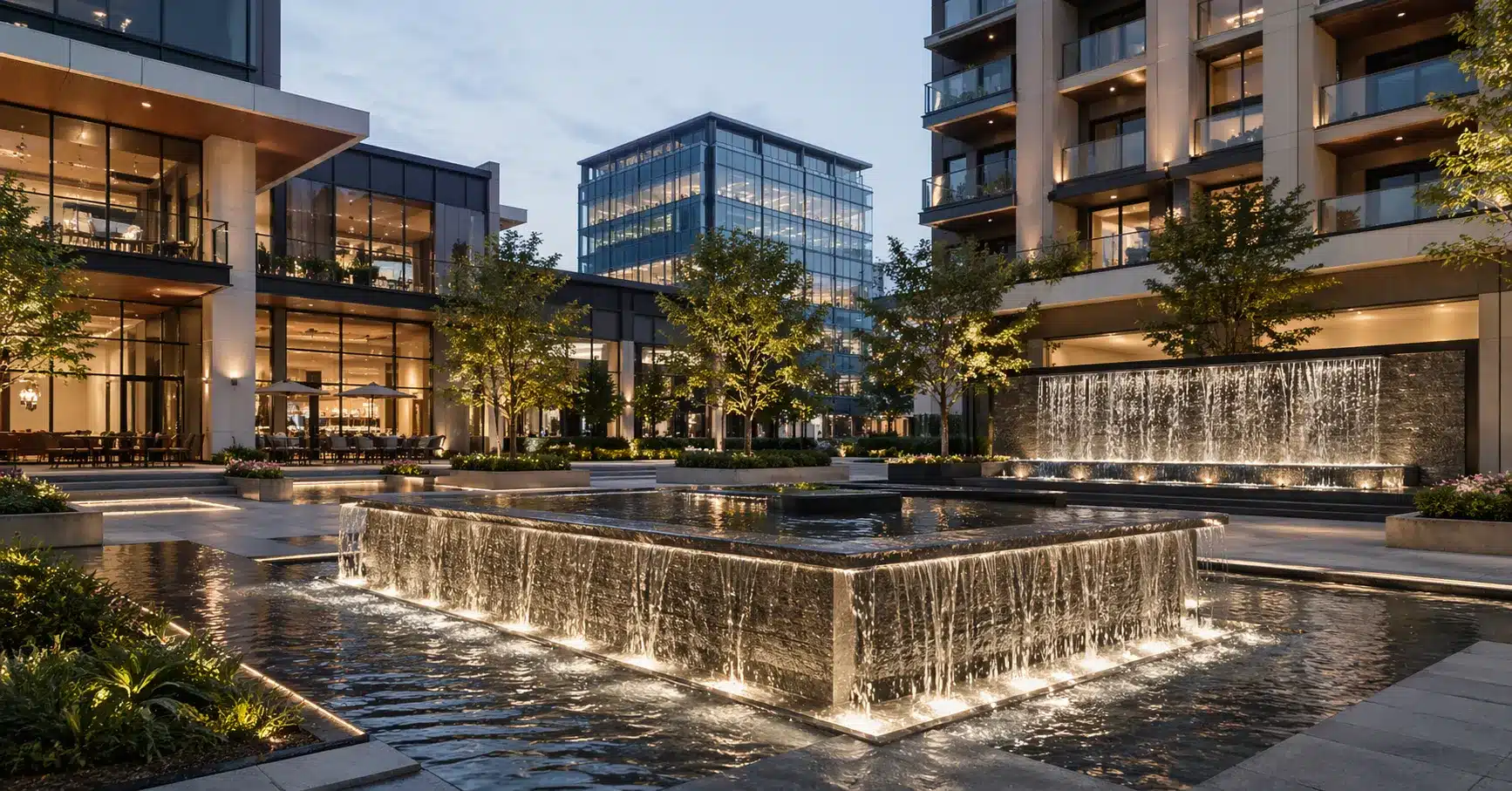
    • A central plaza featuring a bold outdoor water fountain with dynamic jets
    • Office lobbies with minimalist wall fountains using the same stone finish
    • Residential courtyards with smaller garden fountains echoing the same design language

Each space feels distinct, yet unmistakably part of the same story.

Future Trends in Mixed-Use Fountain Design

Interactive Technology
Touch-responsive water features and programmable displays are becoming more common.

Biophilic Integration
Fountains are increasingly integrated with greenery and natural elements.

Customization
Developers are moving away from generic designs toward bespoke water features.

Hybrid Installations
Combining art, lighting, and water for immersive experiences.

Conclusion: Designing for Connection

Mixed-use harmony is about more than aesthetics. It’s about creating a cohesive experience across different ways of living, working, and interacting.

Water fountains and water features offer a unique opportunity to achieve this. They bring movement, sound, and emotion into built environments, bridging the gap between function and feeling.

When aligned thoughtfully, they don’t just decorate spaces, they connect them.

FAQs:

There’s no single answer. A combination works best, large outdoor fountains for retail areas, indoor fountains for offices, and garden fountains or smaller features for residential spaces.

Consistency comes from shared design elements like materials, water flow style, and lighting, even if the scale and function vary.
Yes, modern systems use recirculating water, energy-efficient pumps, and smart controls to minimize environmental impact while maintaining visual appeal.