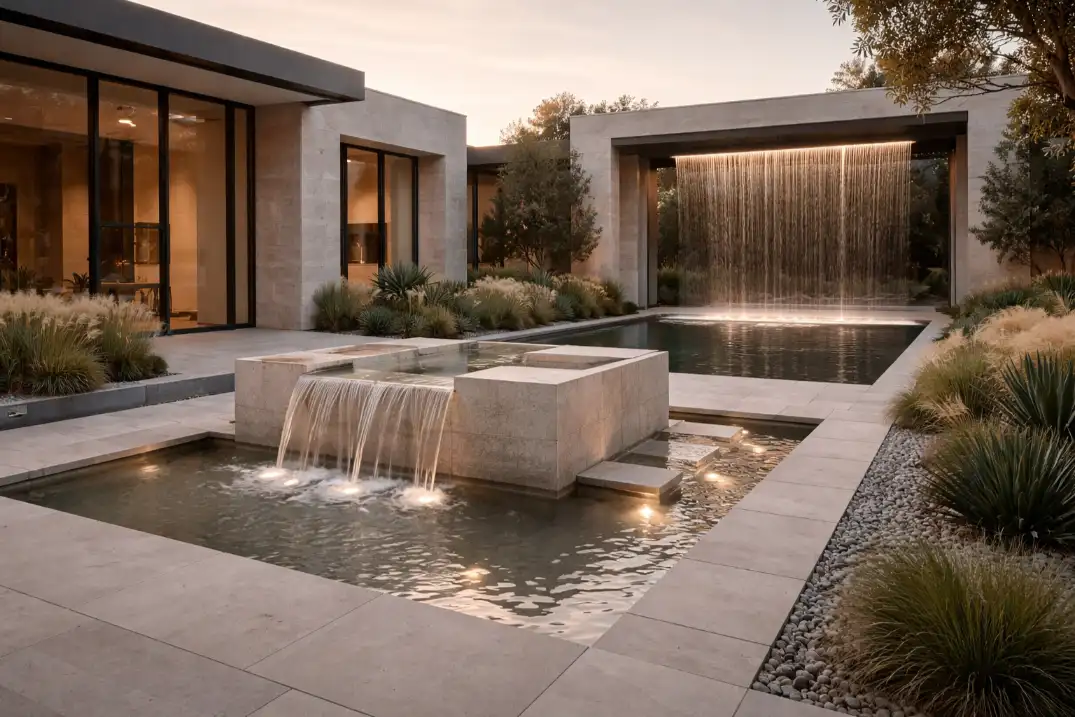
Modern architecture and landscape design have shifted toward a calmer, more sophisticated aesthetic, and neutral-toned fountains are leading the trend. Designers increasingly incorporate water fountains, outdoor fountains, and indoor water features in shades of stone gray, soft beige, charcoal, ivory, and sand. These subtle colors complement contemporary spaces while allowing the soothing movement of water to become the true focal point.
Across luxury residences, commercial developments, hotels, and urban landscapes, neutral-toned water fountains provide a balance between elegance and tranquility. Instead of bold decorative elements, designers now prefer water features that blend seamlessly with surrounding materials like concrete, glass, natural stone, and wood.
From garden fountains and wall fountains to modern rain curtain water features, neutral tones create a timeless appearance that works in both minimalist and nature-inspired environments. This article explores why these fountains are dominating contemporary projects, how designers use them, and which types of fountains are trending today.
Why Neutral-Toned Fountains Are Trending in Modern Design
Contemporary design focuses heavily on simplicity, balance, and natural harmony. Neutral-toned fountains fit perfectly into this philosophy, offering elegance without visual clutter.
Several factors contribute to the rising popularity of neutral-colored water fountains and water features:
1. Timeless Aesthetic
Neutral colors rarely go out of style. A fountain finished in shades of limestone, slate gray, sand, or ivory can complement design trends for decades.
Unlike bright or heavily ornate fountains, neutral outdoor water fountains adapt easily to changing landscaping or architectural updates. This flexibility makes them a smart investment for homeowners, architects, and developers.
2. Seamless Integration with Modern Materials
Contemporary projects often feature materials like:
- Concrete
- Natural stone
- Metal
- Glass
- Wood
Neutral-toned water fountains blend effortlessly with these textures, creating a cohesive environment. For example, a charcoal wall fountain installed against a concrete wall creates visual harmony without overwhelming the space.
3. Focus on the Water Itself
When the fountain structure remains understated, the movement and sound of water become the centerpiece.
Designers intentionally choose neutral finishes so the cascading water, reflections, and lighting effects stand out. This approach is especially effective with modern rain curtain fountains, where the falling water creates a dramatic yet calming visual.
4. Calm and Wellness-Oriented Spaces
Modern design increasingly emphasizes wellness, relaxation, and sensory experiences.
Water naturally reduces stress and improves the ambiance of a space. Neutral-toned indoor fountains and outdoor water fountains amplify this effect by maintaining a serene visual presence that supports relaxation.
Neutral Outdoor Water Fountains in Contemporary Landscapes
Outdoor environments remain the most common setting for large water fountains and water features. Neutral tones enhance these spaces by allowing the surrounding landscape to shine.
Garden Fountains with Natural Finishes
Many homeowners choose garden fountains finished in colors that mimic natural stone or sand. These subtle hues allow fountains to blend seamlessly into plantings, pathways, and patios.
Popular neutral finishes include:
- Limestone beige
- Soft sandstone
- Slate gray
- Weathered concrete
These tones complement greenery while maintaining a refined architectural appearance.
Minimalist Outdoor Water Fountains
Modern landscaping frequently incorporates minimalist outdoor water fountains with clean geometric forms.
Common styles include:
- Rectangular basin fountains
- Cube fountains
- Linear spillway fountains
- Stone slab water features
Neutral finishes reinforce the minimalist aesthetic while allowing the water flow to provide movement and life to the space.
Statement Courtyard Water Features
Large commercial projects and luxury residences often feature central courtyard fountains. Neutral-toned materials ensure these installations remain elegant rather than overly decorative.
Designers frequently integrate floor fountains or ground-level water features in plazas and courtyards. The understated colors create a sophisticated atmosphere while allowing lighting and water patterns to deliver visual impact.
Indoor Water Fountains Bringing Calm to Interior Spaces
Neutral tones are especially effective indoors, where bold colors could disrupt the visual balance of a room.
Indoor water fountains have become a popular feature in modern homes, offices, and hospitality spaces. These installations add movement, texture, and relaxing sound without overwhelming interior design.
Wall Fountains as Architectural Elements
One of the most popular indoor fountain styles is the wall fountain. Mounted vertically, these fountains maximize visual impact while using minimal floor space.
Neutral materials such as:
- Natural slate
- Sandstone
- Textured concrete
- Brushed metal
create elegant indoor installations that complement contemporary interiors. A neutral-toned wall fountain can serve as both an art piece and a calming water feature.
Indoor Fountains in Offices and Commercial Spaces
Modern office environments increasingly integrate indoor fountains and water features to improve ambiance and employee well-being.
Neutral-colored fountains fit particularly well in corporate settings because they maintain professionalism while adding a sense of tranquility.
Reception areas, hotel lobbies, and spa environments often include indoor water fountains designed with stone, slate, or concrete finishes.
Tabletop Fountains for Small Spaces
Even compact interiors can enjoy the benefits of water features through tabletop fountains.
These small indoor fountains sit on desks, coffee tables, or shelves, creating gentle water sounds that promote focus and relaxation.
Neutral finishes such as matte ceramic, natural stone, or soft metallic tones make tabletop fountains easy to integrate into any décor style.
Rain Curtain Fountains: The Ultimate Modern Water Feature
Among the most striking contemporary designs is the rain curtain fountain, sometimes called a rain curtain water feature.
Instead of water flowing over a surface, these installations create a curtain-like sheet of falling water. The effect resembles rainfall, producing both visual drama and soothing sound.
Why Rain Curtain Water Features Are Popular
Rain curtain fountains have gained popularity because they offer:
- Clean architectural lines
- Dynamic water movement
- Elegant lighting possibilities
- Minimalist aesthetic
When paired with neutral materials, the water curtain becomes the star of the installation.
Indoor Rain Curtain Fountains
Modern buildings frequently incorporate indoor rain curtain fountains in atriums, lobbies, and large open spaces.
The falling water creates a calming visual barrier while maintaining openness and light flow.
Neutral structural frames, typically in brushed steel, matte black, or natural stone, enhance the modern design while allowing the water to command attention.
Outdoor Rain Curtain Water Features
In outdoor environments, rain curtain fountains can serve as dramatic landscape elements.
Designers use them in:
- Courtyards
- Poolside areas
- Outdoor lounges
- Garden pathways
The contrast between a soft water curtain and neutral architectural materials creates a refined yet memorable visual experience.
Floor Fountains and Ground-Level Water Features
Another growing trend in contemporary design is the use of floor fountains.
Instead of a raised basin, these fountains sit flush with the ground. Water emerges from jets embedded in stone or pavement and flows back into hidden reservoirs.
Benefits of Floor Fountains
Floor fountains offer several advantages:
- Space-efficient design
- Modern aesthetic
- Interactive possibilities
- Clean architectural lines
Popular Locations for Floor Water Fountains
You’ll often find floor fountains in:
- Public plazas
- Hotel courtyards
- Museum entrances
- Outdoor shopping centers
Because the water jets emerge directly from the ground, these installations maintain a sleek and contemporary appearance.
Materials Behind Neutral-Toned Water Fountains
The neutral aesthetic seen in modern water fountains and water features comes largely from carefully chosen materials.
Natural Stone
Stone remains one of the most popular choices for garden fountains and wall fountains. Options include:
- Limestone
- Granite
- Travertine
- Slate
These materials naturally offer neutral shades that fit contemporary landscapes.
Concrete
Concrete has become a signature material in modern architecture. Many outdoor water fountains now feature polished or textured concrete finishes.
Concrete fountains provide durability while maintaining a minimalist look.
Metal
Metals such as stainless steel, aluminum, and bronze are also common in indoor water fountains and rain curtain fountains.
When finished in brushed or matte textures, these metals produce subtle neutral tones that work well in modern environments.
Lighting Enhancing Neutral Water Features
Lighting plays a major role in highlighting modern water fountains.
Because neutral tones do not distract from the water, lighting can transform a fountain into a nighttime centerpiece.
Common lighting techniques include:
- LED strip lighting along water edges
- Underwater lights in basins
- Backlighting behind rain curtain water features
- Soft uplighting on wall fountains
The reflections created by water movement add another dimension of visual interest.
How Designers Choose the Right Fountain Style
For Residential Gardens
Homeowners often prefer garden fountains or outdoor water fountains with natural stone finishes. These fountains enhance landscaping while maintaining a relaxed atmosphere.
For Modern Interiors
In homes or offices, indoor fountains, wall fountains, or tabletop fountains are ideal. Neutral tones help them blend into the surrounding décor.
For Large Architectural Projects
Architects frequently choose dramatic installations such as rain curtain fountains or floor fountains. These designs provide visual impact without overwhelming modern architecture.
The Future of Neutral-Toned Water Features
The popularity of neutral colors shows no sign of slowing down. As contemporary architecture continues evolving toward minimalism and wellness-focused design, neutral-toned fountains will remain a defining element.
Future trends may include:
- Smart water features with programmable flows
- Integrated lighting systems
- Sustainable water circulation technology
- Custom-designed rain curtain water features
These innovations will allow designers to continue creating breathtaking water installations while maintaining the calming elegance of neutral tones.
Conclusion
Neutral-toned fountains have become a signature element in contemporary architecture and landscape design. Their understated elegance allows the beauty of moving water to take center stage while blending effortlessly with modern materials and natural surroundings.
From garden fountains and outdoor water fountains to striking rain curtain fountains and indoor wall fountains, these water features offer timeless style and sensory appeal.
Whether placed in a private garden, hotel lobby, or urban plaza, neutral water fountains provide both visual sophistication and the calming sound of flowing water — making them one of the most influential design elements in modern spaces.