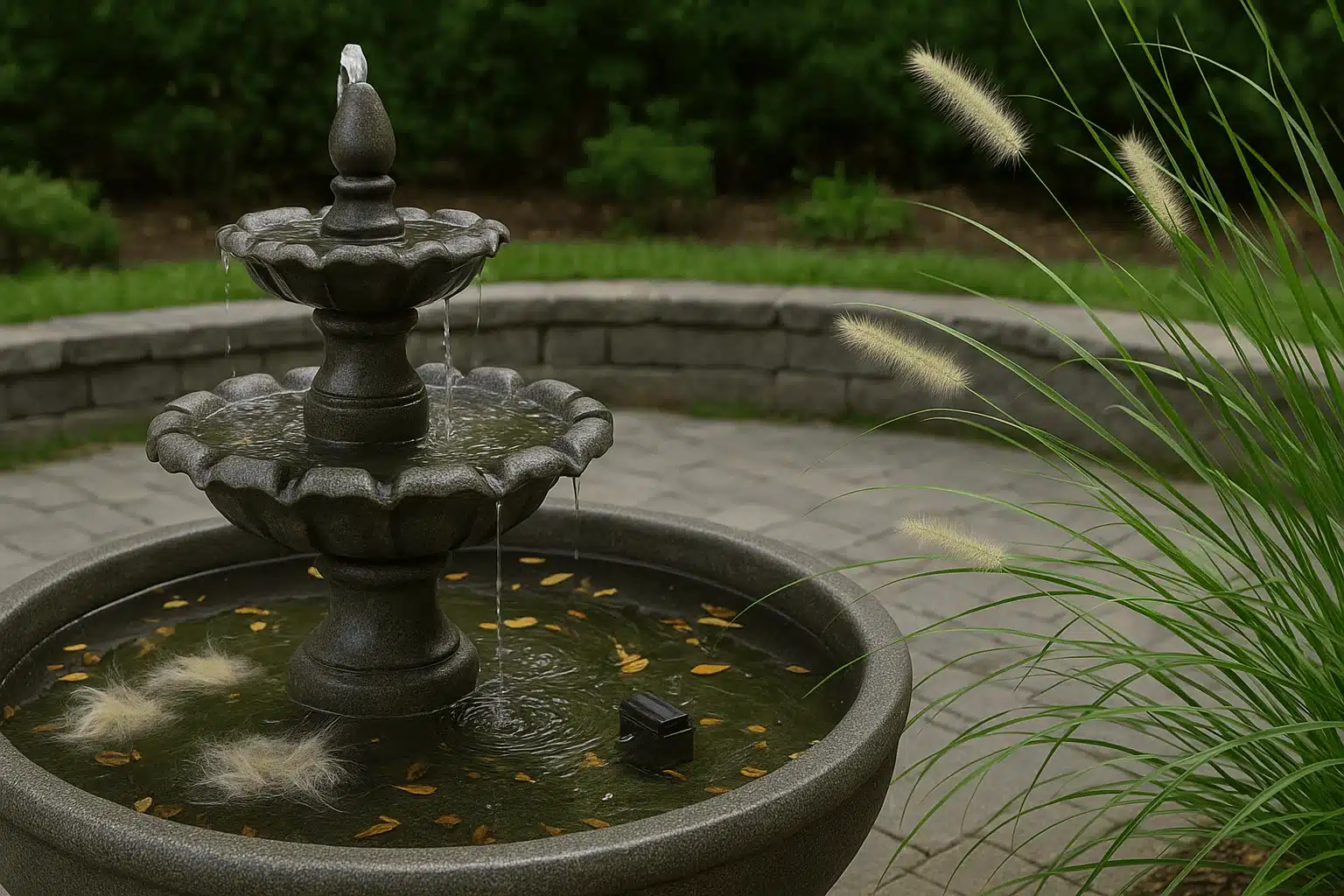
Introduction: The Hidden Enemies of Outdoor Fountain Care
When people think about maintaining outdoor fountains, the usual suspects come to mind, algae buildup, mineral deposits, or pump wear and tear. Yet, two of the most overlooked culprits are pet hair and pollen.
Whether you own a garden fountain, a rain curtain fountain, or a modern floor fountain, these invisible invaders can clog pumps, create unsightly debris on the water’s surface, and even affect water quality. If left unchecked, they can shorten the lifespan of your outdoor water features and reduce their visual appeal.
This article dives deep into the challenges posed by pet hair and pollen, explaining why they matter, how they affect different types of fountains, and most importantly, how to manage them with practical, long-lasting solutions.
Section 1: Why Pet Hair and Pollen Are Unique Challenges
Pet Hair – Small but Mighty
Pet owners often notice fur drifting around their homes, but the problem extends outdoors. Dogs and cats love lounging near garden fountains, and their shedding hair naturally ends up in the water. Unlike leaves or twigs, pet hair is light and fibrous, meaning it:
- Floats easily and spreads across the surface of the fountain basin.
- Clogs filters and pumps much faster than larger debris.
- Breaks down into smaller fibers, which are difficult to skim manually.
For tabletop fountains or indoor water fountains, pet hair is an equally common problem, especially if the fountain is placed on the floor where pets rest nearby.
Pollen – The Seasonal Sneak Attack
Pollen may be invisible at first, but during spring and summer, it quickly coats outdoor water fountains with a yellow-green film. Key challenges include:
- Surface scum: Pollen floats and forms a sticky layer on the water surface.
- Pump stress: Once it sinks, pollen clumps can clog the pump intake.
- Water discoloration: The buildup changes the clarity of your fountain’s water, making it look murky and neglected.
This makes pollen especially problematic for rain curtain water features, where clean, uninterrupted water flow is crucial to maintaining the striking visual effect.
Section 2: How These Issues Impact Different Fountain Types
Each type of fountain faces unique challenges when it comes to pet hair and pollen:
- Garden Fountains: Constant exposure to pets and outdoor air makes them the most vulnerable.
- Wall Fountains (Indoor or Outdoor): Pollen can stick to vertical surfaces, leaving streaks and stains if not cleaned promptly.
- Tabletop Fountains: Because of their small size, just a little pet hair can overwhelm the pump.
- Floor Fountains: These dramatic water features attract dust, dander, and pollen, often in high-traffic indoor areas.
- Rain Curtain Fountains: Pollen build-up disrupts the clean water sheet, causing uneven flow.
- Indoor Fountains: Pet dander combines with hair, leading to frequent cleaning demands.
Understanding these vulnerabilities helps owners prioritize cleaning and prevention strategies for their specific type of water feature.
Section 3: The Science Behind the Problem
Pet hair and pollen share a unique ability to resist natural filtration systems. Here’s why:
- Pet Hair Composition: Made of keratin, it doesn’t dissolve in water. Once trapped in pumps or tubing, it requires manual removal.
- Pollen Microparticles: Pollen grains are microscopic but sticky, adhering to surfaces and forming layers that normal water circulation won’t remove.
Together, they compromise water flow, reduce oxygen levels, and stress pumps, which can eventually lead to costly repairs or replacements for your outdoor fountains.
Section 4: Prevention and Daily Care Tips
For Pet Hair
- Pet Grooming: Regular brushing dramatically reduces loose hair.
- Strategic Placement: Avoid placing floor fountains or tabletop fountains in areas where pets nap or play.
- Pre-Filters: Install mesh or sponge filters at pump intakes to catch larger hair clumps.
For Pollen
- Protective Covers: Use fountain covers during peak pollen season.
- Daily Skimming: A handheld skimmer or net removes floating pollen before it sinks.
- Water Treatments: Use non-toxic water clarifiers designed for water features to help break down organic debris.
Section 5: Deep Cleaning Strategies
Even with prevention, deep cleaning is essential for outdoor water fountains:
- Turn Off & Drain: Always start by unplugging and draining the fountain completely.
- Pump Maintenance: Remove the pump and rinse it under running water to dislodge trapped hair and pollen.
- Scrub Surfaces: Use a soft brush and mild soap to clean the basin, walls, and decorative elements.
- Rinse Thoroughly: Residual soap can harm pump function and water clarity.
- Refill & Restart: Add fresh water and restart the fountain, checking for smooth flow.
For rain curtain water features, pay extra attention to the slotted trough, where pollen and hair tend to collect and disrupt water flow.
Section 6: Seasonal Maintenance Checklist
- Spring: Heavy pollen – clean and skim daily.
- Summer: Peak shedding – watch for pet hair buildup.
- Fall: Falling leaves plus leftover pollen – deep clean before winter.
- Winter: If not winterized, run occasional checks to prevent stagnant buildup indoors.
This schedule ensures your garden fountains, wall fountains, and floor fountains remain functional and attractive year-round.
Section 7: Indoor vs. Outdoor Fountain Care
While outdoor water fountains battle pollen, indoor fountains face constant exposure to pet hair and dander. Owners of indoor water fountains or tabletop fountains should:
- Use air purifiers nearby to reduce airborne hair and dander.
- Clean smaller fountains weekly since pumps have less tolerance for debris.
- Position fountains away from direct pet activity zones.
Section 8: Eco-Friendly and Sustainable Solutions
Eco-conscious fountain owners can incorporate greener approaches:
- Natural Filters: Use bio-filter systems with plants to absorb excess debris.
- Recycled Water Systems: Keep water circulating to prevent stagnation and pollen accumulation.
- Non-Chemical Cleaners: Opt for vinegar or plant-based cleaning solutions instead of harsh chemicals.
These solutions maintain outdoor fountains beautifully while protecting the environment.
Section 9: When to Call in the Professionals
DIY care works for most situations, but call a professional if:
- The pump consistently clogs despite cleaning.
- Water clarity doesn’t improve after multiple deep cleans.
- Stains from pollen or hair buildup damage the fountain’s surface.
Professional maintenance ensures your water features last longer and maintain their intended beauty.
Conclusion: Don’t Underestimate Pet Hair & Pollen
Pet hair and pollen may seem minor compared to algae or mineral buildup, but they are persistent challenges that demand attention. With regular grooming, smart placement, filtration upgrades, and seasonal cleaning, you can protect your outdoor water fountains, garden fountains, and even rain curtain fountains from premature wear.
By addressing these overlooked challenges, your water features—whether they’re indoor fountains, tabletop fountains, or stunning wall fountains, will continue to provide beauty, relaxation, and value for years to come.