...
459.1.Plinth-style-water-features

Plinth-Style Fountains in Modern Commercial Developments

Modern commercial developments are no longer designed purely for functionality. Today’s architects, developers, and landscape designers prioritize experiences, aesthetics, and environmental ambiance. One of the most powerful elements used to achieve this balance is the fountain. Specifically, plinth-style fountains have emerged as a sophisticated solution that integrates water features seamlessly into modern architecture. From luxury hotels and corporate headquarters to mixed-use developments and shopping centers, water fountains are being incorporated into spaces where design, branding, and atmosphere intersect. A plinth-style fountain, with its elevated base and sculptural presence, offers a timeless approach to outdoor water fountains while also adapting beautifully to indoor fountains and contemporary plazas. In this article, we explore how plinth-style fountains are redefining modern commercial spaces, their design advantages, and how they work alongside other water features such as wall fountains, rain curtain fountains, and floor fountains.

What Are Plinth-Style Fountains?

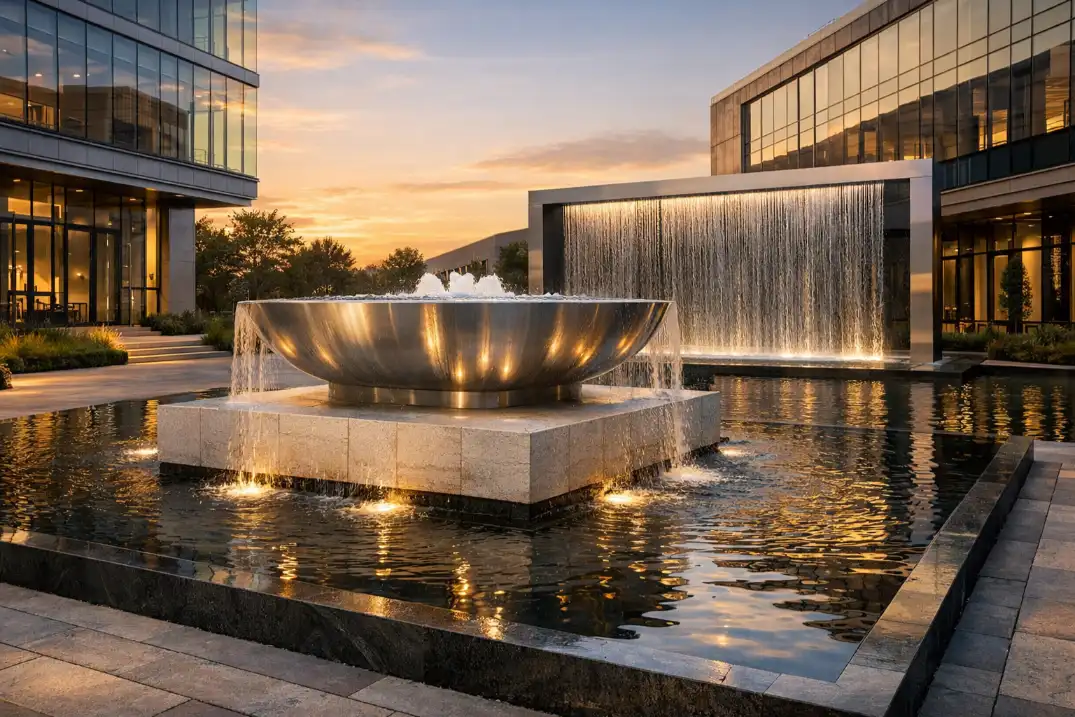
A plinth-style fountain refers to a fountain that sits atop a raised base or platform, known as a plinth. This architectural element elevates the fountain both physically and visually, turning it into a focal point within a landscape or interior space. Unlike traditional garden fountains, which often sit directly on the ground, plinth fountains are designed to create a sense of monumentality and structure. Key characteristics include:
  • Raised pedestal or platform
  • Sculptural basin or water element
  • Architectural integration with surrounding design
  • Clean geometric forms suitable for modern spaces
These fountains can appear in both outdoor fountains and indoor water fountains, depending on the design requirements of the development. Because of their elevated design, plinth fountains provide better visibility, stronger visual impact, and enhanced circulation of water, making them highly suitable for commercial environments.

Why Modern Commercial Developments Use Water Features

The demand for water features in commercial projects has grown dramatically over the past decade. Developers recognize that well-designed outdoor water fountains and indoor fountains contribute to the success of public spaces.

1. Creating Memorable Destinations

In competitive real estate markets, developments need to stand out. A striking fountain becomes a landmark within the property. Whether it’s a rain curtain water feature in a hotel lobby or floor fountains in a plaza, water creates visual drama and attracts attention.

2. Enhancing Relaxation and Wellbeing

Water has a calming psychological effect. The sound of flowing water helps reduce stress and noise in busy environments. This is why water fountains are common in:
  • Corporate campuses
  • Luxury shopping centers
  • Healthcare facilities
  • Hotels and resorts
The gentle movement of water encourages visitors to slow down and enjoy the environment.

3. Improving Brand Image

High-end water features communicate sophistication and attention to detail. Developments that incorporate artistic outdoor fountains or innovative indoor water fountains instantly convey prestige and quality.

The Architectural Appeal of Plinth Fountains

Plinth-style fountains complement contemporary architecture particularly well. Many modern developments rely on minimalist design, clean lines, and geometric shapes. A plinth fountain naturally aligns with these aesthetics.

Structural Integration

The raised base allows designers to integrate fountains directly into plazas, courtyards, or building entrances. Instead of appearing as decorative afterthoughts, these water fountains become structural components of the space.

Clear Visual Hierarchy

Plinth fountains elevate the water element above surrounding paving or landscaping. This creates a hierarchy where the fountain serves as the visual anchor of the environment.

Sculptural Presence

Many architects treat plinth fountains as public art installations. The fountain basin, jets, and stone surfaces can be designed to resemble sculpture while functioning as outdoor water fountains.

Plinth Fountains in Outdoor Commercial Spaces

Outdoor environments are where plinth fountains shine the most. Modern developments often feature large open plazas or landscaped courtyards. These spaces benefit greatly from elegant outdoor fountains.

Corporate Plazas

Corporate headquarters frequently install plinth fountains at main entrances. These water features help soften large architectural structures while adding prestige.

Retail Centers

Shopping districts and malls use outdoor water fountains to create gathering spaces. Customers naturally gravitate toward water features, increasing dwell time and improving visitor experience.

Hospitality Developments

Luxury hotels rely heavily on water to create welcoming environments. A grand plinth-style fountain at the entrance signals elegance and hospitality. In many cases, these fountains are paired with garden fountains, lighting, and landscaping to create immersive arrival experiences.

Integrating Plinth Fountains with Rain Curtain Water Features

One of the most visually striking combinations in modern design is pairing plinth fountains with rain curtain water features. A rain curtain fountain produces a vertical sheet of falling water, often integrated into glass panels or architectural frames. When used together with plinth fountains, the effect can be extraordinary.

Layered Water Design

Designers often create layered experiences:
  • A plinth fountain provides the central basin
  • A rain curtain water feature creates a vertical water wall behind it
  • Lighting enhances movement and texture
This combination is common in hotel entrances and upscale commercial plazas.

Modern Aesthetic

Rain curtain systems have a sleek contemporary look, making them ideal companions for plinth fountains. Together they form cohesive water features that align with modern architectural design.

Indoor Applications of Plinth Fountains

While often associated with outdoor environments, plinth fountains also work beautifully as indoor water fountains. In interior spaces, water elements become part of the architectural storytelling.

Hotel Lobbies

Luxury hotels frequently install indoor fountains in large atriums. A plinth fountain positioned beneath a skylight creates dramatic reflections and movement.

Corporate Reception Areas

Businesses use indoor water fountains to create welcoming atmospheres. Water softens the formality of office spaces and helps create memorable first impressions.

Commercial Interiors

Modern developments sometimes combine plinth fountains with wall fountains or rain curtain fountains inside the building. These layered water features bring motion and texture to otherwise static environments.

Complementary Fountain Types in Commercial Design

Plinth fountains rarely exist in isolation. Developers often combine them with other fountain styles to create cohesive water environments.

Wall Fountains

Wall fountains attach directly to vertical surfaces, allowing water to cascade down textured materials like stone or glass. They are commonly used indoors alongside indoor water fountains or within courtyard walls near plinth fountains.

Floor Fountains

Interactive floor fountains are embedded directly into pavement. These fountains allow jets of water to emerge from ground-level nozzles. When paired with plinth fountains, they create playful spaces in plazas and pedestrian areas.

Garden Fountains

In landscaped zones, garden fountains add organic character to more formal plinth installations. Together they blend structured architecture with natural landscape design.

Tabletop Fountains

Even small tabletop fountains can extend the water theme indoors. Restaurants, lounges, and private seating areas sometimes use tabletop fountains to complement larger indoor fountains in the same development.

Design Materials Used in Plinth-Style Fountains

Material selection plays a crucial role in the durability and appearance of commercial outdoor fountains. Popular materials include:

Natural Stone

Granite, limestone, and marble provide timeless elegance. Stone plinth fountains blend beautifully with landscaped environments and garden fountains.

Stainless Steel

Modern developments often favor stainless steel for sleek contemporary water features. This material works especially well with rain curtain fountains.

Concrete

Architectural concrete allows designers to create large-scale plinth fountains that match modern building materials.

Glass

Glass panels are frequently used with rain curtain water features and wall fountains to highlight flowing water.

Lighting and Technology in ModerPlinth-Style Fountains in Modern Commercial Developmentsn Water Fountains

  Lighting dramatically enhances the impact of commercial water fountains.

LED Lighting

Color-changing LEDs can transform outdoor water fountains into nighttime attractions.

Programmable Displays

Some modern floor fountains and plinth fountains feature synchronized water jets and lighting systems.

Smart Water Management

New technology helps conserve water through filtration, recirculation, and automated monitoring. These innovations make large-scale water features more sustainable.

The Economic Value of Water Features in Commercial Developments

Increased Property Value

High-quality outdoor fountains enhance the perceived value of real estate developments.

Improved Visitor Engagement

People naturally gather around water features. This increases foot traffic and time spent within commercial environments.

Marketing Appeal

Fountains become iconic landmarks used in marketing materials, social media, and promotional imagery.

Future Trends in Commercial Fountain Design

The future of water features continues to evolve with architecture and technology. Key trends include:
  • Sustainable water systems
  • Interactive floor fountains
  • Digital lighting effects
  • Hybrid designs combining plinth fountains and rain curtain fountains
  • Integration with green infrastructure
As urban developments grow more experiential, fountains will remain central to placemaking.

Conclusion

Plinth-style fountains represent a perfect blend of architectural form and flowing water. Their elevated design creates striking focal points in both outdoor fountains and indoor fountains, making them ideal for modern commercial developments. When combined with other elements such as wall fountains, rain curtain fountains, and floor fountains, these installations transform ordinary spaces into immersive environments. From luxury hotels to corporate campuses, water fountains continue to shape how people experience public spaces. As developers increasingly focus on atmosphere, wellness, and design impact, plinth fountains will remain a cornerstone of contemporary water features.

FAQs:

A plinth-style fountain is a water fountain built on a raised base or pedestal. This elevated design makes the fountain a central visual feature in plazas, courtyards, and commercial spaces.
They are commonly installed in outdoor fountains for commercial developments such as hotels, corporate headquarters, shopping centers, and public plazas. They can also function as indoor water fountains in large interior spaces.
A plinth fountain features water flowing within an elevated basin, while a rain curtain fountain or rain curtain water feature creates a vertical sheet of falling water. Both are often combined in modern architectural water features.
SPRING SALE: 10% OFF ALL PRODUCTS
Use Code: MAY10 | Ends MAY 31