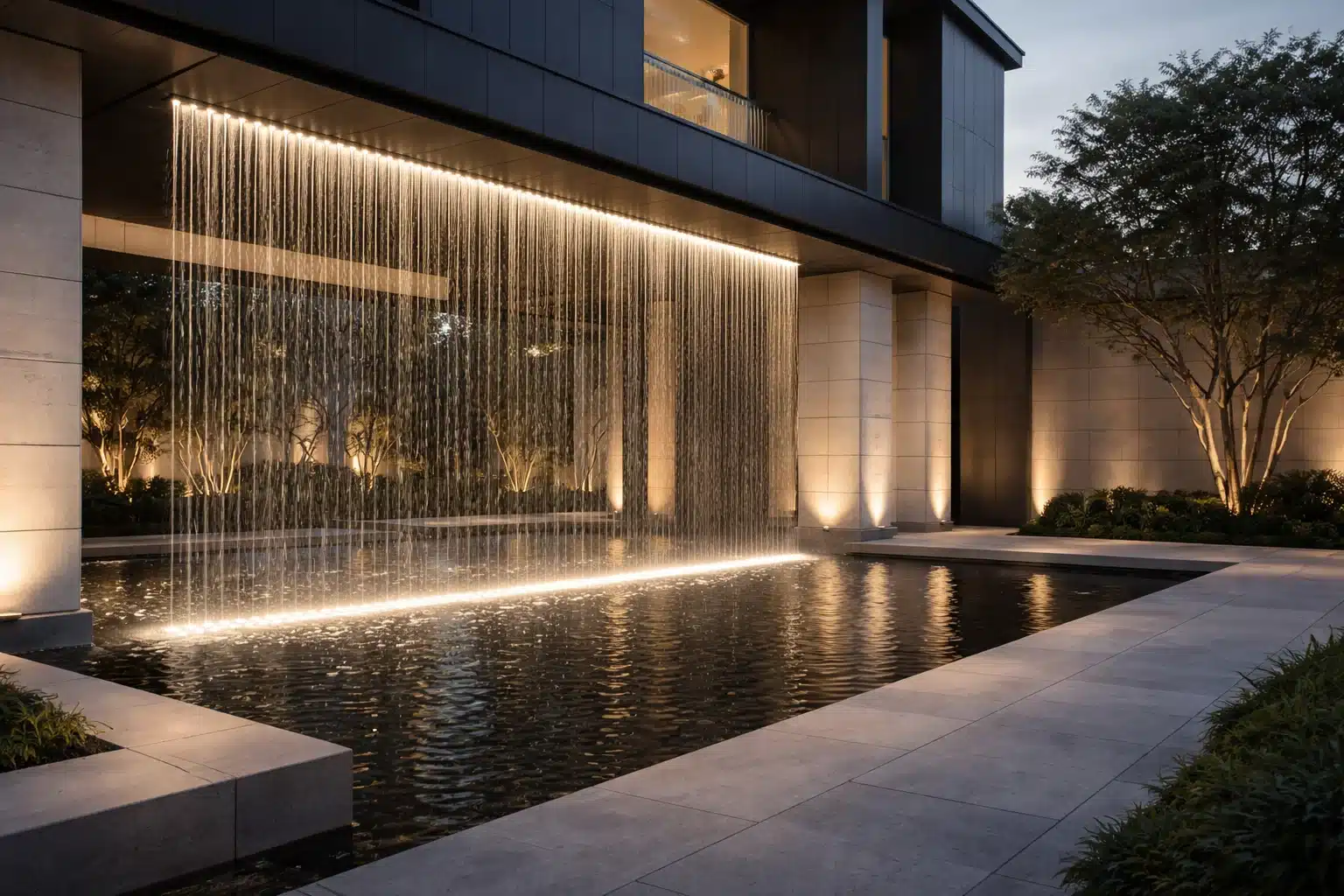
Controlled-Fountain-Motion

Precision Over Performance: Why Architects Favor Controlled Fountain Motion

Introduction: The Quiet Power of Control in Water Design

In the world of architectural design, there is an ongoing conversation about restraint versus spectacle. Nowhere is this more apparent than in the design of fountains and water features. While dramatic, high-shooting jets and choreographed water shows capture attention in public plazas and entertainment districts, architects increasingly favor a different approach, precision over performance.

Controlled fountain motion is becoming the hallmark of thoughtful architectural water design. Instead of overwhelming a space, these fountains complement it. They guide movement, frame sightlines, influence acoustics, and create calm, intentional experiences. From outdoor fountains in civic spaces to indoor water fountains in corporate lobbies, precision-driven design reflects a deeper understanding of how water interacts with architecture and people.

This article explores why architects prefer controlled fountain motion, how it shapes modern water features, and what this means for outdoor water fountains, indoor fountains, and emerging fountain typologies like rain curtain fountains and floor fountains.

The Evolution of Fountains in Architecture

From Monumental Spectacle to Human-Centered Design

Historically, fountains were symbols of power and abundance. Ancient Roman fountains celebrated engineering prowess and water access. Renaissance garden fountains showcased wealth through elaborate displays of moving water. In these eras, performance was the point.

Modern architecture, however, has shifted toward human-centered design. Today’s fountains are less about dominance and more about experience. Architects consider how water fountains influence circulation, mood, and usability. Controlled motion aligns perfectly with this philosophy.

The Rise of Minimalism and Precision

Minimalist architecture emphasizes clarity, proportion, and intention. In this context, uncontrolled water movement feels chaotic. Precision allows fountains to integrate seamlessly with materials like stone, glass, and steel.

Whether designing outdoor fountains for a museum plaza or indoor water fountains for a hospitality environment, architects value motion that is predictable, repeatable, and harmonious with the surrounding geometry.

Why Precision Matters More Than Performance

Water as an Architectural Material

Architects don’t see water fountains as decorative add-ons. They see water as a building material, one that reflects light, absorbs sound, and defines space. Like any material, it must be controlled.

A high-performance fountain may impress initially, but without precision, it can dominate a space or conflict with architectural intent. Controlled fountain motion ensures water behaves consistently, reinforcing the overall design narrative.

Spatial Clarity and Sightlines

Uncontrolled spray and dramatic arcs can obstruct views and create visual clutter. Precision allows architects to maintain clear sightlines across plazas, courtyards, and interior spaces.

For example:

  • Wall fountains provide vertical water movement without interrupting pedestrian flow.
  • Rain curtain water features define thresholds while remaining visually transparent.
  • Floor fountains can activate open plazas without permanent visual barriers.

Each relies on controlled motion to enhance, not overwhelm, the space.

The Psychology of Calm: How Controlled Fountains Shape Experience

Sound Design Through Water

One of the most overlooked aspects of fountain design is sound. Architects carefully tune water flow to produce specific acoustic effects.

  • Gentle laminar streams create a soft, meditative sound.
  • Sheet-flow wall fountains generate consistent white noise.
  • Rain curtain fountains produce a calming, rainfall-like ambiance.

Controlled motion ensures sound levels remain predictable and pleasant, especially in indoor fountains or high-traffic outdoor environments.

Reducing Sensory Overload

In public spaces already filled with visual and auditory stimuli, excessive fountain performance can contribute to sensory fatigue. Architects prefer water features that provide restorative calm.

Garden fountains, tabletop fountains, and indoor water fountains often rely on subtle motion to support relaxation rather than spectacle. Precision allows water to soothe rather than stimulate.

Outdoor Fountains: Precision in Open Environments

Wind, Weather, and Control

Outdoor water fountains face unpredictable conditions. Wind can distort spray patterns, causing water loss and discomfort. Precision-engineered fountains mitigate these challenges through laminar flow technology and low-profile designs.

Architects favor controlled motion because it:

  • Minimizes overspray
  • Reduces maintenance
  • Conserves water
  • Ensures year-round usability

This is especially important for outdoor fountains in urban plazas and commercial developments.

Outdoor Water Fountains as Place-Makers

Outdoor fountains often anchor public spaces. Their role is not to dominate but to define place. Controlled motion helps fountains act as spatial organizers, subtly guiding movement and gathering.

Floor fountains integrated into paving systems allow plazas to transform from active play spaces to open event areas. When off, they disappear entirely, something only precision design can achieve.

Indoor Water Fountains: Where Control Is Non-Negotiable

Precision Over Performance

Water and Architecture in Close Proximity

Indoor fountains demand absolute control. Unlike outdoor water features, there is no tolerance for splashing, misting, or unpredictability.

Architects specify:

  • Laminar jets
  • Sheet-flow wall fountains
  • Precisely metered pumps

This ensures indoor water fountains enhance air quality, acoustics, and aesthetics without compromising safety or comfort.

Corporate, Hospitality, and Healthcare Applications

In corporate offices, indoor fountains communicate stability and refinement. In hotels, they create memorable first impressions. In healthcare environments, controlled water motion supports stress reduction.

Tabletop fountains and small indoor fountains often use the same principles on a reduced scale, proving that precision matters regardless of size.

Garden Fountains: Tradition Meets Modern Control

Reimagining the Classic Garden Fountain

Garden fountains have long been associated with ornamentation. Today, architects and landscape designers reinterpret them through minimalist forms and controlled motion.

Instead of elaborate tiers and splashing basins, modern garden fountains may feature:

  • Single-point bubbling stones
  • Linear water rills
  • Low-flow reflecting basins

Precision allows these water features to coexist with planting schemes and hardscape elements without visual competition.

Sustainability in Landscape Design

Controlled fountain motion supports sustainable design goals. Lower flow rates reduce water consumption and energy use, making modern garden fountains more environmentally responsible.

Architects increasingly favor designs that balance beauty with resource efficiency.

Specialized Water Features: Precision as the Foundation

Rain Curtain Fountain and Rain Curtain Water Feature

Rain curtain fountains exemplify precision in water design. Thousands of evenly spaced streams create a delicate, curtain-like effect that appears solid yet permeable.

Architects use rain curtain water features to:

  • Define entrances
  • Separate spaces without walls
  • Create immersive sensory experiences

Without precise flow control, these features lose their visual coherence.

Wall Fountains and Vertical Expression

Wall fountains transform vertical surfaces into dynamic design elements. Sheet-flow systems rely on carefully engineered weirs to produce smooth, uninterrupted water sheets.

Architects favor wall fountains because they:

  • Save floor space
  • Control splash
  • Integrate with architectural elevations

Again, performance takes a back seat to precision.

Floor Fountains: Interactive Yet Controlled

The Illusion of Playful Freedom

Floor fountains are often interactive, inviting people to engage with water directly. However, their success depends on strict control.

Jets must:

  • Rise to consistent heights
  • Shut off instantly
  • Avoid unpredictable spray

Architects favor precision because it ensures safety while maintaining visual appeal. These outdoor fountains demonstrate that interactivity and control are not opposites—they are partners.

The Role of Technology in Controlled Fountain Motion

Advanced Pump and Nozzle Systems

Modern fountains rely on highly specialized equipment. Variable-speed pumps, laminar nozzles, and digital controllers allow architects to specify exact flow characteristics.

This technology enables:

  • Consistent water patterns
  • Easy maintenance
  • Adaptability to different environments

Precision is no longer a limitation, it’s an opportunity.

Smart Water Features

As smart building systems evolve, water features are increasingly integrated into centralized controls. Indoor fountains and outdoor water fountains can adjust flow based on occupancy, weather, or time of day.

Architects favor this level of control because it aligns with broader trends in intelligent, responsive design.

Precision as a Reflection of Architectural Values

Design Integrity Over Showmanship

Architects are trained to think holistically. Every element must serve a purpose. Controlled fountain motion reflects this mindset, it supports the architecture rather than competing with it.

Performance-driven fountains often belong in entertainment contexts. Precision-driven fountains belong in architecture.

Timelessness Through Restraint

Trends change, but restraint endures. Controlled water features age gracefully, maintaining relevance long after dramatic fountain shows feel dated.

From indoor fountains in cultural institutions to outdoor fountains in civic spaces, precision ensures longevity.

Choosing the Right Fountain for Architectural Projects

Matching Motion to Context

Architects don’t reject performance entirely, they deploy it selectively. The key is matching fountain motion to context.

  • Public squares: Controlled floor fountains
  • Lobbies: Wall fountains or indoor water fountains
  • Gardens: Minimalist garden fountains
  • Thresholds: Rain curtain fountain installations

Precision ensures each water feature fulfills its role effectively.

Collaboration Between Designers and Engineers

Successful fountain design requires close collaboration. Architects define intent; engineers deliver control. This partnership is what makes precision possible.

The Future of Architectural Fountains

As cities grow denser and sustainability becomes more critical, architects will continue to favor controlled fountain motion. Water features will become quieter, smarter, and more integrated into the built environment.

Expect to see:

  • More indoor fountains in wellness-focused spaces
  • Outdoor water fountains that double as infrastructure
  • Increased use of rain curtain water features as spatial dividers

Performance will always have a place, but precision will define the future.

Conclusion: Why Precision Will Always Win

Fountains are no longer about how high the water can rise. They’re about how thoughtfully it can move. Architects favor controlled fountain motion because it aligns with the core principles of good design: clarity, purpose, and harmony.

From tabletop fountains to expansive outdoor fountains, precision transforms water into an architectural language, one that speaks softly but powerfully.

FAQs:

Architects prioritize controlled fountain motion because it supports spatial clarity, acoustic comfort, sustainability, and long-term design integrity.
Yes. Controlled motion is essential for indoor water fountains and equally valuable for outdoor fountains where wind, safety, and maintenance are concerns.
Wall fountains, rain curtain fountains, floor fountains, garden fountains, and indoor fountains all rely heavily on precise water control to function effectively.