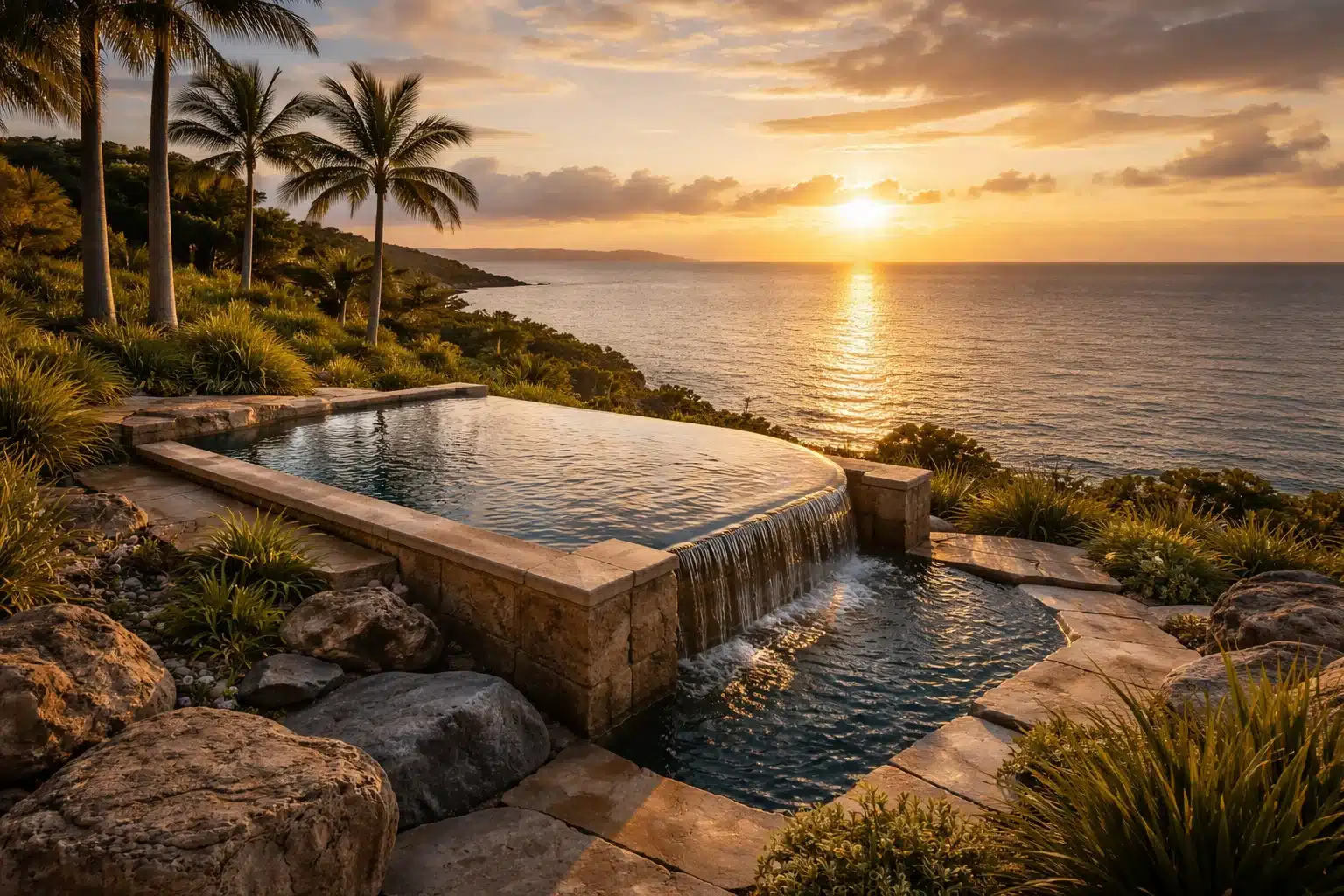
Introduction: Where Isolation Meets Artful Water Design
Private islands represent the pinnacle of exclusivity. Removed from crowds, traffic, and the noise of everyday life, they offer a rare opportunity to experience nature in its purest form, while still enjoying world-class luxury. Within these secluded environments, water features and fountains play a unique and powerful role. They are not simply decorative elements; they become emotional anchors, architectural statements, and sensory experiences that define the island itself.
Designing fountains for private islands is vastly different from installing water features in urban homes, hotels, or public spaces. On an island, every design decision must respond to nature, isolation, sustainability, logistics, and long-term self-sufficiency. Salt air, limited utilities, fragile ecosystems, and the desire for privacy all shape how water features are imagined and executed.
This in-depth guide explores how private island fountains are designed, from conceptual inspiration to engineering challenges and maintenance strategies. Whether the vision is a dramatic ocean-facing fountain, a tranquil lagoon centerpiece, or a minimalist reflecting pool nestled into the landscape, the goal remains the same: to enhance the sense of escape while respecting the island’s natural soul.
The Role of Water Features in Secluded Island Living
Water is already omnipresent on an island, so why add more? The answer lies in control, contrast, and intention.
Natural oceans and lagoons are powerful but unpredictable. Designed water features, on the other hand, offer curated calm. They introduce rhythm, symmetry, and human artistry into an otherwise wild environment.
Emotional and Psychological Impact
Fountains create a sense of grounding. The sound of gently moving water masks wind noise, softens silence, and induces relaxation. For island owners seeking refuge from high-pressure lives, these subtle sensory benefits are invaluable.
Visual Anchors in Open Landscapes
Islands often feature wide, open views with few built landmarks. A thoughtfully placed fountain can:
- Serve as a focal point for villas or pavilions
- Guide sightlines toward the sea or sky
- Define outdoor “rooms” without walls
Enhancing Privacy Without Barriers
Moving water provides acoustic privacy. Strategically placed fountains can reduce sound travel between guest villas, beaches, and communal areas, maintaining seclusion without fences or dense structures.
Understanding the Island Environment Before Designing
Designing a fountain on a private island begins long before sketches or materials are selected. It starts with deep environmental understanding.
Climate and Weather Exposure
Island fountains must withstand:
- High humidity
- Salt-laden air
- Strong winds
- Intense UV exposure
- Tropical storms or monsoons
These factors influence everything from pump selection to surface finishes.
Saltwater vs. Freshwater Considerations
Some island fountains use desalinated freshwater, while others integrate filtered seawater systems. Each option has trade-offs:
- Freshwater: Easier on equipment, better for plants, higher operational costs
- Saltwater: Lower freshwater demand, higher corrosion risk, specialized components
Ecological Sensitivity
Private islands often sit within protected marine or terrestrial ecosystems. Designers must ensure:
No chemical runoff enters surrounding waters
- Lighting does not disrupt wildlife
- Water circulation does not alter natural drainage patterns
- Responsible fountain design enhances the island without harming its environment.
Fountain Styles Suited for Private Islands
Not all fountain styles belong in island settings. The most successful designs feel organic, timeless, and site-specific.
Naturalistic Rock and Lagoon Fountains
These designs mimic nature, blending seamlessly into the landscape. They often feature:
- Cascading stone waterfalls
- Hidden jets
- Irregular basins that resemble tide pools
Ideal for islands prioritizing harmony with nature over architectural dominance.
Contemporary Minimalist Fountains
For modern private islands, clean lines and restraint create elegance:
- Reflecting pools with subtle overflow edges
- Linear rill fountains guiding movement through spaces
- Low-profile jets that emphasize water texture
- Minimalist designs excel near luxury villas and contemporary architecture.
Ocean-Facing Statement Fountains
These dramatic installations are designed to dialogue with the horizon:
- Infinity-edge fountains merging visually with the sea
- Elevated jets silhouetted against sunsets
- Sculptural water features framed by open sky
They are often positioned at arrival points, main residences, or ceremonial spaces.
Cultural and Artistic Water Features
Some private islands incorporate fountains inspired by:
- Asian Zen gardens
- Middle Eastern courtyards
- Mediterranean villas
- Indigenous island traditions
These fountains become storytelling elements, reflecting the owner’s identity or the island’s heritage.
Strategic Placement: Where Water Belongs on an Island
Placement is just as important as design. On an island, water features should enhance movement and experience, not compete with nature.
Arrival Zones and Docks
First impressions matter. A fountain near a dock or helipad:
- Signals luxury and intention
- Creates a sense of ceremony
- Helps guests transition from travel to tranquility
Central Courtyards and Communal Spaces
In shared areas, fountains:
- Encourage gathering
- Create orientation points
- Balance open space with intimacy
Private Villa Gardens
Here, fountains become personal sanctuaries:
- Small-scale water walls for meditation
- Reflecting pools outside bedrooms
- Soft bubbling features for nighttime ambiance
Cliff Edges and Viewpoints
These locations require precise engineering but deliver extraordinary impact. Wind patterns, splash control, and safety barriers must be carefully addressed.
Engineering Challenges Unique to Private Islands
Designing fountains in isolation presents logistical hurdles rarely encountered on the mainland.
Power Supply Limitations
Many private islands rely on:
- Solar energy
- Wind turbines
- Hybrid generator systems
Fountain systems must be energy-efficient, with variable-speed pumps and smart controls to reduce consumption.
Water Availability and Recycling
Freshwater is often produced through desalination. As a result:
- Closed-loop systems are essential
- Evaporation losses must be minimized
- Rainwater harvesting may be integrated
Sustainability is not optional, it’s survival.Transportation and Installation Logistics.
Every component must be shipped by boat or air:
- Modular designs reduce transport challenges
- Durable materials prevent costly replacements
- Local labor capabilities influence construction methods
Designers must think not only creatively but pragmatically.

Materials That Thrive in Island Conditions
Material selection determines the lifespan of a private island fountain.
Stone and Natural Materials
Best options include:
- Granite
- Basalt
- Dense limestone
These resist erosion and age gracefully in marine environments.
Metals and Finishes
Stainless steel must be marine-grade (316 or higher). Bronze and copper develop attractive patinas but require careful detailing to avoid staining.
Concrete and Composites
High-performance concrete with proper sealants offers flexibility in form while resisting salt intrusion when engineered correctly.
Avoiding Vulnerable Materials
Soft stones, untreated steel, and low-grade plastics often fail prematurely in island conditions and should be avoided.
Sustainability and Eco-Conscious Fountain Design
Modern private island owners increasingly prioritize sustainability, not just for ethics, but for long-term viability.
Energy-Efficient Systems
Key strategies include:
- Solar-powered pumps
- Motion-activated features
- Programmable flow schedules
Chemical-Free Water Treatment
Natural filtration systems using:
- UV sterilization
- Biological filters
- Ozone treatment
These reduce environmental risk and maintenance demands.
Wildlife-Friendly Design
Fountains should avoid:
- Excessive nighttime lighting near nesting areas
- Loud or erratic water movement
- Designs that trap birds or small animals
Responsible design enhances coexistence.
- Maintenance in Remote Locations
- Maintenance planning begins at the design stage.
- Low-Intervention Design Philosophy
The best private island fountains:
- Have fewer moving parts
- Use robust, proven technology
- Allow easy access to pumps and filters
Remote Monitoring and Automation
Smart systems enable:
- Real-time diagnostics
- Automated alerts
- Reduced need for specialist visits
- Training Local Staff
Designers often provide documentation and training so on-island staff can manage routine upkeep without external support.
Integrating Fountains with Architecture and Landscape
Successful island fountains feel inevitable, as though they always belonged there.
Collaboration Across Disciplines
Architects, landscape designers, engineers, and fountain specialists must collaborate early to:
- Align elevations
- Coordinate drainage
- Integrate lighting and planting
Blurring Indoor and Outdoor Boundaries
Water features often bridge spaces:
- Courtyard fountains visible from interior rooms
- Pools that extend visually into fountains
- Water walls that cool adjacent living areas
This seamless integration enhances the feeling of immersion.
Lighting and Nighttime Ambiance
At night, fountains transform into living sculptures.
Subtlety Over Spectacle
Private islands favor:
- Warm white or amber lighting
- Low-intensity illumination
- Hidden fixtures
The goal is atmosphere, not performance.
Safety and Navigation
Softly lit fountains help define paths, edges, and elevation changes without overwhelming the darkness.
The Emotional Value of Private Island Fountains
Beyond engineering and aesthetics, fountains deliver something intangible: presence.
They slow time. They encourage reflection. They remind island residents and guests that luxury is not about excess, but about intention, balance, and serenity.
A well-designed fountain does not compete with the ocean. It complements it, offering a quieter voice in a vast natural conversation.
Conclusion: Designing Water That Belongs
Private island fountains are not accessories. They are expressions of philosophy, about how humans coexist with nature, how luxury can be restrained, and how design can elevate solitude rather than interrupt it.
When executed thoughtfully, these water features become timeless elements of the island itself. They weather storms, reflect changing skies, and quietly serve their purpose: transforming isolation into sanctuary.
In the end, the best private island fountains do not announce themselves loudly. They whisper, just like the islands they inhabit.
FAQs:
Natural stone fountains and marine-grade stainless steel systems perform best, as they resist corrosion and weathering caused by salt exposure.