...
477.1.Protected-Fountain-Finishes

Protecting Fountain Finishes in Coastal Commercial Developments

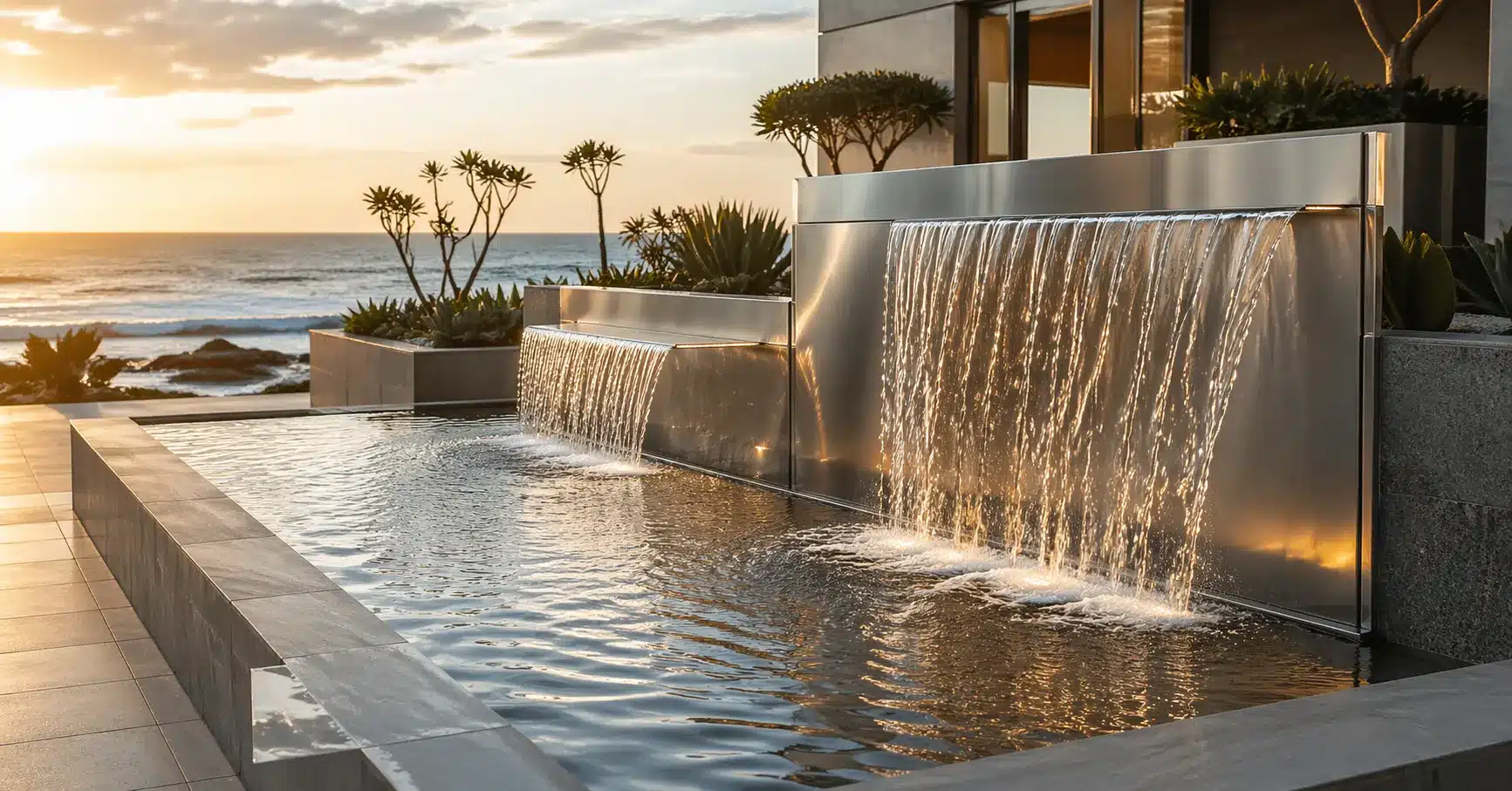
Coastal commercial developments have a magnetic quality, salt air, ocean views, and a relaxed atmosphere that draws people in. It’s no surprise that fountains and curated water features play a central role in elevating these environments. From dramatic entry plazas with outdoor water fountains to serene courtyards featuring modern installations, water enhances both aesthetics and property value.

But here’s the reality: coastal environments are brutal on materials.

Salt spray, high humidity, UV exposure, and wind-driven sand combine into a perfect storm that accelerates wear, corrosion, and surface degradation. Without proper planning and protection, even the most stunning outdoor fountains can quickly lose their finish, turning from a centerpiece into a liability.

This guide breaks down how to protect fountain finishes in coastal commercial settings, covering materials, coatings, maintenance strategies, and design decisions that extend lifespan while preserving visual impact.

Why Coastal Environments Are So Harsh on Fountains

Before diving into solutions, it’s worth understanding the problem.

Salt-laden air is the primary culprit. When microscopic salt particles settle on fountain surfaces, they attract moisture and create a thin film that accelerates oxidation and corrosion. Add UV radiation and fluctuating temperatures, and finishes begin to break down much faster than in inland environments.

Key stress factors include:

    • Salt corrosion: Especially damaging to metals like steel, bronze, and aluminum
    • UV degradation: Causes fading, cracking, and breakdown of protective coatings
    • Humidity: Encourages mold, mineral buildup, and surface staining
    • Wind abrasion: Sand and debris can physically wear down finishes

For commercial developers, this isn’t just a maintenance issue—it’s a branding and cost issue. A poorly maintained fountain reflects directly on the property’s perceived quality.

Choosing the Right Materials from the Start

Protection begins long before installation. Material selection is the first—and arguably most important, decision.

1. Marine-Grade Stainless Steel

Not all stainless steel is equal. In coastal environments, 316 marine-grade stainless steel is the standard. It contains molybdenum, which significantly improves resistance to salt corrosion.

Why it works:

    • Excellent corrosion resistance
    • Sleek, modern aesthetic (ideal for contemporary water features)
    • Low maintenance compared to other metals

Where it fits:

    • Architectural wall fountains
    • Modern plaza installations
    • Linear and minimalist designs

2. Powder-Coated Aluminum

Aluminum naturally resists corrosion, and when paired with a high-quality powder coating, it becomes even more durable.

Benefits:

    • Lightweight yet strong
    • Resistant to rust
    • Customizable finishes for branding and design consistency

This is a strong choice for large-scale outdoor water fountains where weight and structural load matter.

3. Natural Stone (With Proper Sealing)

Stone remains a timeless option for garden fountains and traditional installations. However, not all stone performs equally near the ocean.

Best options:

    • Granite
    • Dense limestone
    • Engineered stone composites

Critical step: sealing. Without a high-performance sealer, stone can absorb saltwater and develop staining, efflorescence, or surface breakdown.

4. High-Density Concrete and GFRC

Glass Fiber Reinforced Concrete (GFRC) offers durability with design flexibility. It’s widely used in custom outdoor fountains because it can mimic stone while reducing weight.

Advantages:

    • Resistant to cracking
    • Can be sealed effectively
    • Suitable for complex, sculptural forms

Protective Coatings: Your First Line of Defense

Even the best materials need protection. Coatings act as a barrier between the environment and the surface.

Powder Coating Systems

For metals, powder coating is often the go-to solution.

What makes it effective:

    • Thick, even application
    • Strong adhesion
    • Resistance to chipping and fading

In coastal settings, a multi-layer system is recommended:

    • Zinc-rich primer (for corrosion resistance)
    • Epoxy intermediate layer
    • UV-resistant polyester topcoat

Clear Protective Sealants

Used primarily on stone and concrete, sealants prevent water and salt penetration.

Types to consider:

    • Penetrating sealers (invisible, breathable)
    • Film-forming sealers (adds a protective layer on top)

For commercial water features, penetrating sealers are often preferred because they maintain the natural look while offering protection.

Specialty Coatings for Metal Finishes

For high-end finishes like bronze or custom patinas, wax coatings and clear lacquers are commonly used.

However, in coastal environments:

    • Wax requires frequent reapplication
    • Lacquers must be marine-grade to avoid peeling

Design Considerations That Extend Finish Life

Protection isn’t just about materials and coatings, it’s also about smart design.

Minimize Water Splash and Drift

Wind-driven spray spreads saltwater across surfaces that wouldn’t otherwise be exposed.

Design solutions:

    • Lower fountain heights in high-wind areas
    • Use wind sensors to adjust flow rates
    • Incorporate splash guards or recessed basins

Optimize Drainage

Standing water accelerates damage.

Ensure:

    • Proper slope for runoff
    • No pooling on horizontal surfaces
    • Efficient basin drainage systems

Strategic Placement

Positioning matters more than most people realize.

Avoid:

    • Direct exposure to prevailing ocean winds
    • Placement near sandy pathways or beaches

When possible, use landscaping or architectural elements as wind buffers.

Protecting Fountain Finishes in Coastal Commercial Developments

Maintenance: The Make-or-Break Factor

Even the best-designed outdoor water fountains will fail prematurely without consistent maintenance.

Routine Cleaning

Salt buildup must be removed regularly.

Recommended schedule:

    • Weekly rinse with fresh water
    • Monthly deep cleaning using mild, non-abrasive cleaners

Avoid:

    • Harsh chemicals
    • Pressure washing on delicate finishes

Inspection and Early Intervention

Small issues escalate quickly in coastal conditions.

Look for:

    • Early signs of corrosion
    • Coating wear or peeling
    • Mineral deposits

Addressing these early can prevent costly repairs.

Recoating and Resealing

Protective layers don’t last forever.

Typical timelines:

    • Sealants: every 1–3 years
    • Powder coatings: 5–10 years depending on exposure
    • Wax coatings: every few months

Special Considerations for Signature Features

Some installations demand extra attention due to their design complexity or visibility.

Rain Curtain Fountain Systems

A rain curtain fountain or rain curtain water feature creates a dramatic visual effect with flowing sheets of water. However, these systems are particularly vulnerable in coastal environments.

Challenges:

    • Thin water streams increase evaporation and salt concentration
    • Metal frames are constantly exposed

Solutions:

    • Use marine-grade stainless steel
    • Apply high-performance coatings
    • Implement frequent maintenance cycles

Mixed-Material Designs

Modern commercial projects often combine metal, stone, and glass.

The challenge:

    • Different materials react differently to salt exposure.

The solution:

    • Use compatible coatings
    • Avoid galvanic corrosion (when dissimilar metals interact)
    • Design for easy maintenance access

Balancing Aesthetics and Durability

Developers and designers often face a trade-off: visual appeal vs. long-term durability.

The good news? You don’t have to choose.
By selecting the right materials and finishes, you can achieve both:

    • Sleek, modern wall fountains that resist corrosion
    • Natural stone garden fountains that maintain their texture and color
    • Statement water features that remain pristine for years

The key is aligning design intent with environmental realities.

The Cost of Not Protecting Fountain Finishes

Cutting corners upfront leads to higher costs later.

Common consequences:

    • Frequent repairs and recoating
    • Premature replacement
    • Negative impact on tenant and visitor perception

In commercial developments, first impressions matter. A deteriorating fountain sends the wrong message, especially in premium coastal properties.

Future Trends in Coastal Fountain Protection

The industry continues to evolve, with new technologies improving durability and reducing maintenance.

Emerging trends include:

    • Advanced nano-coatings for superior protection
    • Self-cleaning surfaces that resist mineral buildup
    • Smart monitoring systems for water quality and flow control

These innovations are making it easier to maintain high-end outdoor fountains even in the toughest environments.

Final Thoughts

Protecting fountain finishes in coastal commercial developments isn’t optional, it’s essential.

From material selection to maintenance planning, every decision plays a role in how well a fountain withstands the elements. The most successful projects take a proactive approach, integrating durability into the design rather than treating it as an afterthought.

When done right, water fountains and architectural water features don’t just survive in coastal environments, they thrive, becoming lasting focal points that elevate the entire property.

FAQs:

Marine-grade stainless steel (316) and properly sealed stone or GFRC are among the best choices due to their resistance to salt corrosion and durability.
Light cleaning should be done weekly, with deeper maintenance monthly. Protective coatings and sealants should be inspected annually and reapplied as needed.
Yes, but they require specialized materials, coatings, and more frequent maintenance to handle increased exposure to salt and moisture.
SPRING SALE: 10% OFF ALL PRODUCTS
Use Code: MAY10 | Ends MAY 31