...
Public-Fountain

Public Fountains as Landmarks in Transit-Oriented Developments

Introduction: Water, Movement, and the Modern City

Cities have always been shaped by movement, of people, goods, and ideas. In today’s era of transit-oriented developments (TODs), that movement is increasingly centered around rail stations, bus hubs, and walkable urban cores designed to reduce car dependence and foster vibrant, mixed-use neighborhoods. Yet while transit infrastructure provides the skeleton of these developments, it is public space design that gives them life and identity.

Among the most powerful, and often underappreciated, elements of public space are fountains. From dramatic outdoor water fountains anchoring plazas to immersive rain curtain water features integrated into station architecture, fountains serve as both functional and symbolic landmarks. They cool microclimates, mask urban noise, invite social interaction, and, perhaps most importantly, help people remember where they are.

This article explores how public fountains function as landmarks in transit-oriented developments, examining their historical role, psychological impact, design typologies, economic value, sustainability considerations, and future potential. Along the way, we’ll also look at how related elements like wall fountains, floor fountains, indoor water fountains, and even smaller-scale tabletop fountains contribute to a cohesive water narrative across TOD environments.

Understanding Transit-Oriented Development (TOD)

What Is a Transit-Oriented Development?

A transit-oriented development is a compact, walkable, mixed-use community centered around high-quality public transportation. Key characteristics include:

  • High-density residential and commercial uses
  • Easy access to rail, bus, or light-rail stations
  • Pedestrian- and cyclist-friendly streets
  • Reduced reliance on private vehicles
  • Strong emphasis on public spaces and placemaking

TODs aim to make daily life more efficient and sustainable, but efficiency alone does not guarantee success. People must want to spend time there.

Why Landmarks Matter in TODs

Transit hubs can be confusing, overwhelming, and impersonal. Landmarks help people orient themselves spatially and emotionally. A well-designed public fountain becomes:

  • A meeting point (“Let’s meet by the fountain”)
  • A visual anchor in dense urban fabric
  • A symbol of civic pride and neighborhood identity

In this context, water features are not decorative afterthoughts, they are strategic placemaking tools.

The Historical Role of Fountains as Urban Landmarks

From Ancient Cities to Modern Transit Hubs

Fountains have marked important urban places for thousands of years:

  • In Ancient Rome, fountains signaled access to fresh water and public life
  • In Islamic cities, garden fountains symbolized paradise and order
  • In Renaissance Europe, monumental fountains celebrated power and artistry

Historically, fountains were placed where people gathered: markets, crossroads, and civic centers. Modern TODs, by design, recreate these same conditions of density and movement, making them a natural home for iconic outdoor fountains.

Continuity in Contemporary Design

While materials and technologies have evolved, the underlying purpose remains the same: fountains draw people in, slow them down, and give meaning to space. In transit-oriented developments, they bridge the gap between ancient urban wisdom and contemporary mobility needs.

Why Public Fountains Work So Well in Transit-Oriented Developments

1. Visual Identity and Wayfinding

A distinctive fountain is instantly recognizable. In large TOD districts with multiple buildings and transit entrances, a central outdoor water fountain helps users orient themselves without signage overload. For example:

  • A rain curtain fountain at a station entrance signals arrival
  • A linear water feature along a pedestrian axis guides movement
  • A sculptural fountain in a plaza marks the heart of the development

People remember places visually, and water is one of the strongest visual cues available.

2. Social Gravity and Placemaking

Fountains naturally attract people. Children play, commuters pause, and visitors take photos. This social magnetism is invaluable in TODs, where the goal is to transform transit riders into active participants in urban life. Plazas anchored by outdoor water fountains consistently show:

  • Longer dwell times
  • Increased foot traffic to adjacent retail
  • More spontaneous social interaction

3. Emotional Comfort in High-Movement Environments

Transit environments can be stressful. The sound of moving water has a proven calming effect, helping counterbalance noise from trains, buses, and crowds. Water features create sensory relief, making TODs feel more human and welcoming.

Typologies of Fountains in Transit-Oriented Developments

Outdoor Fountains: The Primary Landmark

Large-scale outdoor fountains are the most visible and impactful elements in TODs. These often include:

  • Interactive splash fountains in public plazas
  • Sculptural statement fountains near station entrances
  • Reflecting pools integrated with surrounding architecture

Because TODs emphasize walkability, outdoor water fountains must be designed for durability, safety, and year-round visual interest.

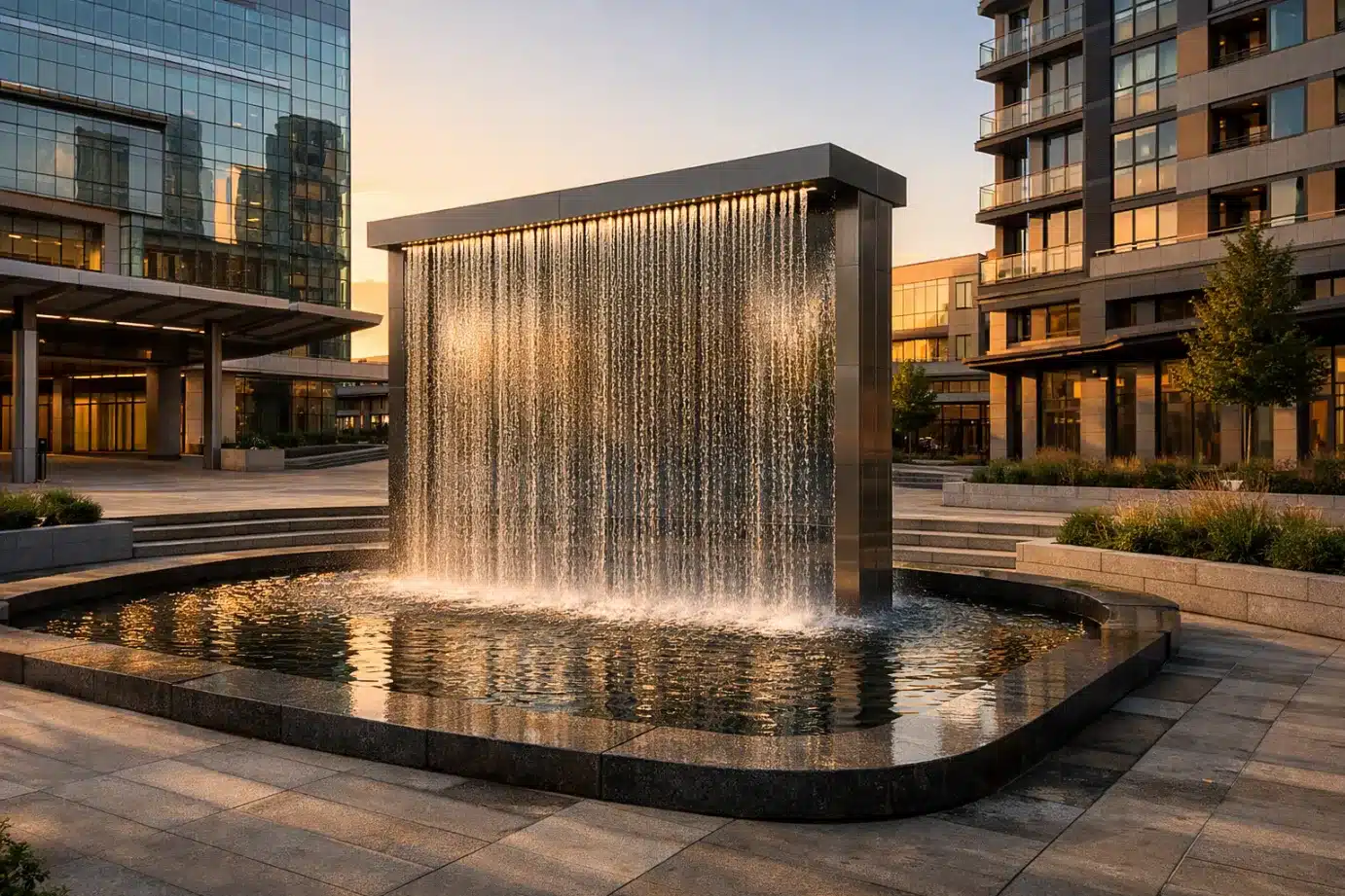
Rain Curtain Fountain and Rain Curtain Water Feature

A rain curtain fountain is particularly effective in transit settings. These vertical sheets of water can be:

  • Integrated into station canopies or facades
  • Used as thresholds between indoor and outdoor space
  • Designed to be passable, creating immersive experiences

A rain curtain water feature provides drama without occupying large footprints, making it ideal for dense TOD sites.

Floor Fountains in Pedestrian Plazas

Floor fountains, where water jets emerge flush with the pavement, are increasingly popular in TODs because they:

  • Maintain clear sightlines
  • Allow flexible use of space when water is off
  • Encourage interaction, especially for families

These fountains transform transit plazas from pass-through zones into destinations.

Wall Fountains and Vertical Water Features

In space-constrained TODs, wall fountains offer elegance without sacrificing circulation. They are commonly used in:

  • Station forecourts
  • Mixed-use building facades
  • Transitional corridors

Wall fountains also pair well with seating and landscaping, enhancing microclimates.

Indoor Water Fountains in Transit Buildings

While often overlooked, indoor water fountains can be powerful landmarks inside transit stations, mixed-use lobbies, and commercial concourses. Benefits include:

  • Improved acoustics
  • Enhanced passenger experience
  • Continuity of water themes from exterior to interior

Indoor fountains often complement tabletop fountains or scaled-down sculptural pieces in adjacent spaces.

Public Fountains

The Role of Smaller-Scale Fountains in the TOD Ecosystem

Garden Fountains in Residential Components

Many TODs include residential courtyards and rooftop amenities. Garden fountains in these semi-private spaces reinforce the overall identity of the development while offering residents tranquility away from transit bustle.

Tabletop Fountains and Interior Design Continuity

In cafes, coworking spaces, and leasing offices within TODs, tabletop fountains and small indoor features echo the larger public fountains outside. This layered approach strengthens brand cohesion and sensory continuity across scales.

Economic and Real Estate Value of Fountains in TODs

Increased Property Value and Leasing Appeal

Developments with iconic water features consistently show:

  • Higher residential rents
  • Faster commercial leasing
  • Stronger long-term asset value

Public fountains signal investment, care, and permanence, qualities that appeal to tenants and investors alike.

Retail and Hospitality Benefits

Retail spaces near outdoor water fountains benefit from increased foot traffic and longer dwell times. Restaurants, cafes, and hotels often orient outdoor seating toward water features to capitalize on their ambiance.

Branding and Market Differentiation

In competitive urban markets, a distinctive fountain becomes a recognizable symbol of the development. Photos shared on social media amplify visibility, turning fountains into organic marketing assets.

Sustainability and Water Management in Modern Fountains

Responsible Water Use

Modern water fountains are designed with sustainability in mind, using:

  • Closed-loop circulation systems
  • Advanced filtration and treatment
  • Minimal evaporation designs

These systems ensure that fountains remain environmentally responsible even in water-conscious regions.

Climate Resilience and Microclimate Benefits

In hot climates, fountains help reduce urban heat island effects by cooling surrounding air. Strategically placed outdoor water fountains improve comfort in transit plazas, encouraging walking and outdoor activity.

Integration with Green Infrastructure

Many TODs integrate fountains with rainwater harvesting, bioswales, and landscape irrigation systems. A rain curtain water feature, for example, can double as a visual expression of sustainable water management.

Design Best Practices for Fountains in Transit-Oriented Developments

  • Align Fountain Design with Transit Flow: Fountains should enhance, not obstruct, movement. Successful designs respect pedestrian desire lines, maintain clear sightlines to transit entrances, and use water sound to guide, not overwhelm.
  • Design for All Seasons: In colder climates, fountains should remain visually engaging even when water is off, through sculpture, lighting, or architectural integration.
  • Prioritize Safety and Accessibility: Non-slip surfaces, shallow basins, and ADA-compliant access are essential, especially in high-traffic transit environments.

The Future of Fountains in Transit-Oriented Developments

As cities continue to densify and prioritize transit, the role of fountains will only grow. Emerging trends include:

  • Interactive digital water features with lighting and sensors
  • Art-driven fountains co-created with local communities
  • Multi-functional water features that combine seating, shading, and play

In future TODs, fountains will not simply decorate space, they will define it.

Conclusion: Water as the Heartbeat of Transit-Centered Places

Transit-oriented developments succeed when they balance efficiency with experience. Public fountains, from monumental outdoor fountains to immersive rain curtain fountains and elegant wall fountains, offer a timeless way to humanize high-density, high-movement environments.

They anchor space, tell stories, and create moments of pause in the rush of daily life. In doing so, fountains transform TODs from transit nodes into true urban destinations—places people recognize, remember, and return to.

FAQs:

Fountains act as landmarks, improve wayfinding, enhance public spaces, and create calming, attractive environments in busy transit areas.
Outdoor fountains, rain curtain water features, floor fountains, wall fountains, and indoor water fountains are all effective, depending on space and context.
Yes. Modern water fountains use closed-loop systems, efficient filtration, and sustainable design strategies to minimize water and energy use.