...
465.1.Reinforced-Concrete-VS-Natural-Stone

When to Choose Reinforced Concrete Over Natural Stone for Fountains and Water Features

Water has always been one of the most powerful elements in landscape design. From grand architectural installations to small decorative pieces, fountains and water features bring movement, sound, and tranquility to spaces of every size. Whether you are designing outdoor fountains, installing indoor water fountains, or creating a dramatic rain curtain water feature, choosing the right material is essential for durability, aesthetics, and long-term maintenance.

Two of the most common materials used in the construction of water fountains are natural stone and reinforced concrete. Natural stone has a long history in architecture and landscape design, prized for its organic beauty and timeless appeal. Reinforced concrete, however, has become increasingly popular in modern projects due to its structural strength, flexibility in design, and cost efficiency.

While both materials can create stunning garden fountains, wall fountains, floor fountains, or decorative tabletop fountains, there are many situations where reinforced concrete offers significant advantages over natural stone.

In this guide, we’ll explore when reinforced concrete becomes the better choice and how it can elevate the design and performance of both indoor and outdoor water features.

Understanding Reinforced Concrete in Fountain Construction

Reinforced concrete combines standard concrete with internal reinforcement materials, typically steel rebar or mesh. This reinforcement increases the tensile strength of the structure and allows it to support heavier loads or complex shapes.

In the context of water fountains and water features, reinforced concrete is often used for:

  • Structural basins
  • Large sculptural fountain elements
  • Custom wall fountains
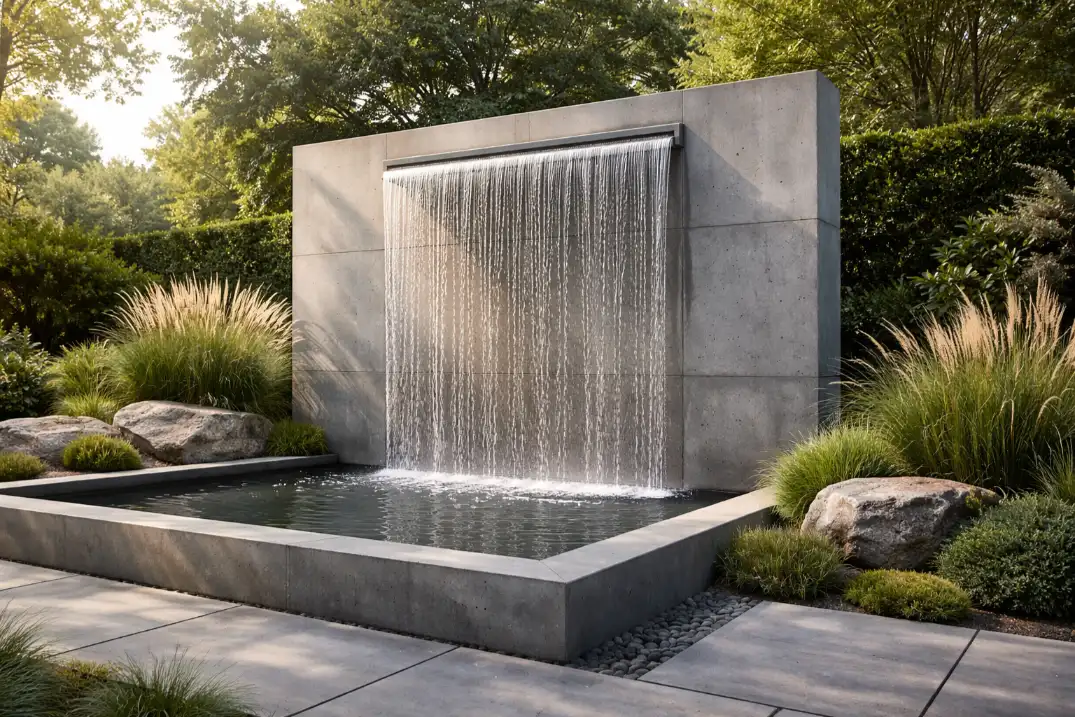
  • Modern rain curtain fountain installations
  • Large-scale outdoor water fountains
  • Architectural floor fountains in commercial spaces

The material can be molded, carved, polished, textured, or finished to resemble stone, metal, or other materials. This versatility makes reinforced concrete an increasingly preferred option for designers and architects.

The Appeal of Natural Stone in Water Features

Natural stone has been used in fountains for centuries. Marble fountains in ancient Rome, limestone basins in European gardens, and carved granite features in Asian landscapes all highlight the elegance of this material.

Natural stone offers:

  • Unique organic textures
  • Natural color variations
  • Historical and traditional aesthetics
  • Prestige in luxury landscaping

However, despite its beauty, natural stone can introduce limitations in certain projects. Weight, cost, availability, and structural challenges often lead designers to consider reinforced concrete as a more practical alternative.

1. When Structural Strength Is Critical

One of the most important reasons to choose reinforced concrete over natural stone is structural performance.

Large outdoor water fountains or architectural water features must withstand:

  • Water pressure
  • Structural loads
  • Environmental stress
  • Continuous moisture exposure

Natural stone, while durable, can crack or fracture under certain conditions, especially when cut into thin or intricate shapes.

Reinforced concrete distributes stress more effectively thanks to internal reinforcement. This allows designers to create:

  • Large garden fountains with deep basins
  • Tall vertical wall fountains
  • Heavy floor fountains in public spaces
  • Complex rain curtain fountain installations

For commercial developments, hotels, and public plazas, reinforced concrete offers a level of structural reliability that natural stone sometimes cannot match.

2. When Designing Large Outdoor Water Fountains

Scale is another major factor.

Large outdoor fountains often require substantial structural support. Natural stone blocks can become extremely heavy and difficult to transport or install.

Reinforced concrete offers advantages such as:

  • Custom shapes poured on site
  • Reduced structural weight
  • Integrated plumbing channels
  • Lower transportation costs

For expansive landscape projects featuring garden fountains or multi-tier water fountains, reinforced concrete provides flexibility and practicality.

Additionally, concrete allows seamless integration of lighting systems, pump housing, and filtration systems within the structure of the fountain.

3. When You Need Custom Shapes and Modern Designs

Contemporary architecture often calls for clean lines and custom forms that are difficult to achieve with natural stone.

Reinforced concrete can be cast into nearly any shape, making it ideal for modern water features such as:

  • Minimalist wall fountains
  • Geometric floor fountains
  • Sculptural rain curtain water feature installations
  • Thin cascading water walls

Designers can create sleek panels for indoor fountains, curved basins for garden fountains, or sculptural installations that combine art with water movement.

Natural stone, by contrast, often requires extensive carving, which increases cost and limits design flexibility.

4. When Budget Matters

Budget plays a major role in selecting materials for water fountains.

Natural stone, especially high-quality marble or granite, can be expensive due to:

  • Quarry extraction costs
  • Transportation logistics
  • Custom stone carving
  • Installation complexity

Reinforced concrete offers a more economical alternative while still allowing high-end finishes.

With modern finishing techniques, concrete can mimic:

  • Limestone textures
  • Travertine surfaces
  • Smooth polished stone

This allows homeowners and developers to create luxurious outdoor water fountains without the high cost associated with natural stone.

5. When Durability in Harsh Climates Is Required

Climate conditions significantly affect the performance of outdoor fountains.

Freeze-thaw cycles can cause natural stone to crack or erode over time. Water that seeps into small pores expands during freezing, which leads to surface damage.

Properly sealed reinforced concrete performs well in these conditions because:

  • Reinforcement controls cracking
  • Sealants protect surfaces
  • Structural integrity remains stable

For regions with extreme weather, reinforced concrete often becomes the preferred material for garden fountains and large landscape water features.

6. When Installing Indoor Water Fountains

Not all fountains are designed for outdoor landscapes. Many modern homes, offices, and hotels incorporate indoor fountains to create a calming environment.

Common indoor installations include:

  • Decorative tabletop fountains
  • Contemporary wall fountains
  • Sculptural floor fountains
  • Elegant rain curtain water feature displays

In these cases, reinforced concrete allows thinner profiles and lighter structural components compared with solid stone blocks.

Designers can integrate concealed plumbing systems and lighting within the concrete structure, creating a cleaner aesthetic for indoor water fountains.

7. When Creating Rain Curtain Fountain Installations

When to Choose Reinforced Concrete Over Natural Stone for Fountains and Water Features

A rain curtain fountain is a striking modern water feature where water falls in a thin sheet or pattern, often illuminated with lighting effects.

These installations require precise engineering to maintain smooth water flow and structural alignment.

Reinforced concrete is ideal because it allows:

  • Precise slot channels for water release
  • Stable vertical panels
  • Hidden pump systems
  • Integrated LED lighting systems

Large commercial installations often rely on reinforced concrete to support the structure behind the visible rain curtain water feature.

Natural stone, due to its weight and limitations in shaping thin panels, may not be suitable for these types of installations.

8. When Installation Logistics Are Complex

Transporting massive stone blocks to a construction site can be difficult and expensive.

Reinforced concrete offers flexible installation options:

  • Precast components manufactured off-site
  • Poured-in-place concrete structures
  • Modular fountain elements

This flexibility simplifies construction for projects involving outdoor water fountains, garden fountains, or architectural water features in urban environments.

9. When Maintenance and Repairs Are a Concern

All water fountains require ongoing maintenance.

Over time, mineral deposits, algae growth, and environmental exposure can affect the surface of both stone and concrete.

However, reinforced concrete offers advantages in repair and restoration:

  • Cracks can be sealed and reinforced
  • Surface coatings can be reapplied
  • Structural elements can be reinforced internally

Natural stone repairs often require replacement pieces that must match the original quarry material, which can be difficult to source.

For long-term maintenance planning, reinforced concrete often proves to be the more practical choice.

10. When Sustainability Is a Priority

Sustainability has become an important factor in modern design.

Although natural stone is a natural material, quarrying operations can have significant environmental impact.

Reinforced concrete installations can incorporate sustainable practices such as:

  • Recycled aggregates
  • Efficient water recirculation systems
  • Energy-efficient pumps and lighting
  • Local production of materials

These considerations are increasingly important in large architectural water features, especially in commercial developments and eco-conscious landscaping projects.

Combining Concrete with Natural Stone

It’s important to note that reinforced concrete and natural stone do not always compete directly. Many successful fountain designs combine both materials.

For example:

  • Concrete structural basins with stone cladding
  • Stone decorative elements mounted on concrete frameworks
  • Concrete wall fountains with stone accents
  • Modern rain curtain fountain structures finished with stone textures

This hybrid approach offers the structural benefits of reinforced concrete while preserving the visual appeal of natural stone.

Choosing the Right Material for Your Fountain

Selecting the right material depends on several factors:

  • Fountain size
  • Design complexity
  • Budget
  • Climate conditions
  • Maintenance expectations
  • Indoor or outdoor location

For small decorative tabletop fountains or traditional stone garden features, natural stone may still be an excellent choice.

However, for modern architectural water features, large outdoor water fountains, or complex installations like a rain curtain water feature, reinforced concrete often provides the best balance of durability, flexibility, and cost efficiency.

Final Thoughts

The decision between reinforced concrete and natural stone ultimately depends on the goals of your project.

Natural stone offers timeless elegance and historical charm. Reinforced concrete, on the other hand, provides structural strength, design flexibility, and cost advantages that make it ideal for many modern fountains and water features.

From expansive garden fountains to sleek indoor fountains, reinforced concrete has become a cornerstone material in contemporary water feature design. Its versatility allows architects, designers, and homeowners to create stunning installations that combine beauty with durability.

Whether you are planning outdoor fountains, sculptural floor fountains, elegant wall fountains, or a dramatic rain curtain fountain, understanding the advantages of reinforced concrete can help you make the right decision for a long-lasting and visually striking water feature.

FAQs:

Yes. Reinforced concrete is highly durable and performs well in large outdoor water fountains and garden fountains, especially in areas with extreme weather conditions.
Absolutely. Modern finishing techniques allow reinforced concrete fountains to mimic the texture and appearance of limestone, marble, or travertine used in traditional water features.
Yes. Reinforced concrete works well for indoor water fountains, including wall fountains, floor fountains, and decorative rain curtain water feature installations because it allows custom shapes and integrated plumbing systems.
SPRING SALE: 10% OFF ALL PRODUCTS
Use Code: SPRING10 | Ends April 30